PHNOM PENH, Cambodia (AP) — Emmanuel Macron is set to attend a biennial meeting of French-speaking territories beginning Saturday in Cambodia, where the French president contending with public unrest at home will face international political challenges as an African conflict hangs over the proceedings.
The Organisation internationale de la Francophonie is holding the three-day meeting through Monday in the Cambodian capital Phnom Penh. Macron is expected to engage in bilateral discussions and join the summit meeting of the loose confederation of 90 member states and governments comprising 53 full members, five associate members and 32 observers where French is spoken.
Click to Gallery
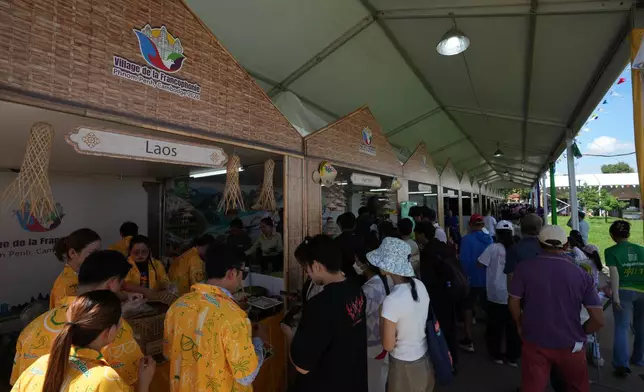
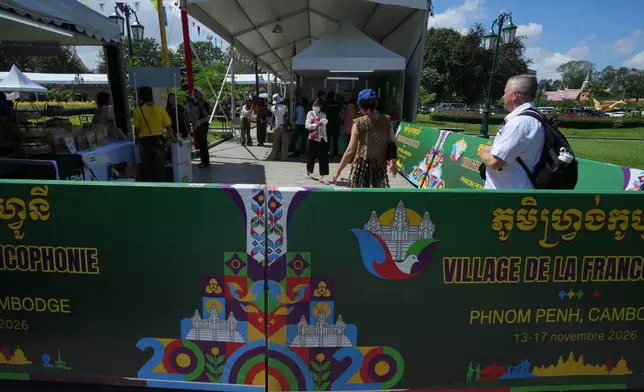
Tourists visit Village de la Francophonie, or Francophonie Village, set up to mark the 20th Francophonie Summit in Phnom Penh, Cambodia, Saturday, Nov. 14, 2026. (AP Photo/Heng Sinith)
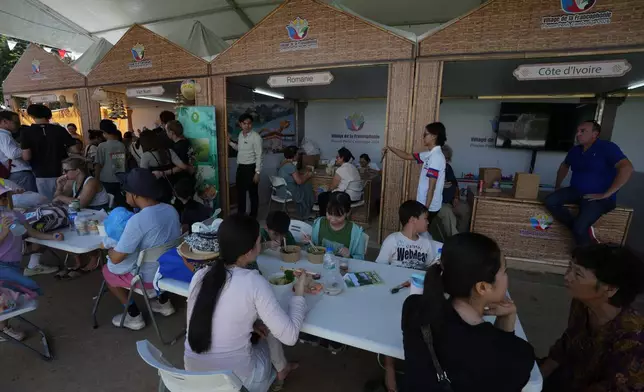
People eat at Village de la Francophonie, or Francophonie Village, set up to mark the 20th Francophonie Summit in Phnom Penh, Cambodia, Saturday, Nov. 14, 2026. (AP Photo/Heng Sinith)
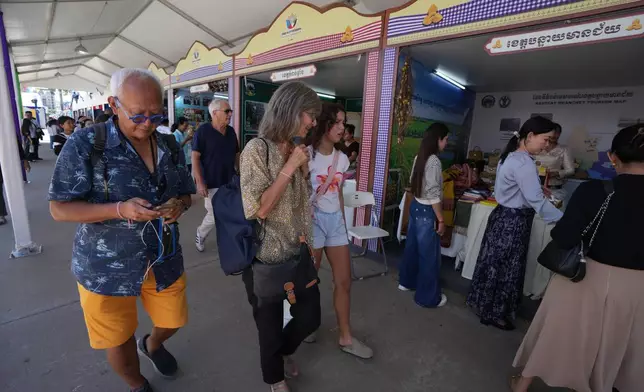
Tourists visit Village de la Francophonie, or Francophonie Village, set yp to mark the 20th Francophonie Summit in Phnom Penh, Cambodia, Saturday, Nov. 14, 2026. (AP Photo/Heng Sinith)
Tourists visit Village de la Francophonie, or Francophonie Village, set up to mark the 20th Francophonie Summit in Phnom Penh, Cambodia, Saturday, Nov. 14, 2026. (AP Photo/Heng Sinith)
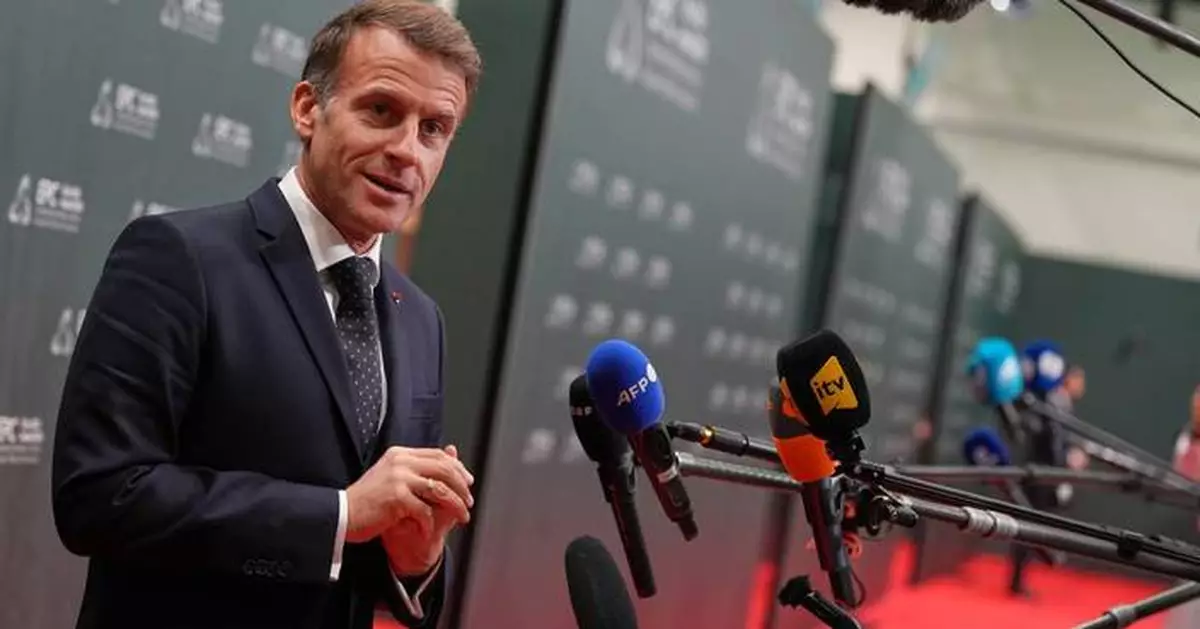
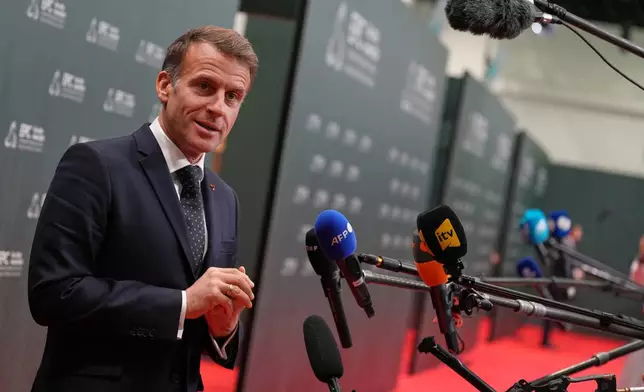
French President Emmanuel Macron speaks to the media during the European Political Community (EPC) Summit in Dublin, Thursday, Nov. 12, 2026.(AP Photo/Virginia Mayo)
Cambodia will take over the summit's chairmanship from Macron, who served as chair in 2024 when France was the host nation.
Before departing for Malaysia on Monday, Macron is scheduled to visit the Angkor World Heritage Site near the city of Siem Reap, where he and King Norodom Sihamoni will mark the completion of a French-supported restoration of the West Mebon temple.
The French leader's trip comes at a time of widespread domestic protests. France’s Interior Ministry said more than 600,000 people took to the streets earlier this month in a demonstration to demand higher wages and support the country’s student protest movement, which has resulted in thousands of arrests, hundreds of injuries and schools set on fire.
The summit's sticky diplomacy for Macron and other leaders will take place when participants decide on Monday who will serve for the next four years as the group’s leader and chief executive in the role of secretary-general.
The choices include candidates from two bitterly feuding African members, Rwanda's Louise Mushikiwabo, who is seeking reelection to a third four-year term, and the Democratic Republic of Congo's Juliana Lumumba, the 71-year-old daughter of the country’s martyred independence hero, Patrice Lumumba.
Congo, the United States and experts from the United Nations accuse Rwanda of backing the M23, one of about 100 armed groups that have been vying for a foothold in mineral-rich eastern Congo, along the border with Rwanda. Rwanda’s government consistently denies backing armed groups in Congo.
Congo has threatened to leave the OIF if Mushikiwabo is reelected. With a population exceeding 110 million people, over 40 million more than France, Congo is the most populous nation where French is the official language and its withdrawal would mark a significant blow to the Francophonie organization.
Two other candidates, from Romania and Mauritania, are poised to serve as compromise picks.
France is influential in the decision as the largest contributor to the OIF 2026 budget of €71.7 million ($79 million).
The outcome also could be delicate because the challenge comes on the heels of the withdrawals of Mali, Niger and Burkina Faso from the OIF announced in March 2025, following their membership suspensions over military coups.
Mali said the suspensions infringed on sovereignty, but the withdrawals also came in the context of Francophone African countries in recent decades shedding French political, military and cultural influence that they regarded as overbearing.
The summit's slogan, “Reinvest in Peace for Shared Prosperity and Lasting Stability,” is seen as a reflection of Cambodia’s recovery from years of war and unrest in the last quarter of the 20th century.
About 20 government leaders, including Canada’s Mark Carney, Vietnam’s To Lam, Rwanda’s Paul Kagame and the Democratic Republic of the Congo’s Félix Tshisekedi, are expected to attend the summit and likely will meet with Cambodia's king as well as Prime Minister Hun Manet.
Most of the summit’s agenda is uncontroversial. Documents set to be approved concern political commitment to peaceful coexistence, social, cultural and economic cooperation, resolution of crisis situations and peace-building, and the protection of cultural heritage and the promotion of cultural diversity.
Host Cambodia, which has an opportunity to showcase tourism potential and business opportunities, is holding side events highlighting commercial partnerships, cultural exchanges, science and technology.
Local political activists see the meeting as an occasion to press for more democratic freedoms in a de facto one-party state. U.N. Special Rapporteur Tom Andrews issued a statement pleading with summit delegates to uphold OIF values and pressure the Cambodian government for the release of detained rights activists.
“No one should be detained for defending human rights, reporting on matters of public concern, or voicing critical opinions,” he said.
Cambodia can lay claim to helping birth the OIF, as its late king and mercurial independence leader, Norodom Sihanouk, was one of four founders in 1970 of the Agency for Cultural and Technical Cooperation. Sihanouk was overthrown and his immediate successors did not join, as Cambodia subsequently endured civil war and the brutal rule of the communist Khmer Rouge from 1975 to 1979. Cambodia joined the Francophonie as an observer in 1991 and became a full member in 1993.
Peck reported from Bangkok.
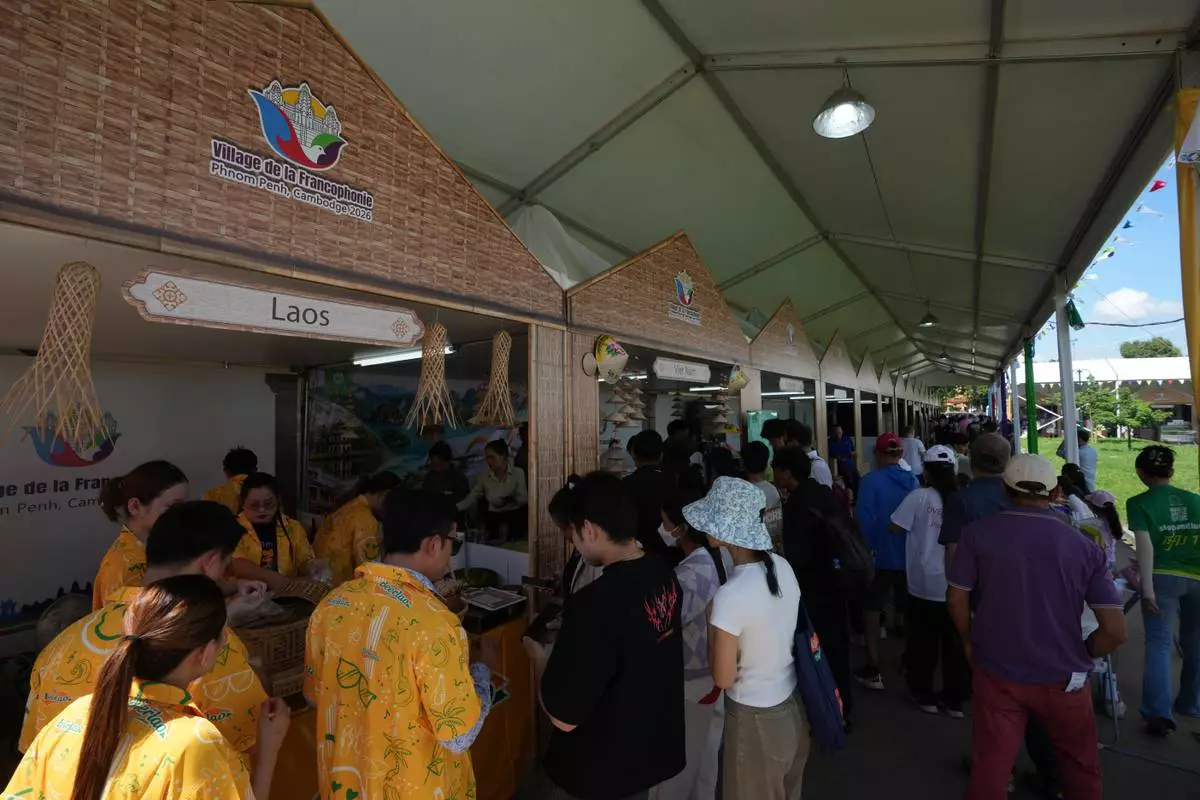
Tourists visit Village de la Francophonie, or Francophonie Village, set up to mark the 20th Francophonie Summit in Phnom Penh, Cambodia, Saturday, Nov. 14, 2026. (AP Photo/Heng Sinith)

People eat at Village de la Francophonie, or Francophonie Village, set up to mark the 20th Francophonie Summit in Phnom Penh, Cambodia, Saturday, Nov. 14, 2026. (AP Photo/Heng Sinith)
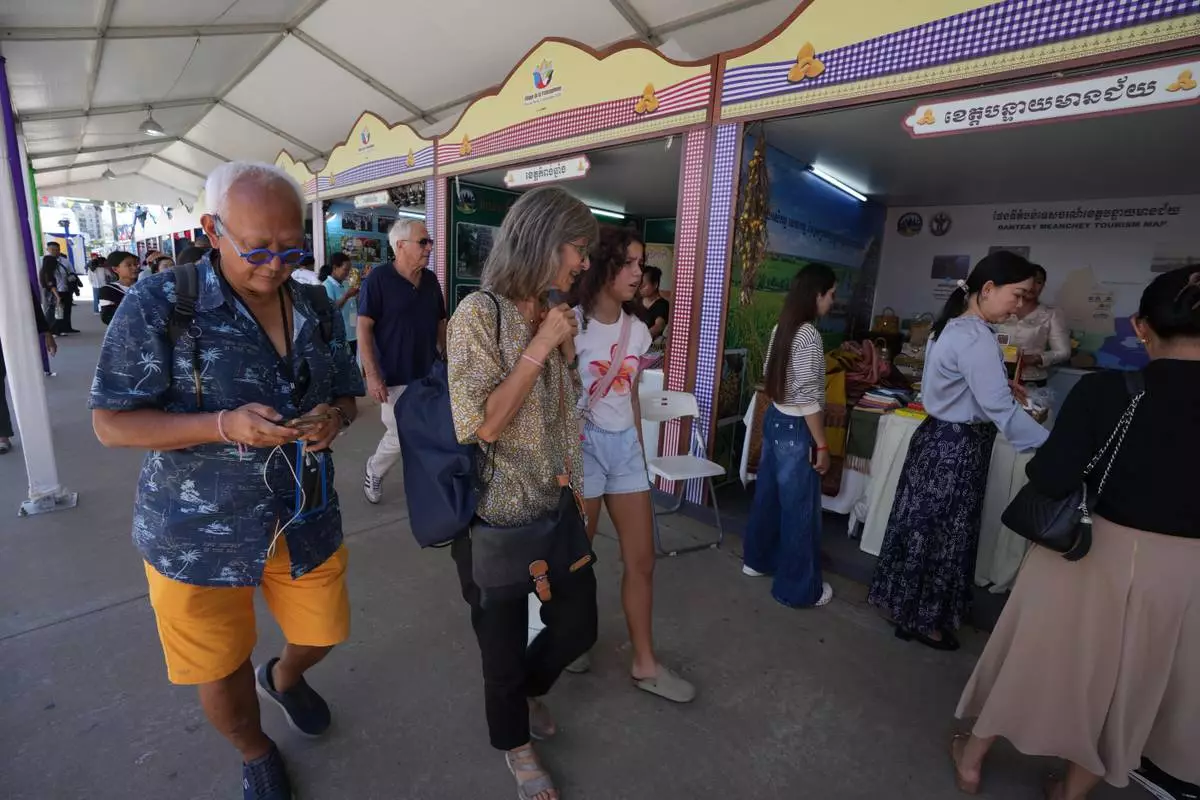
Tourists visit Village de la Francophonie, or Francophonie Village, set yp to mark the 20th Francophonie Summit in Phnom Penh, Cambodia, Saturday, Nov. 14, 2026. (AP Photo/Heng Sinith)
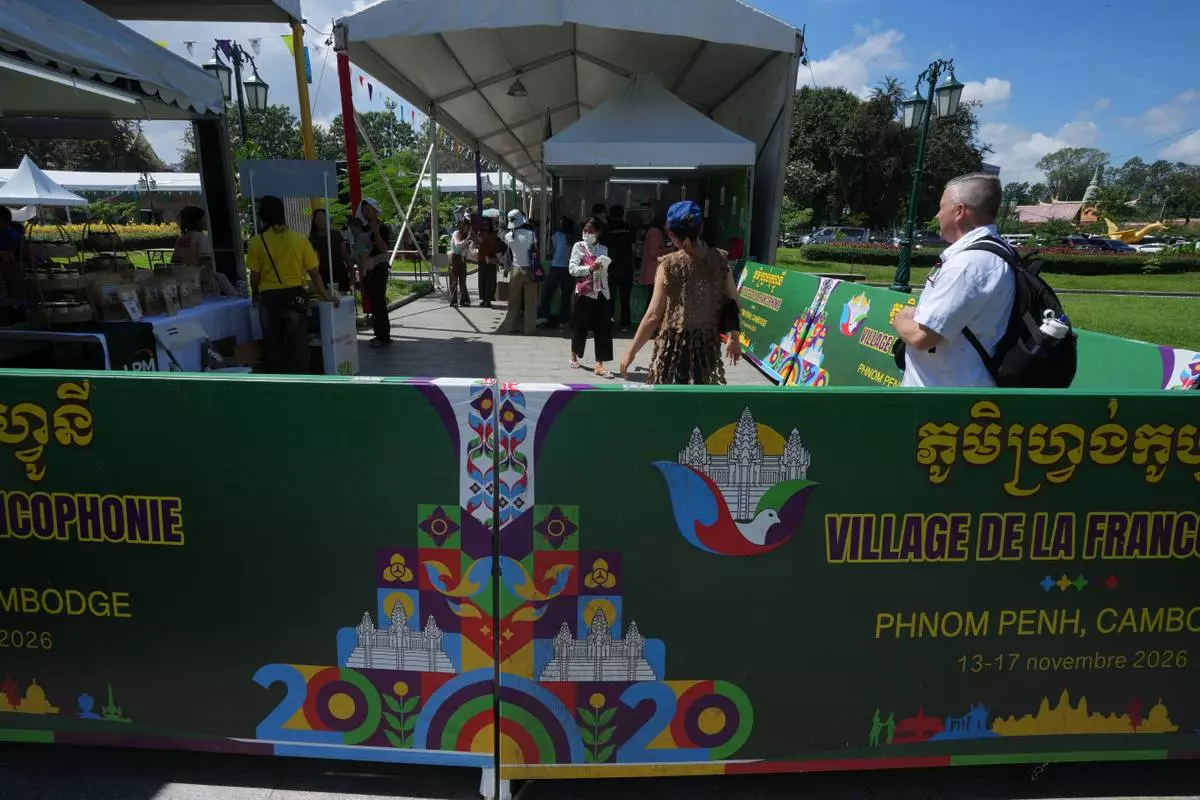
Tourists visit Village de la Francophonie, or Francophonie Village, set up to mark the 20th Francophonie Summit in Phnom Penh, Cambodia, Saturday, Nov. 14, 2026. (AP Photo/Heng Sinith)
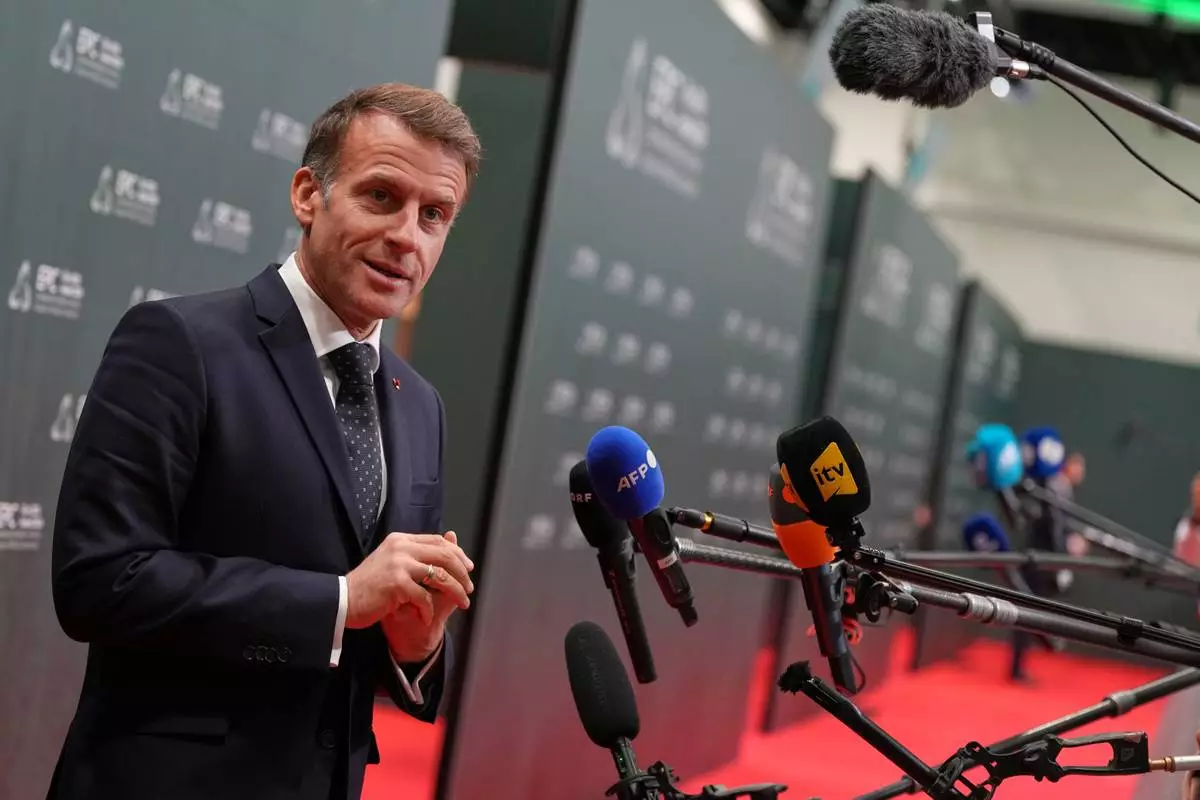
French President Emmanuel Macron speaks to the media during the European Political Community (EPC) Summit in Dublin, Thursday, Nov. 12, 2026.(AP Photo/Virginia Mayo)
WASHINGTON (AP) — President Donald Trump has had a lot to say about his thinking on the way ahead in the Iran war since Republicans were trounced in last week's midterm elections.
In exchanges with reporters, broadcast interviews and social media posts since Election Day, he's somehow managed to back away from carrying out additional strikes while also backing away from the prospect of additional talks with the Islamic Republic's negotiators on ending the 8-month-old conflict.
The president acknowledged on the day after the midterms that the war and the global economic tumult it's caused were partly to blame for Republicans' electoral losses, while maintaining it was the right thing to do.
Then, at the start of this week, he huddled with Qatar's prime minister at the White House and afterward told reporters that he believed it was highly unlikely he'd need to order new major strikes on Iran, declaring that the war “militarily is effectively over.”
But by Thursday, he was again raising questions about whether he needed to rush to find an endgame. He declared that the U.S. no longer needs a deal with Tehran and brusquely directed Vice President JD Vance — who served as his chief negotiator in earlier peace talks with Iran — to shift his attention to the administration's domestic anti-fraud campaign.
All the while, Trump warned Iran that the U.S. military is “locked and loaded” and keeping an eye on Pickaxe Mountain, a facility linked to Iran’s nuclear program, for signs of activity.
“If something does not work out, I would not hesitate" to act, Trump told conservative broadcaster Hugh Hewitt on Thursday.
Trump's tonal shifts have only added to the uncertainty about what comes next in a war in which America's allies were not consulted before it was started but nonetheless struggle to deal with its economic ramifications.
“President Trump is now acting like an arsonist who has set ablaze our foreign policy,” Democratic Sen. Cory Booker of New Jersey said in an interview Friday on the sidelines of the Democrats’ postelection gathering in Denver. “And now he just wants to walk away.”
The president's ambiguous positioning on the war is expected to loom large during a visit next week to the Philippines and the Asia-Pacific Economic Cooperation meetings in the Chinese tech hub of Shenzhen.
While in Shenzhen, Trump will hold an unprecedented three-way summit with China's Xi Jinping and Russia's Vladimir Putin. Trump is expected to discuss Iran and the three powers' nuclear stockpiles with Xi and Putin.
The White House declined to comment directly to queries on Trump's postelection rhetoric on Iran. But Secretary of State Marco Rubio underscored that Trump's approach is leading to the Iranian economy collapsing.
“The economic pain that we are inflicting on that regime is so great that there’s no need for military action because we’ve weakened them so much,” Rubio said in a Friday evening speech to the Federalist Society.
Chief mediator Qatar continues to try to negotiate an interim agreement that would restore traffic through the Strait of Hormuz, a vital passageway for the flow of oil and natural gas from the Persian Gulf to global markets, while leaving open options for further discussions between the U.S. and Iran.
But those efforts are now clouded by uncertainty following Trump’s shifting — and sometimes contradictory — comments, according to two Middle East diplomats familiar with the process.
The diplomats, who spoke on condition of anonymity due to the sensitivity of the matter, said the situation had appeared to be on the right track earlier this week after Qatar’s prime minister met with Trump.
But Trump's social media post Thursday declaring that the U.S. doesn't need a deal with Iran and directing Vance “to focus his complete and total attention” on his anti-fraud campaign has created a sense of limbo.
One of the diplomats said the post raised questions about why Trump appeared to be sidelining Vance, who was skeptical about launching the war but ultimately supported Trump.
Trump's post came as Vance had been weighing a possible reengagement with senior Iranian negotiators, according to a person familiar with the matter who was not authorized to comment publicly and spoke on the condition of anonymity.
The president posted his message calling on Vance to steer away from Iran negotiations the morning after The Wall Street Journal reported Vance was thinking about resuming talks. Trump — who had been aware of Vance's deliberations — believed the Iranians weren't acting in good faith, the person added.
Trump is also increasingly confident that he can credibly declare that he's achieved his military objectives in the war.
But traversing the Strait of Hormuz remains treacherous. The United Nations reports October had the highest number of incidents against commercial ships in the contested waters since February.
Still, Trump believes with oil shipments through the strait reaching near-prewar levels, he could potentially leave it to Gulf countries to negotiate a deal with the Iranians on governing the critical waterway, the person said.
The other regional diplomat described the push for peace as falling into a holding pattern as people await clarification from the White House on Trump’s intentions.
That diplomat added it was not entirely clear to mediators or the Iranians if Trump’s comments meant he was abandoning a negotiated agreement or was just posturing after the congressional midterm elections that cost his Republican Party control of Congress.
Iran remains unwilling to engage in negotiations over its nuclear program until the U.S. agrees to several core conditions that Iran has been demanding be part of any ceasefire agreement.
Differences with Iran over its nuclear activities remain the thorniest issue and one that Trump insists must be resolved as part of any deal meant to end the war.
Tehran's rhetoric has hardly cooled. Iran’s deputy U.N. ambassador Gholamhossein Darzi told the United Nations Security Council on Friday that Iran “has never closed the door to diplomacy.” But he warned that should the U.S. or Israel return to bombing, his country would offer “an immediate and decisive response.”
Rubio earlier this week stressed that the U.S. is not opposed to mediators continuing their efforts.
“If there’s a deal to be done, the president will be the first one to be in favor of it," Rubio said. "But it’s not going to be a stupid deal. It’s not going to be a bad deal.”
Michael Singh, managing director at the Washington Institute for Near East Policy, said he expects the status quo to persist for some time, with the U.S. and Iran locked in a stalemate over the Strait of Hormuz and the U.S. continuing its monthslong naval blockade that's curbing the flow of Iranian crude to the global market.
Singh said the American strategy of squeezing Iran economically is a far more attractive option for Trump than military escalation or making concessions to Tehran.
He also suggested Trump could always reverse his position on Vance engaging with Iranians if the president finds the Iranians are ready to seriously negotiate.
“It’s probably the most sensible path as well to sort of be patient, keep the pressure on, allow the mediators to keep doing their work,” said Singh, who worked on Middle East issues in former President George W. Bush's White House. “And when the time is right, but not before then, is when you want to engage senior officials like the vice president and so forth.”
Associated Press writers Nicholas Riccardi in Denver and Edith M. Lederer at the United Nations contributed reporting.
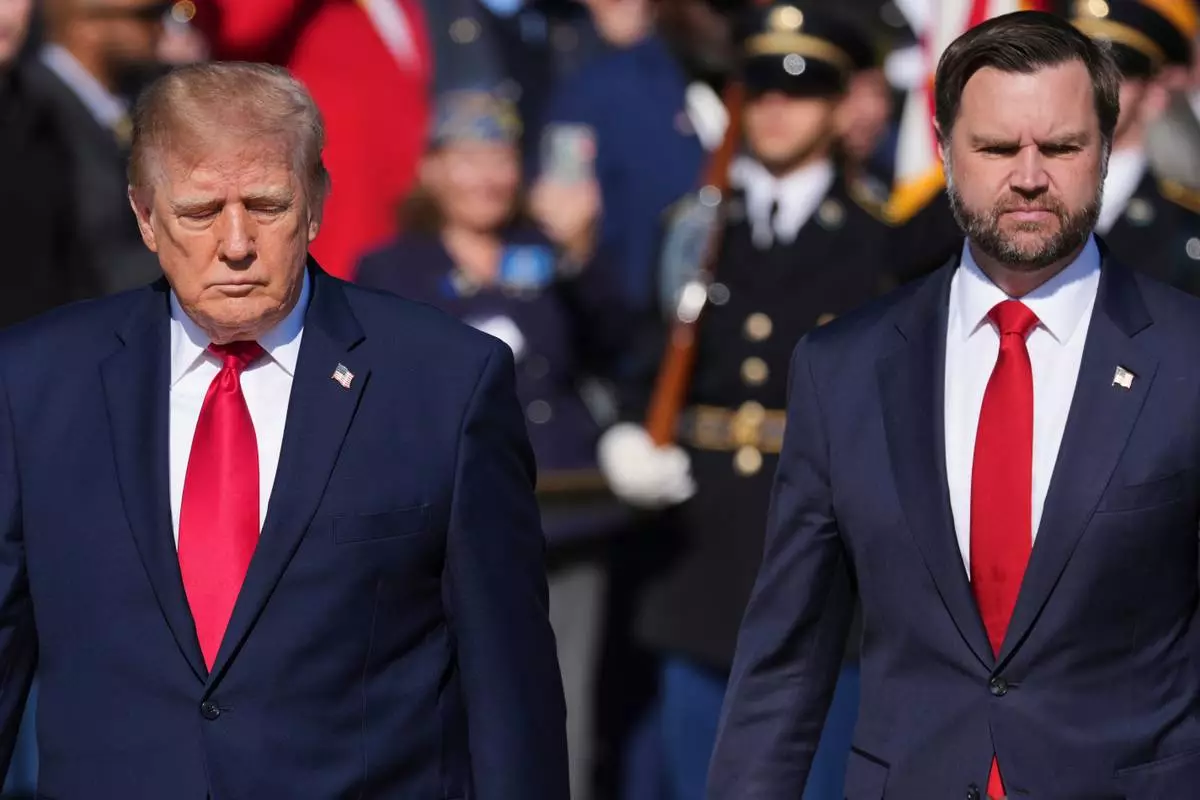
President Donald Trump and Vice President JD Vance attend a ceremony at the Tomb of the Unknown Soldier on National Veterans Day Observance at Arlington National Cemetery in Arlington, Va., Wednesday, Nov. 11, 2026. (AP Photo/Mark Schiefelbein)
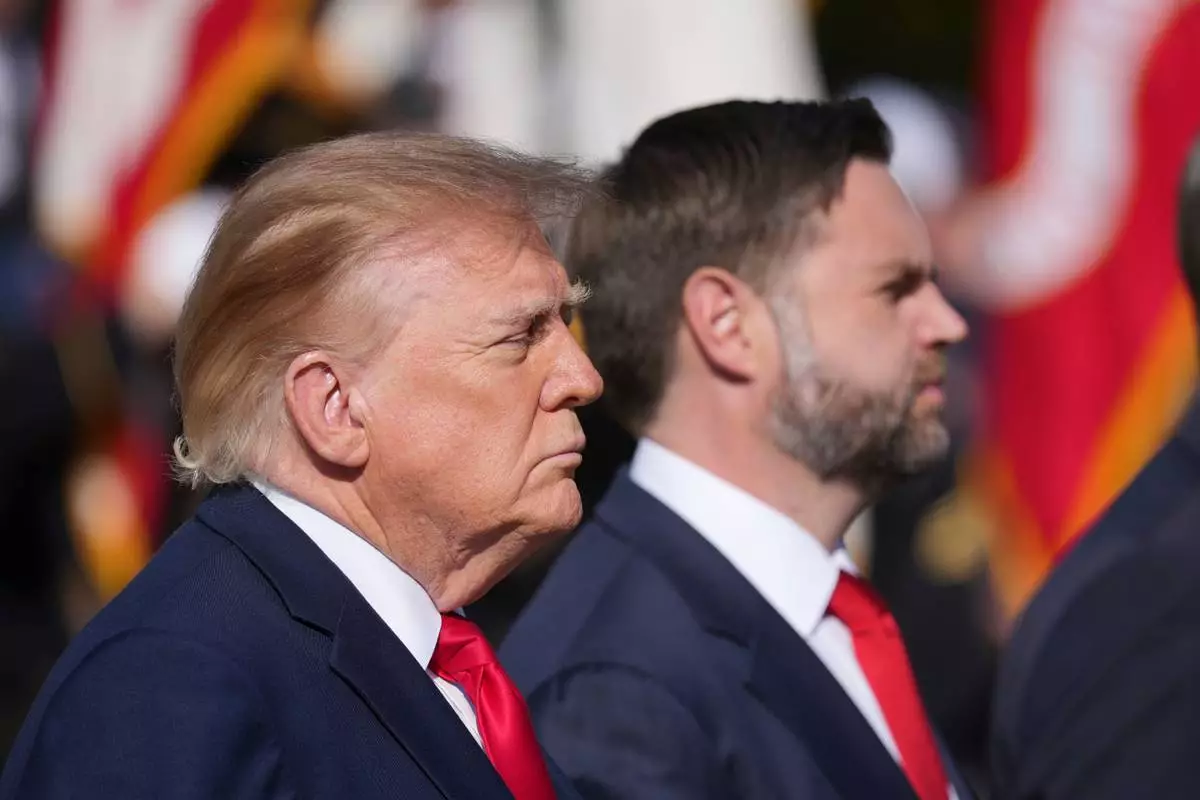
President Donald Trump and Vice President JD Vance attend a ceremony at the Tomb of the Unknown Soldier on National Veterans Day Observance at Arlington National Cemetery in Arlington, Va., Wednesday, Nov. 11, 2026. (AP Photo/Mark Schiefelbein)
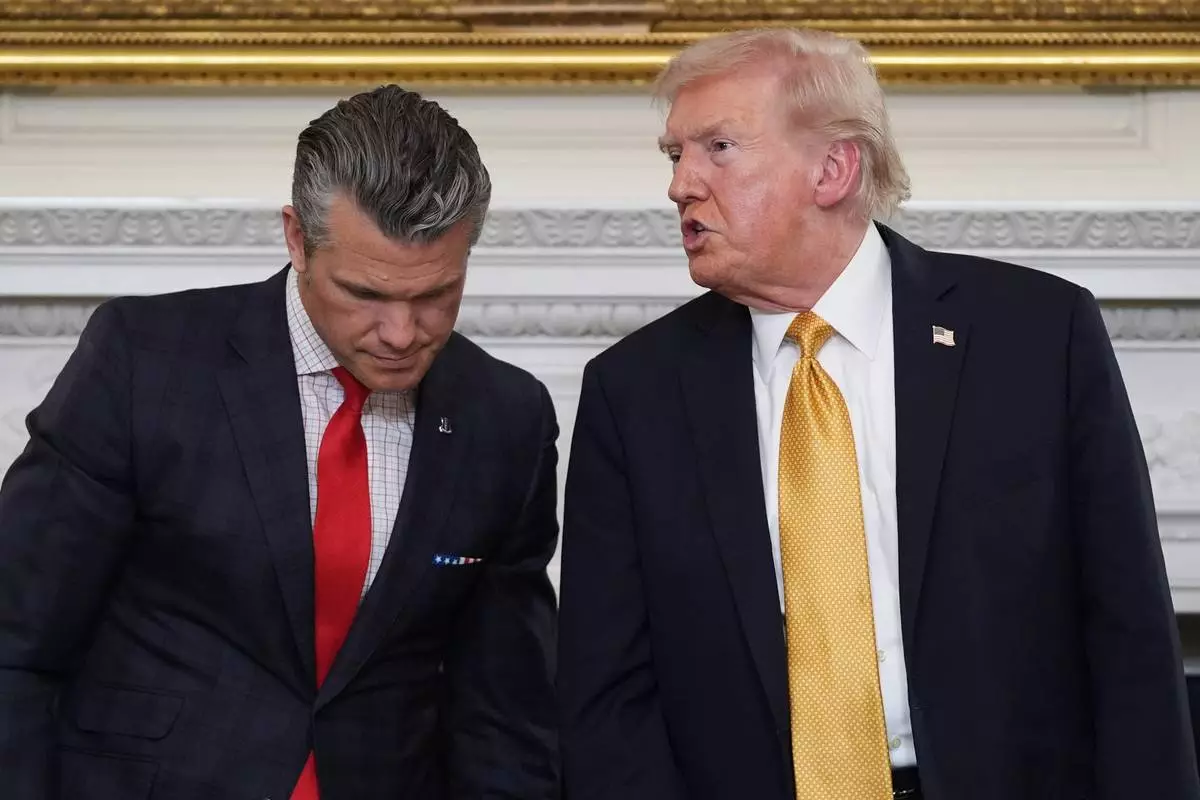
FILE - President Donald Trump talks with Defense Secretary Pete Hegseth after a roundtable on criminal cartels in the State Dining Room of the White House, Oct. 23, 2025, in Washington. (AP Photo/Evan Vucci, File)