MINNEAPOLIS--(BUSINESS WIRE)--Sep 9, 2026--
Liz Kramer has joined Dorsey & Whitney LLP as a Partner in the Commercial Litigation group in Minneapolis, the law firm announced today.
This press release features multimedia. View the full release here: https://www.businesswire.com/news/home/20260908766316/en/
“We are thrilled that Liz has joined Dorsey. She strengthens our Commercial Litigation capabilities with a wealth of experience and insight,” said Jaime Stilson, Practice Group Co-Leader for the Commercial Litigation Group. “Liz advises clients on complex commercial, appellate, and constitutional matters, bringing firsthand experience at the highest levels of state government.”
Liz is a nationally recognized appellate and constitutional attorney. Before joining Dorsey, Liz served as Minnesota Solicitor General for two terms, leading the state's appellate and constitutional litigation and securing several of Minnesota's landmark decisions. For example, she successfully defended health and safety executive orders during the COVID 19 pandemic. Liz also led the Minnesota Supreme Court case that resolved a constitutional crisis arising from a tied Minnesota Legislature and built and led the Rule of Law division at the Attorney General’s Office, overseeing more than 70 cases challenging federal executive overreach.
“I left the best public law office in Minnesota to join the best private law office here,” said Liz Kramer. “I was especially attracted to Dorsey because of its strong reputation, its strategic growth across the country, and the opportunity to build on its strong foundation in appellate practice. I look forward to bringing the same skills that brought success for the governor and attorney general to my new clients.”
Before entering public service, Liz represented clients in commercial litigation and construction disputes. She also gained deep experience in arbitration law while at a Minneapolis law firm for 15 years.
Liz received her J.D. from Yale Law School and her B.A. from Mount Holyoke College.
About Dorsey & Whitney LLP
Clients have relied on Dorsey as a valued business partner since 1912. With locations across the United States and in Canada, Europe, and the Asia-Pacific region, Dorsey provides results-oriented, grounded counsel for its clients' legal and business needs. Dorsey represents a number of the world's most successful companies from a wide range of industries, including banking & financial institutions; development & infrastructure; energy & natural resources; food, beverage & agribusiness; healthcare & life sciences; and technology.

Liz Kramer has joined Dorsey & Whitney LLP as a Partner in the Commercial Litigation group in Minneapolis.
BELHAVEN, N.C. (AP) — Investors and scientists are restoring a 23-square-mile (60-square-kilometer) tract of peatland in North Carolina's Inner Banks to curb emissions of climate-warming carbon dioxide and regenerate native habitat.
Fifty miles (80 kilometers) of ditches dug decades ago for an abandoned farming venture drained much of the water from thousands of years of accumulated peat — partially decayed organic matter up to 15 feet (4.6 meters) deep — leaving the site vulnerable to drought and wildfires, altering native habitats and allowing it to emit 130,000 tons of carbon dioxide every year.
Here are key takeaways from The Associated Press’ reporting:
Though they account for just 3% of the global land surface, peatlands store about one-third of the Earth’s carbon dioxide, more than all forests combined. But when degraded, destroyed or burned they become part of the problem, releasing huge volumes of greenhouse gases, now about 6% of the annual global total from all sources.
When peatlands are intact, gases generated by decomposing plants are trapped in a waterlogged, oxygen-deprived environment, while surface vegetation absorbs carbon dioxide from the atmosphere, scientists say.
They also store about 10% of global fresh water, help control flooding and can help stem wildfires, as well as provide important habitat for many species.
Two-thirds of temperate peatlands — mostly in Europe and the U.S. — have been dewatered for farming, mining and other uses, while about 45% of tropical peatlands have been similarly disturbed, according to a 2025 study published by The Society for Conservation Biology.
Boreal peatlands, in colder climates in places like Canada and Russia, are about 90% intact, but face growing pressure from thawing permafrost and intense fires, both linked to climate change, as well as mining and critical minerals exploration.
Saturated peatlands are nearly fireproof: Just the surface vegetation and a few inches of peat burn, releasing nutrients, regenerating seed banks and creating beneficial biochar.
But when they’re dry, fire can burn underground for weeks or months — drying out and destroying even saturated layers — emitting enormous volumes of carbon dioxide and destroying thousands of years of accumulation.
In North Carolina, 11,000 miles (17,702 kilometers) of canals drain peatlands before the water empties into coastal estuaries. And the type of peatlands found there, and for hundreds of miles along the Eastern Seaboard, are among the most threatened in the world.
Colorado-based Pantheon Regeneration plans to restore its property by blocking off ditches to control the water table and significantly reduce carbon dioxide emissions. Then it will cull invasive species and replant native grasses, flowers and other plants.
Pantheon plans to sell carbon credits to tech companies and other corporations that want to compensate for their own greenhouse gas emissions, then use the money to restore and preserve a million acres of peatland from Virginia to northern Florida over the next decade.
The Associated Press’ climate and environmental coverage receives financial support from multiple private foundations. AP is solely responsible for all content. Find AP’s standards for working with philanthropies, a list of supporters and funded coverage areas at AP.org.
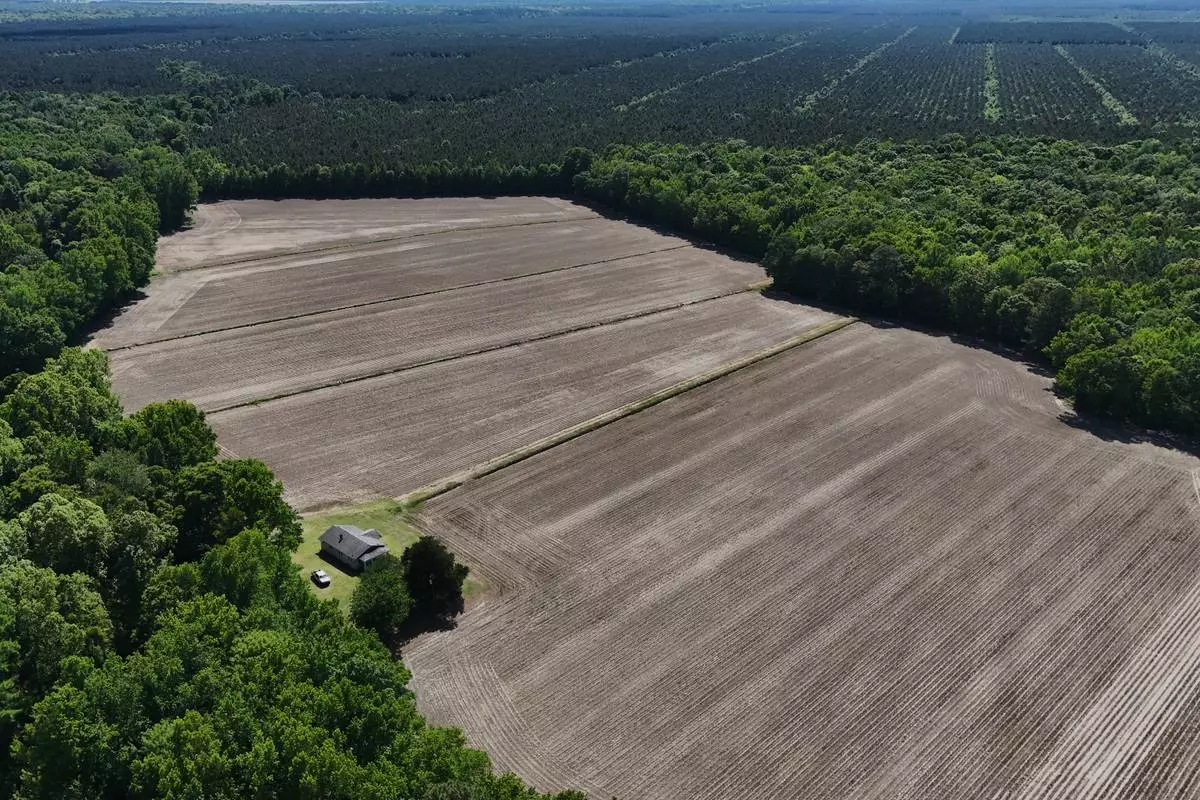
An agricultural field in a peatland area is visible Monday, May 4, 2026, in Roper, N.C. (AP Photo/Joshua A. Bickel)
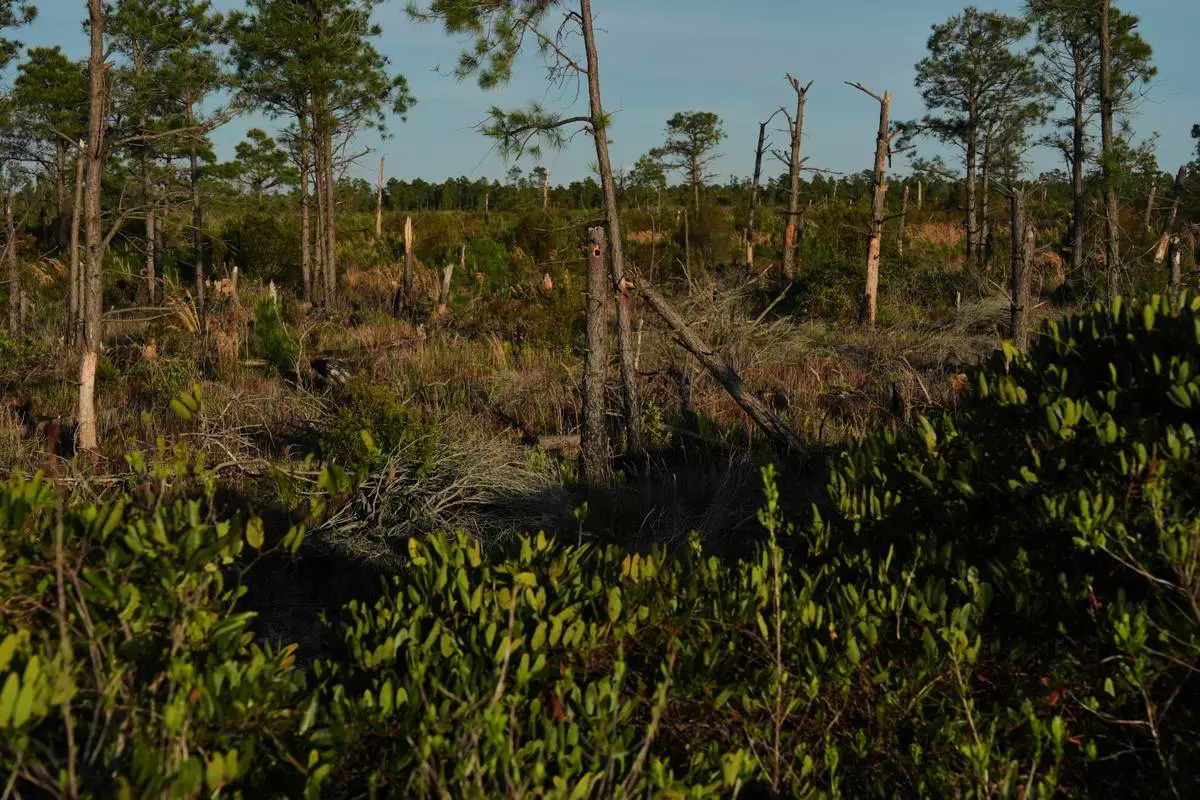
Fire-damaged trees stand in an area of peatland Tuesday, May 5, 2026, in Belhaven, N.C. (AP Photo/Joshua A. Bickel)
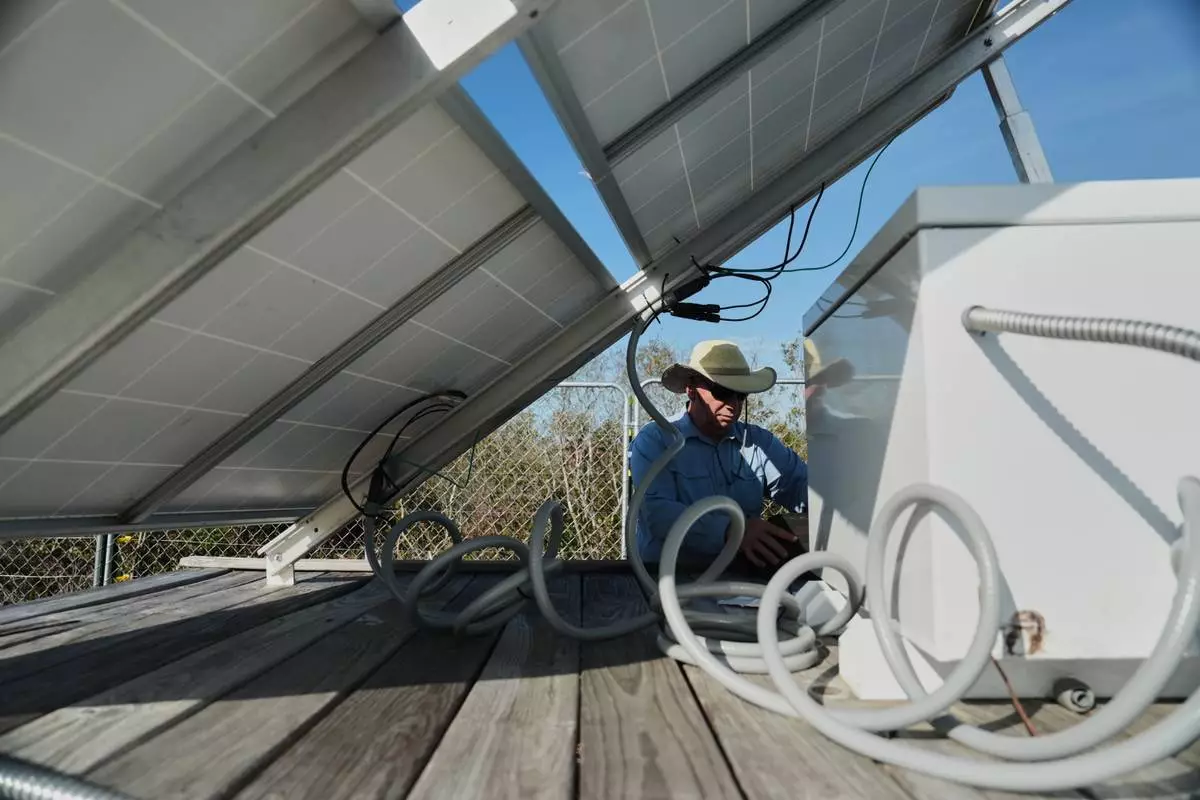
Neal Flanagan, a research scientist at Duke University, works near a solar panel powering a sensor that measures carbon emissions Wednesday, May 6, 2026, in Belhaven, N.C. (AP Photo/Joshua A. Bickel)
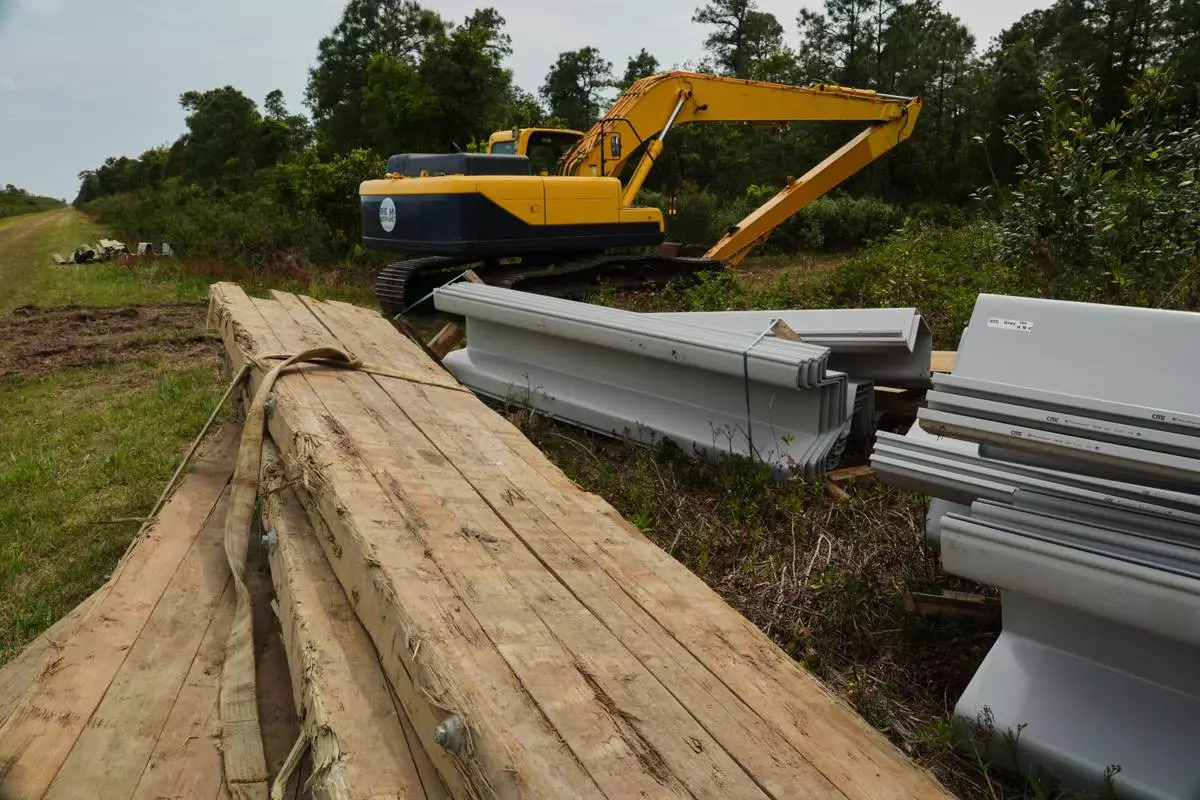
Construction materials sit near a peatland restoration site Wednesday, May 6, 2026, in Belhaven, N.C. (AP Photo/Joshua A. Bickel)
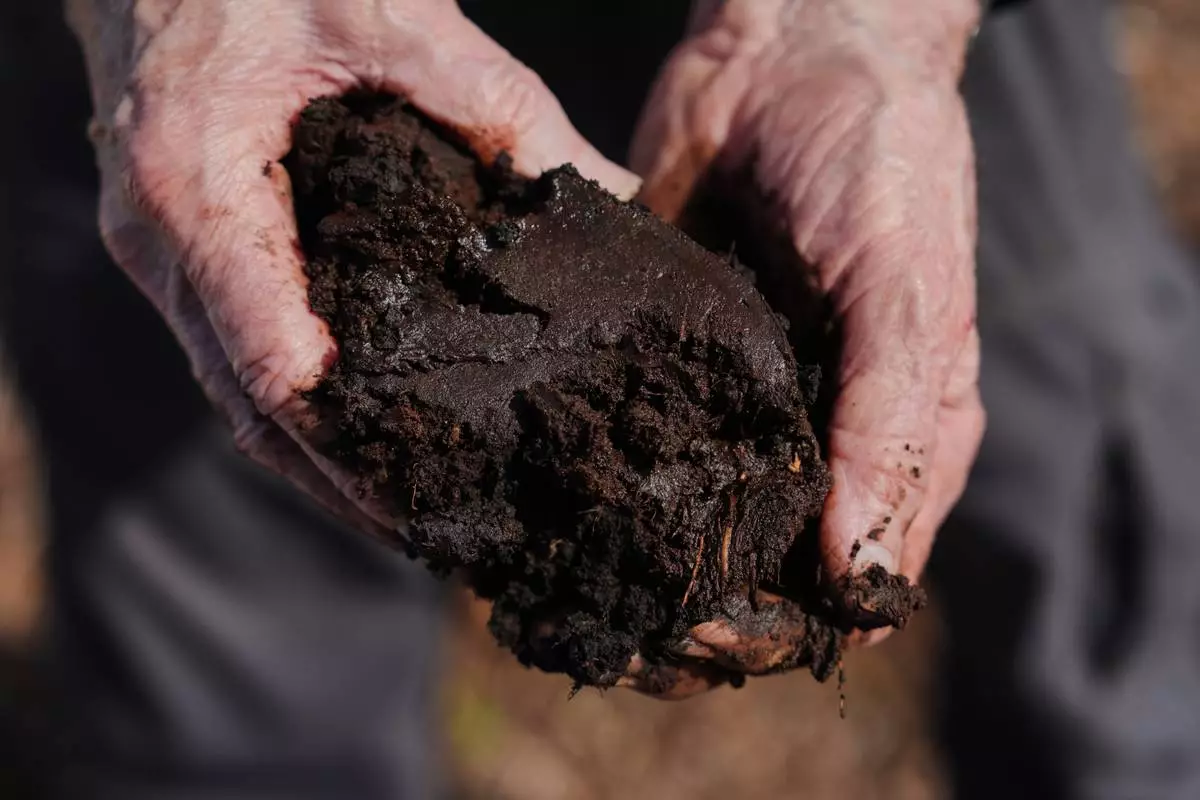
Curtis Richardson, an ecology professor at Duke University, holds peat soil Wednesday, May 6, 2026, in Belhaven, N.C. (AP Photo/Joshua A. Bickel)