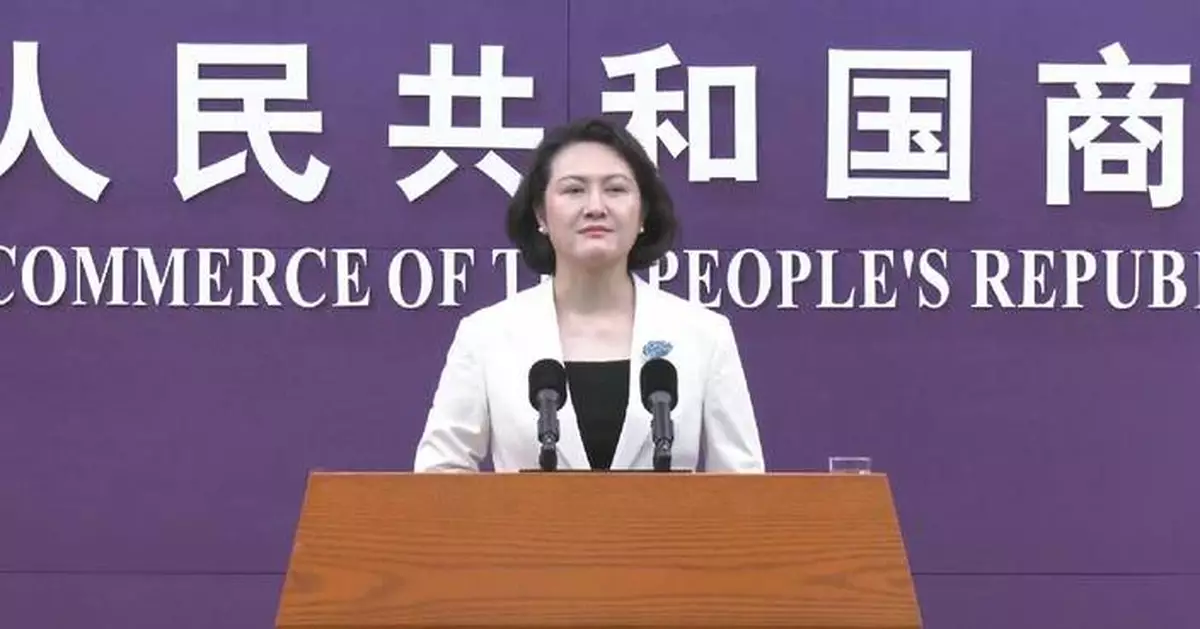
China's Ministry of Commerce has requested information and explanations from several French companies operating within China regarding subsidies they received from the European Union and its member states, spokesman Huang Ling said in Beijing on Thursday.
Speaking at a regular press briefing, Huang made the remarks in response to a media query about recent meetings the ministry held with several French enterprises in China.
"Public reports indicate that some French companies have received relevant subsidies from the European Union and its member states. This may have been passed on to their entities in China to some extent. To assess the impact, the Ministry of Commerce, in accordance with the law, has sought information from them and asked them to provide explanations," said Huang.
China seeks clarification from French firms over EU subsidies: spokeswoman
New Zealand's ruling National-led coalition has secured a parliamentary majority in the general election, preliminary results showed early Sunday, putting Prime Minister Christopher Luxon on course to retain power for a second term.
The Election Commission's tally of all voting places has resulted in 11 "overhang" seats, increasing to 131 the total number of seats in parliament, which normally has 120.
Among the seats, the National Party, ACT New Zealand and New Zealand First collectively secured 67, giving the three-party coalition a narrow majority to continue governing, while the opposition bloc of the Labor Party, the Green Party and the Maori Party garnered 57 in total.
The contest between the National and the Labor, led by former prime minister Chris Hipkins, remained exceptionally close, with each securing over 29 percent, according to preliminary figures.
Addressing supporters in Auckland, Luxon said the election was "too close to call," with the final outcome hinging on special votes to be counted. He acknowledged that negotiations and compromise would be needed to form the next government.
The outcome could still change when 700,000 special votes are counted days later. These include ballots cast by overseas voters and people voting outside their electorates, and are not included in the preliminary results, according to the Electoral Commission, which is scheduled to release the final official results, including special votes, on Nov. 27.
The Green Party has won a record 16 seats in parliament. The centrist Opportunity Party has also made a parliamentary breakthrough, projected to win seven seats, preliminary results showed.
The country has nearly 3.8 million provisionally enrolled voters for the 2026 general election, representing 93.6 percent of the estimated eligible population, below the final enrolment rates of 94.7 percent in 2023 and 94.1 percent in 2020, the commission said.
New Zealand uses the mixed-member proportional voting system to elect its parliament. Under this system, voters cast two ballots, one for a political party and another for their local electorate candidate. The government is usually formed by two or more parliamentary political parties.
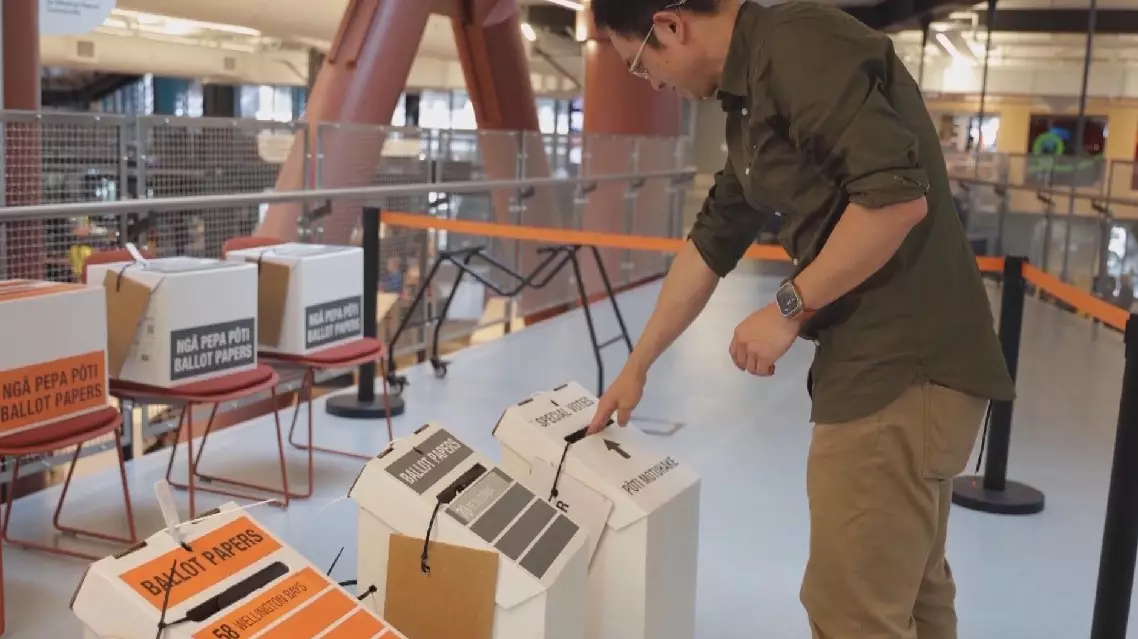
New Zealand's National-led coalition wins majority parliamentary seats: preliminary results