ROMEOVILLE, Ill.--(BUSINESS WIRE)--Sep 10, 2026--
StormTrap announced today that SurgeSettler™, its new high-flow stormwater treatment device, has received verification from the New Jersey Corporation for Advanced Technology (NJCAT) and certification from the New Jersey Department of Environmental Protection (NJDEP).
This press release features multimedia. View the full release here: https://www.businesswire.com/news/home/20260910466357/en/
Through comprehensive testing at StormTrap’s state-of-the-art research and development facility in Morris, Illinois, SurgeSettler was tested at the highest flow rate ever attempted for a hydrodynamic separating device. Testing was conducted in accordance with ASTM test methods C-1745 and C-1746 to measure hydraulic characteristics and removal efficiency performance. SurgeSettler is NJDEP certified for 50% Total Suspended Solids (TSS) removal, with additional Sediment B testing supporting NJCAT verification for 80% TSS removal.
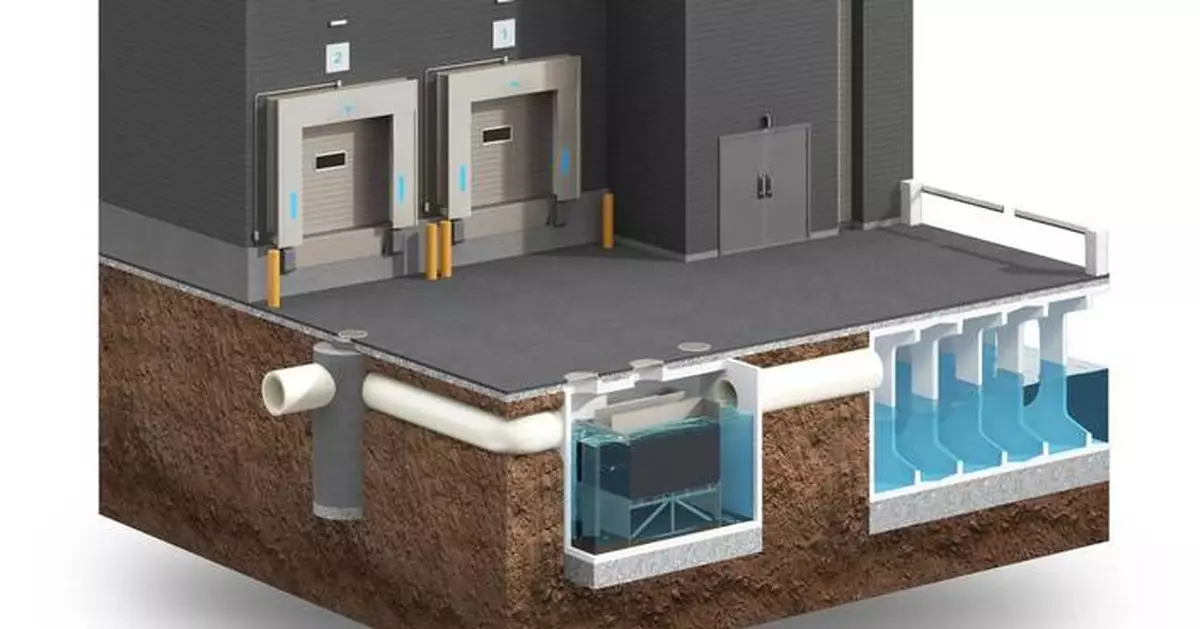
Built to treat large stormwater flows within a single structure, SurgeSettler features enhanced settling pack technology designed to increase treatment surface area and shorten particle settling distance. Internal flow-control components distribute stormwater evenly through the settling pack, promoting pollutant capture before treated water exits the system. The system is also designed to accommodate site-specific layouts, including side-outlet configurations.
SurgeSettler incorporates three access locations: the forebay, outlet bay, and a dedicated 2’ x 2’ maintenance opening through the center of the enhanced settling pack. The layout provides direct access for inspection and sediment removal using conventional vacuum maintenance equipment.
“Stormwater treatment requirements continue to evolve, and our customers need solutions that deliver both verified performance and scalability,” said Nathan Olds, CEO of StormTrap. “SurgeSettler represents the next generation of hydrodynamic separation technology, combining proven treatment performance with the ability to efficiently manage higher flow rates and larger drainage areas. By leveraging our innovative settling pack technology, SurgeSettler helps engineers, owners, and regulators achieve water quality objectives without compromising constructability or long-term value. We are excited to bring another industry-leading solution to market that reinforces StormTrap’s commitment to innovation in stormwater management.”
SurgeSettler joins StormTrap’s portfolio of stormwater treatment solutions, including the StormSettler® hydrodynamic separator, and further expands the company’s ability to support projects ranging from localized water quality treatment to large-scale stormwater management.
For additional information, technical specifications, and sizing assistance, visit the SurgeSettler product page.
About StormTrap
StormTrap provides proven, innovative stormwater management solutions that help manage runoff, protect waterways, and maximize the use of available site space. The company works with engineers, owners, and municipalities to deliver cost-effective, customized solutions for water quality, detention, infiltration, and water harvesting applications. StormTrap systems are designed to address site constraints, reduce project footprints, lower overall costs, and meet project-specific requirements.
For more information, visit StormTrap.com.
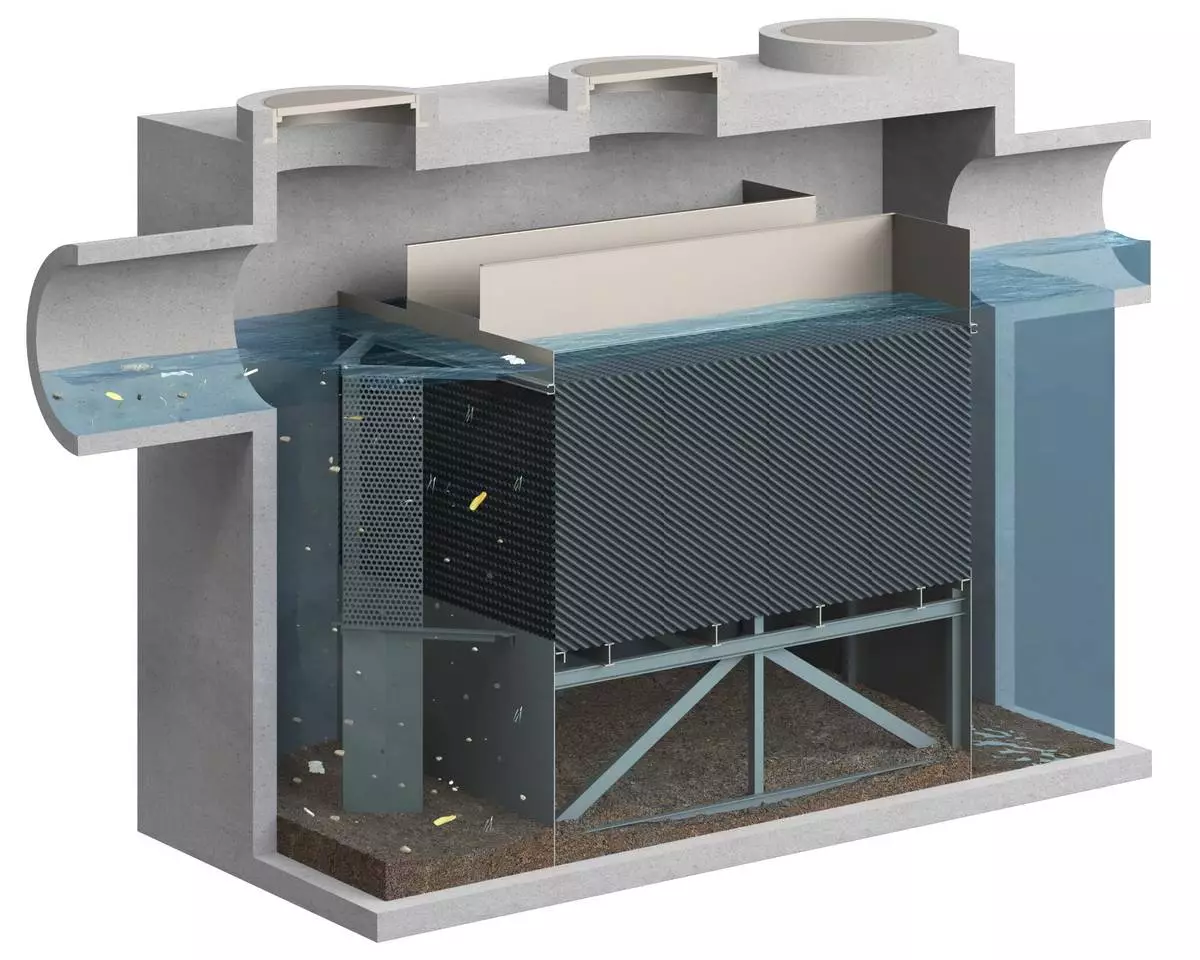
SurgeSettler™ combines high-flow treatment capacity, enhanced settling technology, and a maintenance-friendly design to support modern stormwater management needs.
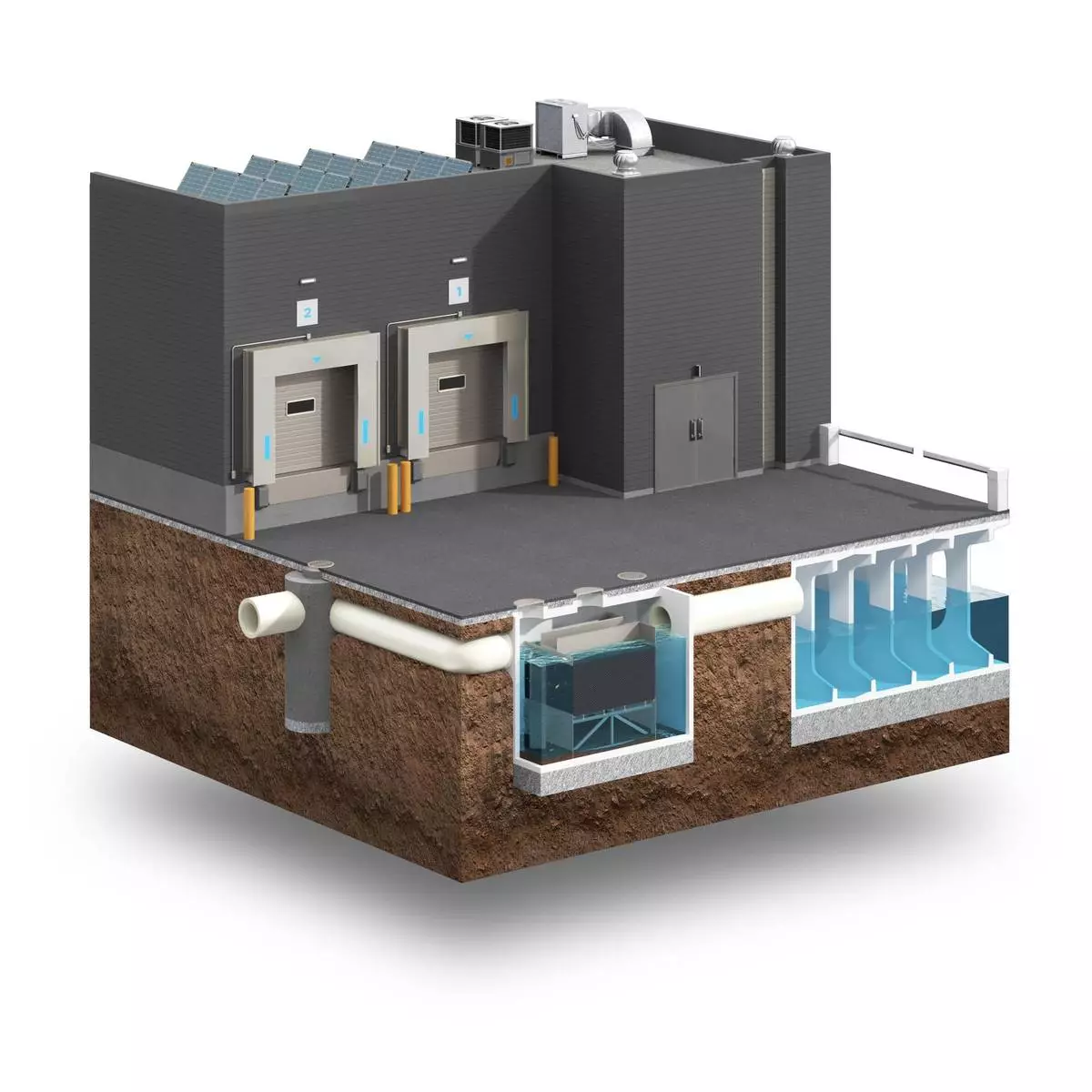
SurgeSettler™ combines high-flow treatment, hydraulic efficiency, and a compact footprint to support demanding commercial and industrial stormwater applications. Shown here integrated with a StormTrap detention system.
NEW YORK (AP) — Oil prices keep climbing as the war with Iran keeps clogging the global flow of crude, and they got back to where they were before the summer on Thursday. That’s worsening worries about inflation and cranking up pressure within the bond market, helping to send stocks lower again on Wall Street.
The S&P 500 fell 0.4% and is on track for a fourth straight loss, though it’s not far from its all-time high set last month. The Dow Jones Industrial Average was down 227 points, or 0.4%, as of 11:30 a.m. Eastern time, and the Nasdaq composite was 0.4% lower.
Stocks sank under the weight of rising oil prices. Brent crude, the international standard, climbed another 3.5% and got above $105 per barrel for the first time since May.
The price for a barrel of benchmark U.S. crude rose 3.7% and topped the $100 level for the first time since before Memorial Day.
Oil prices have been jumping since early July, when Brent crude was going for less than $72 per barrel, as hopes fade that the United States and Iran may reach a deal soon to fully reopen the Strait of Hormuz and allow oil tankers to freely exit the Persian Gulf. President Donald Trump said on Wednesday that oil prices likely won’t come down until after the U.S. midterm elections in November.
The jump has pushed the price for a gallon of regular gasoline to an average of nearly $4.28 across the United States, according to AAA. That’s up nearly 34% from a year earlier and is not only costing people more at the pump but also through higher prices for all kinds of products that move by truck to store shelves.
A report on Thursday showed that inflation at the U.S. wholesale level accelerated to 5.4% last month from 4.8% in July. Retailers could eventually pass such increases in prices onto shoppers. A report is coming on Friday that will show how much inflation U.S. consumers are feeling.
The typical move to rein in high inflation is for the Federal Reserve to raise its main interest rate, the federal funds rate. Such a move then filters out through the rest of the bond market, makes it more expensive for U.S. households and businesses to borrow money, slows the overall economy and undercuts prices for investments to hopefully remove some of inflation's fuel.
A report on Thursday suggested the U.S. job market may still remain solid, as fewer workers applied for unemployment benefits last week. That could give the Fed confidence the economy may be able to withstand higher interest rates.
Following Thursday’s reports, traders see a roughly 70% chance the Fed will raise the federal funds rate at its meeting next week. That’s up from the 61% probability seen the day before, according to data from CME Group. That’s also despite Trump’s consistent lobbying for interest rates to go lower rather than higher.
The Fed’s counterpart in Europe, the European Central Bank, raised its own interest rates on Thursday in hopes of getting inflation in check. It cited “the conflict in the Middle East” and how it “continues to generate inflation pressures.”
It all pushed the yield on the 10-year Treasury up to 4.92% from 4.83% late Wednesday, which is a significant move for the bond market. It’s up from just 3.97% before the war with Iran began, and it’s back to where it was in the autumn of 2023. That was after the Fed cranked the federal funds rate higher to get super-high inflation coming out of the COVID pandemic under better control.
Higher yields mean investors can make more money from parking their money in bonds, which in turn can make investors less willing to pay high prices for stocks and other investments that carry more risk than bonds.
Some investors are eyeing a 5% yield on the 10-year Treasury as the next potential flashpoint, a level not seen since October 2023. But strategists at Bank of America's Research Investment Committee suggest 7% may be the more important threshold, pointing to how expensive stocks peaked around that point in the past in Japan and on the Nasdaq.
On Wall Street, Macy’s fell 3% even though the retailer reported stronger profit and revenue for the latest quarter than analysts expected. It also raised its forecasts for earnings and other financial measures for its fiscal year, but it warned that “there are macroeconomic and geopolitical factors that could influence” how much its customers feel comfortable spending.
Macy’s said it received $116 million in tariff refunds from the government — $98 million during the quarter and another $18 million after the quarter ended. Macy’s CEO Tony Spring told The Associated Press Thursday that it’s using some of the proceeds to lower prices on certain items like furniture and other big-ticket purchases.
Helping to limit the market's losses was JetBlue Airways, which rose 2.2%. It said booking trends remain strong and customers continue to be willing to pay to fly. It said revenue trends for the latest quarter look to be better than it had earlier forecast, even as its fuel prices climb higher than it had expected.
In stock markets abroad, indexes slipped across much of Europe and Asia. Hong Kong’s Hang Seng dropped 1.3% for one of the world’s biggest moves.
AP Business Writers Anne D’Innocenzio and Elaine Kurtenbach contributed to this report.
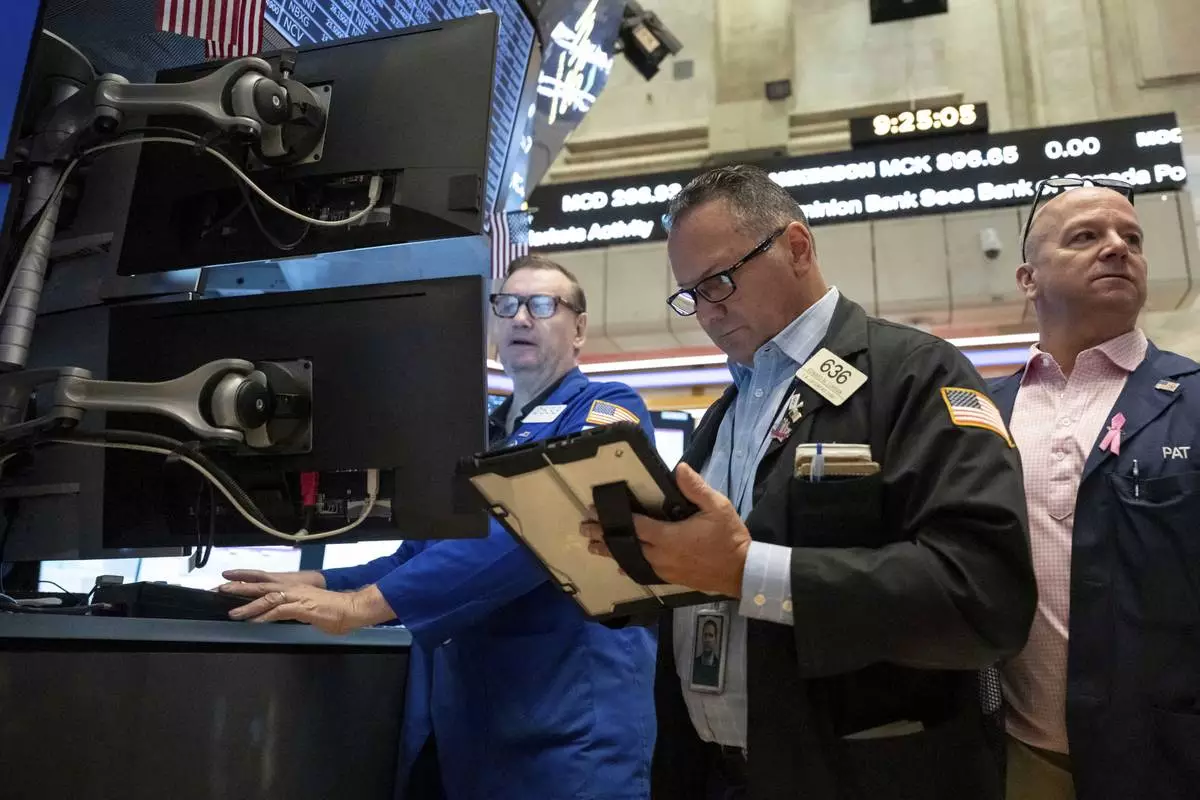
Trader Edward Curran works on the floor of the New York Stock Exchange, Thursday, Aug. 27, 2026, in New York. (AP Photo/Yuki Iwamura)
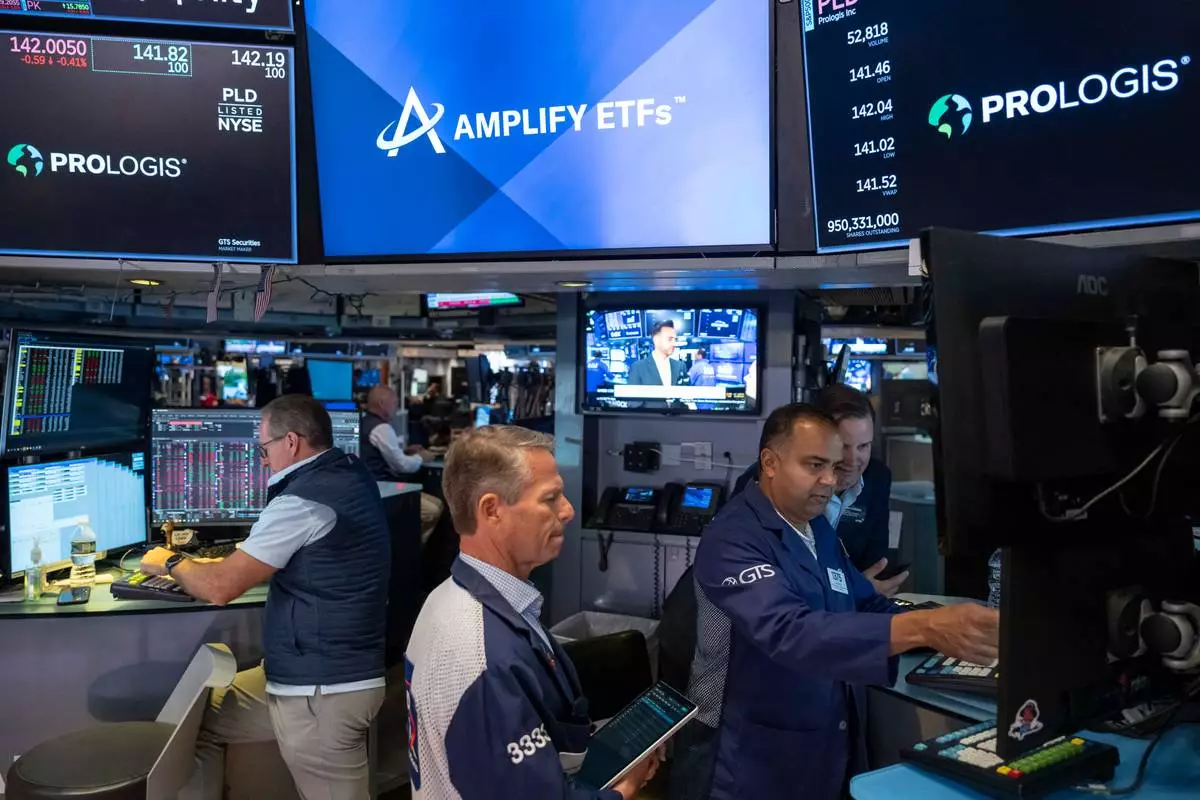
Specialists Dilip Patel, right, and Trader Robert Charmak, center, work on the floor of the New York Stock Exchange, Thursday, Aug. 27, 2026, in New York. (AP Photo/Yuki Iwamura)
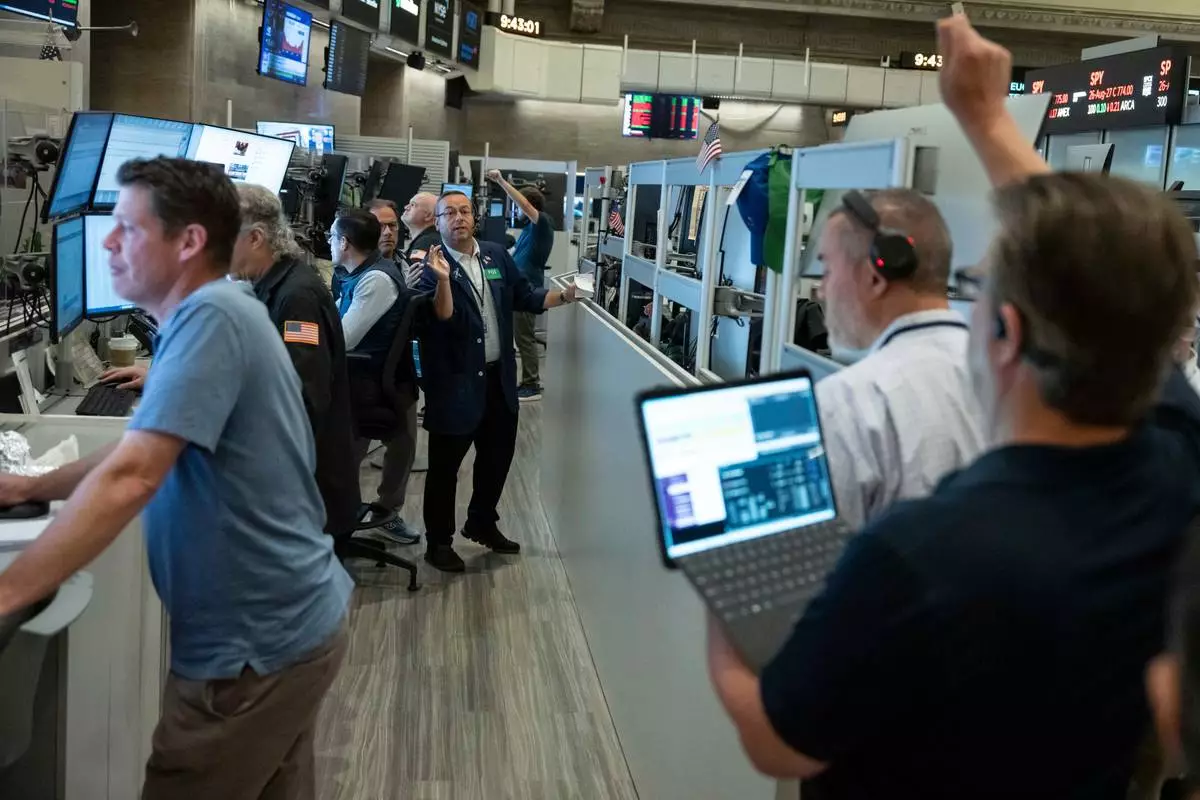
Options trader Matthew Hefter works on the floor of the New York Stock Exchange, Thursday, Aug. 27, 2026, in New York. (AP Photo/Yuki Iwamura)
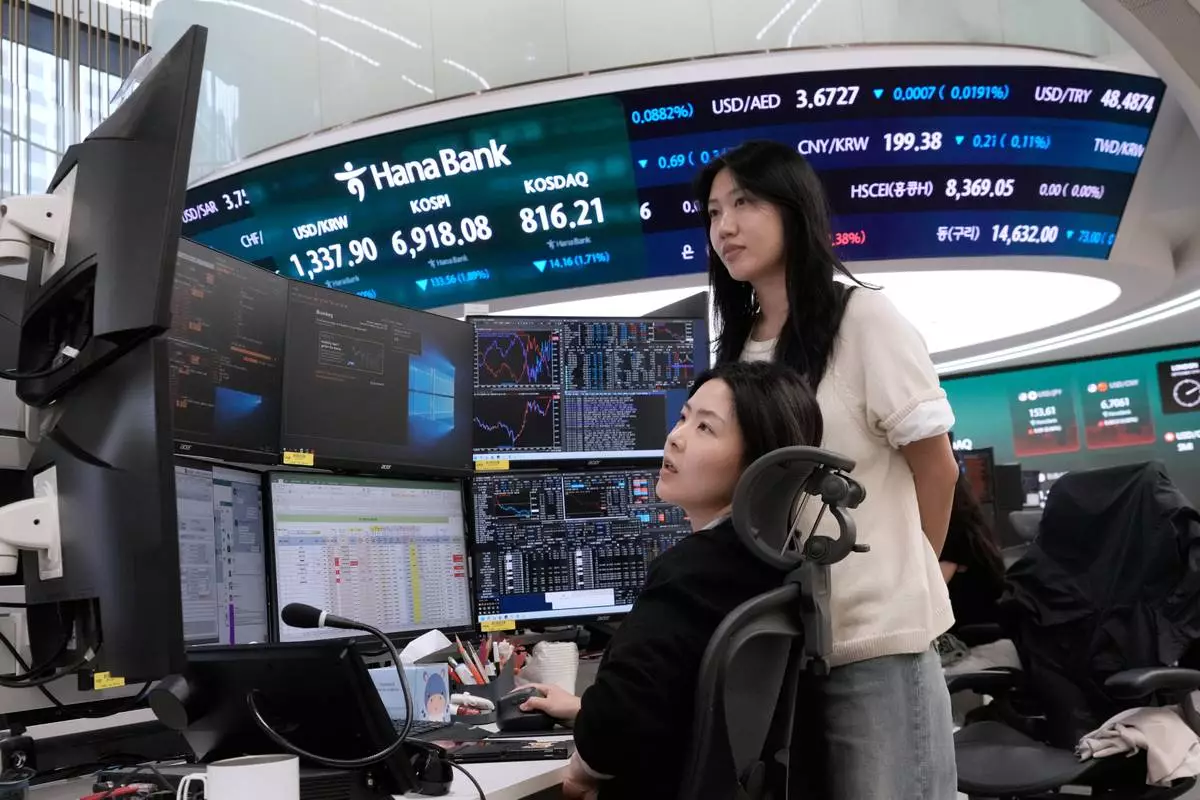
Currency traders watch monitors at the foreign exchange dealing room of the Hana Bank headquarters in Seoul, South Korea, Thursday, Sept. 10, 2026. (AP Photo/Ahn Young-joon)
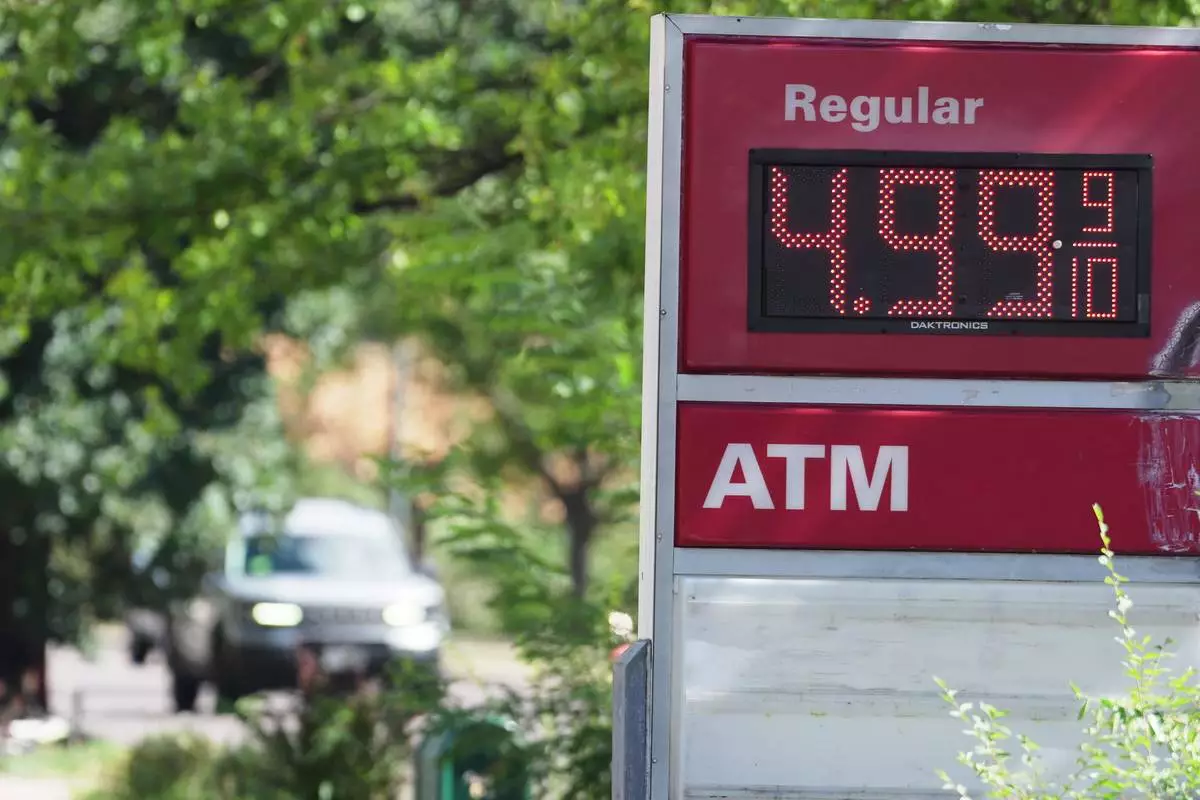
The per-gallon price for regular unleaded fuel is displayed electronically on a sign outside a Conoco gasoline station Wednesday, Sept. 9, 2026, in Denver. (AP Photo/David Zalubowski)
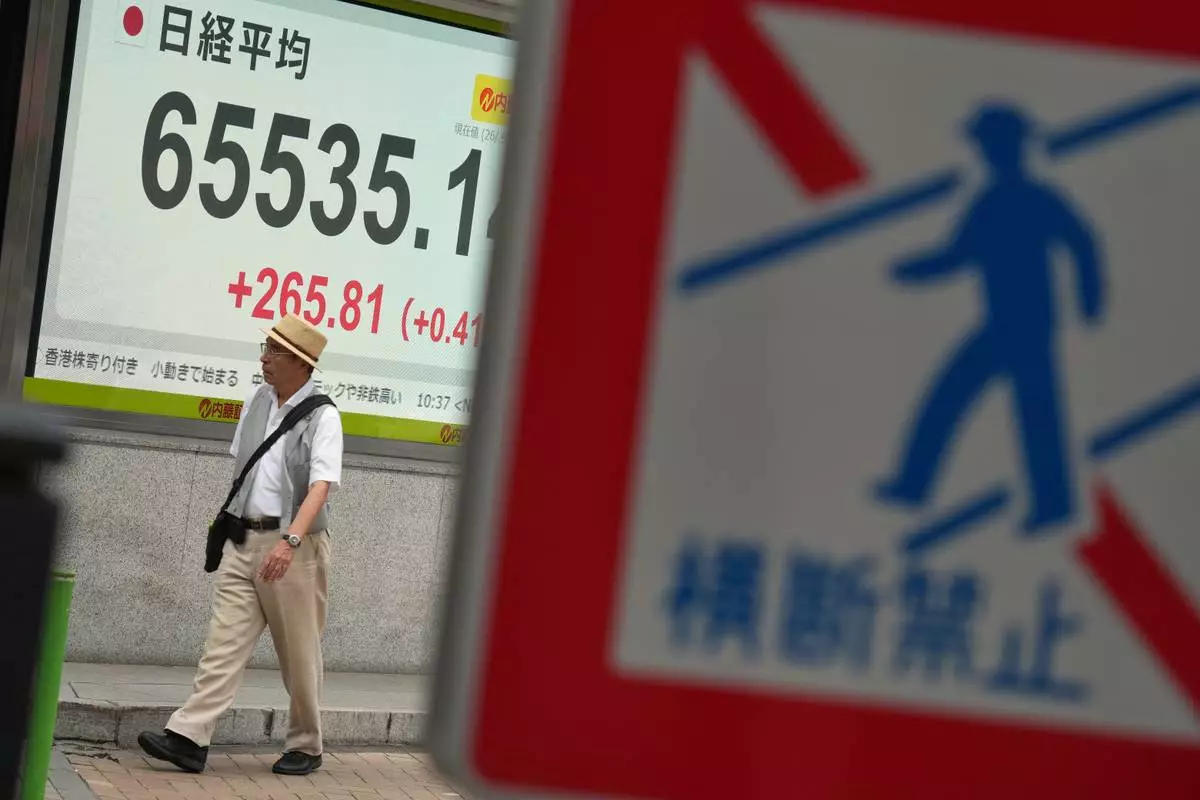
A person walks in front of an electronic stock board showing Japan's Nikkei index at a securities firm Wednesday, Sept. 9, 2026, in Tokyo. (AP Photo/Eugene Hoshiko)

A worker passes by a screen showing the Korea Composite Stock Price Index (KOSPI), SK Hynix and Samsung Electronics Co. stock price at the foreign exchange dealing room of the Hana Bank headquarters in Seoul, South Korea, Thursday, Sept. 10, 2026. (AP Photo/Ahn Young-joon)