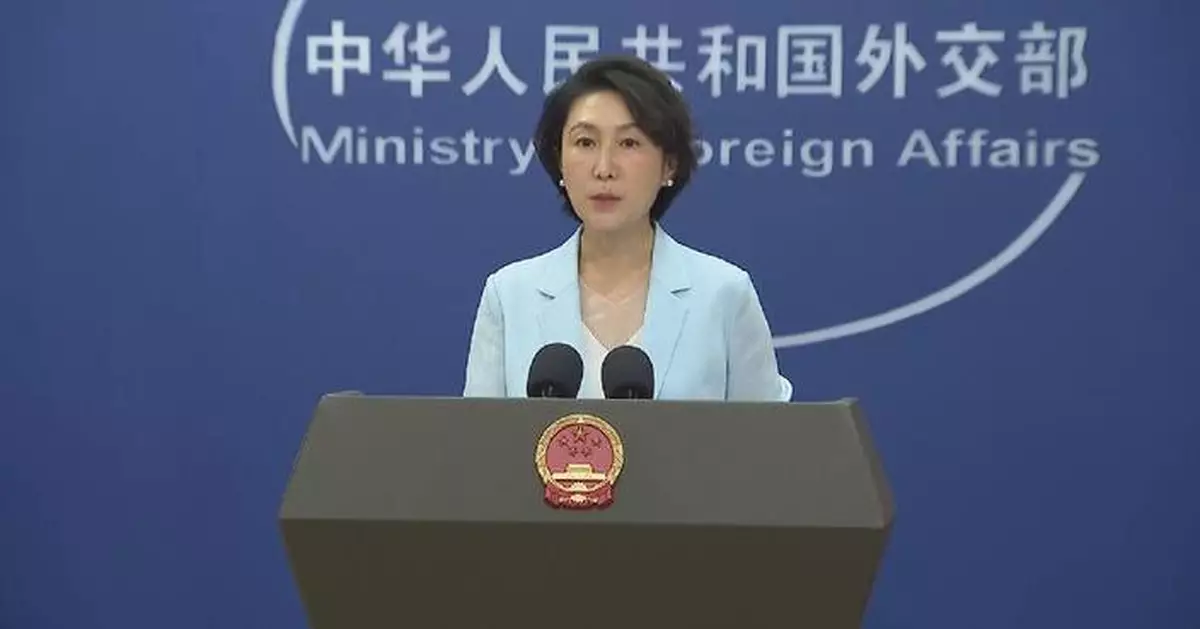
China is ready to work with all BRICS partners to help greater BRICS cooperation advance steadily and progress further, Chinese Foreign Ministry spokesperson Mao Ning said on Friday.
Mao made the remarks at a regular media briefing when asked about China's expectations for the 18th BRICS Summit.
"BRICS is the most important platform for solidarity and cooperation among emerging markets and developing countries in today's world. Since its establishment, BRICS countries have upheld the BRICS spirit of openness, inclusiveness and win-win cooperation, remained committed to safeguarding multilateralism, upholding fairness and justice, and pursuing common development, and have become a leading force of the Global South in both name and reality," said Mao.
"China attaches great importance to and actively participates in BRICS cooperation. President Xi Jinping will attend the upcoming summit and deliver an important speech, have in-depth exchanges with leaders of other countries on major issues including the current international situation, the development of the BRICS mechanism and the deepening of practical cooperation, and put forward China's important initiatives and proposals to chart the course for the high-quality development of greater BRICS cooperation," Mao said.
"China is willing to work with all BRICS partners to help greater BRICS cooperation advance steadily and go further, and make BRICS contributions to building a community with a shared future for humanity," she said.
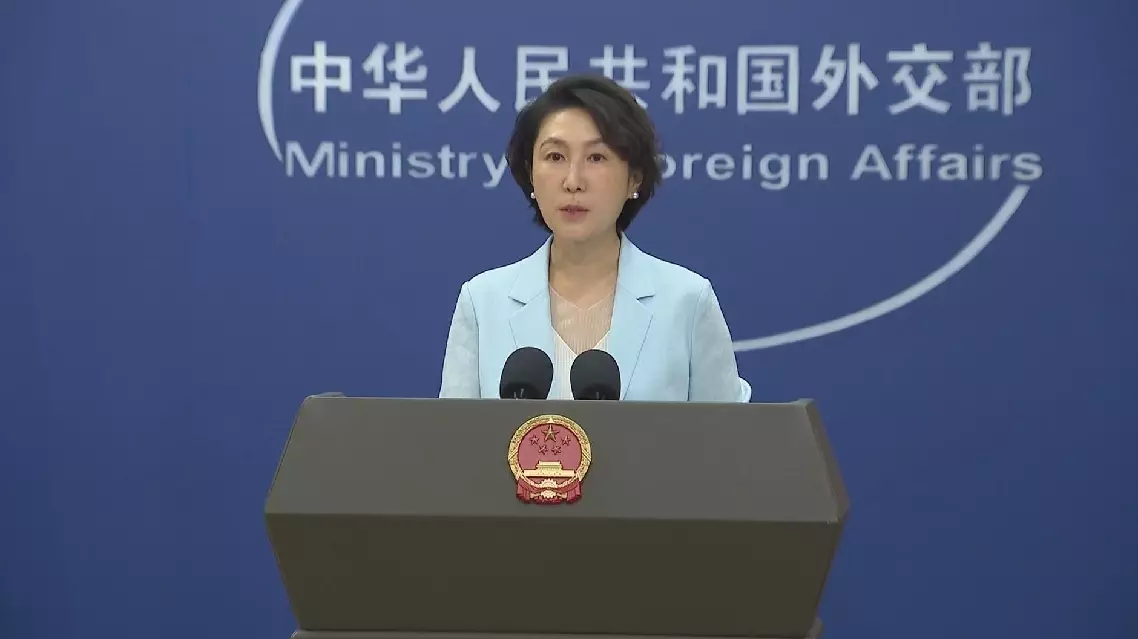
China willing to work with BRICS partners to advance greater BRICS cooperation: spokeswoman
China willing to work with BRICS partners to advance greater BRICS cooperation: spokeswoman
China willing to work with BRICS partners to advance greater BRICS cooperation: spokeswoman
NIO's manufacturing base in Hefei, east China's Anhui Province, the country’s leading new energy vehicle startup brand, showcases advanced intelligent manufacturing with a highly flexible assembly line that breaks the limitations of traditional fixed-mode production, boosting production flexibility, operational efficiency, and product quality.
At NIO's Second Advanced Manufacturing Base, vehicles with entirely different models and designs are assembled alternately on the same line. This flexible system supports millions of personalized configuration combinations, spanning a wide range of interiors and accessories to precisely meet the growing demand for customization among global EV consumers.
Besides flexible production, the plant's original zero-kilometer logistics model achieves a major breakthrough in supply chain efficiency. A dedicated connecting corridor links the vehicle assembly workshop directly to supporting component suppliers. Core auto parts such as vehicle seats are delivered to the assembly line in real time via conveyor belts, completely replacing traditional truck transportation. The innovative model substantially cuts intermediate logistics costs and greatly improves overall production efficiency and stability.
"Our automated and digital capabilities enable the plant to roll out one finished vehicle every minute. The workshop is equipped with 1,015 intelligent robots, and all our connections are 100 percent automated, effectively ensuring the safety of our vehicles and the quality of our products," said Yin Liang, a production supervisor.
In addition, AI-driven quality inspection acts as the final and critical safeguard for vehicle quality. The plant's inspection workshop deploys an unmanned detection system integrated with cloud computing, vehicle-mounted AI agents, and 5G technology.
Without human intervention or exposed detection devices, the intelligent system autonomously completes over 1,000 professional inspection items in just three minutes, including door actuation tests, air conditioning and seat functionality checks, and lighting system calibration.
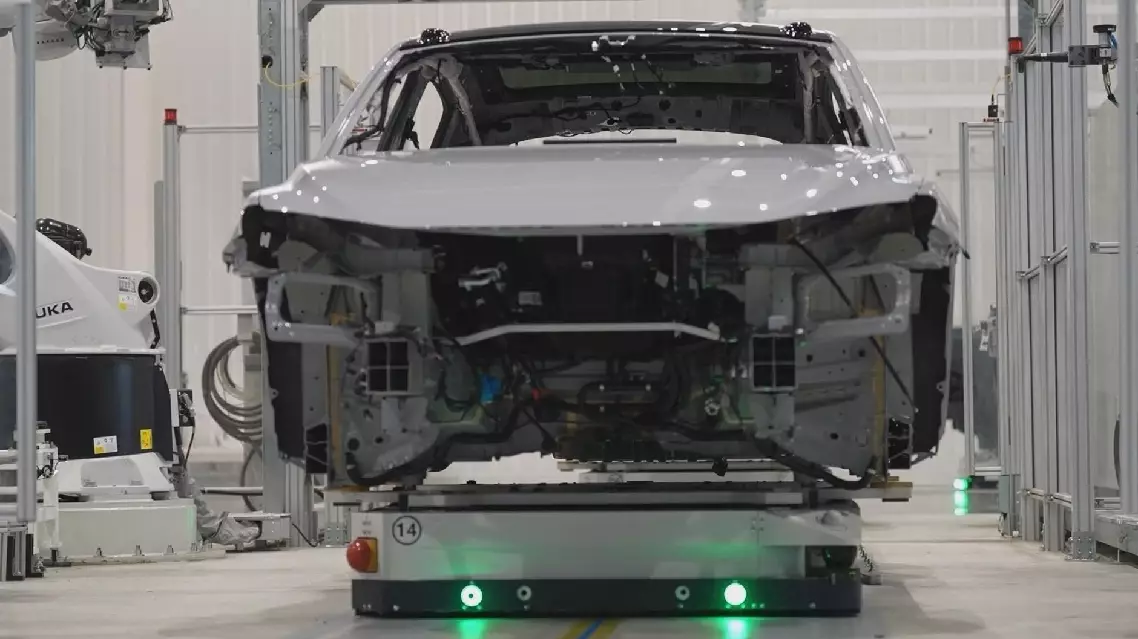
NIO’s Hefei plant highlights advanced, flexible assembly line