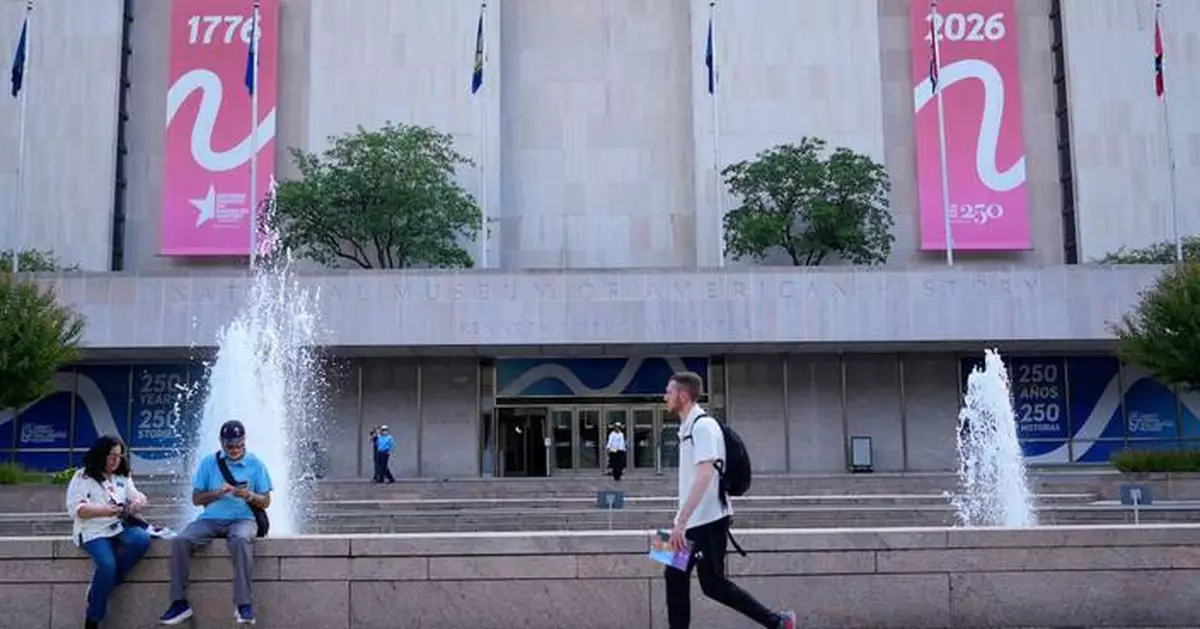
President Donald Trump wants the Smithsonian Institution to install a colossal statue of George Washington outside the National Museum of American History and a special exhibit honoring the nation's first president.
Trump, in social media posts late Friday, asked for an exhibit beginning now and continuing through Feb. 22, 2032, the 300th anniversary of Washington’s birth. For Constitution Day on Sept. 17, Trump asked the institution to install the 11-foot statue of Washington featured at the recent Freedom 250 IndyCar race in the museum's Flag Hall.
He also wants a 30-foot statue of Washington to replace the current “Infinity” sculpture by New York artist Jose de Rivera, commissioned by the federal government and installed in 1967.
“He is easily America’s Greatest Hero. Without him, our Country and our Freedoms wouldn’t exist,” Trump posted on Truth Social as he flew to his golf course in Ireland.
He complained that the museum currently doesn't mention Washington's fabled crossing of the Delaware River during the Revolutionary War.
Instead of a Center for Restorative History — a recently ended museum initiative to spotlight spotlights stories that have been excluded from the national historical narrative — Trump said the museum should have a “Center for American Heroes.”
It’s not clear that Trump has the power to order the museum to make the change. The Smithsonian operates outside the executive branch and its leadership is overseen by a Board of Regents that includes Vice President JD Vance, Chief Justice John Roberts, a bipartisan group of lawmakers and a group of citizens.
Trump in March revealed his intention to force changes at the Smithsonian with an executive order that targeted funding for programs that advanced “divisive narratives” and “improper ideology.”
The White House published a lengthy report this year that repeatedly complained the institution had not done enough to highlight Washington and other founders.
In July, he ordered his administration to install signs in front of the U.S. history museum telling visitors that some of the exhibits are inaccurate, part of his initiatives to reshape how the story of the United States is told.
Its top leader, Lonnie Bunch, announced this week he was stepping down at the end of the year.
Statues have also been a consistent theme in Trump’s many efforts to remake Washington. He wants to build a park along the Potomac River to display statues of 250 prominent Americans, and he has also installed a statue of Washington in his remodeled Rose Garden patio.
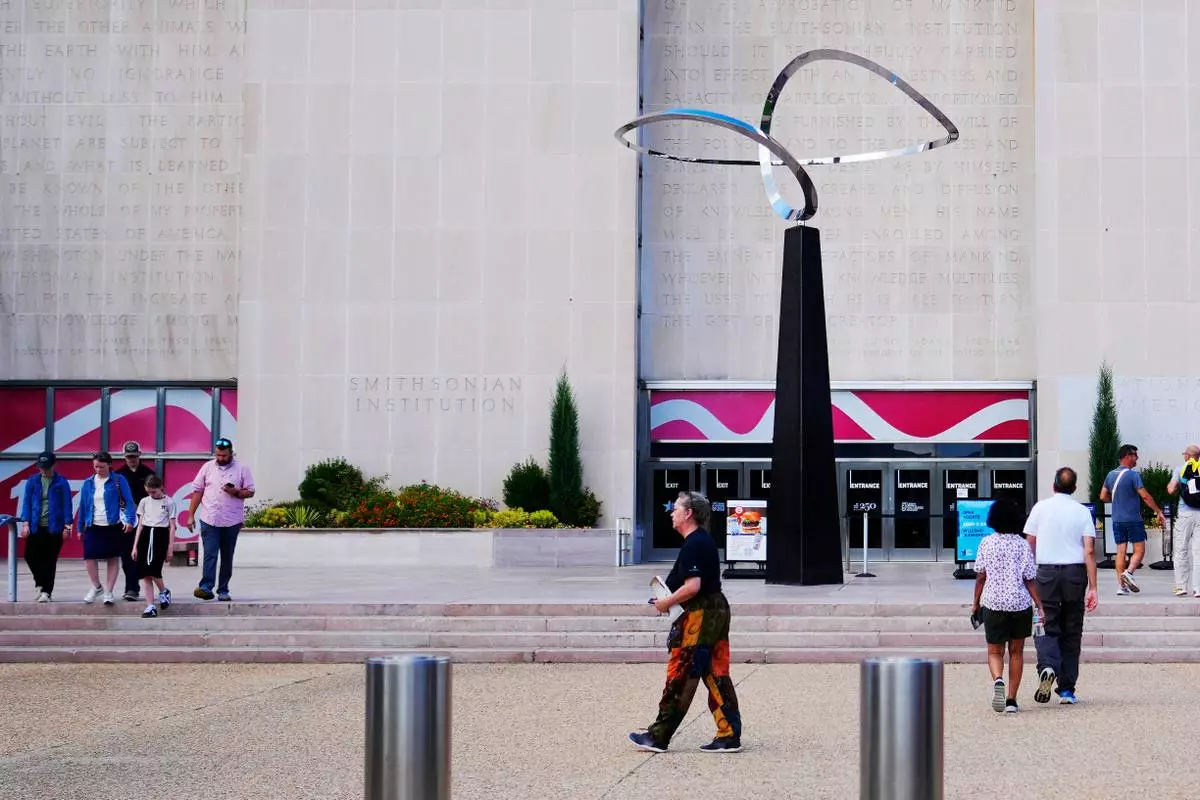
People walking past the "Infinity" sculpture outside the Smithsonian National Museum of American History on the National Mall in Washington, Tuesday, Sept. 8, 2026. (AP Photo/Pablo Martinez Monsivais)
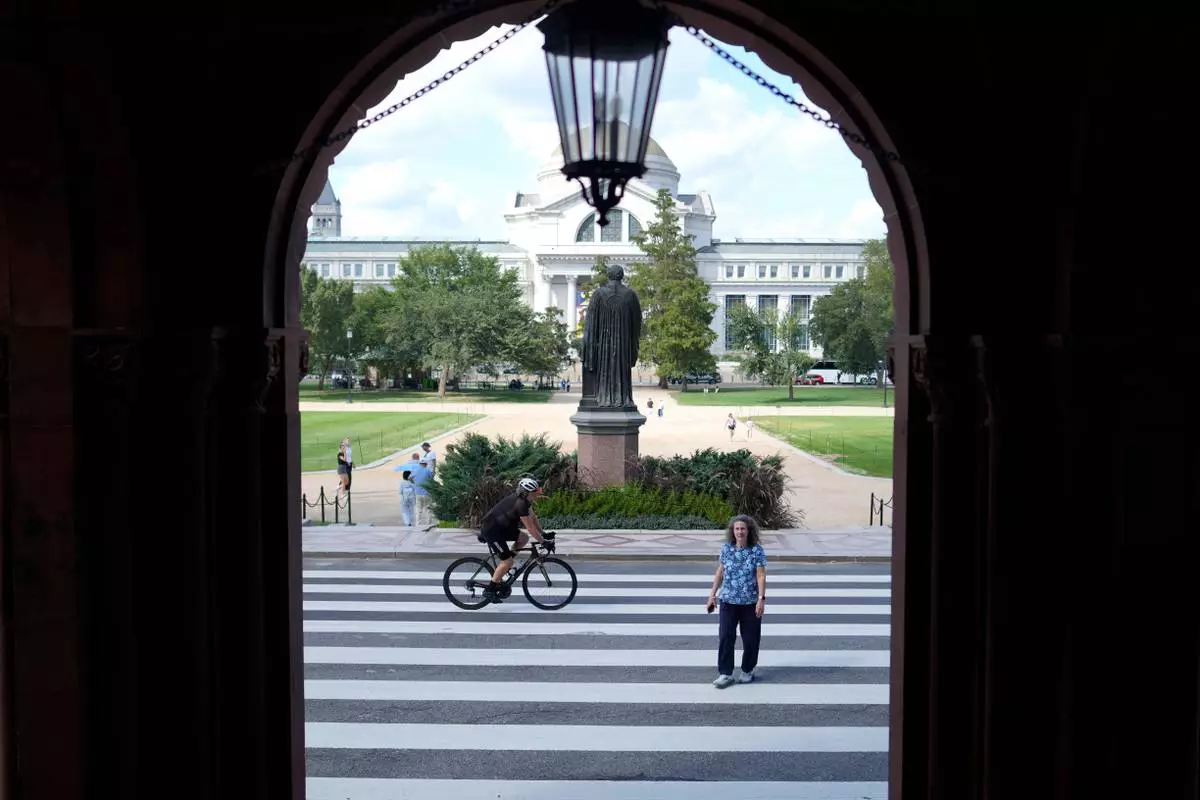
FILE - People are seen near the main entrance to the Smithsonian Institution Building, more commonly known as the Smithsonian Castle, which is closed for renovations, in Washington, Tuesday, Sept. 8, 2026. (AP Photo/Pablo Martinez Monsivais,FIle)
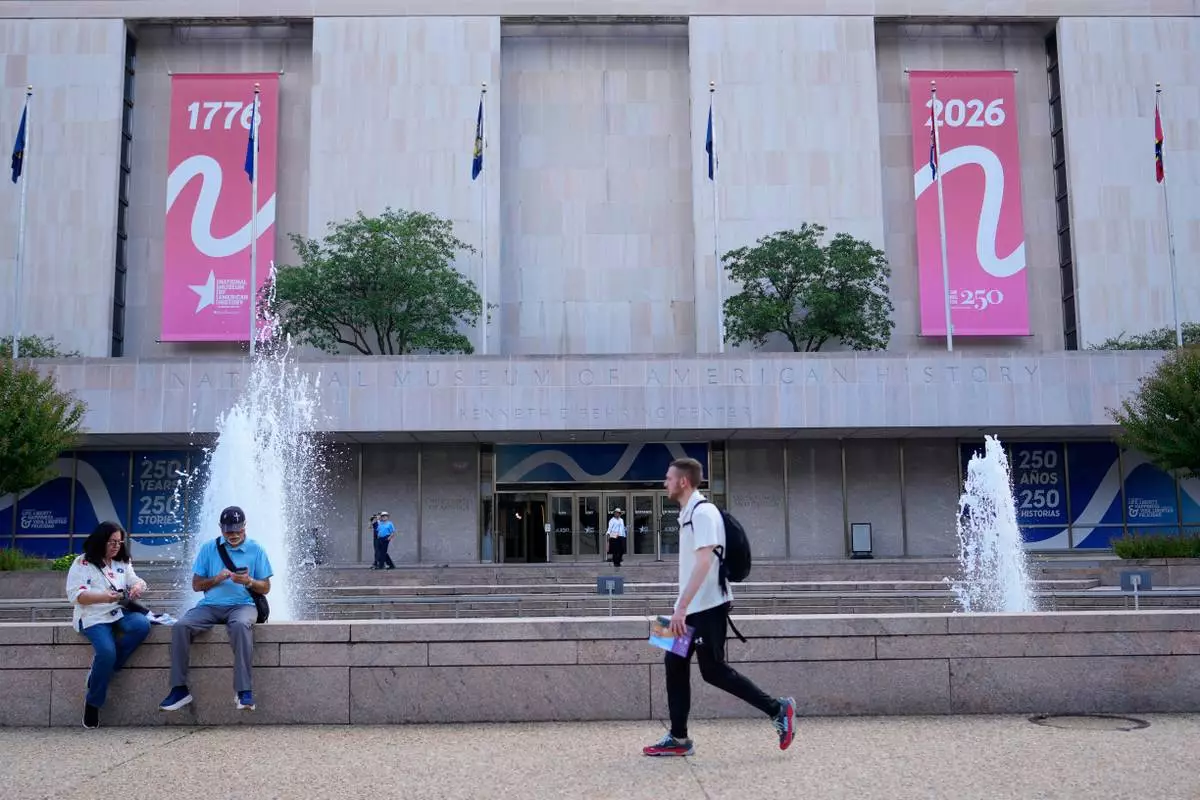
FILE - People visiting the Smithsonian Museum of American History on the National Mall in Washington, Tuesday, Sept. 8, 2026. (AP Photo/Pablo Martinez Monsivais,File)
LOS ANGELES (AP) — The U.S. Justice Department failed to secure felony convictions against most of the 102 protesters arrested in four major cities last year on charges of assaulting federal authorities — a record far below the norm in federal assault prosecutions.
All of the dozen cases that made it to trial, mostly in Los Angeles, ended in acquittal, mistrial or dismissal. Experts say that's surprising for a department known for its ability to win at trial. The last three felony assault cases, in LA and Portland, will go to trial this fall.
The dismal record has raised questions about rushed investigations and aggressive charging tactics by prosecutors under pressure to show the Trump administration is cracking down on people who assault law enforcement. It comes as the Justice Department is facing broader setbacks in politically charged investigations, with grand juries repeatedly refusing to return indictments and trial juries granting acquittals.
“Prosecutors tend to win because they control what cases they pursue and they have a lot of resources and discretion,” said Mary Fan, a former federal prosecutor and law professor at the University of Washington.
The fact that the government failed to win any felony assault convictions at trial calls into question “whether or not these charges should have ever been brought in the first place,” she said.
The Associated Press' analysis focused on arrests made during protests last summer and fall in LA, Chicago, Portland, Oregon, and Washington, D.C. — cities with significant protests where President Donald Trump sought to or successfully deployed the National Guard.
Then-Attorney General Pam Bondi said those who interfered with federal law enforcement would face “severe consequences.”
Most of the arrests — 102 — were for felony assault on a federal officer, which can carry a sentence of up to 20 years in prison. Of those cases, 41% were dismissed and 34% were pleaded down to misdemeanors. Ten people pleaded guilty to felony assault. Nine people got prison time.
Of those arrested on other charges, seven were sentenced to prison for offenses including arson and obstructing law enforcement. A handful of defendants have diversion agreements, meaning their case will be dismissed if they demonstrate good behavior.
The AP's analysis shows that the Justice Department’s record failed to meaningfully improve since December, when an initial assessment showed early struggles to prosecute people on the charges for which they were arrested.
The Justice Department said in a statement that federal prosecutors are right to prioritize cases against people accused of assaulting federal officers and that “each case is based on the facts.”
“If there are mitigating factors identified in a case, then prosecutors must also act appropriately to inform the court, and in some cases downgrade or drop charges," the department said.
It’s rare for federal prosecutors to lose at trial. In 2024, 82% of defendants charged with felony or misdemeanor assault were convicted at trial or with a plea deal, according to data from the Administrative Office of the U.S. Courts. AP’s analysis found that less than half of the protesters charged for either felony or misdemeanor assault were convicted.
In Portland, a jury couldn’t reach agreement on felony assault charges for Oriana Korol, who was playing clarinet in a marching band demonstrating outside the city’s ICE building last October when a scuffle involving officers broke out. Officers pepper sprayed her and pushed her to the ground, where she struck one with her foot, according to court documents.
After a mistrial, prosecutors filed a reduced misdemeanor assault charge. She pleaded guilty and was sentenced Sept. 1 to time served and one year of supervised release.
Her attorneys wrote in a court filing that she “has accepted responsibility for the bad choices she made over a few seconds that caused no injury.”
Jonathan Caravello, a lecturer at California State University Channel Islands, was acquitted of assault on a federal officer after a three-day trial. He was accused of throwing a tear gas canister deployed by immigration agents back at them while protesting a raid at a Southern California cannabis farm.
Caravello said he was trying to get the canister away from the crowd. Videos showed he had tossed it high above officers’ heads and it landed far behind them. The jury acquitted Caravello after a quick deliberation.
“They’re trying to get a chilling effect out of these charges,” said Caravello, who turned down a misdemeanor plea deal.
Michael Rabbitt was among six co-defendants accused of felony conspiracy to impede a government vehicle from accessing an ICE facility near Chicago last September.
The vehicle slowly advanced despite being surrounded by protesters, leading some to put their hands on it, Rabbitt said.
After the government dismissed charges against two of the defendants, defense attorneys requested transcripts of the grand jury proceedings that led to the conspiracy indictment. The government eventually dropped the conspiracy charge and proceeded on misdemeanor counts of impeding a federal officer.
The judge later reviewed the unredacted transcripts and admonished prosecutors for improper behavior before the grand jury. The charges were dismissed days before trial.
Rabbitt said he was proud they fought the charges.
“This case was bigger than us,” he said. “I’m proud that we won this case, not just for us, but for protesters across the country.”
Though many federal criminal cases end in plea deals, some legal experts say it's rare for felony assault to be pleaded down and may signal overcharging — filing a more severe initial charge so defendants will be more willing to plead guilty to one with a lighter sentence.
“I think when prosecutors bring charges ethically, they should be prepared to prove them beyond a reasonable doubt,” said Laurie Levenson, a former federal prosecutor who is a professor at Loyola Law School in Los Angeles.
The U.S. Attorney’s office overseeing Los Angeles said it brought the prosecutions in response to a “wave of violence against law enforcement officers who were doing their jobs." It voluntarily dismissed charges against some defendants after further investigation, it said.
LA prosecutors have arrested three additional people for felony assault at immigration-related protests this year. One pleaded guilty to a felony and two to misdemeanors.
In Chicago, all but one of 19 felony assault cases were dismissed. The U.S. Attorney’s offices in the Northern District of Illinois, District of Columbia and Oregon did not respond to requests for comment.
A man accused of throwing a Molotov cocktail at a hotel outside Los Angeles where federal authorities were staying was sentenced to five years in prison. Two others were sentenced to more than three years after pouring lighter fluid on a burning California Highway Patrol vehicle.
Federal judges sentenced eight people to decades in prison for their participation in a demonstration outside a detention center in Texas last July where a police officer was shot in the neck.
Three people were convicted at trial of conspiracy to impede or injure an officer for protesting outside a detention facility in Spokane, Washington, last June. The Spokane and Texas cases were not included in AP’s analysis because they did not occur in one of the four cities where Trump tried to or deployed troops.
__
Rush reported from Portland, Oregon. Associated Press writers Eric Tucker and Alanna Durkin Richer contributed from Washington.
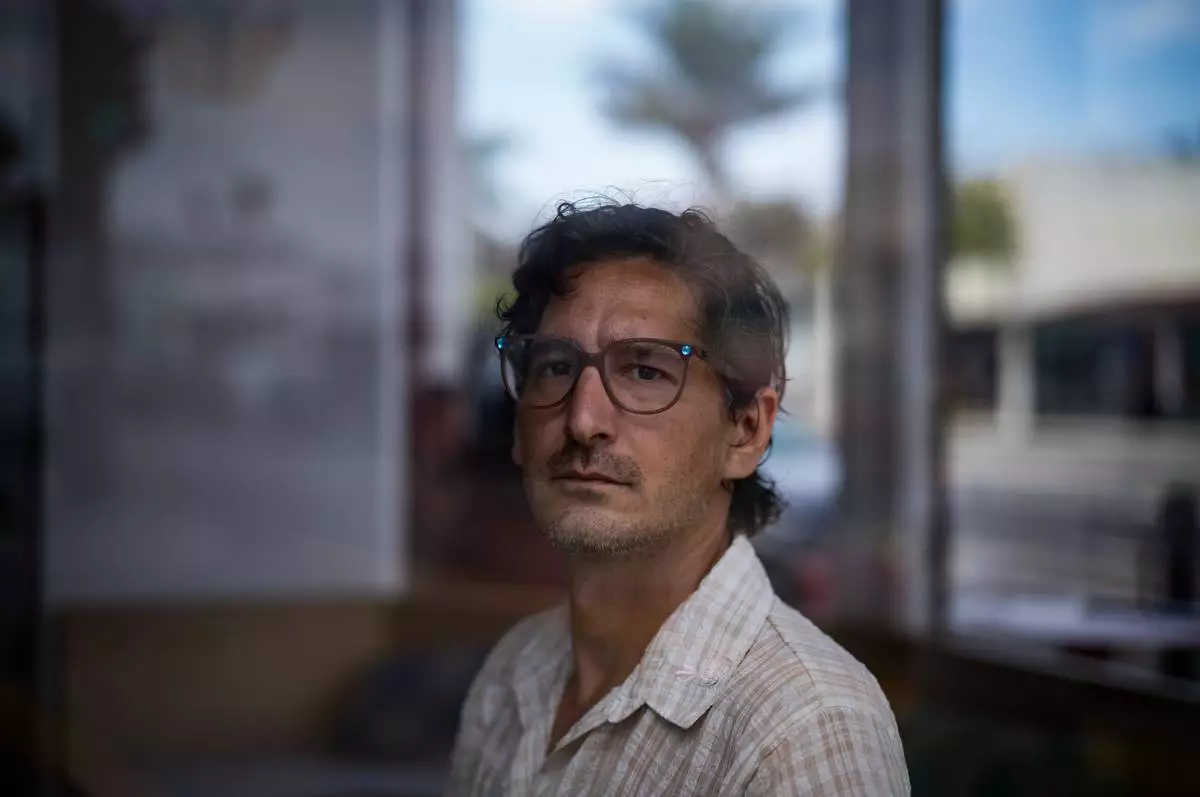
Jonathan Caravello, a lecturer at California State University Channel Islands, sits for a photo in Ventura, Calif., Friday, Aug. 28, 2026. (AP Photo/Jae C. Hong)
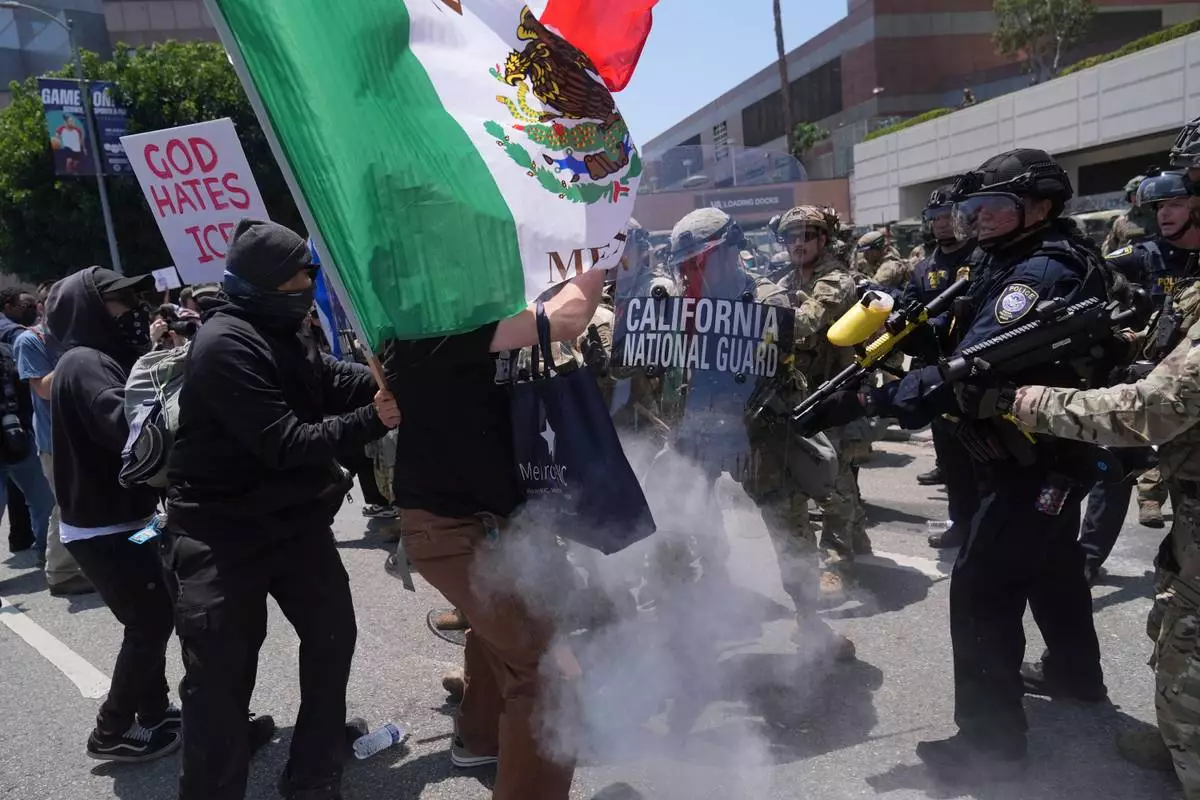
FILE - Protesters clash with authorities in downtown Los Angeles, June 8, 2025, following the night's immigration raid protest. (AP Photo/Jae Hong, File)
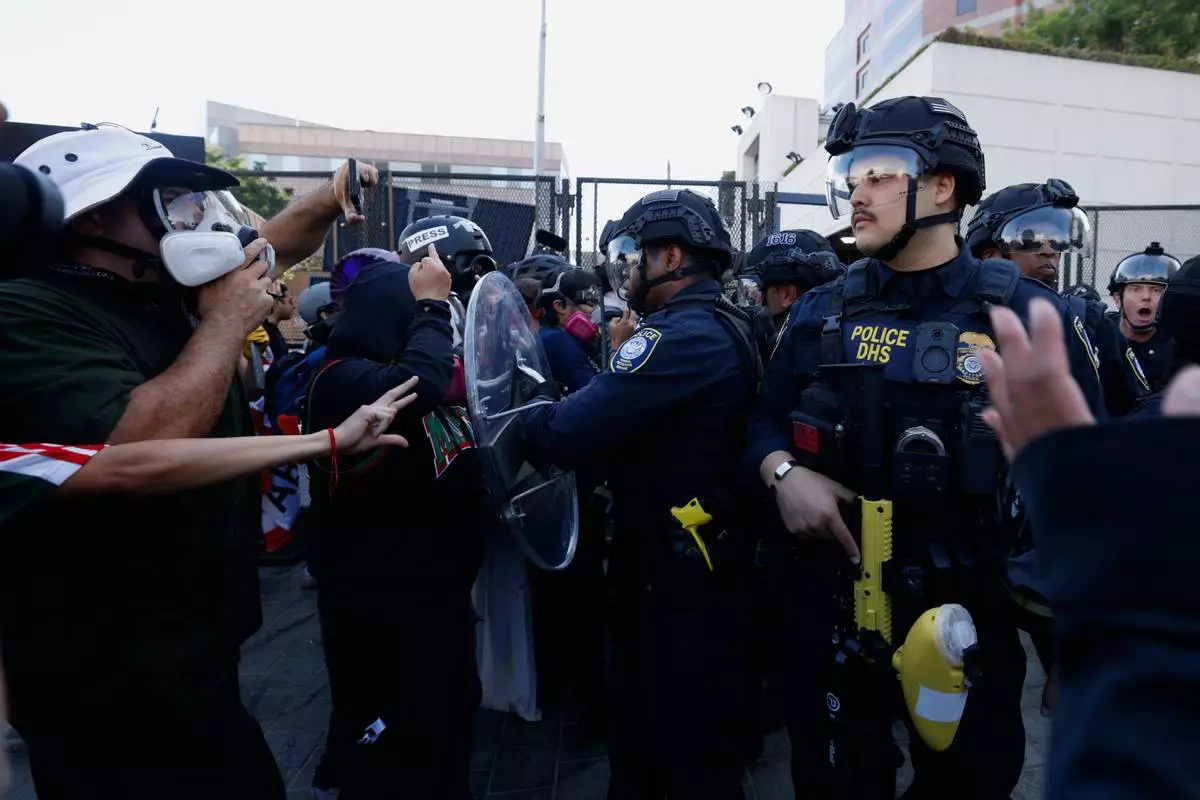
FILE - Protesters confront federal law enforcement agents outside the Metropolitan Detention Center on June 6, 2026, commemorating federal immigration raids and community protests one year ago in Los Angeles. (AP Photo/Jill Connelly, File)
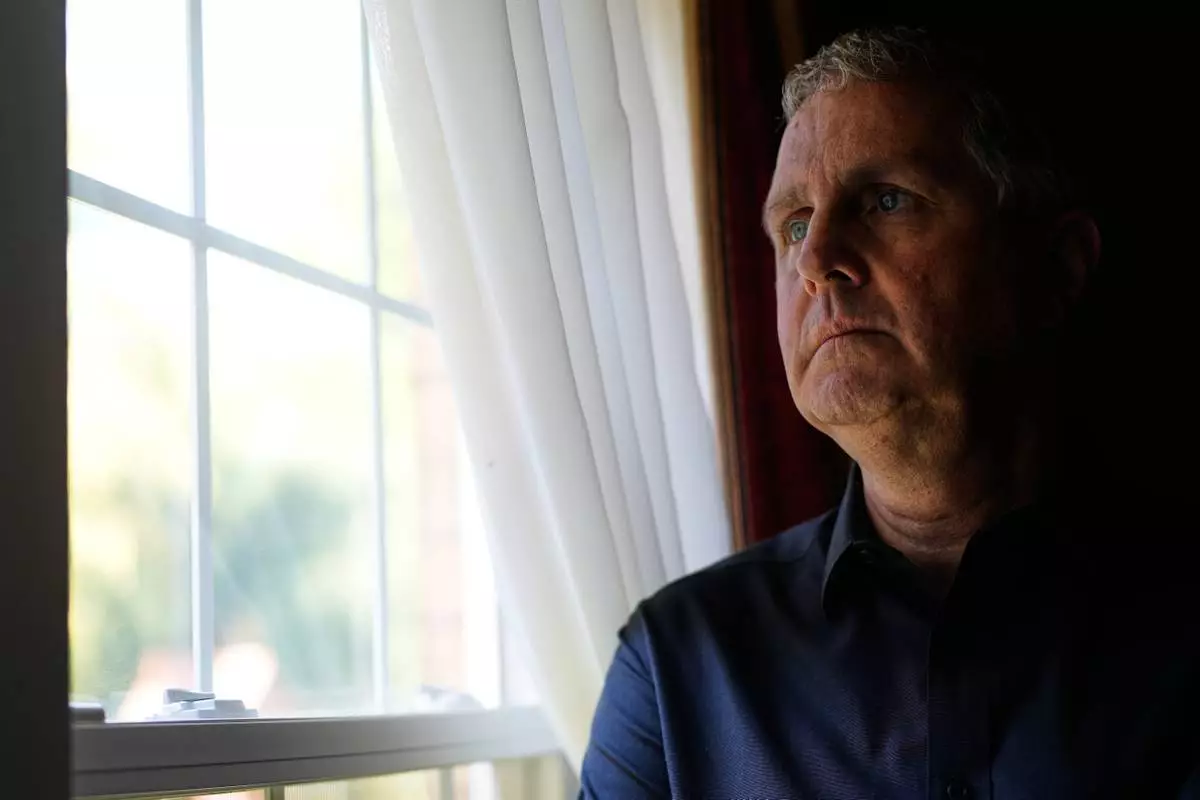
Michael Rabbitt poses for a photo at his home in Chicago, Thursday, Aug. 27, 2026. (AP Photo/Nam Y. Huh)