Skip to Content Facebook Feature Image

Yemen conflict enters new phase as clashes move toward Bab Al-Mandab Strait

China

China

China

Yemen conflict enters new phase as clashes move toward Bab Al-Mandab Strait

2026-09-13 21:24 Last Updated At:21:47

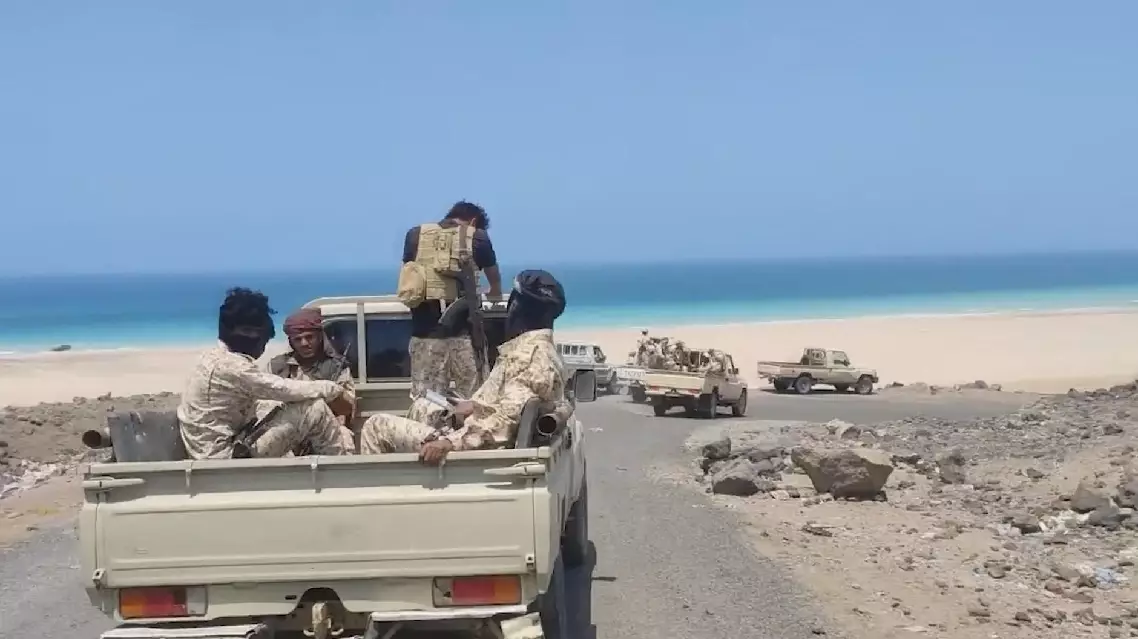
Conflict in Yemen between the Houthis--officially known as Ansar Allah, and Saudi-backed government forces has entered a new phase along the western coast, with clashes moving toward the Bab Al-Mandab Strait, a key maritime route in the region.

Houthis announced Friday that they had taken control of six districts in the western provinces of Taiz and Al-Hudaydah, covering about 5,400 square kilometers, in an operation that began on Sept. 3.

The group also said commercial ships would not be targeted, with the exception of Saudi vessels.

"There are no implications for the security and safety of navigation in the Red Sea, and there is no reason for concern in this regard. We assure everyone that there is no cause for concern about maritime security. Navigation is safe and stable, operating normally and smoothly, and there are no intentions in this regard," said Hizam al-Asad, a member of the Political Bureau of Ansar Allah (Houthis).

Yemeni government sources said that Houthis has also taken control of the Mayun Island, also known as Perim, in the Bab Al-Mandab Strait, a strategic waterway linking the Red Sea with the Gulf of Aden.

In response, forces loyal to Yemen's internationally recognized government, with backing from Saudi Arabia, launched a military operation described as a "kill zone". The operation designates areas along the western coast, including Al Mokha and Dhu Bab, as zones for intensive military strikes.

"The Israeli enemy is trying today, in various ways, to strengthen its presence near the Bab Al-Mandab Strait by building relations with Somaliland. It has also made significant moves and visits to Al Mokha and other areas. However, recent developments have weakened this strategy and undermined the plans and arrangements Israel had built," said Rashad Al-Wutairi, a military expert.

The escalation is now extending beyond Yemen's front lines, with fighting reaching areas that overlook the southern entrance to the Bab Al-Mandab Strait, one of the world's most strategically important shipping routes.

The developments are also raising concerns beyond Yemen. Egyptian government has formed a crisis cell, a high-level committee tasked with monitoring the situation along Yemen's western coast. Egyptian government is concerned that any disruption to shipping through the Red Sea could have a direct impact on traffic through the Suez Canal, a vital artery for global maritime trade.
Yemen conflict enters new phase as clashes move toward Bab Al-Mandab Strait

Yemen conflict enters new phase as clashes move toward Bab Al-Mandab Strait
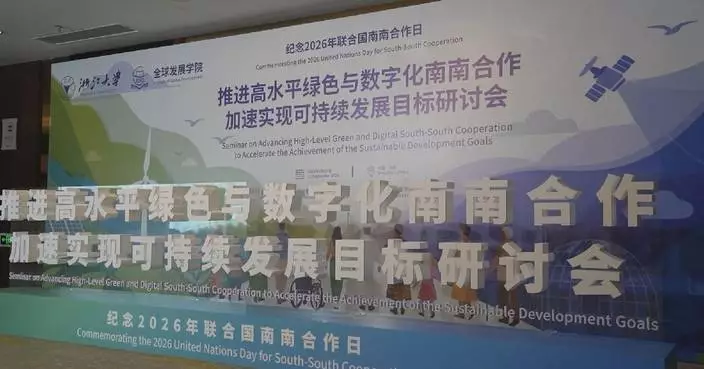
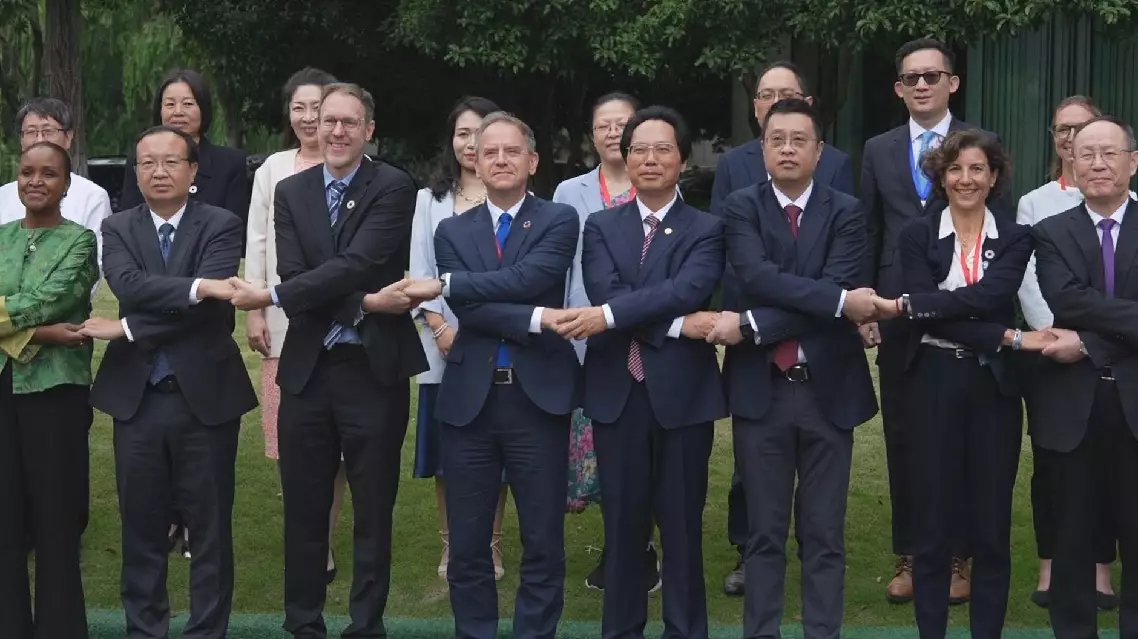
A United Nations Development Programme (UNDP) forum in Hangzhou, east China's Zhejiang Province, explored how developing countries can work together on low-carbon development, digital technology and supply chains.

The two-day event, held in Hangzhou on Friday and Saturday, to mark the United Nations Day for South-South Cooperation, drew about 100 government officials, representatives of UN agencies and academics to discuss ways of translating policy commitments into practical projects.

Observed annually on Sept. 12, the UN day commemorates the 1978 Buenos Aires Plan of Action, which promoted technical cooperation and the exchange of knowledge and resources among developing countries.

UNDP Resident Representative in China Stefan Liller said the agency has worked closely with the Chinese government through the Global Development Initiative and the Global Development and South-South Cooperation Fund.

"[The] UNDP has worked very closely with the Chinese government under the Global Development Initiative, particularly implementing projects under the Global Development and South-South Cooperation Fund -- 39 projects across 26 countries, benefiting 18 million people in Africa, Latin America and Asia-Pacific." Liller said.

For the event's participants, the forum also offered a chance to examine China's experience in technology and development.

"[In the] South-South region, they can cooperate with each other. They could partner in AI, technology, [and] others like that, [and] also see how China is developing or [how] China is leading the South-South cooperation," said Mani R. Lamichhane, chief of the Nepal Tourism Board's Gandaki Province office in Pokhara.

The discussions also examined China's role in UN procurement and humanitarian supply chains.

"A lot of goods that the UN is procuring are made in China. We get to our most cost-efficient supply chain. We're looking at China as also providing those cost efficiencies, allowing us to be more rapid in also our delivery on the ground and to have a reflection on maybe co-creation when it comes to innovation and sustainability," said Sophie Muller, UNHCR representative in China.

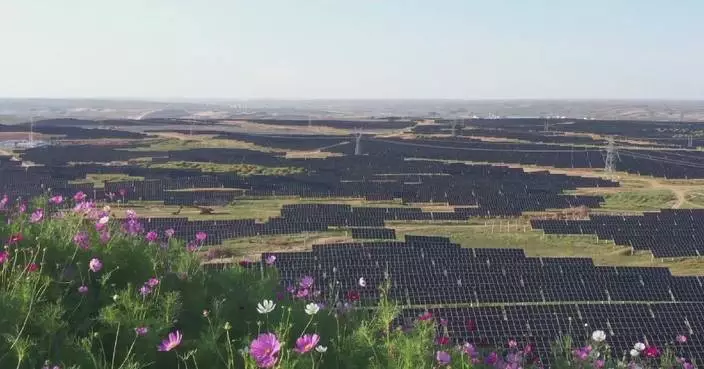
The participants also visited a low-carbon industrial park and a Hangzhou company working on embodied artificial intelligence and robotics, connecting the policy discussions with the city's green and digital development efforts.

UNDP forum explores green, digital cooperation among Global South countries

UNDP forum explores green, digital cooperation among Global South countries

Recommended Articles