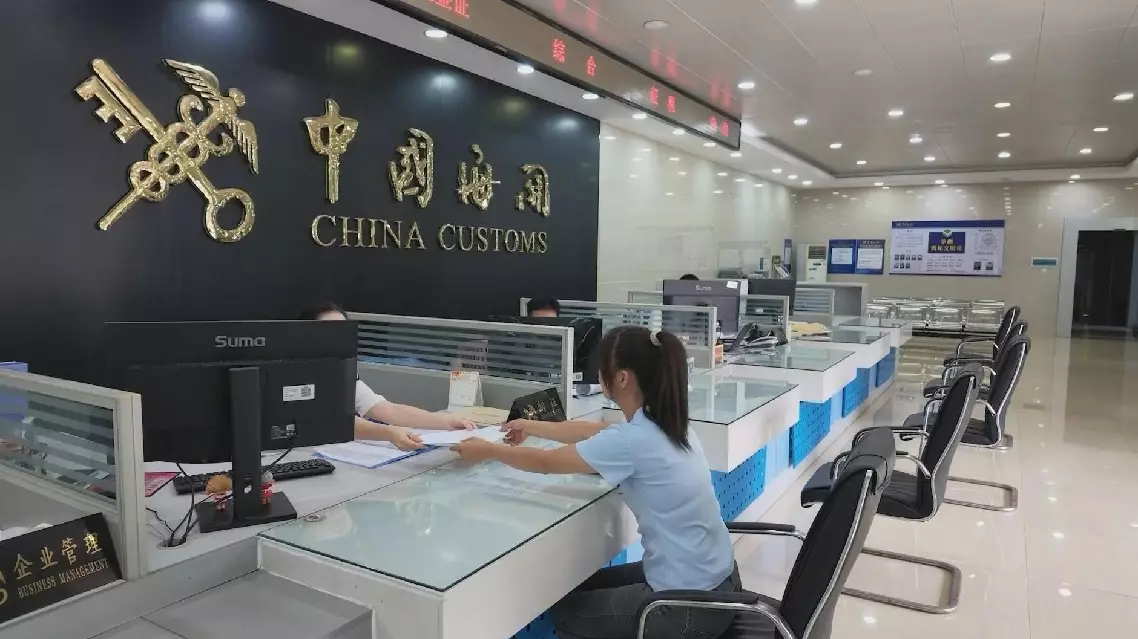
The first batch of foreign trade cargo to be shipped through the Pinglu Canal has completed customs clearance, with the final consignment arriving at Nanning Port in south China's Guangxi Zhuang Autonomous Region on Saturday.
The cargo is scheduled to leave Nanning Port on Sept 16 aboard the Beigang Nanning Borun, the first river-to-sea direct foreign trade vessel on the Pinglu Canal. The ship will sail via the canal directly to Can Tho Port in Vietnam.
Nanning Customs said it had contacted enterprises in advance to explain customs clearance policies to facilitate the process. It also coordinated with terminal and port authorities to establish a customs–port–enterprise coordination mechanism, enabling real-time tracking of key junctures such as cargo transportation, delivery to port, and arrival at port.
The 134.2-km Pinglu Canal, which links the Xijiang River shipping route in the north with the Beibu Gulf in the south, will become operational on Sept 16. It is China's first major river-to-sea canal project that has been planned and coordinated at the national level since 1949.
Designed to accommodate vessels of up to 5,000 tons, the canal stretches along China's New International Land-Sea Trade Corridor, a strategic route linking the country's inland regions with the Association of Southeast Asian Nations and other global markets.
1st batch of foreign trade cargo via China's Pinglu Canal completes customs clearance
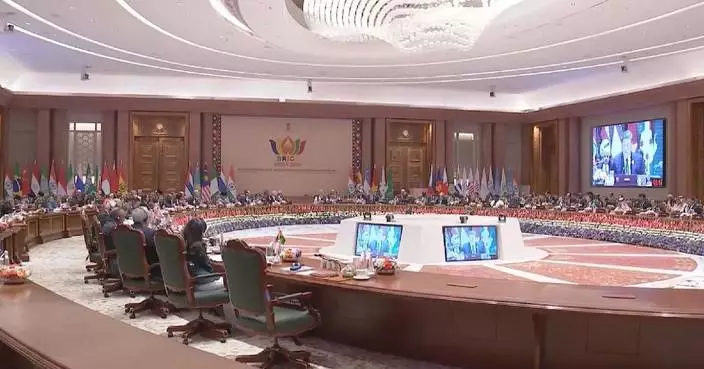
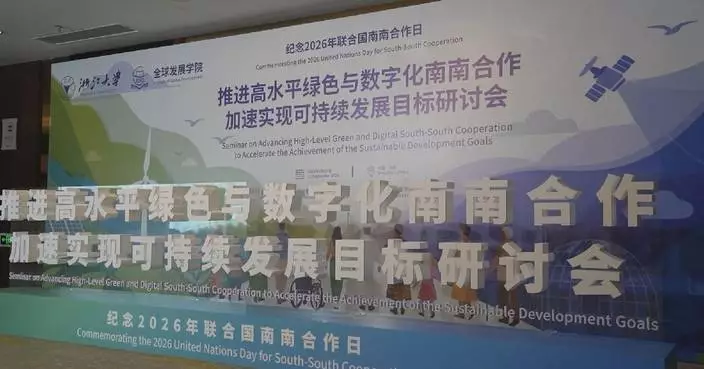
A United Nations Development Programme (UNDP) forum in Hangzhou, east China's Zhejiang Province, explored how developing countries can work together on low-carbon development, digital technology and supply chains.
The two-day event, held in Hangzhou on Friday and Saturday, to mark the United Nations Day for South-South Cooperation, drew about 100 government officials, representatives of UN agencies and academics to discuss ways of translating policy commitments into practical projects.
Observed annually on Sept. 12, the UN day commemorates the 1978 Buenos Aires Plan of Action, which promoted technical cooperation and the exchange of knowledge and resources among developing countries.
UNDP Resident Representative in China Stefan Liller said the agency has worked closely with the Chinese government through the Global Development Initiative and the Global Development and South-South Cooperation Fund.
"[The] UNDP has worked very closely with the Chinese government under the Global Development Initiative, particularly implementing projects under the Global Development and South-South Cooperation Fund -- 39 projects across 26 countries, benefiting 18 million people in Africa, Latin America and Asia-Pacific." Liller said.
For the event's participants, the forum also offered a chance to examine China's experience in technology and development.
"[In the] South-South region, they can cooperate with each other. They could partner in AI, technology, [and] others like that, [and] also see how China is developing or [how] China is leading the South-South cooperation," said Mani R. Lamichhane, chief of the Nepal Tourism Board's Gandaki Province office in Pokhara.
The discussions also examined China's role in UN procurement and humanitarian supply chains.
"A lot of goods that the UN is procuring are made in China. We get to our most cost-efficient supply chain. We're looking at China as also providing those cost efficiencies, allowing us to be more rapid in also our delivery on the ground and to have a reflection on maybe co-creation when it comes to innovation and sustainability," said Sophie Muller, UNHCR representative in China.
The participants also visited a low-carbon industrial park and a Hangzhou company working on embodied artificial intelligence and robotics, connecting the policy discussions with the city's green and digital development efforts.
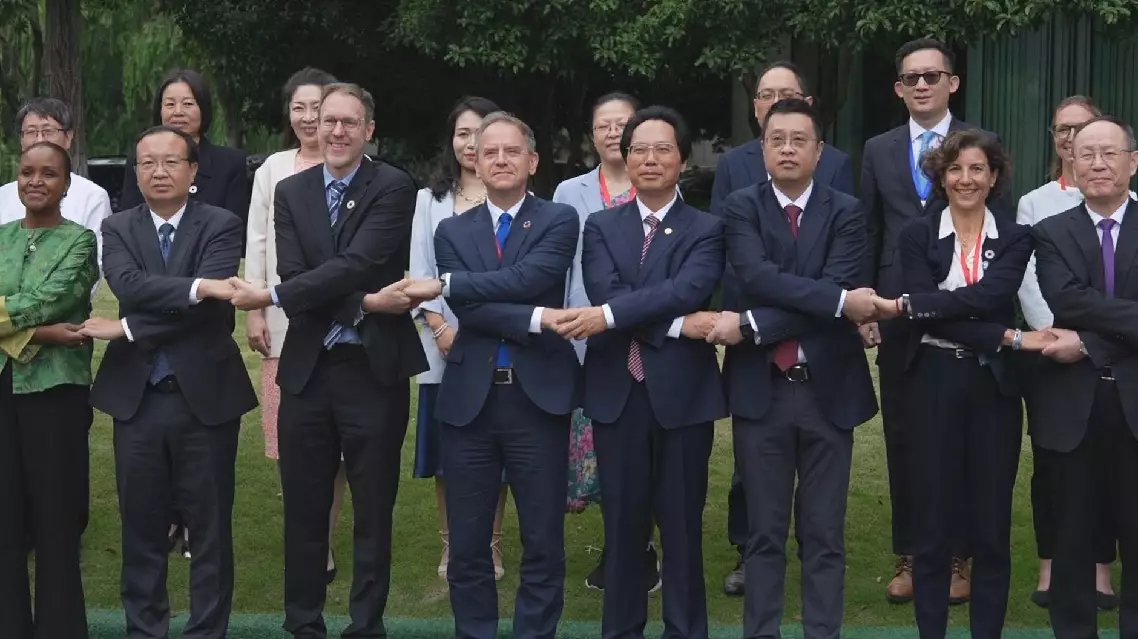
UNDP forum explores green, digital cooperation among Global South countries