RIO DE JANEIRO (AP) — A Brazilian Supreme Court justice on Sunday unsealed an investigation into the production of a film about former President Jair Bolsonaro, pointing in his decision to suspicions the movie’s financing had ties to a criminal network.
The suspicions laid out in Justice Flávio Dino’s decision may complicate matters further for Sen. Flávio Bolsonaro, only weeks before October’s national elections in which he will challenge President Luiz Inácio Lula da Silva.
Sen. Bolsonaro, the ex-leader's eldest son, is under investigation for corruption, money laundering and tax evasion for receiving millions of dollars from a disgraced banker to finance the biopic about his father, titled “Dark Horse.”
Dino, a Lula appointee who oversees one of the investigations into the film, said the hypothesis that there existed a sophisticated scheme for the allocation and diversion of public funds involving federal congressional budget amendments and the Sao Paulo city government had strengthened.
On Thursday, Brazil’s federal police targeted federal lawmaker and Bolsonaro ally Mário Frias in an operation.
Police seized documents from the film’s production company and from Frias, who sent about 2 million reais ($400,000) to a nonprofit linked to the film. They suspect a criminal organization channeled funds to companies that were irregularly subcontracted, without evidence that the contracted services were provided.
The judge said Sunday that there were strong indications that Frias, who held a cabinet position during Bolsonaro’s term, played a central role within the alleged criminal network.
The network may also have links to the criminal organization the First Command of the Capital, or PCC, Dino said. U.S. President Donald Trump declared the group a foreign terrorist organization earlier this year.
Frias denies wrongdoing. “I never allocated any congressional budget funds to finance or benefice the production of the film in any way,” Frias said Sunday in a post. He had previously described Thursday’s operation as a “smoke screen.”
Brazil’s Supreme Court has been embroiled in turmoil these past few weeks, with suspicions of graft, political bias and police interference looming over several of its members.
Dino recently clashed with Justice André Mendonca, who was appointed by Bolsonaro. On Tuesday, Mendonca removed federal police Director-General Andrei Rodrigues and the force’s intelligence director, Leandro Almada, for allegedly leading illegal investigations against Mendonca.
Then on Wednesday, Dino overruled his colleague and restored the two senior police officials to their posts. Chief Justice Edson Fachin later suspended their opposing decisions.
The chaos gripping the court stems from the collapse of Banco Master, a mid-sized bank worth up to $16 billion in assets, which was shut down last November after a sprawling investigation into a fraud scheme involving billions of reais.
Banco Master’s former CEO Daniel Vorcaro was arrested earlier this year. It has since emerged that he had links with many high-ranking politicians. They include Sen. Bolsonaro but also several Supreme Court justices, including Alexandre de Moraes who oversaw the case in which Jair Bolsonaro was sentenced to 27 years in prison for attempting a coup.
“We are experiencing the most serious crisis in the history of the Supreme Court and certainly one of the most serious in our turbulent republican history,” said former ministers, economists, executives and the presidents of trade union federations on Sunday in a letter to Fachin published by local media.
“Investigating the facts and holding accountable those who may have violated the law and the dignity of their positions are essential so that we can regain confidence in the institutions and preserve our democracy,” they added.
Follow AP’s coverage of Latin America and the Caribbean at https://apnews.com/hub/latin-america
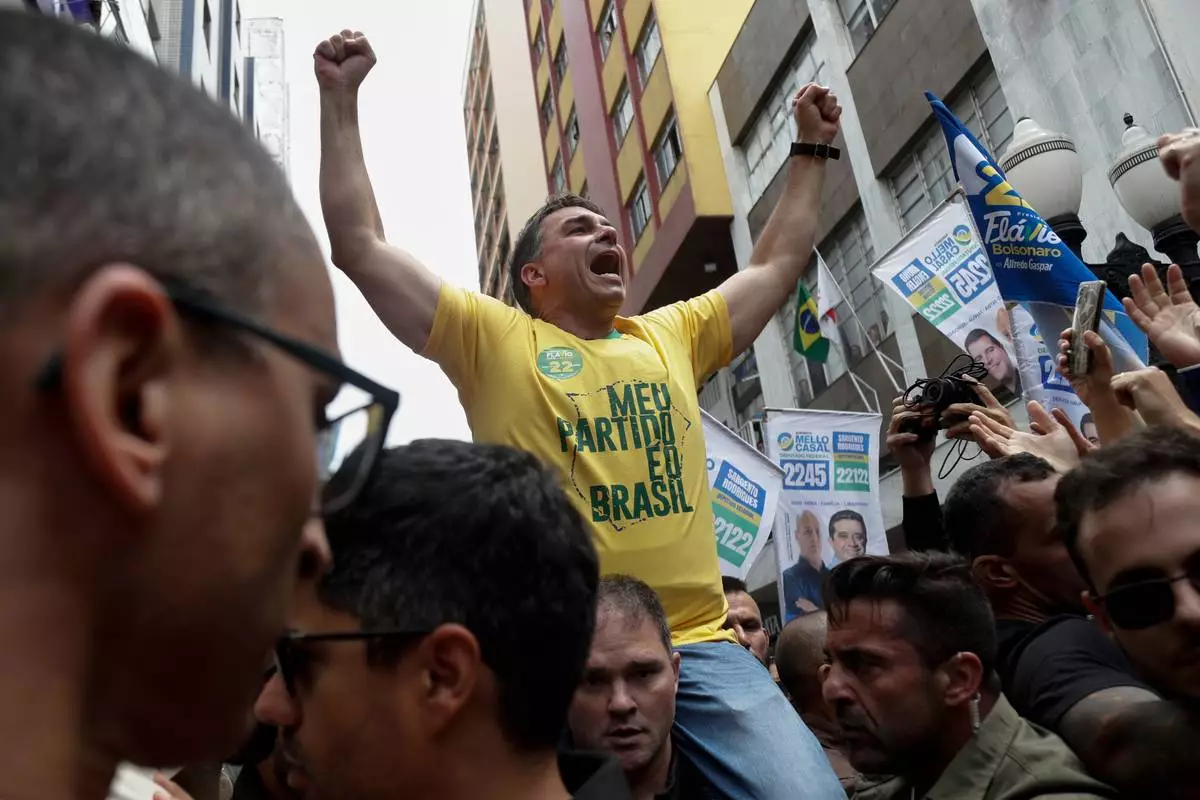
Presidential candidate Flavio Bolsonaro rides on a man's shoulders during his campaign rally at the site where his father, former President Jair Bolsonaro, was injured by a stabbing attack in 2018, in Juiz de Fora, Minas Gerais state, Brazil, Wednesday, Sept. 9, 2026. (AP Photo/Bruna Prado)
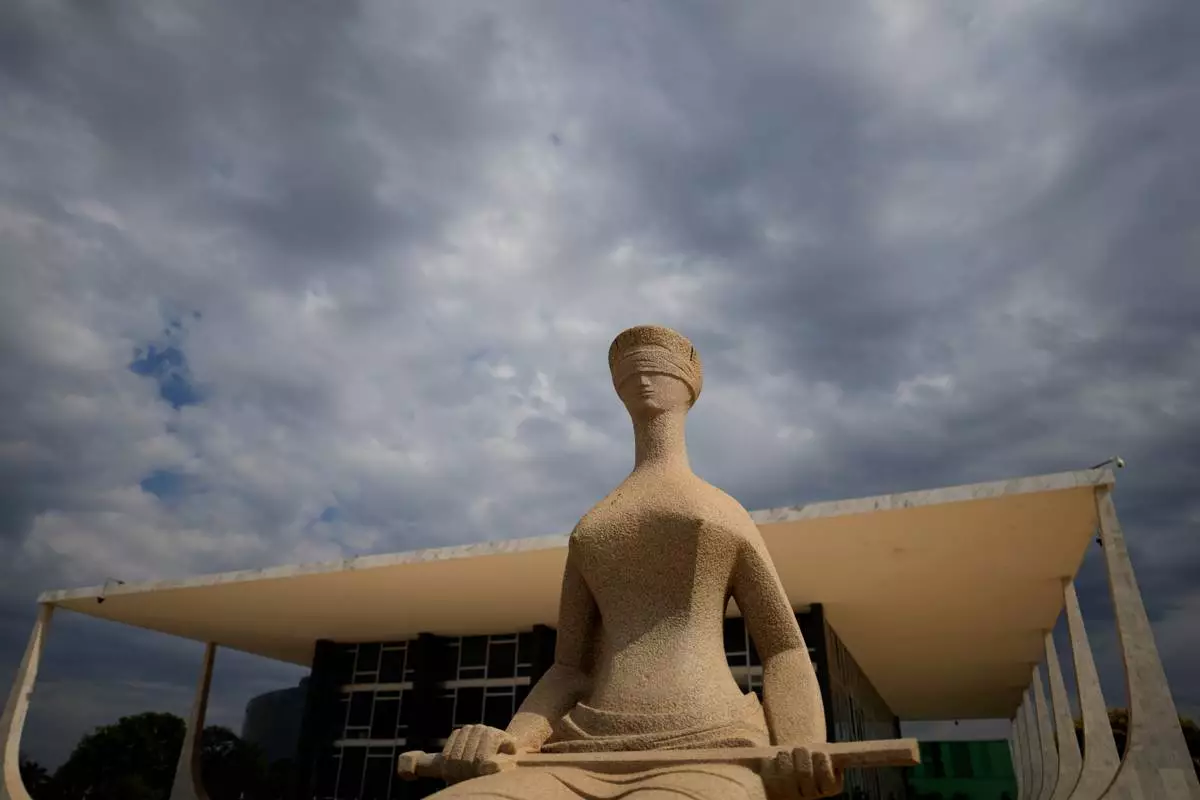
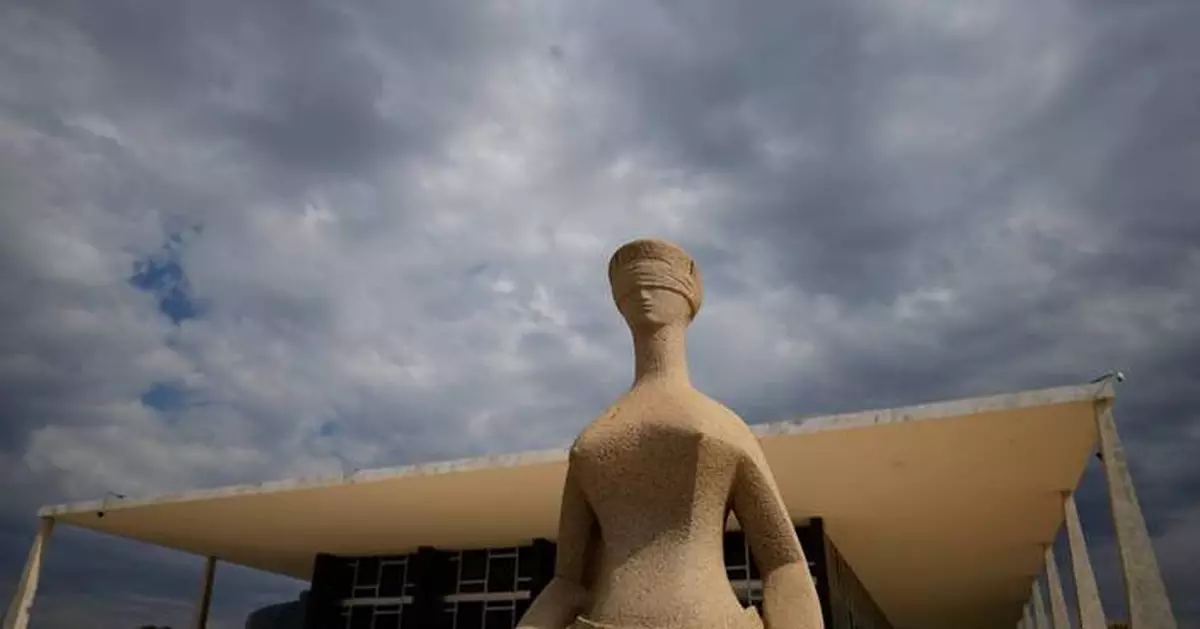
The Statue of Justice stands outside the Supreme Court building ahead of a plenary session in Brasilia, Brazil, Wednesday, Sept. 2, 2026. (AP Photo/Eraldo Peres)
Cornell University’s handling of an alleged fraternity house gang rape is raising questions about how a decades-old federal civil rights law shapes colleges' treatment of campus sexual assault.
The focus on Title IX, which prohibits sexual discrimination in education, comes after a woman identified only as Jane Doe filed a lawsuit last month against Cornell and seven fraternity members.
She said she was assaulted at the Chi Phi fraternity house in October 2024 after being pressured into snorting the fast-acting sedative ketamine, smoking marijuana and drinking alcohol. The accused men have all denied her allegations, either saying the sexual activity was consensual or they weren’t involved.
Title IX was best known for most of its 54 years for opening doors for female athletes. But guidance issued in 2011 under President Barack Obama's administration made clear it also protects people who say they were sexually assaulted or harassed.
The rules have changed with new presidential administrations, but Title IX proceedings are intended to help colleges decide how to discipline the people involved, regardless of whether they face criminal or other legal repercussions.
A sexual assault case can be handled in criminal court and through the campus-run Title IX disciplinary process at the same time.
In theory, the criminal proceeding could lead to prison time and the Title IX case to expulsion.
In reality, serious consequences are rare in either system, said Megan Greeson, a professor of community psychology at DePaul University. She was among the authors of a review of studies involving 288,066 cases that found around 20% of those reported to police are prosecuted and 8% lead to convictions.
Jane Doe was no exception. Days after she gave her first substantial interviews to campus police, the county district attorney in upstate New York decided not to prosecute.
Long after that, Jane Doe believed the criminal investigation was ongoing. Her attorney, Thomas Giuffra, said she was “misled.”
Her case illustrates a common complaint with the dual-track system. Greeson said she often hears: “What do you mean there’s two different investigations?”
On the surface, Title IX investigations look a lot like police investigations. Witnesses are interviewed, and the accused often hire attorneys. The process is so demanding that many victims drop their case or choose to go an informal route, in which the accused might be asked not to take classes with the accuser, or to switch universities — often with no mark on their record.
When cases proceed to a hearing, schools have a lower bar for determining culpability than the justice system’s standard of beyond a reasonable doubt. Title IX requires schools to find an accused student responsible if the evidence shows the allegations are more likely true than not.
Beyond expulsions, consequences can include suspensions, loss of scholarships or withholding of a degree. A culpability finding can be noted on transcripts, which can make it difficult to get into graduate school or to obtain a state license in certain fields.
At some universities, including Cornell, Title IX offices handled fewer complaints after regulations narrowed the definition of sexual harassment during President Donald Trump’s first term.
Critics argued the rules discouraged students from coming forward with abuse allegations. Those who did faced a live hearing and cross-examination by a person of their alleged attacker’s choosing.
Former President Joe Biden's administration overhauled the rules to expand the type of behavior that’s considered sexual harassment. Rules finalized in 2024 also provided recognition that Title IX protects LGBTQ+ students and made live hearings optional.
A federal judge in Kentucky overturned Biden’s changes in early January 2025. Trump's current administration subsequently reverted to the 2020 rules in a change that became official last month.
Cornell’s Title IX complaints fluctuated as the regulations changed, falling from 205 in 2019 to 98 in 2020, when COVID-19 also shut down campuses, before rising to 166 in 2024.
Additionally, the Education Department ’s Office for Civil Rights used to serve as a powerful enforcer in cases of campus sexual violence. Under Obama and Biden, it brought the weight of the government against schools that mishandled sexual assault complaints involving students. But investigations have dwindled since Trump returned to office.
“There’s become fewer and fewer avenues for accountability and support that students are able to access with the way the current administration is enforcing or really choosing not to enforce Title IX,” said Emma Grasso Levine, the manager of Know Your IX, which works to address campus sexual violence.
It started about three weeks after the alleged assault, when Jane Doe went to campus police. That same day, the head of Cornell’s fraternities contacted the school’s Title IX office. The Chi Phi fraternity house was immediately suspended and later closed for good.
The following week, Jane Doe met twice with Title IX and campus police investigators, according to court records filed after one of the accused students sued Cornell over his punishment.
Investigators ultimately conducted 50 interviews with 32 witnesses and gathered evidence that included social media messages. The process led to a disciplinary hearing that stretched over 12 days in May 2025.
Although the alleged gang rape happened during the brief time Biden’s versions of the rules were in place, Jane Doe faced a live hearing because an injunction had stalled them from going into effect at hundreds of colleges, including Cornell.
At least one accused student wasn’t happy with the process. At one point, a hearing panel member listened to testimony over Zoom while driving for 45 minutes, according to the accused student's lawsuit. The student alleged it was a distraction that hurt his defense.
Ultimately, some of the accused students were suspended or expelled. Two were asked to write reflection essays as part of their punishments.
Those were unusual outcomes. From 2018 to 2024, 1,216 Title IX complaints were reported to Cornell, with just 4% resulting in a finding that one of the accused was responsible. Only 14 cases led to suspensions and seven to expulsions or dismissals. Lighter consequences, such as written reprimands, were more typical.
Amid calls for Cornell President Michael Kotlikoff to resign over the handling of the investigation, the school announced Tuesday that it was suspending parties at fraternity houses and will give New York State Police a role in investigating sex crimes on campus.
Kotlikoff also committed to adding a case manager to the school’s Office of Civil Rights to help those who report sexual misconduct navigate the process. A review of Cornell's handling of sexual assault claims also is underway.
“I believe,” Kotlikoff said in an earlier apologetic video, “we as an administration and we as a community must do better.”
The Associated Press’ education coverage receives financial support from multiple private foundations. AP is solely responsible for all content. Find AP’s standards for working with philanthropies, a list of supporters and funded coverage areas at AP.org.
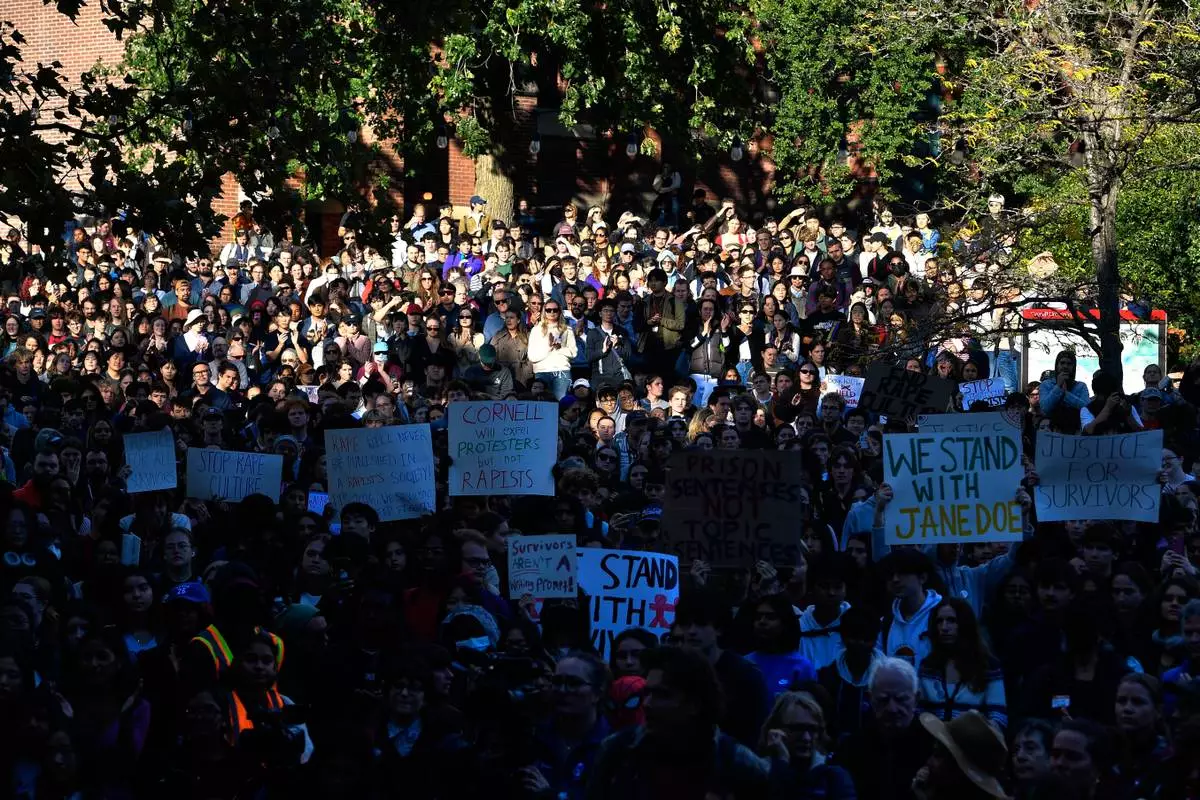
Demonstrators attend a protest against Cornell University's handling of the 2024 fraternity-house gang rape allegations at the campus, Monday, Oct. 5, 2026, in Ithaca, N.Y. (AP Photo/Adrian Kraus)
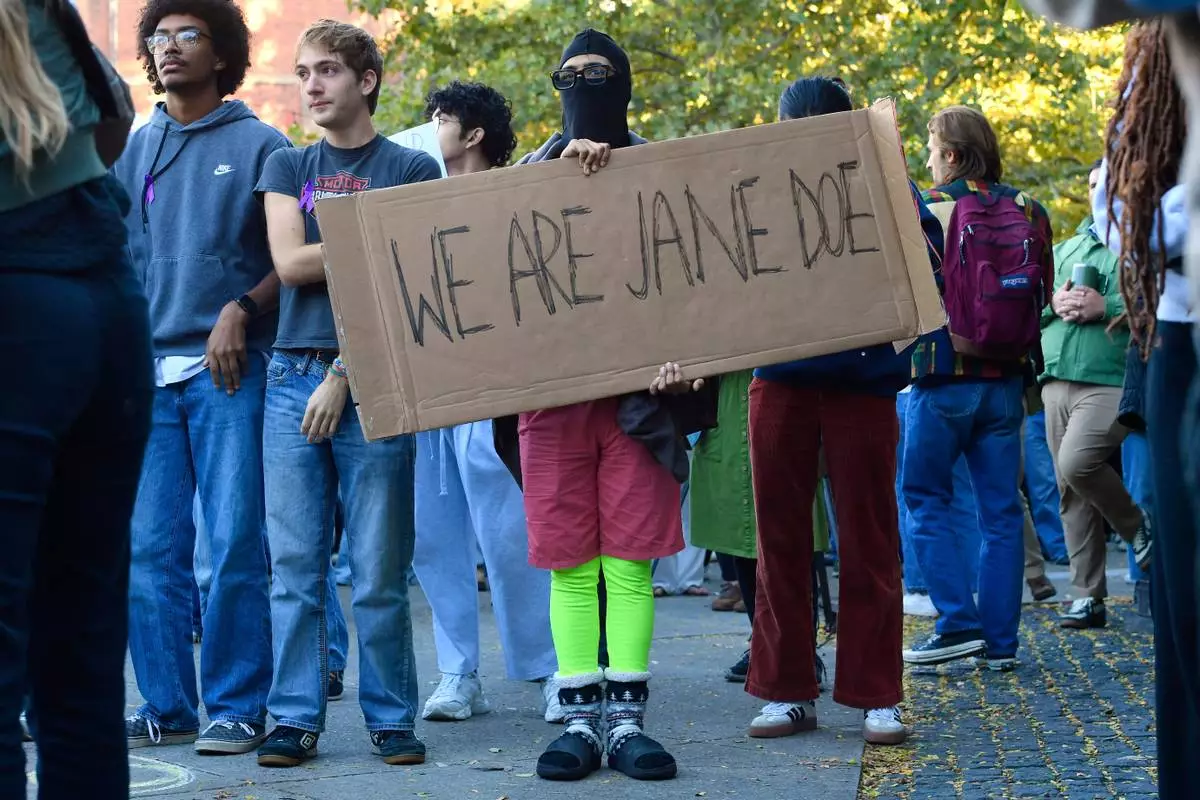
A demonstrator holds a sign reading "WE ARE JANE DOE" during a protest against Cornell University's handling of the 2024 fraternity-house gang rape allegations at the campus, Monday, Oct. 5, 2026, in Ithaca, N.Y. (AP Photo/Adrian Kraus)