SAN FRANCISCO (AP) — High tides along the Pacific Coast could break 40-year-old records and flood low-lying coastal communities, complicating travel during Thanksgiving week.
In the San Francisco Bay Area, tides could reach 2.6 feet (0.8 meters) above normal Tuesday before peaking Wednesday at 2.8 feet (0.9 meters) above normal, said Dial Hoang, a National Weather Service forecaster.
The Bay Area’s highest recorded tide reached 2.9 feet (0.9 meters) above normal in San Francisco on Jan. 27, 1983, he said. San Francisco's famed Embarcadero waterfront, which flooded during heavy rain last week, is again at risk of flooding.
King tides, the highest tides of the year, occur when the gravitational pull of the moon and sun aligns to raise water levels. Their effects this year are being amplified by the ongoing super El Niño, which has warmed the ocean, leading to an increased volume of seawater.
The weather service issued a high surf warning in the Bay Area on Wednesday, when breaking waves of 20 to 30 feet (6 to 9 meters) could overpower swimmers and sweep people into the ocean.
“Remain out of the water and stay off of jetties, piers, and rocks. Never turn your back to the ocean!” the agency said in a social media post.
Heavy rain forecast for Tuesday evening into Wednesday could worsen street flooding.
San Francisco Mayor Daniel Lurie, who urged people over the weekend to consider avoiding holiday travel because of an “extremely serious” situation, later said the forecast had improved somewhat.
“As you make plans for Thanksgiving, keep the weather in mind. Check conditions before traveling, and avoid unnecessary trips when roads are flooded or winds are strong,” he wrote on social media on Monday.
Farther north, in Humboldt County near the Oregon border, the sheriff’s office ordered evacuations in a small coastal community where some buildings flooded on Monday, saying people needed to leave by Tuesday morning.
“The tides are expected to be higher by Tuesday, and the southerly winds will have been blowing for 24 hours by then, and so that will push the storm surge even higher,” said Matthew Kidwell, a National Weather Service meteorologist in Humboldt County.
National Weather Service offices in Portland and Seattle warned of coastal flooding through Friday. The most significant flooding could occur Tuesday through Thanksgiving Day as several weather systems bring strong winds and rising surf coinciding with high tides.
Waves can sweep people off rocks or knock them off their feet and pull them into the ocean, the agency warned.
Washington State Ferries has canceled several sailings because of high tides. About 300,000 people are expected to use the ferry system over the holiday weekend, and extreme tides could disrupt their trips.
Heavy snow in the mountains could slow holiday travel over passes, especially along Interstate 90 east of Seattle.
In South Florida, king tides are expected to cause coastal flooding from Palm Beach to Miami. Water levels could remain elevated for several hours before and after high tide Wednesday and Thursday mornings.
A storm arriving Tuesday night could increase the risk of flooding if it moves over land, the National Weather Service said.
Many South Florida communities were just beginning to dry out after slow-moving storms dumped more than 17 inches (43 centimeters) of rain less than a week earlier.
The St. Johns River has been above flood stage near Cocoa since Nov. 2. Last week, it broke a record set in 1953. The river is forecast to remain at least 2 feet (0.6 meters) above flood stage, according to the weather service.
Associated Press writers Martha Bellisle in Seattle and John Raby in Charleston, West Virginia, contributed.
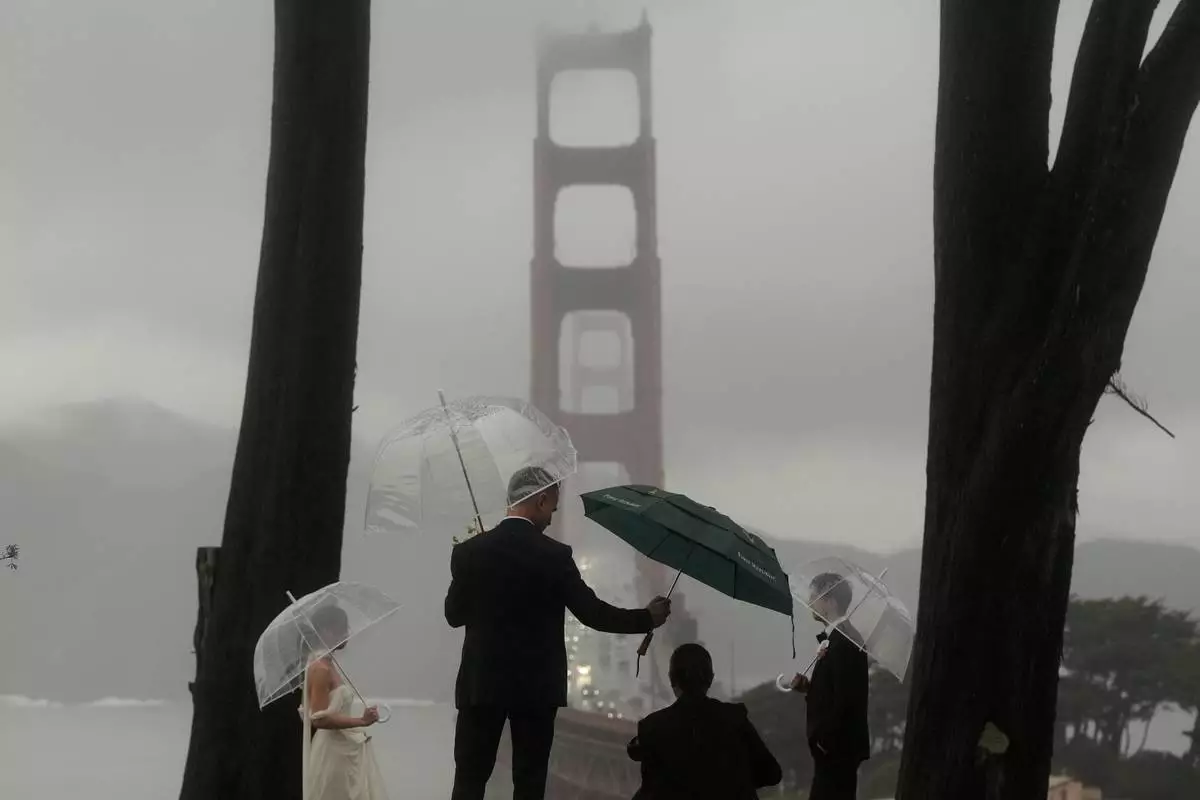
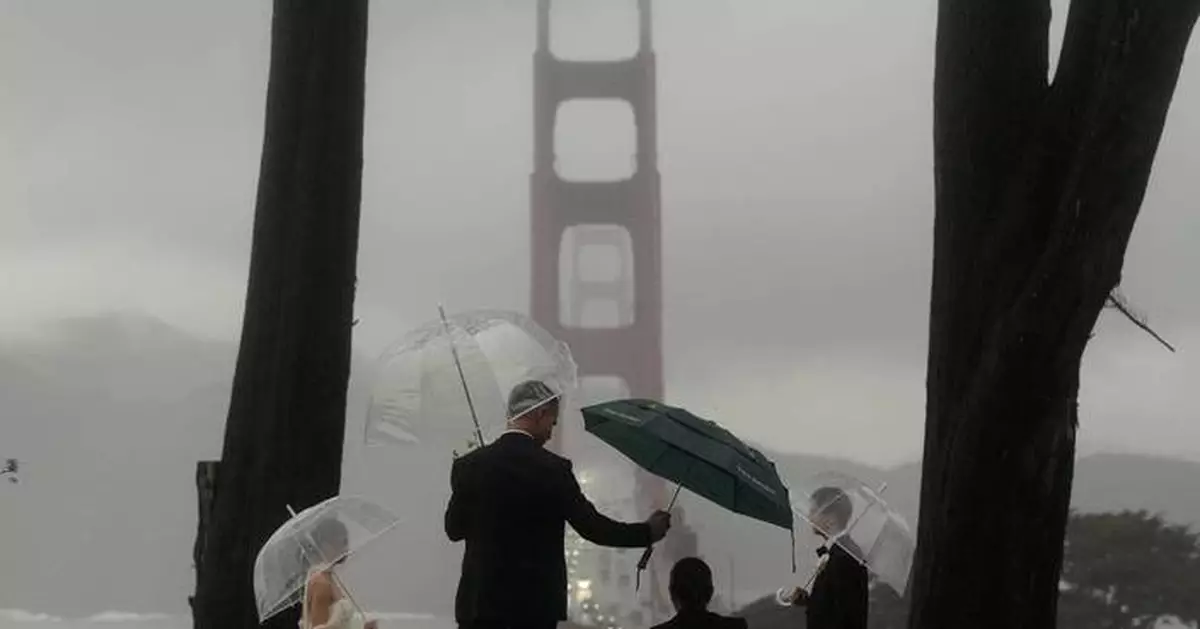
Tomek Jarlowiecki, from Poland, center left, holds an umbrella over photographer Sunny Park as Jarlowiecki's daughter, Olga Guerr, left, and her husband, Joseph Guerr, right, have their wedding photos taken at Golden Gate Overlook after being married earlier in the day, Wednesday, Nov. 18, 2026, in San Francisco. (AP Photo/Jeff Chiu)
LAPITHOS, Cyprus (AP) — The construction worker in Cyprus spotted human bones jutting out from the muddy trench where he had been preparing to pour concrete for the foundation of a new luxury hotel. His alerts went unheeded and the remains were entombed beneath tons of concrete.
They stayed there, a stone’s throw from the island nation’s northern coastline, for 38 more years — until the hotel's recent demolition presented Cyprus' Committee on Missing Persons with the rare chance to act on the decades-old eyewitness account.
Comprised of a Greek Cypriot, a Turkish Cypriot and a United Nations appointee, the CMP employs a bi-communal forensic team of more than 60 archaeologists, anthropologists and geneticists who have spent two decades unearthing and identifying bodies from the conflict that consumed Cyprus and led to its ethnic division.
There were 2,002 people on an official list of those who disappeared during 1960s clashes after Cyprus gained independence from British colonial rule and when the island’s population split in 1974. The CMP has exhumed and identified 1,085.
Such achievements offered closure to relatives waiting decades for word about their loved ones' fates, and chiseled away at mistrust and enmity between the two communities. And this has helped to provide impetus for a negotiated peace deal, despite numerous failed U.N.-mediated rounds of talks.
But 745 Greek Cypriots and 172 Turkish Cypriots are still missing, according to the CMP — and recovering bodies like the one beneath the L.A. Hotel is increasingly difficult as eyewitnesses die and old memories blur, while high-rises and hotels luring foreign buyers and vacationers are built atop makeshift graves.
“Time is our biggest enemy at the moment because our witnesses are disappearing, families are leaving us, buildings are going up everywhere,” Leonidas Pantelides, the Greek Cypriot member of the CMP's hierarchy, told the Associated Press in an interview at the demolition site. “So it is a struggle against time, but it’s one that we cannot give up on.”
Before the foundation for the L.A. Hotel in Lapithos was laid in 1988, there was little there but citrus orchards and pristine beaches.
It had been the scene of fierce battles between Turkish forces and Greek Cypriot defenders during Turkey’s 1974 invasion, which was triggered by a Greek junta-backed coup that aimed at union with Greece.
As Turkish troops advanced to seize the northern third of the island, hundreds of Greek Cypriots were buried in hastily dug mass graves while tens of thousands more fled. Many Turkish Cypriots also disappeared in the south. The island's ethnic split was entrenched in a 1975 deal to swap populations stuck on either side of a United Nations-controlled buffer zone.
The bright pink L.A. Hotel sought to draw European tourists to the island's north, where Turkish Cypriots declared a separate state recognized only by Turkey. But the business collapsed under the strain of COVID-19 travel restrictions. A new owner tore it down this year to make way for a swankier hotel.
The CMP seized the moment and got the owner's consent to dig at the site for the body spotted almost four decades earlier — a rare reprieve as construction marches ahead on both sides of the buffer zone. Excavation began this month, with hopes that finding at least one body beneath the concrete slab could prompt searches on other developed or condemned property in the north.
“We hope that we will have the chances for more old buildings to be demolished so that we can excavate the whole area, which is a focus area actually for us,” archaeologist Irene Papadopoulos said.
Since unearthing 177 bodies in 2015, the CMP's success rate has dwindled. So far this year they’ve found just eight. What was once an open field where a witness described someone being buried near an olive tree could now be the site of a strip mall or apartment complex. Ground-penetrating radar has brought only mixed results.
Even the slightest clue can help piece together disparate strands of information, according to Pantelides: “A topographical detail that a witness knows may help us to locate a place of interest more specifically, because our biggest problem is accuracy."
For Ali Culluoglu, team leader of the Lapithos dig, the work is deeply personal. His grandfather had been among the missing until his remains were found in 2015 near the town of Paphos, on the island’s southwestern corner. The CMP will keep searching until "the last missing person" is found, he said.
A half-dozen skeletons are laid out atop white tablecloths in the CMP's anthropological laboratory, where Alexandra Mouski painstakingly pieces together tiny fragments of a shattered skull.
Collecting tooth and bone samples for identification through DNA analysis is a laborious process, since most remains have been found comingled in mass graves. Many samples must be taken to properly identify the bones before returning the most complete remains possible to relatives, laboratory coordinator Istenc Engin said.
DNA collected from remains is checked against a genetics database containing samples from relatives of most of the missing on both sides. DNA samples are occasionally taken from deceased relatives, when the missing person had no family members still living, identification coordinator Katerina Papaioannou and colleague Gulbanu Zorba said.
Forensic teams also search for any artifacts that could help identify the bodies — like a ring engraved with a wedding date and the initials of a spouse.
"This is very important for the family members, because this they can remember. They cannot understand the bones, but they can understand the artifacts,” Mouski said.
Among the Cypriots still waiting for results is schoolteacher Panayiotis Efstathiou, who was 10 when his parents and younger brother were caught behind enemy lines after Turkish forces landed. He never saw them again.
His amateur sleuthing turned up details about how his family disappeared — including the name of the now-deceased man who killed them. But his years of gathering testimonies haven't revealed just where they were buried outside their village of Vasileia.
“I believe they must all accelerate their work, because most witnesses have died, others are in very old age; they’re suffering from dementia and I see this daily. I search for them, speak with them. They won't say,” Efstathiou told the AP. “It will be very difficult, unfortunately, to find those who are left. From this side and from the other side.”
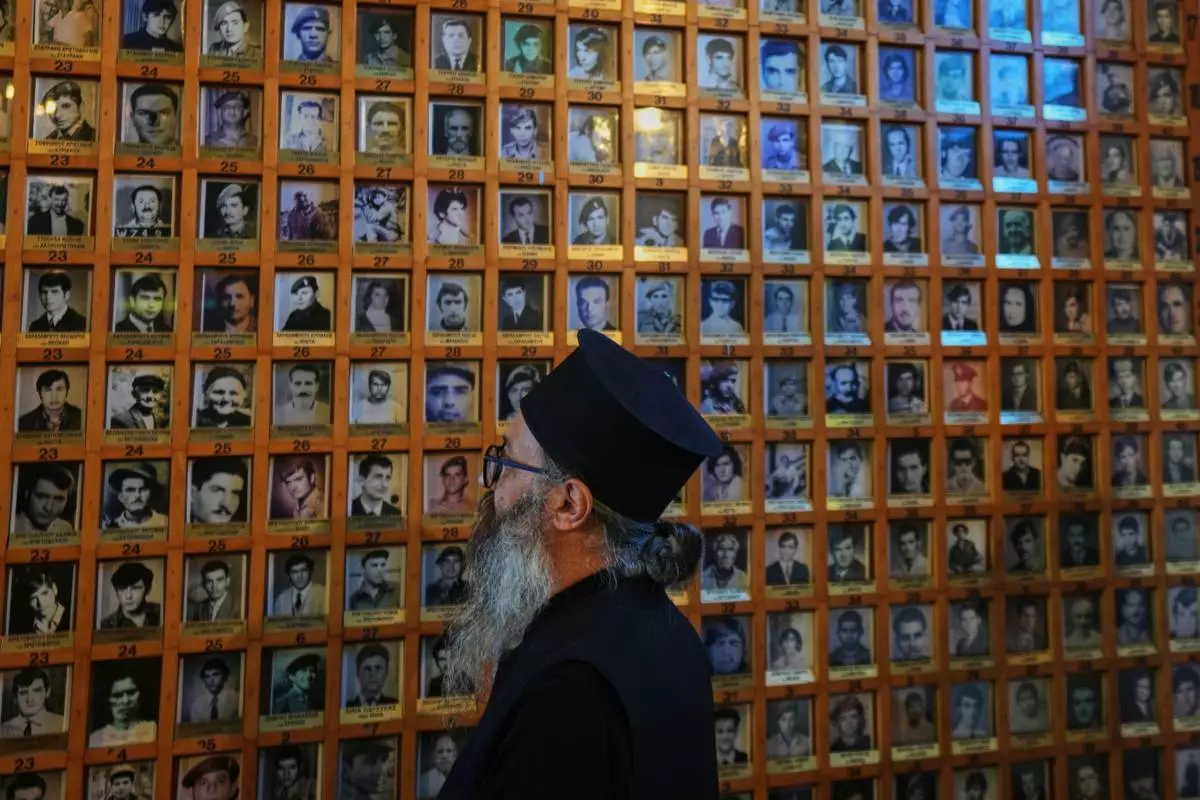
Orthodox priest Athanasios stands in front of the Greek Cypriot missing persons portraits photographs who went missing during the 1960s and 1974 Turkish invasion, at Saint Alexander church in Kornos village, Cyprus, on Nov. 5, 2026. (AP Photo/Petros Karadjias)
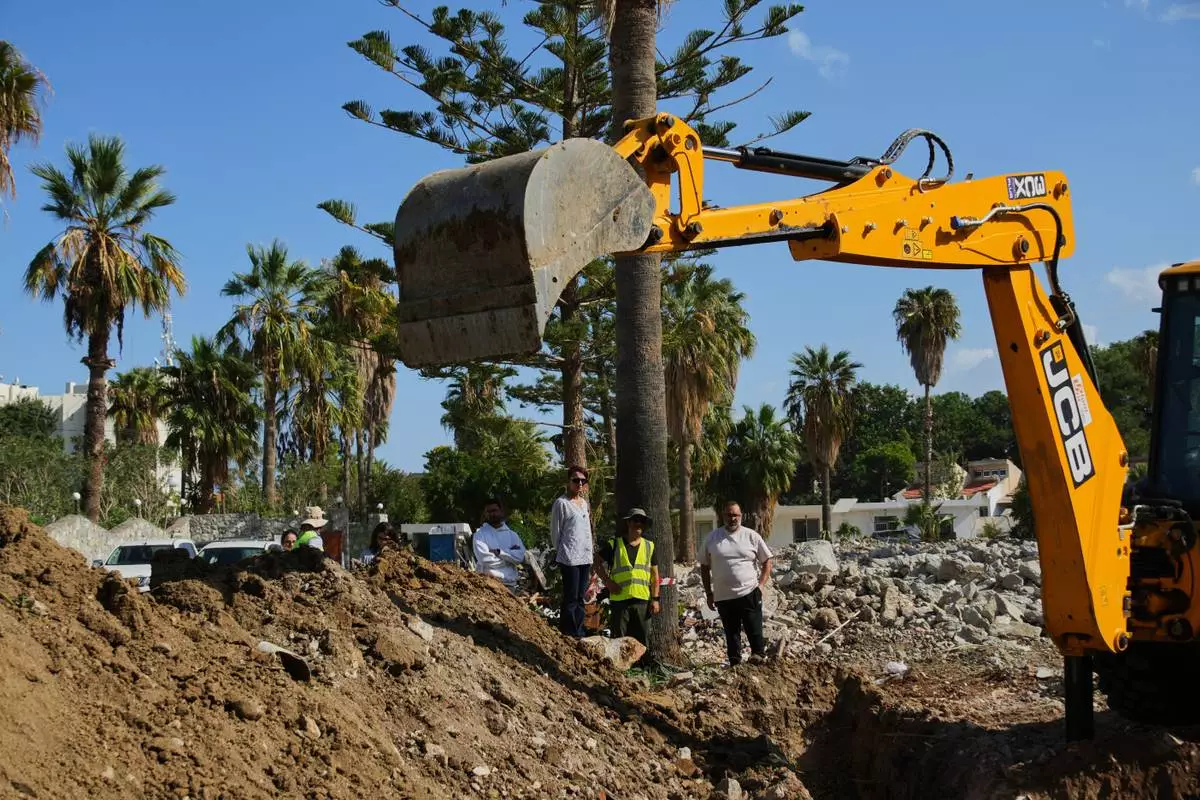
A bulldozer excavates a site in search of the remains of people who went missing during the 1974 Turkish invasion, in the Turkish-occupied area of Lapithos, Cyprus, on Nov. 4, 2026. (AP Photo/Petros Karadjias)
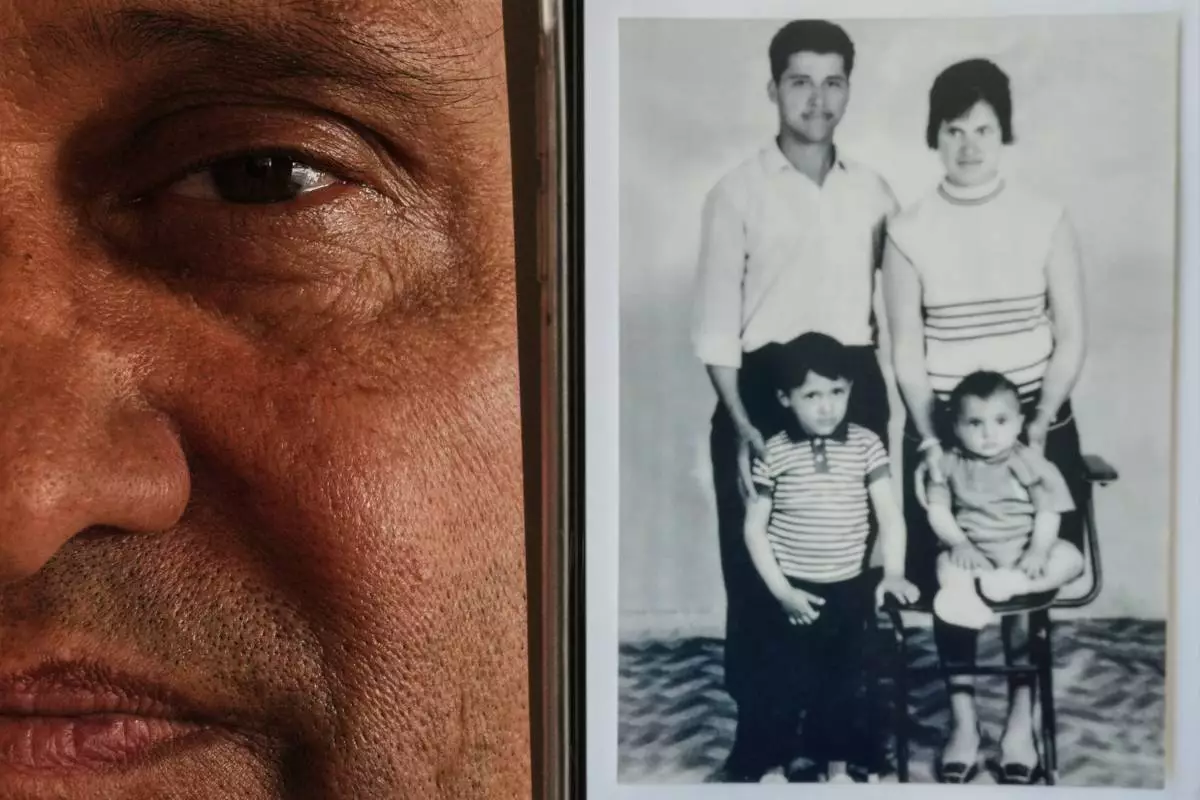
Panayiotis Efstathiou holds a photograph showing himself, left, with his parents and younger brother, who went missing after becoming trapped behind enemy lines during the second phase of the Turkish invasion in August 1974, in Nicosia, Cyprus, Friday, Nov. 20, 2026. (AP Photo/Petros Karadjias)
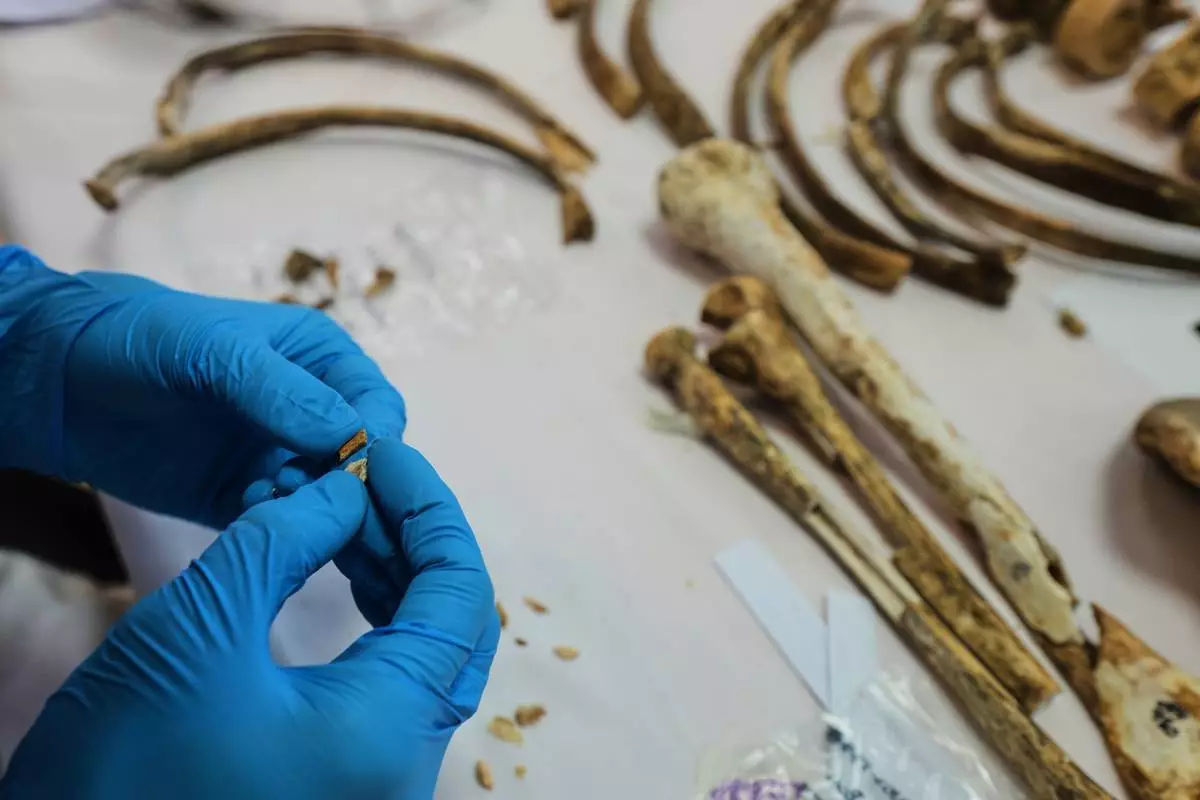
Alexandra Mouski, Laboratory Deputy Coordinator, works on the remains of a missing person who went missing during the 1960s and 1974 Turkish invasion, at Committee's anthropological laboratory on the grounds of the defunct Nicosia airport, Cyprus, on Nov. 12, 2026. (AP Photo/Petros Karadjias)
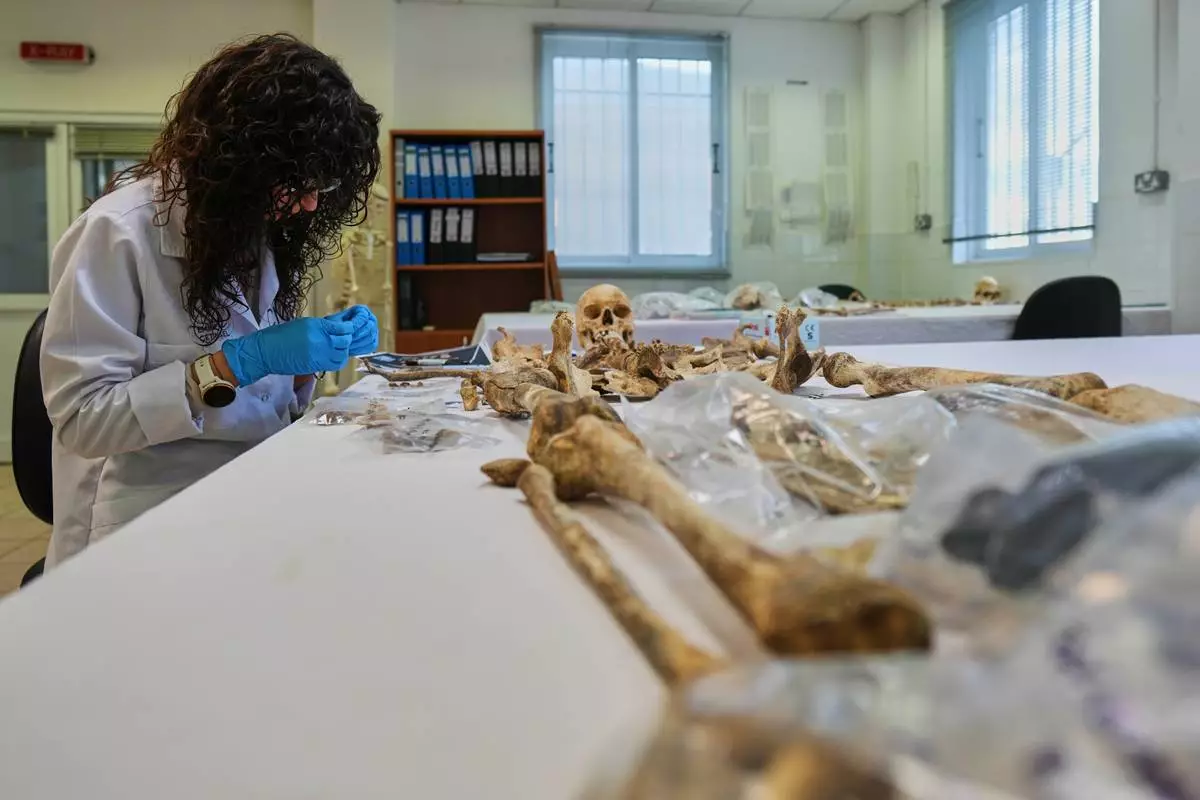
Alexandra Mouski, Laboratory Deputy Coordinator works on the remains of a missing person who went missing during the 1960s and 1974 Turkish invasion, at Committee's anthropological laboratory on the grounds of the defunct Nicosia airport, Cyprus, on Nov. 12, 2026. (AP Photo/Petros Karadjias)