BANGKOK--(BUSINESS WIRE)--Sep 13, 2026--
Black & Veatch marks more than fifteen years of working in floating LNG (FLNG) this year at Gastech 2026, showcasing dramatic liquefaction performance increases and the launch of the company’s LNG-focused infrastructure intelligence toolset, BVInfraIQ.LNG. These advancements form the basis for the company’s new Advanced Liquefaction Architecture (ALA).
This press release features multimedia. View the full release here: https://www.businesswire.com/news/home/20260914313124/en/
ALA encompasses more than 60 years of LNG experience and more than fifteen years of offshore experience achieving continuous performance improvements spanning the company’s proprietary PRICO liquefaction technology, digital optimization and expertise in facility integration and project execution, helping clients achieve up to a 15 percent increase in LNG production.
BVInfraIQ.LNG, the first solution of Black & Veatch’s BVInfraIQ infrastructure intelligence platform, is the digital optimization capability of ALA that transforms operational data into real time actionable operational intelligence and prioritized recommendations that help operators improve throughput, efficiency and asset value.
BVInfraIQ is a suite of digital solutions that combine the power of AI with Black & Veatch’s deep engineering expertise and operational intelligence to deliver performance, reliability and asset value for clients. PRICO’s single mixed-refrigerant loop remains the proven liquefaction foundation of the architecture, delivering the compact footprint, scalability and operational flexibility required for FLNG applications.
“LNG performance is no longer defined by liquefaction technology alone, but by how effectively process technology, facility integration and digital intelligence work together to maximize performance,” said Narsingh Chaudhary, president of Fuels & Natural Resources, Black & Veatch. “With more than fifteen years of unparalleled design, construction and operational experience in FLNG, our Advanced Liquefaction Architecture now includes an AI-augmented toolset to help our clients remain competitive and resilient while improving vessel efficiencies.”
Black & Veatch’s ALA helps clients increase production density, contributing to lower production and lifecycle facility costs per ton of LNG exported. Many elements of ALA are currently deployed on operating facilities and projects in execution, with ongoing innovation continuing to expand its capabilities. Key components include:
Black & Veatch has deployed its advanced engineering and proprietary PRICO liquefaction technology to more than half of the FLNG facilities operating or under construction worldwide. ALA continuously builds on this proven foundation to deliver higher efficiency and throughput while maintaining the compact, modular design essential for floating and onshore midscale LNG applications.
“The discussion around FLNG used to be whether it could work; today, it’s how fast we can scale it,” said Justin Ellrich, associate vice president and LNG technology manager, Black & Veatch. “What we’re demonstrating at Gastech is the quantifiable proof: ALA delivers a practical approach to increased LNG production and efficiency with lower cost and managed risk.”
With more than 60 years of global LNG experience, more than fifteen years of FLNG experience and a growing portfolio of FLNG projects, Black & Veatch is defining the future of floating energy infrastructure.
About Black & Veatch
Black & Veatch is a 100-percent employee-owned global engineering, procurement, consulting and construction company with a more than 100-year track record of innovation in human critical infrastructure. Since 1915, we have helped our clients improve the lives of people around the world by addressing the resilience and reliability of our most important infrastructure and energy assets. Learn more about us at the Black & Veatch newsroom and follow us on LinkedIn, Facebook and Instagram.

BLACK & VEATCH | Proven PRICO® liquefaction and more than half of the world's FLNG.
WASHINGTON (AP) — President Donald Trump repeatedly encouraged voters to pretend he was on the midterm ballot. They did. And it went very badly for him and his Republican Party.
Voters absolutely punished Trump’s allies in swing states and Republican strongholds alike on Tuesday, giving Democrats key victories across New Hampshire, North Carolina, Ohio, Texas, and even South Carolina. Trump’s controversial mid-decade redistricting plan appeared to backfire. In Georgia, Democrat Keisha Lance Bottoms became the first Black woman elected governor in U.S. history, while Texas elected Democrat Gina Hinojosa as its first Latina governor.
Voters nationwide were in the mood for change, according to The AP Voter Poll, which found that roughly three-quarters of voters feel “angry” or “dissatisfied” with the direction of the country.
Among those who had Trump in mind when they cast their vote, about twice as many wanted to express opposition to the Republican president as those who wanted to support him. Most also blamed the Trump administration for high costs: about 6 in 10 say higher than usual prices are “more because of Trump’s policies."
Trump's coalition was also fraying: Young voters and Hispanics appear to have shifted away from the GOP after warming to Trump in 2024.
With undeniable momentum, Democrats were eyeing majorities in the House and Senate, which would curb Trump’s power after he’s faced few limits from a compliant Republican-controlled Congress.
Here are some takeaways from Tuesday's midterms:
Tuesday's electoral beating appeared to be a direct repudiation of Trump, who demanded loyalty across his party and brought Republicans to the midterms saddled by his dismal approval ratings, an unpopular war with Iran, and surging costs for millions of frustrated Americans.
Indeed, Trump's political strength is hitting a new low roughly two years before his final term ends.
The AP Voter Poll confirms that voters are deeply unhappy with the Republican president, with roughly 6 in 10 saying they disapprove of his job performance. About 70% of voters want Congress to provide more checks and balances on the presidency. And roughly 6 in 10 voters said Trump places a higher priority on his personal interests than the country’s interests.
Trump was betting that his base of white working-class voters — and an increased share of young people and voters of color — which fueled his presidential victory in 2024 could save his Republican allies if they show up in great numbers.
He was wrong.
The AP Voter Poll indicates a substantial shift in young people and Hispanics moving away from Republicans compared to Trump's victory just two years ago.
Voters under 30 were about evenly split between Trump and Vice President Kamala Harris in 2024. But in this election, about 7 in 10 voters in that same age nationally say they supported the Democratic House candidate in their area.
Meanwhile, only about one-third of Hispanic voters say they backed the Republican in their local U.S. House race, while roughly 4 in 10 voted for Trump two years ago. About 6 in 10 Hispanic voters nationally say they voted for the Democratic candidate in their local House race. That's as about 7 in 10 Hispanic voters say Trump’s policies have worsened economic conditions in the U.S.
Such shifts will echo into the 2028 presidential contest, which unofficially begins on Wednesday.
Since World War II, the House and Senate have flipped from one party to the other in the same midterm just three times: 1946, 1994 and 2006.
Democrats are on the brink of doing it again in 2026.
They are winning virtually everywhere in a truly historic sweep. Democrats won Senate and governor's races in Georgia, Ohio and Texas — the latter two states Trump carried by 11 and 14 percentage points, respectively.
In North Carolina, Democratic former Gov. Roy Cooper won the Senate race. Sen. Jon Ossoff easily won reelection in Georgia, while Lance Bottoms won the Georgia governorship. New Hampshire Democrat Chris Pappas won his Senate election, which will make him the only openly gay senator. In Ohio, former Ohio Sen. Sherrod Brown flipped a GOP-held Senate seat, while former state health official Amy Acton beat close Trump ally Vivek Ramaswamy in the governor's race.
The Democratic romp continued in Kansas, where voters picked Democrat Adam Hamilton, a first-time candidate who leads the largest United Methodist church in the country, over incumbent Republican Sen. Roger Marshall. And in Texas, long an object of desire for Democrats, 37-year-old state lawmaker James Talarico was elected to the Senate, while Hinojosa defeated three-term Gov. Greg Abbott.
The most painful blow for Trump may have come in South Carolina, where his handpicked candidate to replace the late Sen. Lindsey Graham, his sister Darline Graham, was defeated by Democrat Annie Andrews, a pediatrician making her first run for office.
Republicans currently have a 53-47 advantage in the Senate. To take control, Democrats must win states that Trump won in 2024. Strategists in both parties believe Democrats are on track to win a majority in the House, where Republicans began the current Congress with a slim margin of 220-215.
Democrats are targeting more than 60 House districts, including many where Trump won by double digits.
While Trump’s standing has cratered in 2026, Democrats’ brand as a whole isn’t much to brag about. That leaves the party’s major factions — the progressive left flank and the liberal-to-moderate establishment — parsing Tuesday’s outcomes to claim any advantage in Democrats’ tug-of-war over party identity.
The party’s moderate wing was having a good night early on as high-profile leaders like Pennsylvania Gov. Josh Shapiro and Maryland Gov. Wes Moore won reelection. Both are considered 2028 presidential prospects.
At the same time, Florida Democrat Angie Nixon, the only self-identified democratic socialist on a Senate ballot, was defeated, despite a much stronger-than-expected showing.
Still, the progressive movement would have a feather in its cap should Michigan Democratic Senate nominee Abdul El-Sayed defeat Republican Mike Rogers in Michigan. El-Sayed is progressives’ highest-profile candidate, although he does not identify as a DSA member nor is he endorsed by the organization.
It’s one thing for New Yorkers to elect Zohran Mamdani, a democratic socialist, as mayor. It’s quite another for an unabashed progressive like El-Sayed to carry a perennial battleground state that helped elect Trump twice.
The Democratic brand needs help no matter how well the party does on Tuesday.
The AP Voter Poll shows that about half of voters have a “very” or “somewhat” unfavorable opinion of the Democratic Party, while about 6 in 10 view the GOP negatively.
Trump set off a tempest in Texas last year when he pushed the most populous Republican-run state to redraw congressional boundaries. California Gov. Gavin Newsom answered by persuading his state’s voters to respond in kind. Democratic and Republican states followed. Along the way, the U.S. Supreme Court gutted part of the Voting Rights Act, allowing several Southern states to redraw districts that had been majority- or near-majority-Black.
However, the Trump-backed gerrymandering push is not going as planned for Republicans. On paper, the results suggest a net shift of nine seats to Republicans. But the gerrymandering meant spreading conservative supporters across more districts.
That’s bad news for Republicans in other districts in Florida and potentially in Texas — states where the Republican plan counted on getting votes from Latino voters and other nonwhites who backed Trump in 2024. Early results show that has not happened.
In Florida, Democratic Rep. Jared Moskowitz won the state's 25th District; Democrat Pia Dandiya, a first-time candidate, won the 22nd District and Rep. Kathy Castor won reelection in the 14th District. Republicans had redrawn all three districts this spring with the intent of ensuring GOP victories this fall.

North Carolina Democratic Senate candidate Roy Cooper speaks at an election night event Tuesday, Nov. 3, 2026, in Raleigh, N.C. (AP Photo/Matt Ramey)

A supporter holds up a poster while attending an election night event for Georgia Democratic gubernatorial candidate Keisha Lance Bottoms, Tuesday, Nov. 3, 2026, in Atlanta. (AP Photo/Brynn Anderson)

Republican gubernatorial candidate Rep. Byron Donalds, R-Fla., center left, greets supporters at an election night event Tuesday, Nov. 3, 2026, in Hollywood, Fla. (AP Photo/Rebecca Blackwell)

North Carolina Democratic Senate candidate Roy Cooper speaks at an election night event Tuesday, Nov. 3, 2026, in Raleigh, N.C. (AP Photo/Matt Ramey)

Georgia Democratic Senate candidate Sen. Jon Ossoff, D-Ga., during an election night event, Tuesday, Nov. 3, 2026, in Atlanta. (AP Photo/Mike Stewart)

North Carolina Democratic Senate candidate Roy Cooper speaks to supporters in Raleigh, N.C., on Election Day, Tuesday, Nov. 3, 2026. (AP Photo/Matt Ramey)
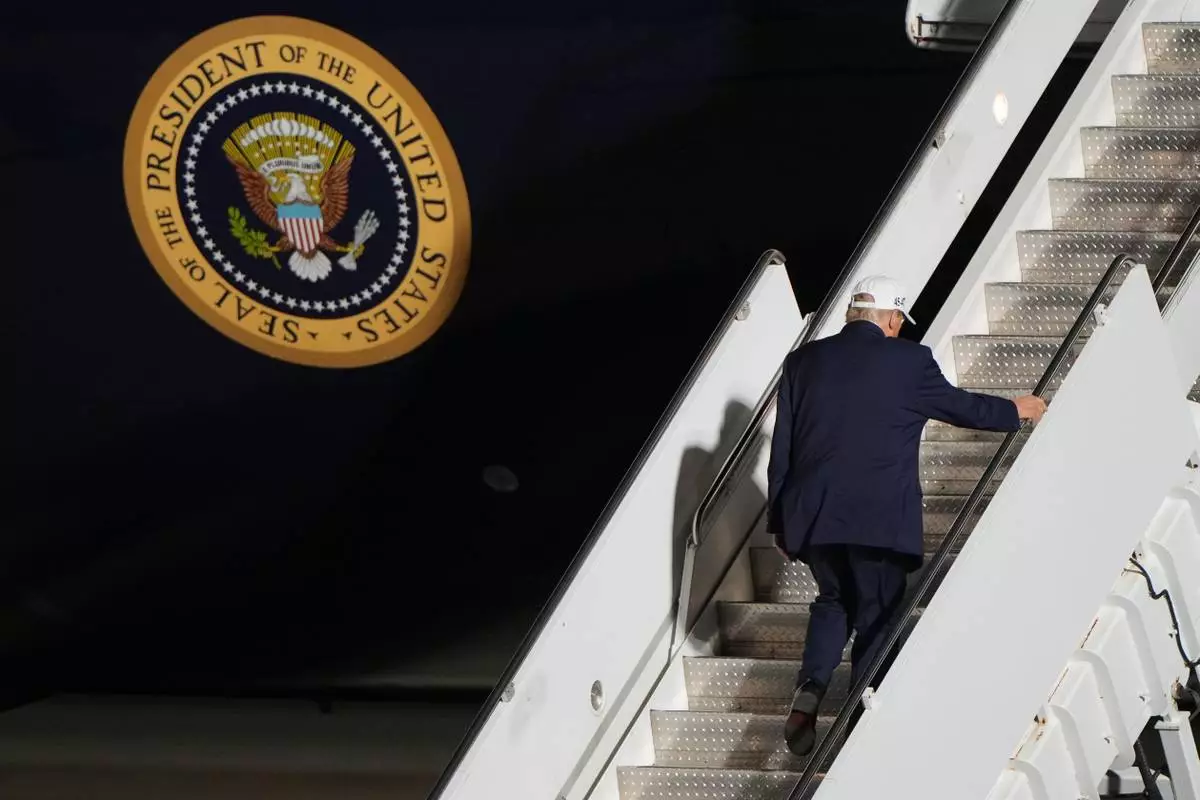
President Donald Trump boards Air Force One after speaking at a campaign rally at the Salina Regional Airport, Sunday, Nov. 1, 2026, in Salina Kan. (AP Photo/Charlie Riedel)
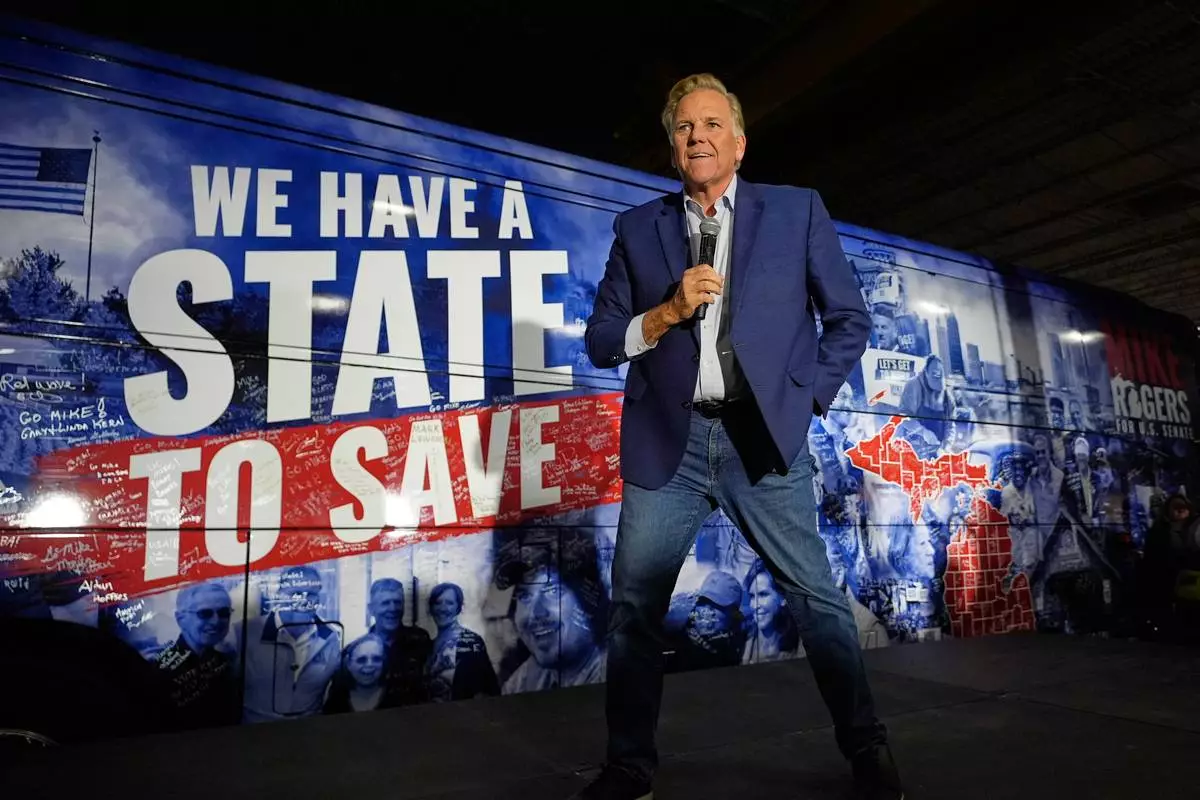
Michigan Republican Senate candidate Mike Rogers greets people at an election eve event Monday, Nov. 2, 2026, in Rochester Hills, Mich. (AP Photo/Paul Sancya)

Democratic Senate candidate James Talarico speaks during a campaign event in San Antonio, Sunday, Nov. 1, 2026. (AP Photo/Eric Gay)

Republican U.S. Senate candidate Texas Attorney General Ken Paxton, left, stands on a stage for a photo with Former NBA center Enes Kanter Freedom during a campaign event in Fort Worth, Texas, Saturday, Oct. 31, 2026. (AP Photo/LM Otero)
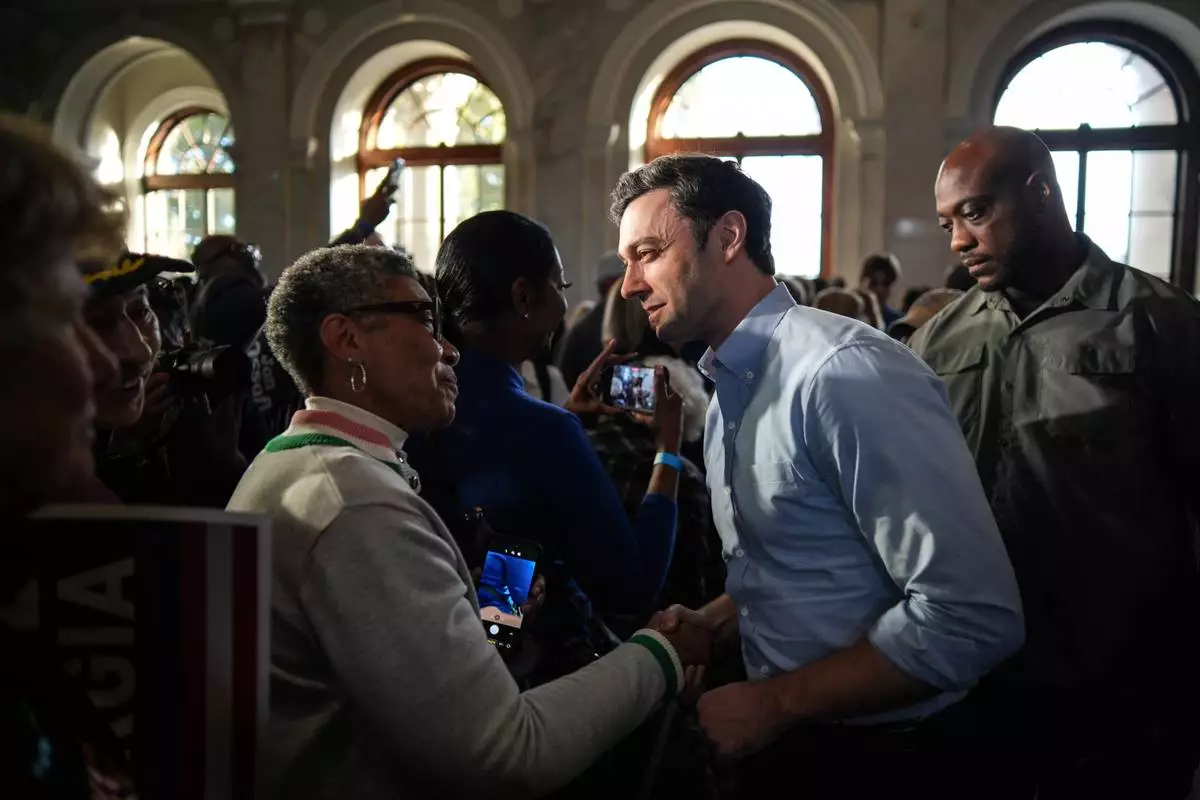
Democratic candidate U.S. Sen. Jon Ossoff shakes hands with a supporter at his final campaign event before Election Day, Monday, Nov. 2, 2026, in Ga. (AP Photo/Ryan Murphy)
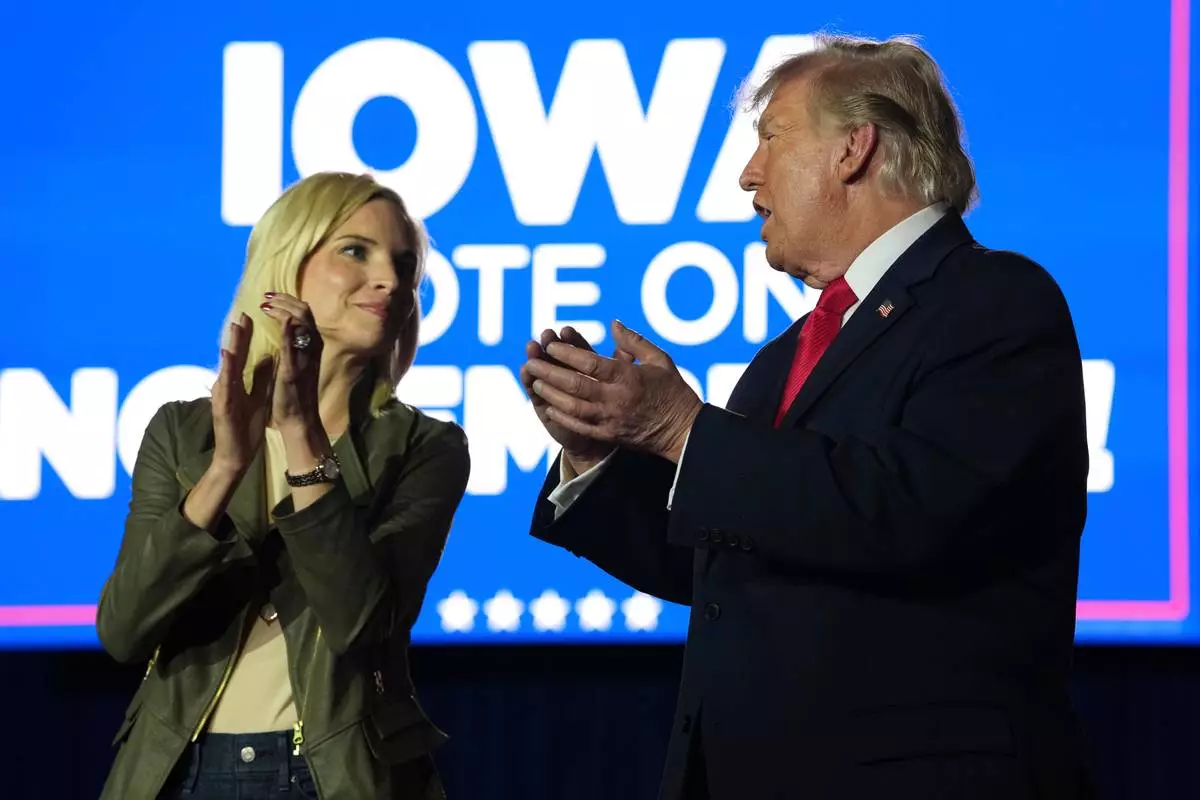
Senate candidate Rep. Ashley Hinson, R-Iowa, left, speaks with President Donald Trump on stage during a campaign rally at the Five Flags Event Center, Sunday, Nov. 1, 2026, in Dubuque, Iowa. (AP Photo/Jacquelyn Martin)