The 13th Beijing Xiangshan Forum will open at the Beijing International Convention Center on Tuesday, focusing on the prominent and pressing major challenges currently facing the international security landscape.
The three-day forum will feature four plenary sessions and eight parallel breakout sessions, covering key areas such as traditional and non-traditional security, global governance and regional hotspots, military technology, and the rule of law in international affairs.
Organized by the Chinese Association for Military Science, the forum has undergone a transformation in its role since its inception in 2006.
Initially positioned as a "track-two" defense think-tank exchange event held every two years, the forum was upgraded in 2014 to a "track-and-a-half" high-level security dialog platform and began to be held annually.
Since then, the forum's international participation and influence have continued to rise.
This year marks the 20th anniversary of the Xiangshan Forum.
Over the past two decades, it has expanded to include government officials, military leaders and scholars from more than 100 countries. The forum has evolved into a vital international public good, offering a space for equal dialog and joint efforts toward global peace.
The forum's development serves as a vivid microcosm of China's deep engagement in global security governance and its efforts to promote the building of a community with a shared future for mankind.
The 4th China-Africa Peace and Security Forum will also be convened in conjunction with the Xiangshan Forum.
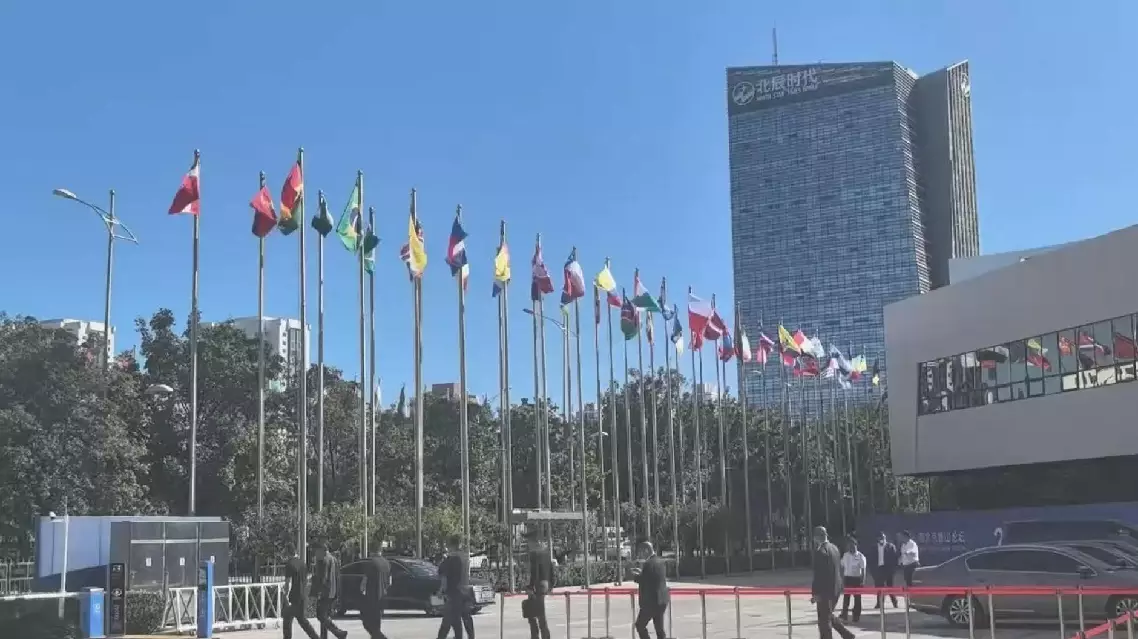
Xiangshan Forum to open in Beijing
The escalating tensions between Saudi Arabia and Yemen's Houthi group reflect a broader strategic contest over key maritime routes and regional security, with the Houthis group seeking to put additional pressure on Saudi Arabia while avoiding a wider confrontation, said a Chinese expert on the Middle East.
Zhang Chuchu, deputy director of the Middle East Studies Center at Fudan University in Shanghai, said in a recent interview the Houthis' efforts to restrict access around strategic maritime chokepoints are aimed in part at coordinating with Iran to create pressure on Saudi Arabia from two directions.
"At this time, one of the purposes of the Houthi armed group's efforts to control the straits is to join hands with Iran to put Saudi Arabia under dual pressure. We know that, amid the frequent disruptions in shipping in the Strait of Hormuz, part of Saudi Arabia's oil transportation would become more dependent on the western coast's Yanbu Port and routes through the Bab el-Mandeb Strait. If Saudi Arabia's oil transportation is obstructed from both sides, it would face huge economic losses. The Mocha and Hanish Islands are key chokepoints along international shipping routes. By taking control of these strategic high points, the Houthi armed group not only seeks to reduce the opponent's strongholds, but also hopes to gain the ability to influence the security of the southern Red Sea at any time. However, during its operations, the Houthi armed group has repeatedly stressed that its actions are targeted only at Saudi Arabia and no other countries. This is because it also seeks to send a signal to avoid making more enemies and triggering another large-scale offensive by a multinational naval coalition," Zhang said.
The expert noted that the Houthis' calculations extend beyond immediate military objectives, as control over strategically located islands and waterways could provide them with greater leverage over maritime security in the southern Red Sea.
Meanwhile, tensions between Saudi Arabia and the Houthis have continued to intensify, while the United States has so far only agreed to provide intelligence and target-identification support but rejected direct military intervention, said Zhang.
She attributed the U.S. decision to three main factors, saying Washington is seeking to avoid opening another war front in the Middle East while its military focus remains on Iran.
"First, the current strategic focus of the U.S. military in the Middle East remains on Iran. It has already deployed a large number of air and naval forces there and is suffering significant attrition, so it wants to make every effort to avoid opening a new front in Yemen. Second, from March to May last year, the U.S. military launched large-scale airstrikes and naval attacks against the Houthi armed group in Yemen. It knows very well that the Houthi armed group possesses strong asymmetric combat capabilities. Therefore, the United States is also concerned that if it resumes attacks, it may once again fail to achieve its objectives, as happened last year. The last point is that the Trump administration wants to reduce its security commitments to its allies, arguing that Gulf allies should rely on their own military capabilities to address security threats in their neighborhood, and opposing the U.S. military serving as the region's free security backstop," Zhang said.
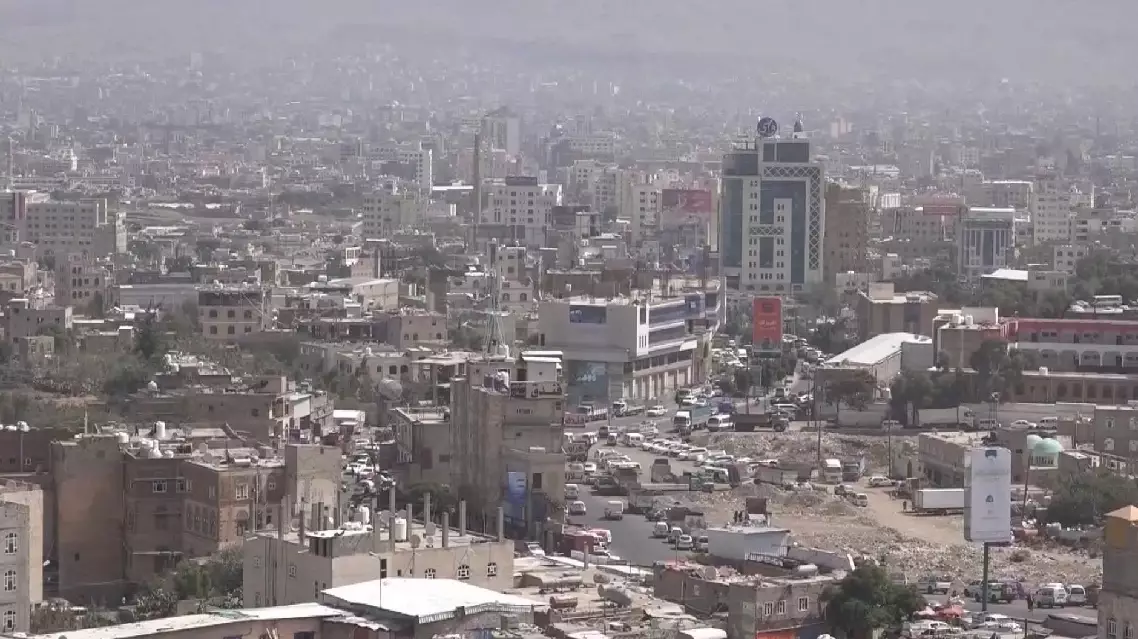
Houthi seeks to pile pressure on Saudi Arabic: expert