NEW YORK--(BUSINESS WIRE)--Sep 14, 2026--
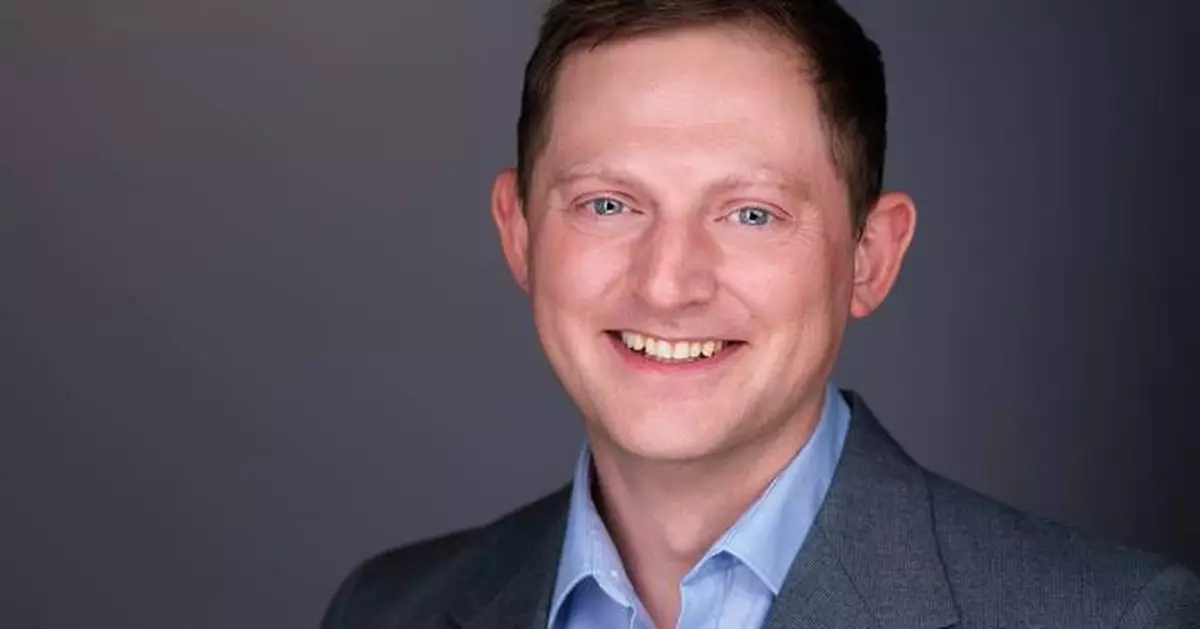
MDCalc, the medical information platform used by millions of physicians to access critical clinical decision tools, today announced the return of co-founder Dr. Graham Walker. Walker returns to full-time employment at the organization in a newly created role that will help guide the company's approach to the opportunities and challenges of using AI in clinical decision making.
This press release features multimedia. View the full release here: https://www.businesswire.com/news/home/20260914330240/en/
Since co-founding MDCalc with fellow emergency physician Dr. Joseph Habboushe in 2005, Walker’s career has increasingly merged the medical and the technological. "The potential of AI excites us tremendously at MDCalc,” he says. “Across the country, physicians are already adopting tools that enhance their practice and create more time to concentrate on the patients in front of them. There is tremendous promise. But there are also flashing warning signs. While AI can be a powerful force to help physicians care for patients, it also brings new issues to light around bias, de-skilling, liability, and risk. Each of these issues carries new ethical questions for clinical care. As an organization, we want to help lead physicians through this technology change, as we've done for the past 20 years.”
"It’s hard for me to express how excited I am to work closely with Graham again,” says Habboushe. “The most important work of our lives has been to build MDCalc together. What Graham and I got right is we were solving a real problem we knew well - always staying focused on what’s best for patients and physicians. Today’s world needs this type of leadership - and trust - more than ever, so this new stream of work feels like a natural evolution to us.”
Lead author of the Physicians’ Charter for Responsible AI, written in 2023, Walker has been thinking, writing, and speaking on the ethical use of AI in clinical care for some time. In his most recent role as Co-Director of Advanced Development at The Permanente Medical Group, which delivers care to Kaiser Permanente's 4.6 million members in Northern California, Walker led emergency and urgent care strategy for KP's electronic medical record as a clinical informaticist, as well as working on practical AI development, commercialization, partnerships, and technology transformation.
That experience is the perfect foundation for MDCalc’s new endeavor, which Walker and Habboushe hope will expand to include a wide range of partners. They believe many other companies care deeply about the ethical implications of clinical AI and how to address risks, gaps, and known challenges in this technology, and look forward to working with other like-minded companies to drive adoption of AI tools in medicine.
“Our sights are trained on safeguarding clinical AI, emphasizing transparency, accuracy, and fairness,” says Walker. “And we are eager to work with anyone who is focused on the same North Star.”
ABOUT MDCALC
Founded by two physicians to help their colleagues better treat patients, MDCalc is one of the most widely used clinical decision-support platforms in medicine. Millions of clinicians worldwide use the platform to access and understand over 800 clinical tools and algorithms that support decision-making at the point of care.
ABOUT GRAHAM WALKER
Graham Walker, MD, is an emergency physician, clinical informaticist, and healthcare AI builder. He co-founded MDCalc and now serves as its Head of Artificial Intelligence, working on practical clinical AI tools for physicians and health systems. Based in San Francisco, Graham spent nearly two decades with The Permanente Medical Group, where he practiced emergency medicine and helped lead the deployment of technology and AI across clinical care. He also led emergency and urgent care strategy for KP’s Epic EHR.
Graham earned his medical degree from Stanford University School of Medicine and completed his emergency medicine residency at St. Luke’s-Roosevelt Hospital Center in Manhattan. He writes about the intersection of AI, technology, and medicine, and created The Physicians’ Charter for Responsible AI, a practical guide to implementing safe, accurate, and fair AI in healthcare settings. Graham also writes and speaks to national and international audiences about AI, medicine, and the future of healthcare.
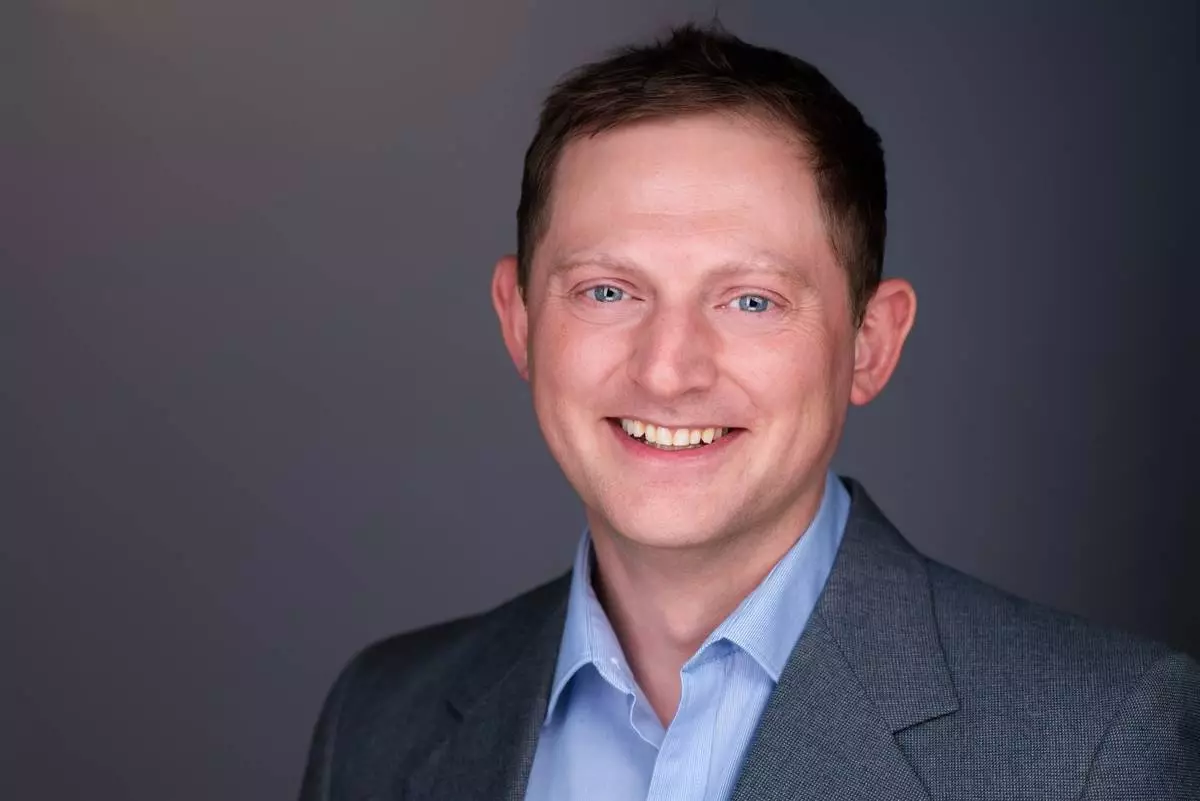
Dr. Graham Walker returns to MDCalc in a newly created role, as head of Artificial Intelligence. The physician leader will focus on the opportunities, risks and evolving role of AI in clinical practice
ARAPAHOE, Wyo. (AP) — Every Sunday morning on the Wind River Reservation, congregants gather at Foundations for Nations Church to pray while protesters outside do the same.
The two rituals have unfolded in parallel since the Christian church's pastor, Sarah Lucas, preached a sermon condemning Arapaho ceremonial ways.
The Northern Arapaho and Eastern Shoshone Tribes that share the reservation have made clear that Lucas is no longer welcome. Lucas, who is not Native American but owns the land under her church, says she isn't going anywhere. The standoff tests the boundaries of religious freedom and the right of a tribal nation to govern according to its own values and protocols.
The conflict stems from a video that circulated in July as Arapaho people surfaced from their weeklong sundance ceremony. In it, Lucas called that cornerstone of Arapaho spiritual life “idol worship.”
“Jesus is the chain breaker. He is the only God that we should be praying to,” Lucas said.
Lucas says her words reflect her interpretation of the Bible and are constitutionally protected. Many Arapaho people say she took aim at something central to who they are, reopening wounds from a not-so-distant era of religious assimilation and abuse.
With the smell of coffee and sweetgrass swirling, regular Sunday demonstrators were recently joined by activists from the American Indian Movement and Arapaho Chairman Keenan Groesbeck as they marched past ranchland and scattered homes toward the church.
“We brought in our ceremonial elders. We heard them loud and clear,” said Groesbeck. “They don’t want them here no more.”
The sundance marks a time of connection, offering and collective renewal. As Arapaho people closed this year's ceremony and welcomed a new year according to their traditions, Lucas and her smaller-than-usual congregation prayed for them.
“You have generations, centuries of people doing this offering, going in and making vows to change,” Lucas said. “Father God, we see no fruit.”
Many Arapahos were stunned to hear an outsider not only disparage the ceremony but talk about closely held details that aren't meant to be discussed openly.
Big Wind Carpenter, who was among the protesters, said Lucas couldn't have chosen a more painful target.
“There's nothing I could say to make non-Arapahos understand,” Carpenter said.
Lucas said she regrets her sharp delivery captured in clips that went viral but not the message itself. Since founding her church nine years ago, she said she has had “hard conversations” urging Native congregants to renounce sundance, sweat lodges and burning cedar during prayer, traditions she equates to idolatry.
“The Bible makes it very clear to only worship one God,” Lucas said.
Some members of her mixed Native and white congregation were unaware of her stance. Lucas said Sunday turnout is down half from 150. Some weeks, the protest crowd has rivaled church attendance.
Arapaho congregant Tearany Black, who considers Lucas a stand-in parent, said she agrees Native Christians should turn away from ceremony but found the tone of the sermon racist.
“She cares for our people,” said Black. “I just don’t think she understands where we’re coming from.”
DJ Gardner grew up praying in sweat lodges and reading the Bible. He joined Lucas' congregation last year and didn't anticipate being asked to choose.
“I thought they accepted us,” Gardner said. “In my view, why else would you be on a reservation?”
The 28-year-old, who has walked away from Foundations for Nations, associates Lucas' rhetoric with assimilationist boarding schools like the one his grandfather survived.
In part to repair that dark history, the Episcopal and Catholic missions that have been active on Wind River since the late 1800s now embrace ceremonial practices.
“It’s an irony of colonialism, the degree to which Native people have remade Christianity according to their own values,” said Michael McNally, a professor of religious studies at Carleton College in Minnesota.
Lucas interprets the Bible differently.
“I don't believe you can have mixture,” she said.
Mary Rose Goggles was struggling with the costs of raising her grandchildren in 2017 when Lucas knocked on her door and warmly invited her to join her new church.
Goggles, who practices Arapaho ceremonial ways but dabbles in Christianity, liked the worship band and activities that kept her grandchildren busy. As Foundations for Nations grew, she visited its food bank, clothing giveaways and events like a fall harvest festival.
“It was good to see the kids enjoying themselves. It was good to see my relations getting help,” Goggles said.
Lucas built relationships on Wind River by filling gaps. Her church offers free after-school and summer day camps. Visiting missionaries fill tribal members’ gas tanks and replace their sagging roofs.
Foundations for Nations' website solicits outside donations to “revive, raise up and restore” Wind River, listing grim statistics about addiction, sexual assault and unemployment. The Associated Press found those numbers were pulled from national studies not specific to the reservation or could not be traced to a verifiable source.
A page asking donors to “sponsor” a child in exchange for photos and letters was recently removed.
Goggles left Foundations for Nations several years ago after moving away but thought warmly of the church until seeing Lucas' sermon, which she said left her “heartbroken.”
Jenea Mandan has cycled through feelings of anger and shame about sending her children to the church's summer camp. An Arapaho traditionalist, Mandan had misgivings about the Christian program but needed childcare help.
“At that time I was a single mom, I was in a low-income situation,” Mandan said. “It feels like they took advantage of that.”
Lucas believes God called her to Wind River. But she deliberately built her church on private property within the reservation's boundaries rather than tribal land where, she said, the tribes would effectively be her landlords.
Foundations for Nations is located amid a patchwork of federal, tribal and private property — the legacy of 19th century federal policies designed to eliminate tribes by breaking up collective land bases.
“That era has cascading effects that are devastating for tribal sovereignty,” said Jessica Shoemaker, a professor at the University of Nebraska College of Law.
Shoemaker said tribes have broad civil authority over non-Natives on tribal land, including to banish them. But jurisdiction over private property within reservations is litigated case-by-case.
Lucas and her attorneys with the Liberty Counsel, a conservative Christian legal organization, assert that her ownership of the property shields her from banishment.
In July, the Arapaho and Shoshone councils passed ordinances requiring religious groups to seek their approval before operating on Wind River.
“That’s the law of the land on our reservation,” said Groesbeck.
That has forced Foundations for Nations to suspend youth programming since it is now prohibited from picking up and dropping off children on the reservation.
In an Aug. 31 memo, the Arapaho council acknowledged that “jurisdictional limits” likely prevent it from regulating church activity on private land. And any tribal court enforcement of those ordinances could face federal review, where there's a high bar for proving non-Native conduct threatens tribal well-being.
Meanwhile, the 21,000 square-foot (1,950 square-meter), steel-sided building that houses Foundations for Nations’ sanctuary, community spaces and indoor playground has been unusually quiet. Construction on a neighboring youth center continues.
“God would not have us build this and provided all of it to empty it out,” Lucas said.
Gardner has returned to the Catholic church of his childhood, where Arapaho geometric motifs adorn the sanctuary and he is welcome to burn cedar.
He has been praying for guidance on forgiveness.
This story is published through the Global Indigenous Reporting Network at The Associated Press.
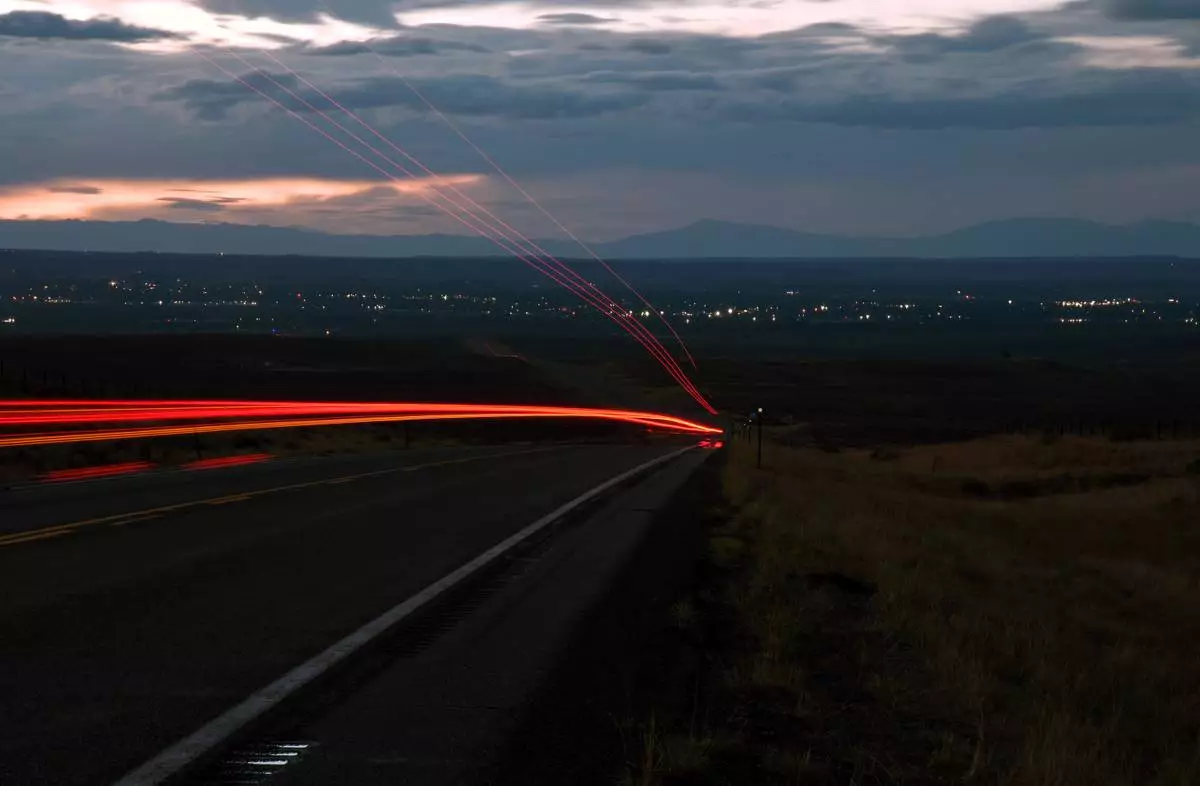
A truck passes through the Wind River Reservation on its way to Riverton, Wyo., on Saturday, Aug. 15, 2026. (AP Photo/Thomas Peipert)
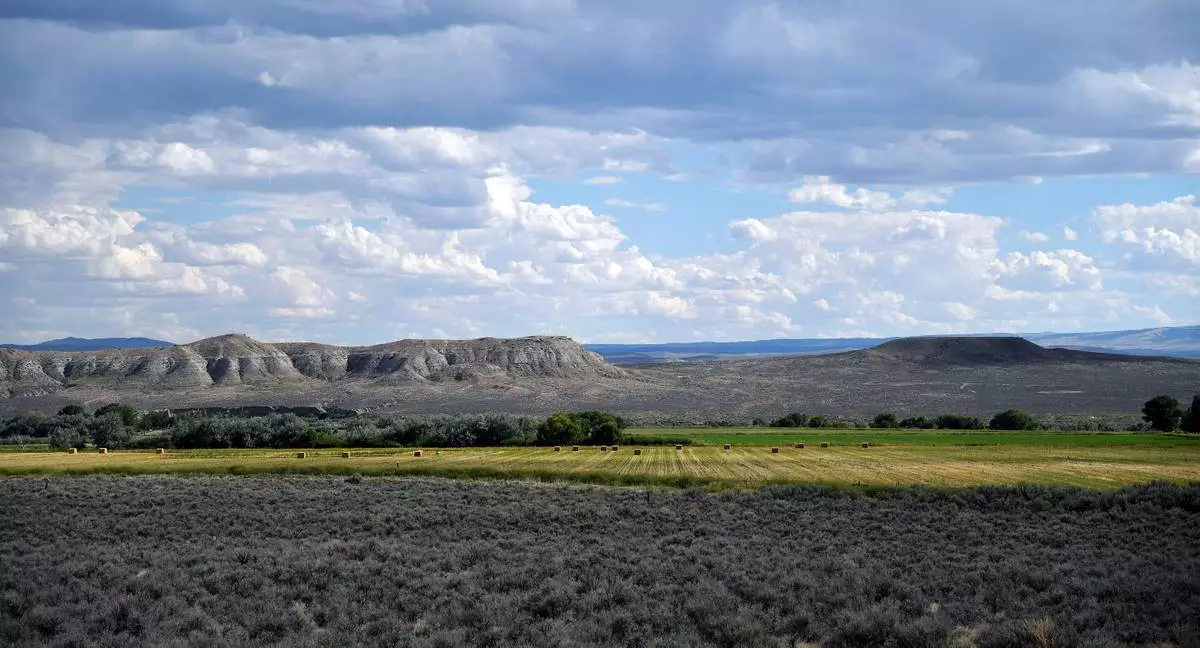
The sun shines on a hay field on the Wind River Reservation near Riverton, Wyo., on Sunday, Aug. 16, 2026. (AP Photo/Thomas Peipert)
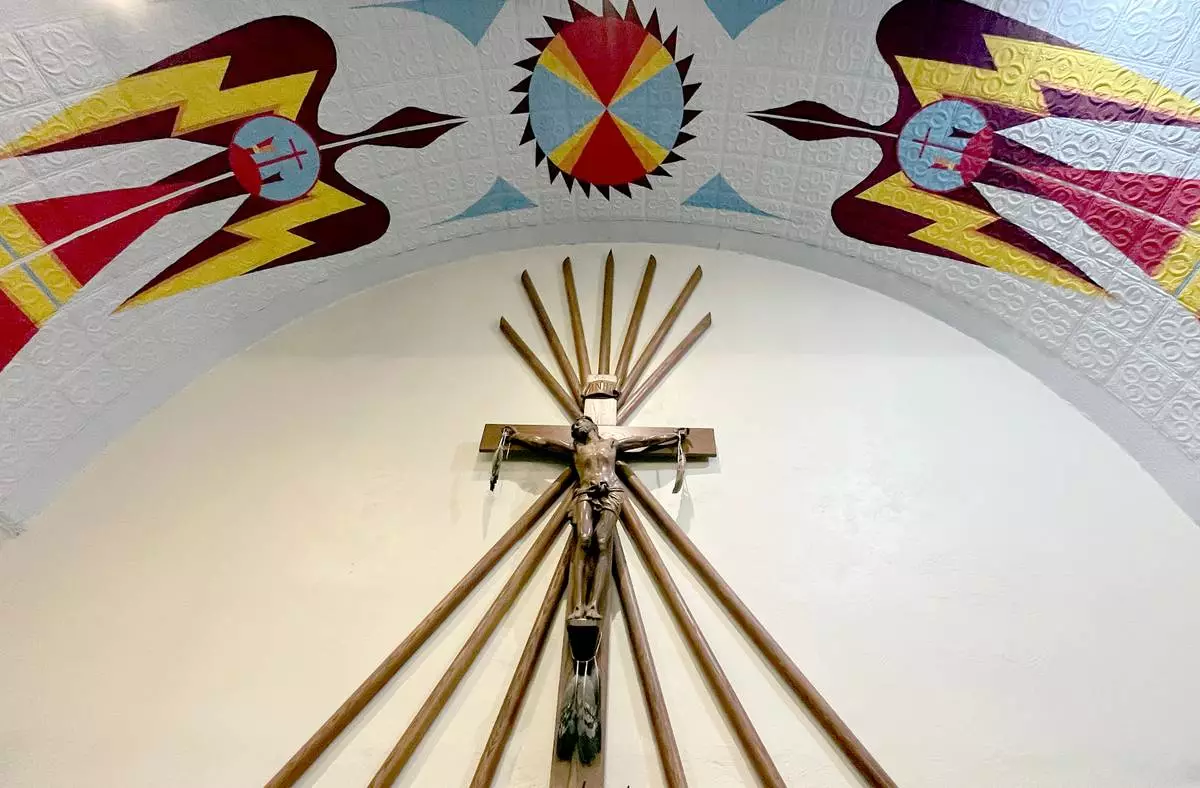
Native American imagery is displayed on the ceiling of the St. Stephens Indian Mission Catholic church in Arapahoe, Wyo., on Monday, Aug. 17, 2026. (AP Photo/Thomas Peipert)
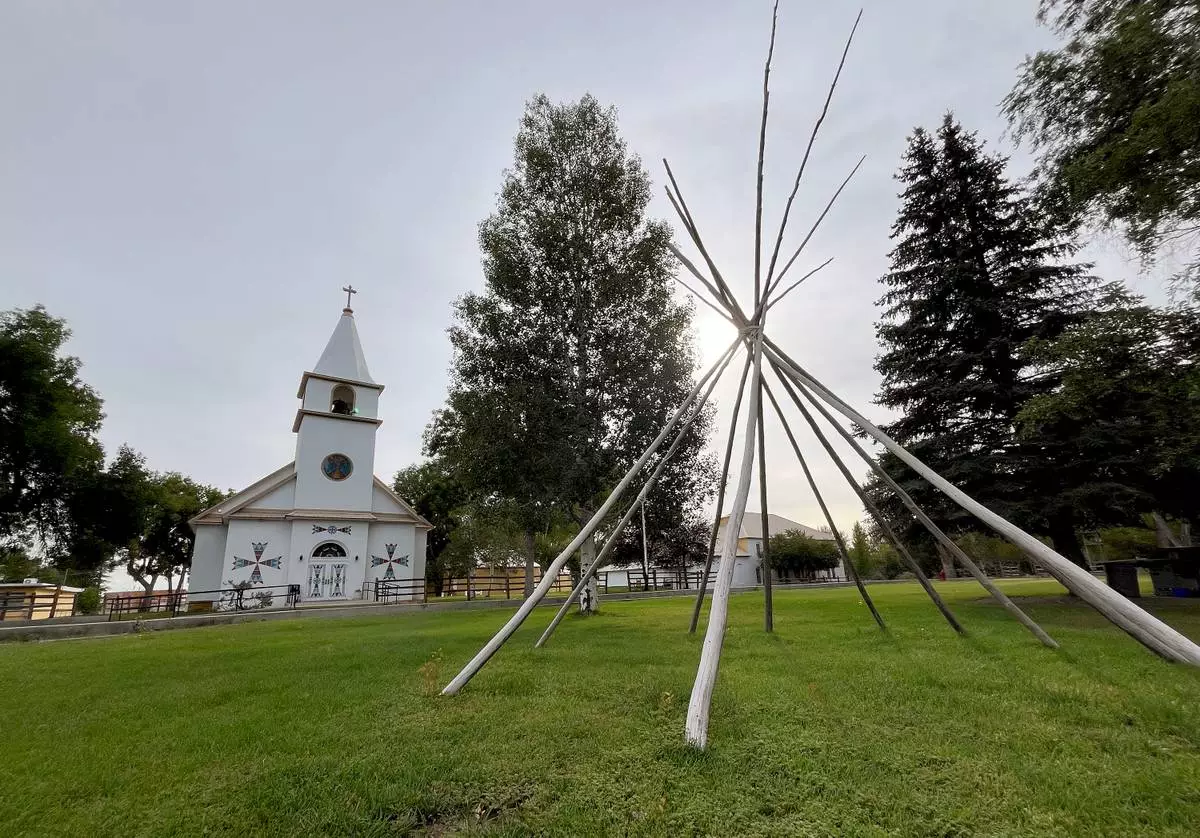
The frame of a teepee is displayed outside the St. Stephens Indian Mission Catholic church in Arapahoe, Wyo., on Monday, Aug. 17, 2026. (AP Photo/Thomas Peipert)
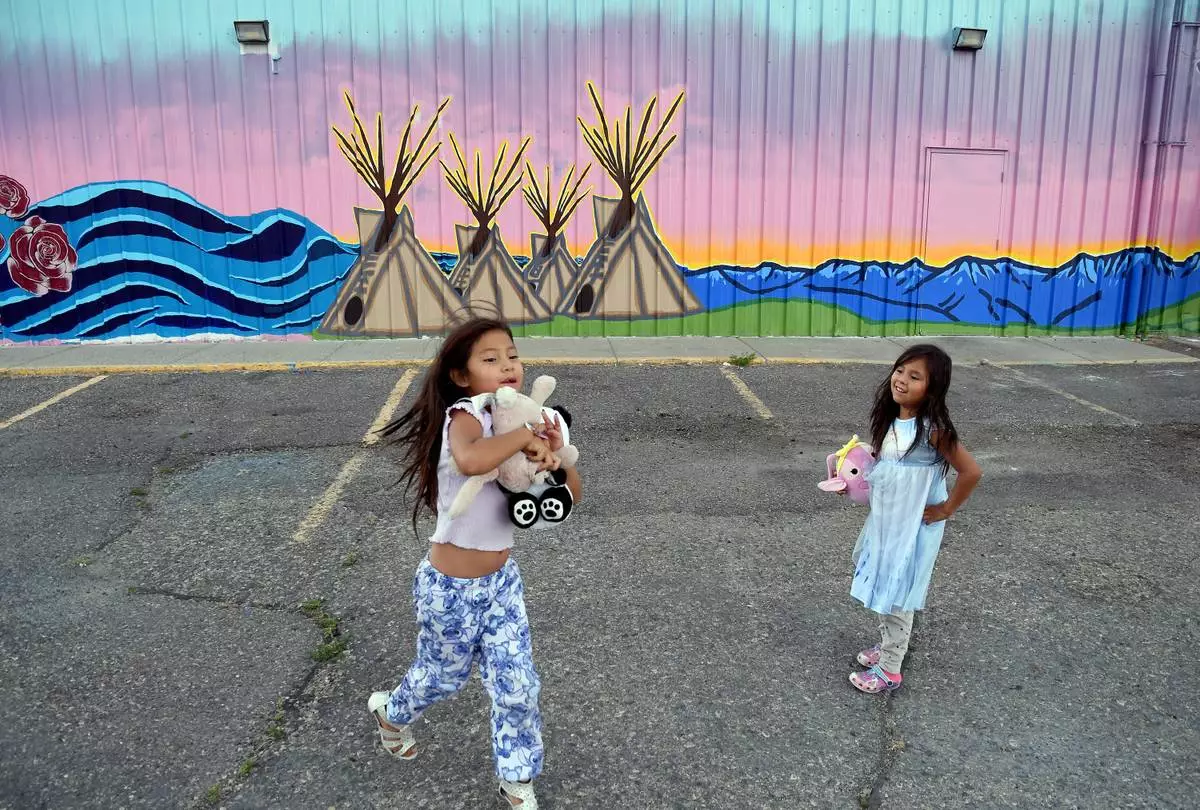
Jaelynn Duran, left, and Abigail Whiteman play in front of a mural at a gas station on the Wind River Reservation near Riverton, Wyo., on Saturday, Aug. 15, 2026. (AP Photo/Thomas Peipert)
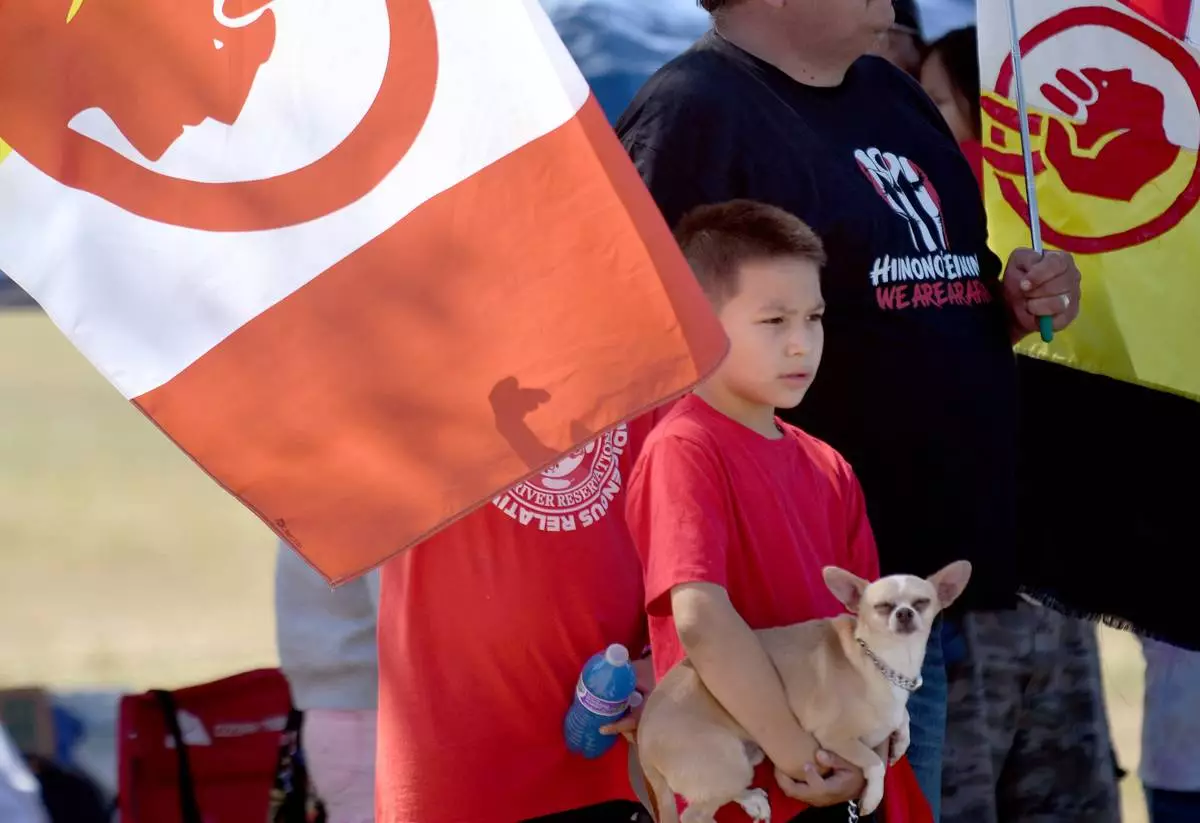
Raphael C'Hair stands amid protesters near the Foundations for Nations church in Arapahoe, Wyo., on Sunday, Aug. 16, 2026. (AP Photo/Thomas Peipert)
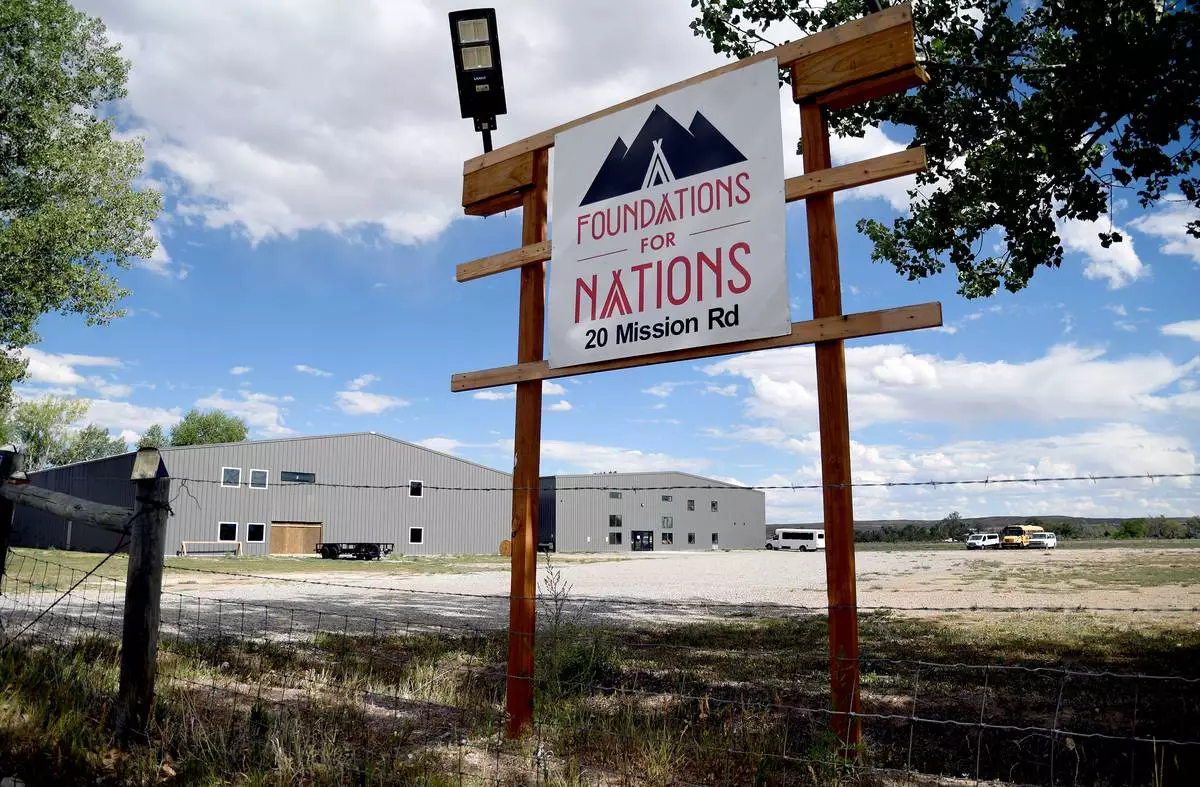
The general view of Foundations for Nations church is seen in Arapahoe, Wyo., on Sunday, Aug. 16, 2026. (AP Photo/Thomas Peipert)
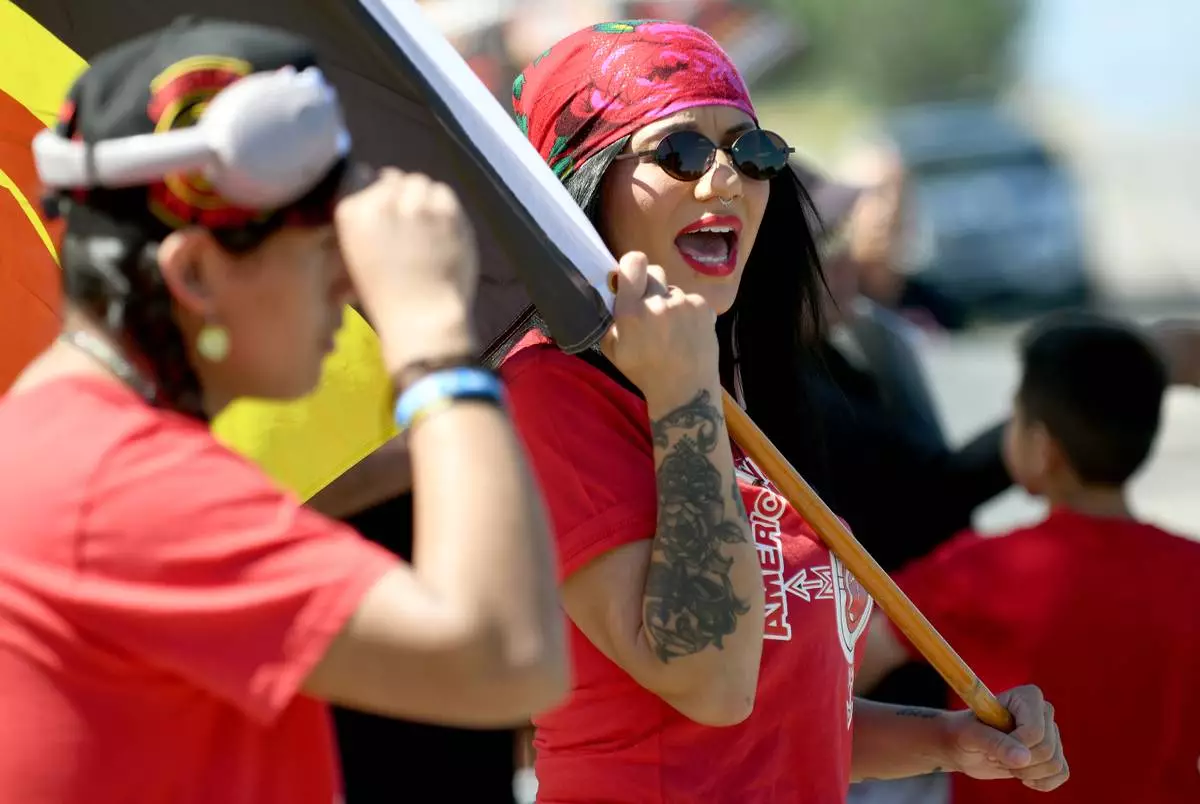
Danelle Kawasaki, a spokeswoman for the Montana American Indian Movement, protests near the Foundations for Nations church in Arapahoe, Wyo., on Sunday, Aug. 16, 2026. (AP Photo/Thomas Peipert)
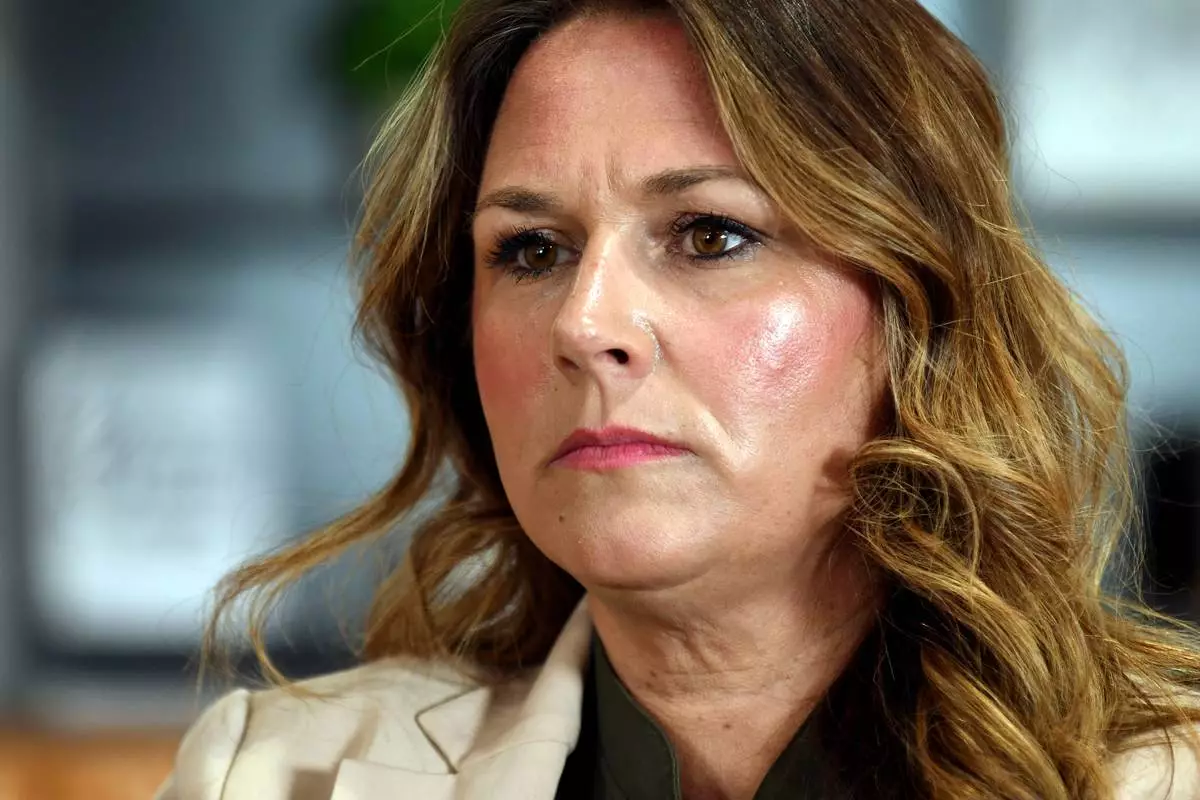
Sarah Lucas, pastor of the Foundations for Nations church, is interviewed in Arapahoe, Wyo., on Monday, Aug. 17, 2026. (AP Photo/Thomas Peipert)
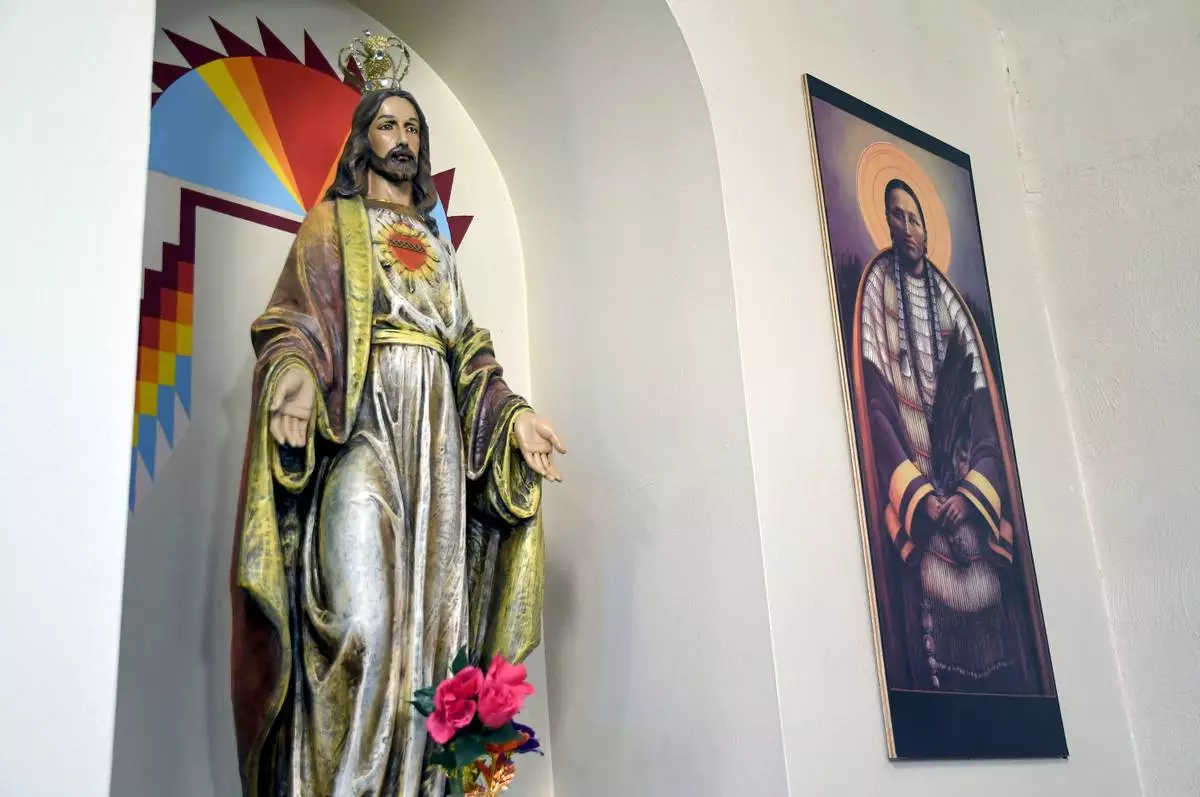
Native American imagery is displayed at the St. Stephens Indian Mission Catholic church in Arapahoe, Wyo., on Monday, Aug. 17, 2026. (AP Photo/Thomas Peipert)
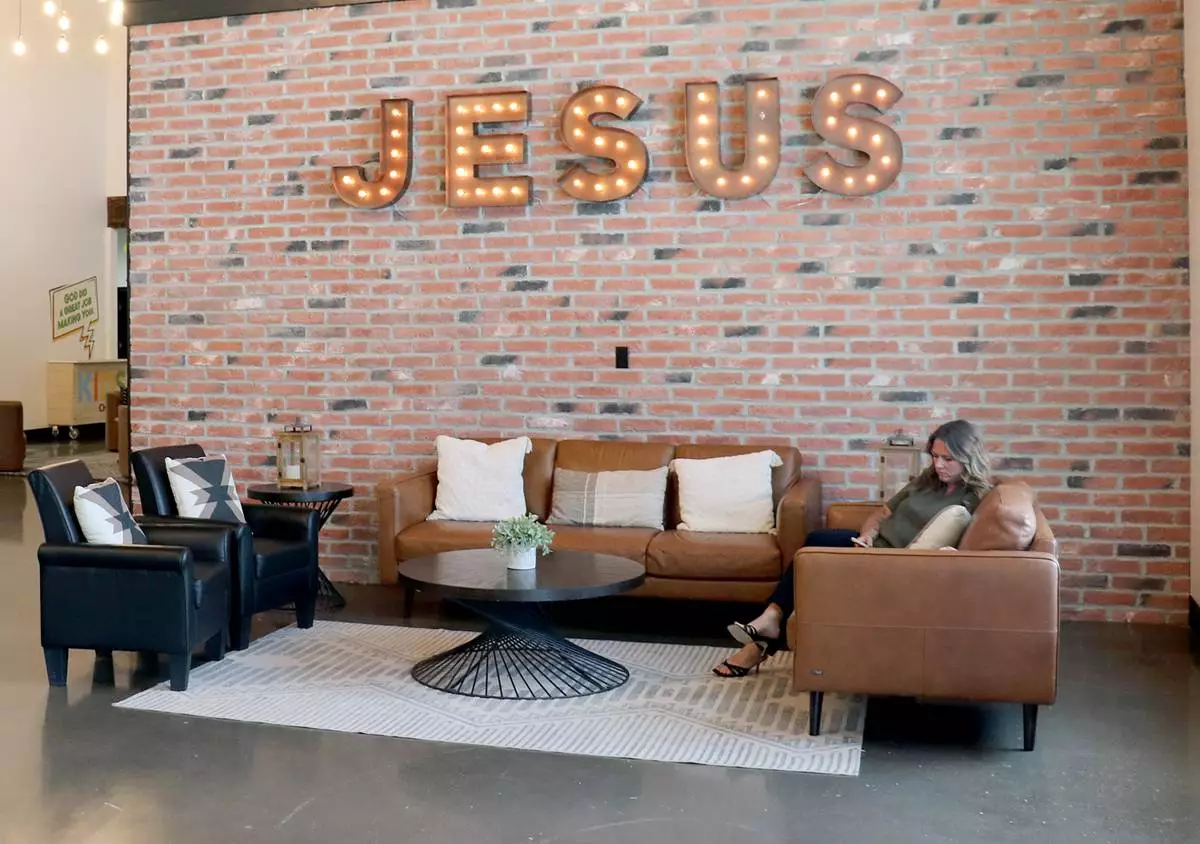
Pastor Sarah Lucas sits inside the Foundations for Nations church in Arapahoe, Wyo., on Monday, Aug. 17, 2026. (AP Photo/Savannah Peters)
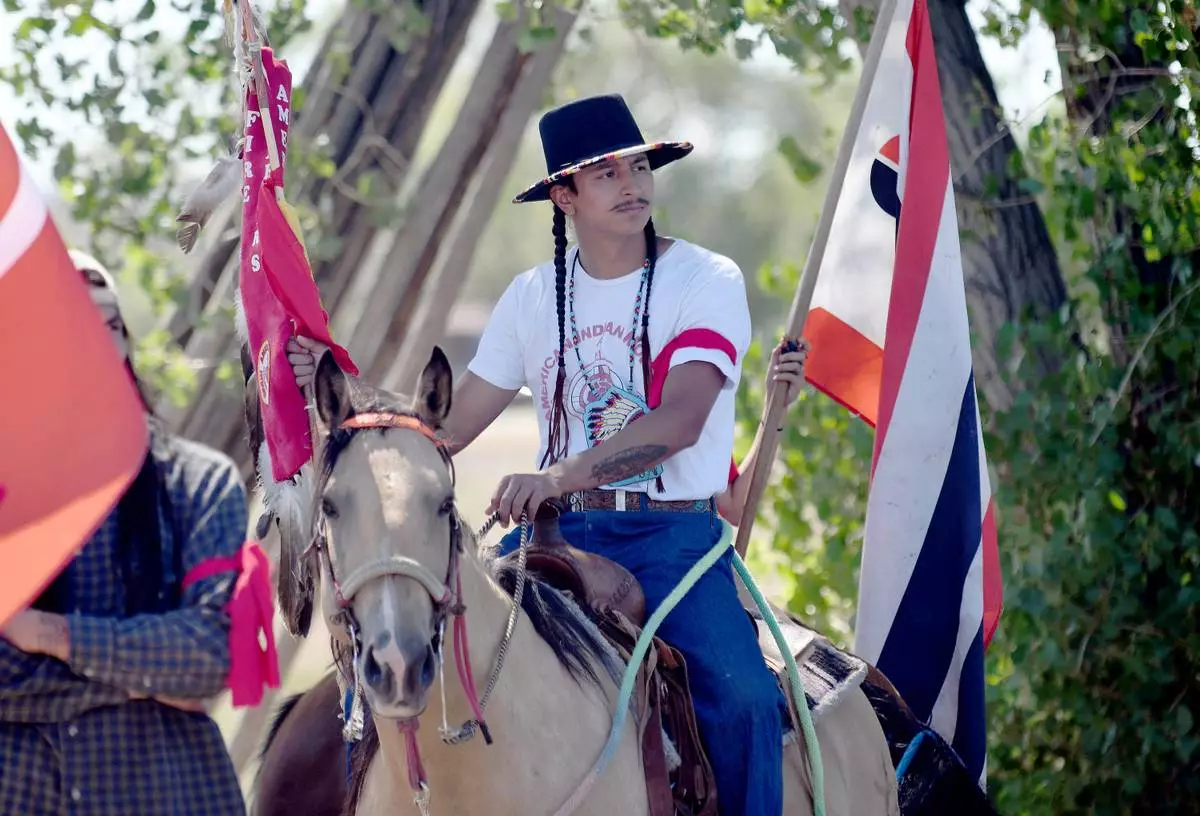
Kolten Lawrence protests near the Foundations for Nations church in Arapahoe, Wyo., on Sunday, Aug. 16, 2026. (AP Photo/Thomas Peipert)