COLUMBUS, Ohio--(BUSINESS WIRE)--Sep 14, 2026--
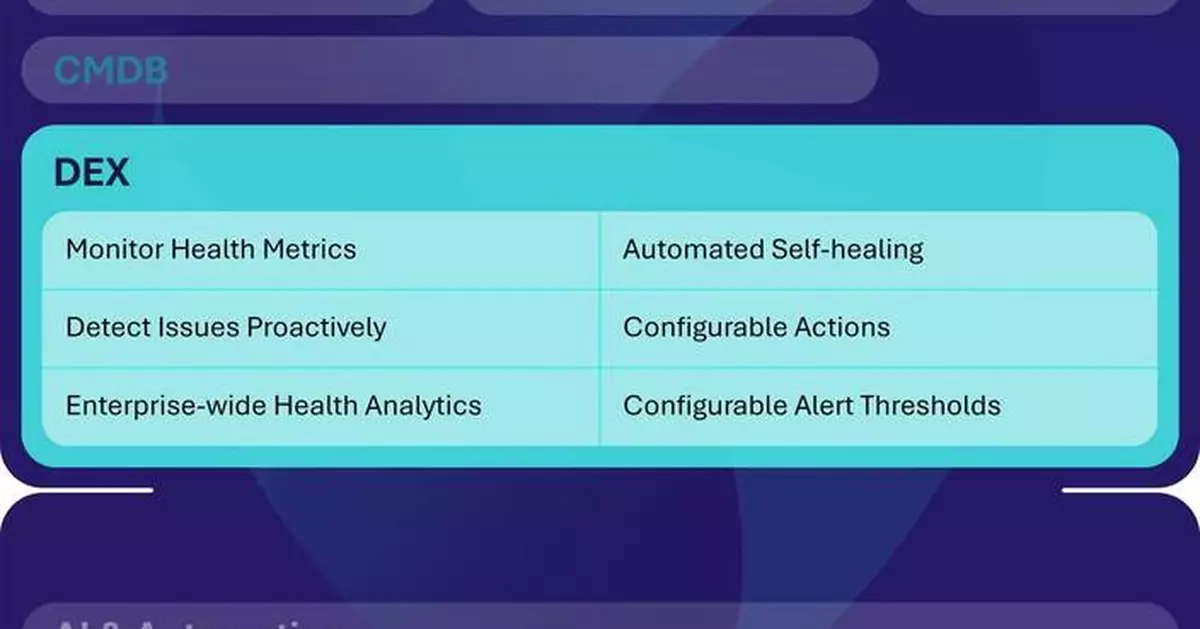
TeamDynamix, a leading provider of a unified, no-code, AI-powered IT Service Management platform (ITSM / ESM ) with enterprise integration and automation, today announced the launch of TeamDynamix DEX, a Digital Employee Experience solution built natively into the core platform. TeamDynamix customers can further modernize IT service operations by combining DEX with ITSM and IT Asset Management (ITAM). The platform-native DEX offering monitors computer telemetry, proactively detects issues, and initiates autonomous remediation or human-in-the-loop intervention with AI and Automation.
This press release features multimedia. View the full release here: https://www.businesswire.com/news/home/20260914298016/en/
“With the addition of DEX, we are bringing autonomous self-healing to the core TeamDynamix ITSM/ESM offering alongside ITAM, enterprise integration, automation, and AI. Every piece works together on a unified, no-code platform,” says Rod Mathews, chief executive officer at TeamDynamix. "With TeamDynamix, IT teams get powerful capability without the complexity that you see in dev-heavy systems. That's what's actually driving modernization, and it's what lets IT service delivery shift further left. We're challenging the idea that real ITSM power has to come with complexity." TeamDynamix was recently named a Challenger in the Gartner® Magic Quadrant™ for IT Service Management Platforms.
TeamDynamix Unifies ITSM with ITAM and DEX
DEX tracks critical health signals across the fleet of computers, from CPU, memory, disk, and network performance to thermal throttling, sleep and wake reliability, and per-application crash behavior, and rolls them into a health score. When a signal moves out of the configured threshold, DEX runs a risk-gated remediation from a pre-built library of cross-platform automations, triggers a workflow through the platform’s AI and automation layer, or creates a ticket with full computer, user, and telemetry details attached. Download the “ Self-healing IT Service ” eBook to learn more.
“According to industry analysts, roughly two-thirds of employees who experience a technology problem never report it,” explains Andrew Graf, chief product officer at TeamDynamix. “This is causing a loss of an estimated one to five hours per incident to friction IT can’t see.” DEX allows IT leaders to analyze which computers are healthy and can extend the life of the rest through simple interventions, including RAM upgrades, removing bloatware, and fixing startup performance, because device age alone is a poor predictor of whether a computer is struggling.
DEX drives cost savings and productivity gains by:
DEX monitors computers running Microsoft Windows, macOS, and Linux distributions from a single implementation, with no query language to learn and no separate system to buy, staff, or integrate. Learn more about DEX.
About TeamDynamix
TeamDynamix is a unified, AI-powered, no-code Enterprise Service Management (ITSM/ESM) and automation with an integration platform that gives organizations power without complexity. Built for agility and designed to evolve with your business, TeamDynamix helps IT and business teams eliminate manual toil, expedite service delivery, and orchestrate work across the enterprise. By removing the administrative burden, IT leaders can quickly adapt without draining resources or budgets. The result is faster time to value, lower total cost of ownership, and a platform that scales with your organization. Learn how TeamDynamix can accelerate IT service modernization at teamdynamix.com.

Andrew Graf, Chief Product Officer, TeamDynamix

Rod Mathews, CEO, TeamDynamix

TeamDynamix, a leading provider of a unified, no-code, AI-powered IT Service Management platform (ITSM/ESM) with enterprise integration and automation, today announced the launch of TeamDynamix DEX, a Digital Employee Experience solution built natively into the core platform. TeamDynamix customers can further modernize IT service operations by combining DEX with ITSM and IT Asset Management (ITAM). The platform-native DEX offering monitors computer telemetry, proactively detects issues, and initiates autonomous remediation or human-in-the-loop intervention with AI and Automation. TeamDynamix was recently named a Challenger in the Gartner® Magic Quadrant™ for IT Service Management Platforms.
CAIRO (AP) — Yemen’s Iran-backed Houthi rebels captured more strategic islands in the southern Red Sea, government and Houthi officials said Monday, strengthening their control of a major maritime shipping route.
The capture of the islands of Greater and Lesser Hanish is the latest in the rebels' swift advance around the Bab el-Mandeb Strait, a key passage for Saudi oil shipments that has only become more crucial during the Iran war since it serves as an alternative to the Strait of Hormuz.
Like Hormuz, which is located at the mouth of the Persian Gulf, the Bab el-Mandeb Strait — on the opposite side of the Arabian Peninsula — is a chokepoint that connects the Red Sea to the open ocean and Saudi Arabia's key Asian markets.
For more than a month, the Houthis have been striking Saudi oil infrastructure and shipping in the Red Sea, stepping up pressure on global oil prices and boosting Iran’s leverage in its war with the United States.
Saudi-backed Yemeni government forces have been attempting to rally and fight back. But the Houthi gains have seemingly come with little resistance.
The rebels deployed on the Hanish islands, 160 kilometers (100 miles) north of Bab el-Mandeb, after hundreds of government-allied forces withdrew from the archipelago, according to two government officials and a Houthi official. The officials spoke on condition of anonymity because they were not authorized to talk to journalists.
The capture of the islands came after the rebels last week seized the port city of Mokha on the mainland nearby and the island of Mayun, inside the Bab el-Mandeb Strait. The Houthis’ advances also put them just 20 miles (32 kilometers) from the U.S. military base in Djibouti, on the other side of the Bab el-Mandeb Strait.
The fighting is pushing in the impoverished nation back into full-fledged civil war, after a truce that largely maintained quiet since 2022. Even as they advance along the Red Sea, the Houthis have waged an offensive further inland, particularly in the longtime battleground province of Taiz.
Some 150 civilians have been killed in fighting since Sept. 3, including a pregnant woman killed Saturday in a village in Taiz, the government’s Human Rights Ministry said. More than 200 civilians have been wounded, it said.
Thousands of families have fled their homes in Taiz and nearby provinces in the past day along, said Khanzad Shah, acting head of Islamic Relief, a charity that operates in the area.
“Many of them don’t have enough food or water as they had to flee with whatever they could carry. In some areas, whole villages have reportedly emptied,” he said.
The United Nations has estimated that more than 80,000 people have been displaced in the past two weeks, including over 2,000 people who fled by boat to Djibouti.
The fighting threatens to reignite a war that for more than a decade brought disaster to Yemen, killing more than 150,000 people and driving the country to the brink of famine. Since 2014, the Houthis have controlled the north, including the capital, Sanaa, and much of the western heartland of the country where most of the population is located.
The internationally recognized government, backed by an array of disparate militias, controls the south and east, including the key southern port of Aden.
The Hanish islands, newly captured by the Houthis, had been controlled by the United Arab Emirates and its southern allies in Yemen. However, the UAE dismantled its military infrastructure there after it fell out with Saudi Arabia and the Yemeni government earlier this year.
For years, Saudi Arabia waged a destructive air campaign against the Houthis, while backing the government and allied militias. But it has appeared reluctant to throw itself fully back into the war, despite the Houthi attacks on oil infrastructure and shipping.
Saudi authorities sounded sirens on Sunday afternoon in the southern city of Abha and Khamis Mushait province, warning residents to take shelter from potential incoming fire. Both areas, near the border with Yemen, were repeatedly attacked by the Houthi in recent weeks.
A Houthi spokesman said they fired dozens of missiles and drones at the King Khalid Air Base in Khamis Mushait, targeting hangars, radar installations and ammunition depots. The statement on Monday by Brig. Gen Yahya Saree did not specify when the attack took place, but the Houthis often take hours or days to claim responsibility for attacks.
There was no immediate comment from Saudi Arabia on the Houthi claim. The Saudi civil defense overnight said a projectile fell in a different area near the border with Yemen along the Red Sea, injuring two people and damaging a mosque and several other buildings. The statement blamed the Houthis.
Saudi Arabia did not announce any new attacks targeting the Houthis.
On Sunday, the Yemeni government’s military said it launched airstrikes on Houthi positions in the port city of Mokha, the coastal town of Dhubab and elsewhere in Taiz province. The rebels reported strikes by the Saudi-backed forces in Taiz province and artillery shelling in Saada province, a Houthi stronghold on Yemen’s northern border with Saudi Arabia.
Sultan al-Arada, a member of the government’s presidential leadership council, described the collapse of government forces in Mokha, about 80 kilometers (50 miles) from the Bab el-Mandeb Strait, and elsewhere on Yemen’s west coast as “painful and regrettable.”
He said in televised interview aired late Saturday that forces “are currently regrouping and will return to the battle.”
On Sunday, Rashad al-Alimi, who leads the presidential council, sought to downplay the defeats as “incidental,” according to comments published by the country’s state-run SABA news agency. The government, he said, “will remain clear and fixed on the goal of retrieving (state) institutions and of reclaiming sovereignty over all national territories.”
People fleeing the Houthi advance told The Associated Press they saw forces withdrawing and urging people to run.
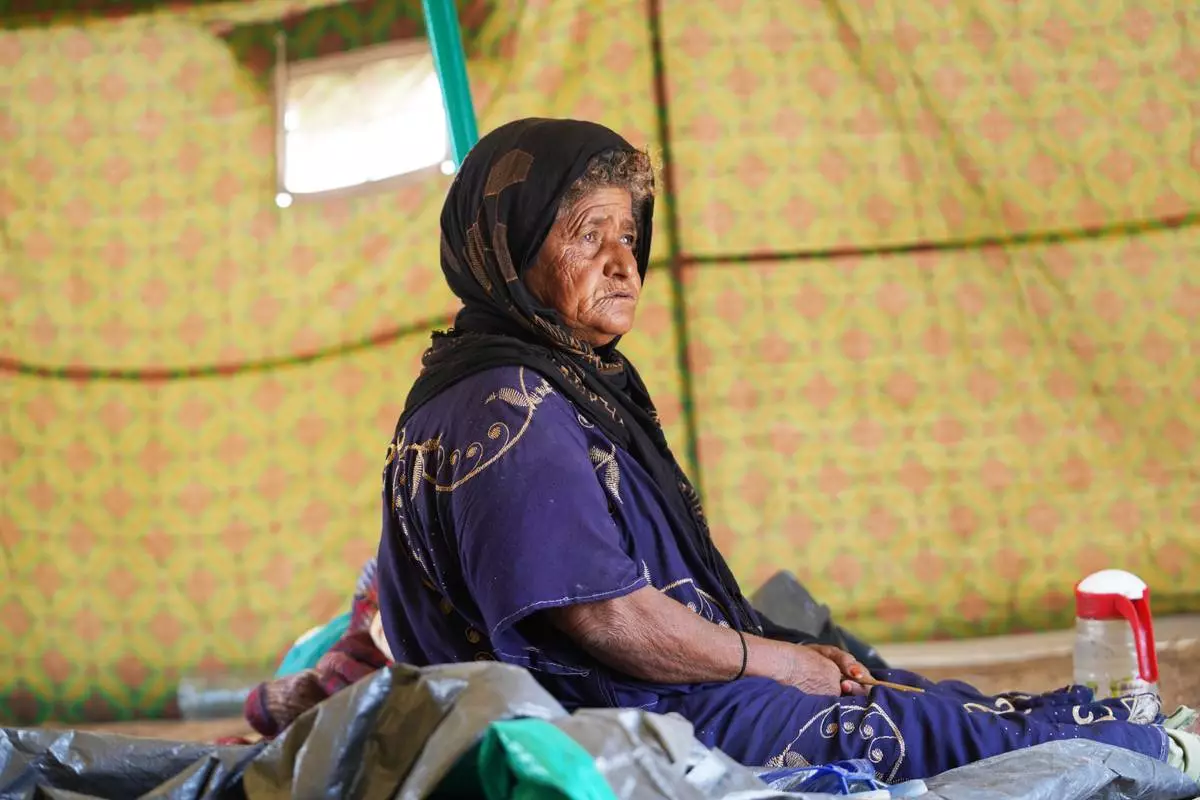
Salma Mohammed, 60, a displaced Yemeni woman, sits inside her tent at the Al-Firdaws camp in Ras Imran, just outside Aden, Yemen, Monday, Sept. 14, 2026. (AP Photo/Abdulnasser Alseddik)
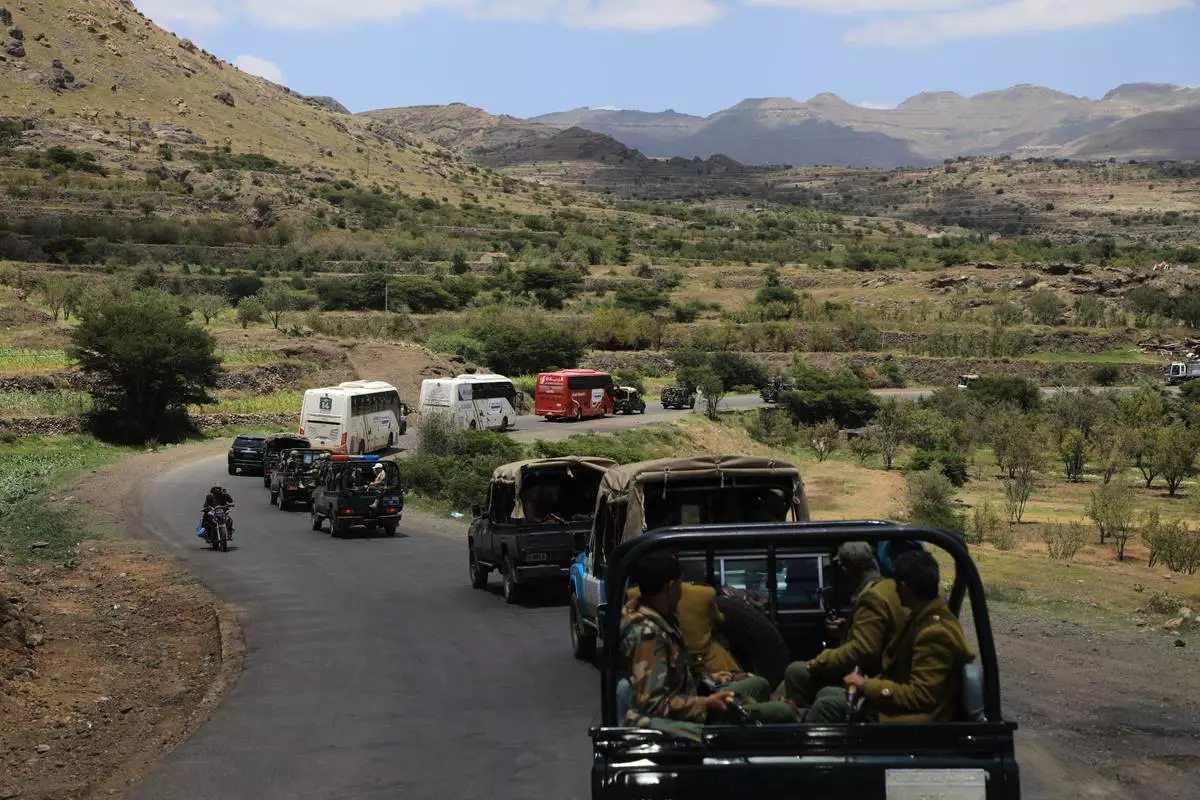
Houthi fighters escort a convoy carrying prisoners freed in Mokha through the Bani Matar district on its way to Sanaa, Yemen, Saturday, Sept. 12, 2026, following the Houthi takeover of the southern Red Sea port city. (AP Photo/STR)
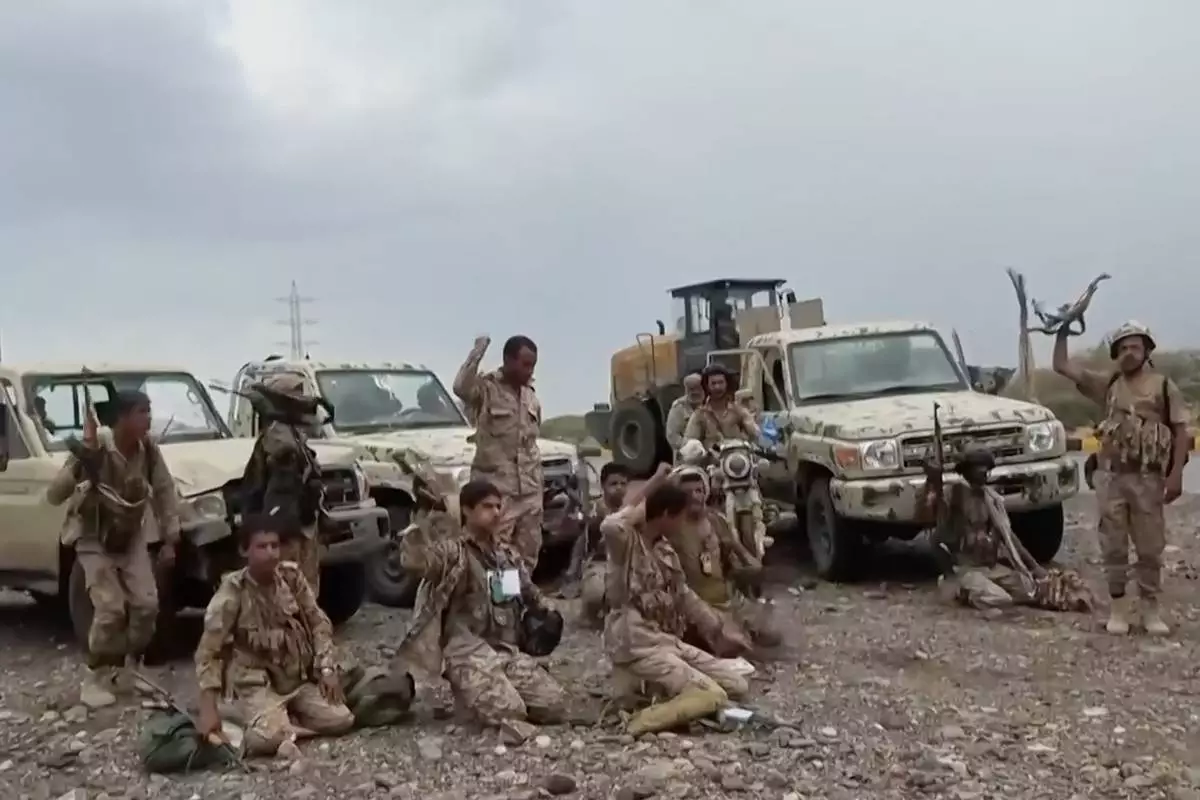
This image taken from undated video released by the Ansar Allah Media Office, the media arm of Yemen's Houthi rebels, on Saturday, Sept. 12, 2026, shows Houthi fighters chant after praying beside military vehicles during what the group says was their advance against Saudi-backed forces at an undisclosed location in southern Yemen. (Ansar Allah Media Office via AP)

This image taken from undated video released by the Ansar Allah Media Office, the media arm of Yemen's Houthi rebels, on Saturday, Sept. 12, 2026, shows a vehicle burning during what the group says was an advance by Houthi fighters against Saudi-backed forces at an undisclosed location in southern Yemen. (Ansar Allah Media Office via AP)
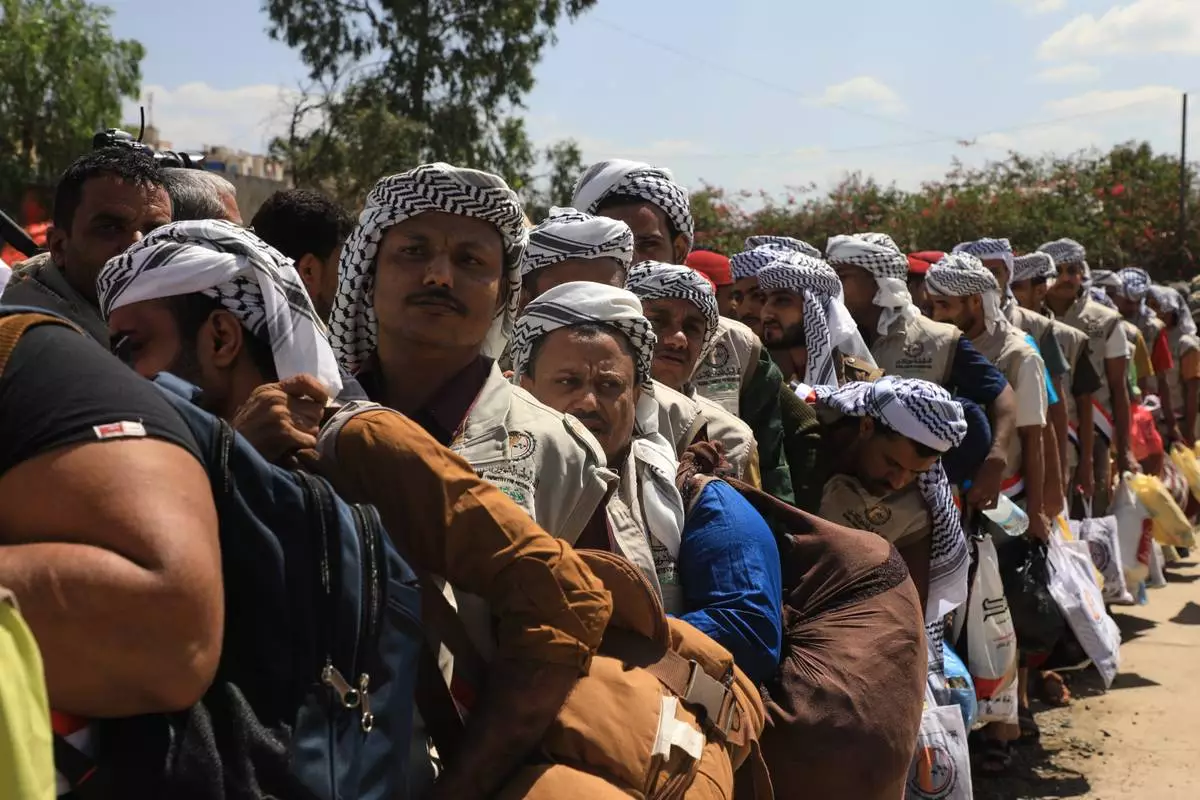
Houthi prisoners freed in Mokha carry their belongings as they arrive in Sanaa, Yemen, Saturday, Sept. 12, 2026, following the Houthi takeover of the southern Red Sea port city. (AP Photo)
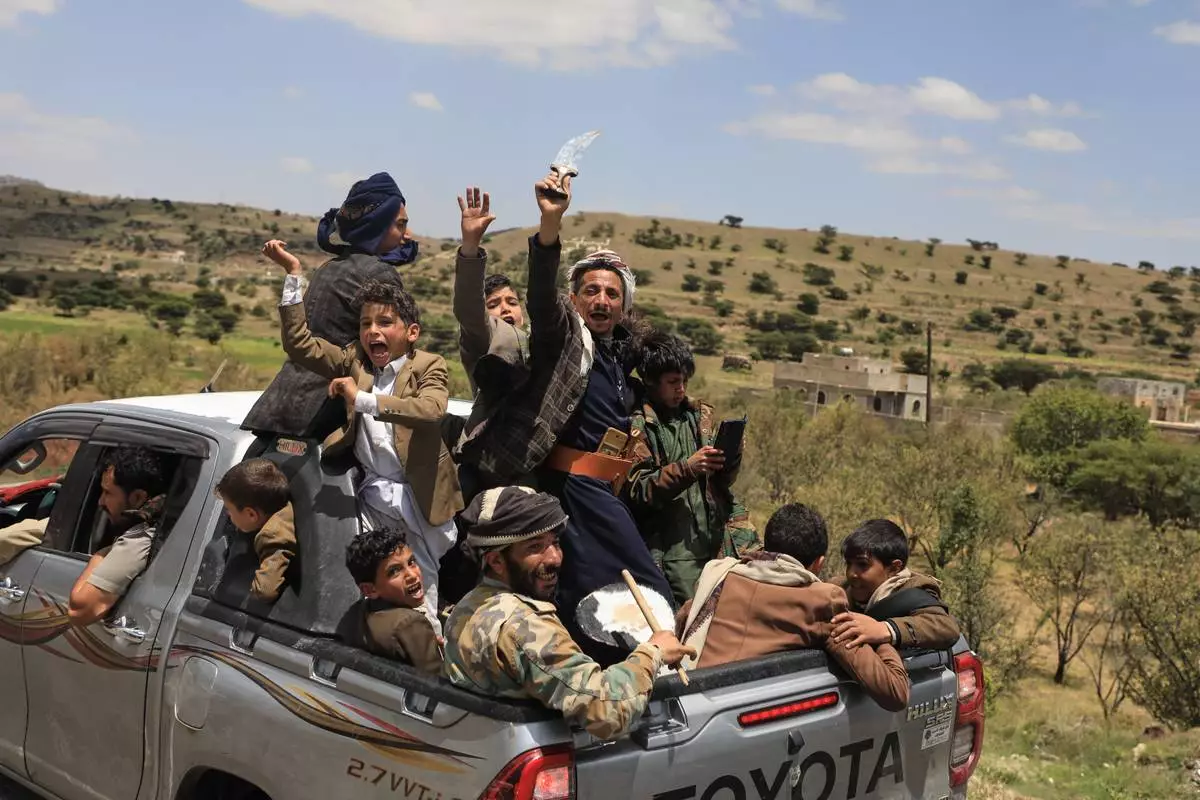
Yemeni civilians celebrate while riding in the back of a pickup truck in the Bani Matar district, Yemen, Saturday, Sept. 12, 2026, as they follow a convoy carrying Houthi prisoners freed in Mokha on its way to Sanaa following the Houthi takeover of the southern Red Sea port city. (AP Photo/STR)