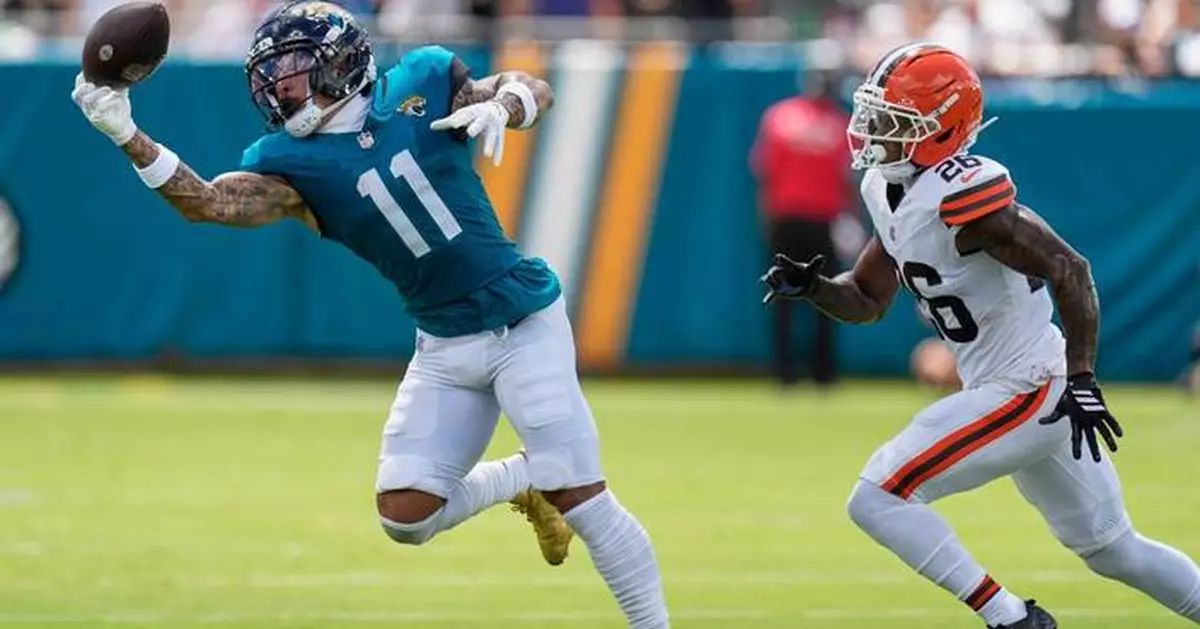
JACKSONVILLE, Fla. (AP) — Parker Washington fully extended his body at the goal line and hauled in Trevor Lawrence’s 30-yard pass for Jacksonville’s first touchdown of the season.
Washington followed with an ode to a professional wrestler, “The Undertaker,” and then rubbed his index finger and thumb together in a money celebration.
His message was seemingly simple: wake up and pay up!
“I was just bringing energy to the team, man,” Washington said. “It was just cool to just start strong, have some fun and have a great win.”
Washington proved his worth in the Jaguars’ 34-10 rout of Cleveland in the season opener for both teams Sunday. He finished with five receptions for 83 yards, including the two best catches of the day for the home team.
His diving TD reception on Jacksonville’s opening possession was one; his one-hander near the sideline was the other.
They were exactly what Washington needed to help him gain leverage in contract negotiations with the Jaguars. The fourth-year pro is a pending free agent who could command more than $25 million a year in March — a significant payday for a sixth-round draft pick from Penn State in 2023 who caught 58 passes for 847 yards and five TDs last season.
The Jaguars had hoped to get an extension done before training camp, but it didn’t happen. They again tried to agree to terms before the opener, but nothing materialized.
Washington stayed quiet through it all — and then let his play speak volumes.
“You would not even know that’s going on just the way he carries himself,” Lawrence said. “He’s been the same guy. Just comes to work every day, does everything the right way. You wouldn’t even know that’s going on in the background. Really just impressed with how he’s handled that but not surprised. He’s a worker, and he’s a stud.”
The Jaguars got off to another fast start, reigniting a trend that began late last season.
They led 24-0 at halftime against Cleveland, marking the sixth time in their past seven regular-season games that they scored 17 or more points in the first two quarters.
“Yeah, that’s always the goal,” Lawrence said. “You want to start the game fast and play well in that first possession so you can settle in as soon as possible and not give the ball back to the other team.”
Jacksonville allowed 228 yards on six kickoffs, including a 74-yarder that set up a field goal in the third quarter.
Raheim ”Rocket” Sanders totaled 130 yards on three returns. Dylan Sampson returned two for 64 yards. And Malachi Corley added a 34-yarder.
“Got to clean up some things on kickoff,” coach Liam Coen said.
Linebacker Ventrell Miller had nine tackles, including his first career sack, and forced a fumble. He knocked the ball out of rookie receiver KC Concepcion’s hands at the end of a 5-yard gain in the second quarter, setting up Trevor Lawrence’s third touchdown pass.
Miller, a fourth-round draft pick out of Florida in 2023, beat out second-year pro Branson Combs for the starting job in the preseason. He’s now tasked with replacing Pro Bowl linebacker Devin Lloyd, who had a career-high five interceptions last season.
Defensive end Bryan Thomas Jr., an undrafted rookie from South Carolina, was inactive after leading the team with 3 ½ sacks in the preseason. Second-year pros Danny Striggow and BJ Green played ahead of Thomas, and Green was ruled out at halftime with an elbow injury. Green’s injury could open the door for Thomas to make his NFL debut in Week 2.
Right tackle Cole Van Lanen made a relatively quick return from knee surgery. Van Lanen started the opener eight months after tearing a ligament in his right knee in the team’s 2025 regular-season finale. He played the first half against Cleveland — he didn’t give up a sack — before giving way to backup Walker Little.
2018 — most recent time the Jaguars started a season 2-0.
Winning at Denver (again) would certainly raise Jacksonville’s profile in the AFC. The Jags stunned the Broncos 34-20 last December, although Denver still earned the conference’s No. 1 seed in the playoffs.
See AP’s full NFL coverage here
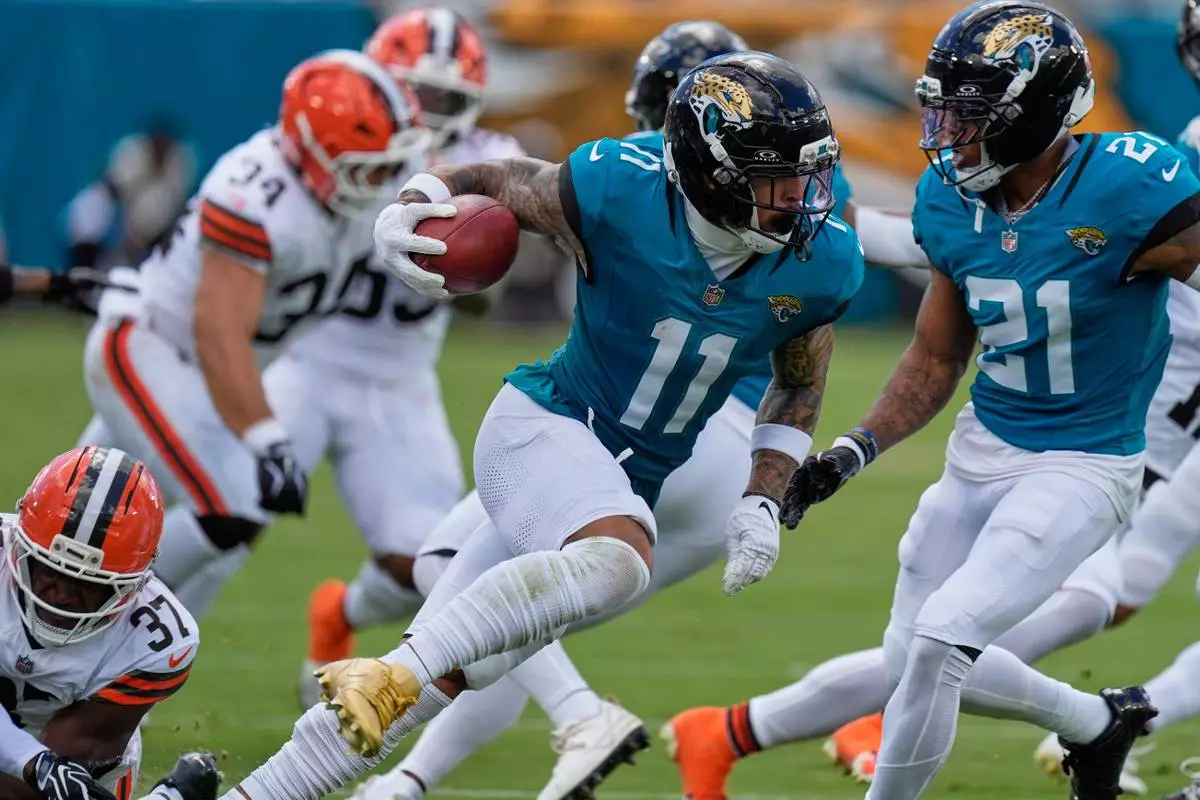
Jacksonville Jaguars wide receiver Parker Washington (11) carries in the first half of an NFL football game against the Cleveland Browns, Sunday, Sept. 13, 2026, in Jacksonville. (AP Photo/Mike Stewart)
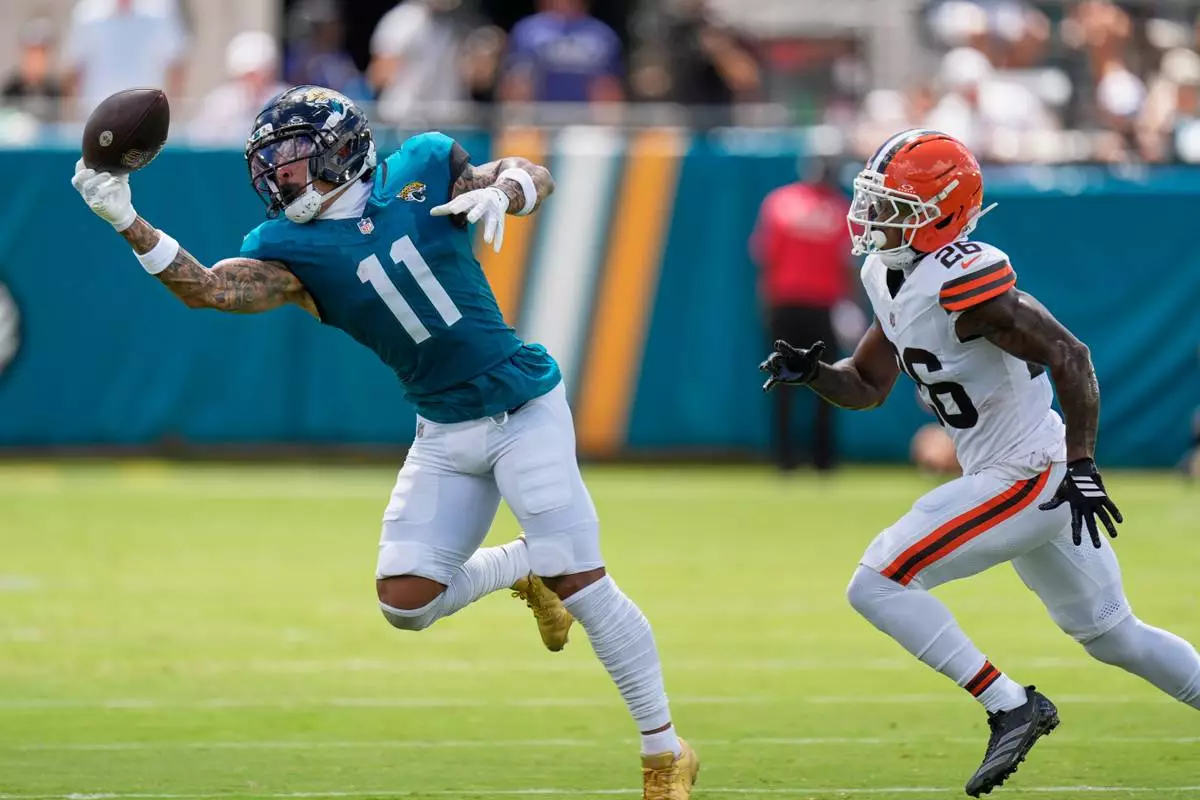
Jacksonville Jaguars wide receiver Parker Washington (11) catches a pass in front of Cleveland Browns cornerback Myles Harden (26) in the first Parker Washington, -cb26=half of an NFL football game, Sunday, Sept. 13, 2026, in Jacksonville. (AP Photo/Mike Stewart)
NEW YORK (AP) — Democratic-led states and cities filed lawsuits Monday challenging a federal rule set to begin Friday that they say gives President Donald Trump’s administration broad discretion to deny green cards to immigrants who rely on public assistance for food, healthcare, housing and other basic needs.
The lawsuits challenge the U.S. Department of Homeland Security’s plan to revive a “public charge” rule the Republican originally imposed during his first term, only to have it reversed under his successor, Democratic President Joe Biden.
New York Attorney General Letitia James, who is leading a coalition of 21 other states in one of the suits, said the rule would force needy immigrant families to choose between seeking assistance and seeking legal status in the country.
“This rule preys on that fear and counts on families forfeiting the food assistance, health care coverage, and other public benefits to which they are legally entitled,” she said Monday at a news conference in City Hall alongside New York City Mayor Zohran Mamdani and immigrant advocates.
California, Colorado, Hawaii, Massachusetts, Michigan, Nevada, New Mexico and Wisconsin are among the states involved in the legal challenge.
Mamdani filed a separate suit with leaders of other U.S. cities, including Chicago, San Francisco and Seattle. He said the rule would have a “chilling effect” not just on immigrants seeking legal status but other residents of the nation’s largest city.
“The new public charge rule seeks to push immigrant families away from the programs that have kept people fed and healthy for decades,” the mayor said. “New Yorkers will be afraid to see a doctor or ask for help they are legally entitled to. That fear will not stop at the families that the federal government is targeting.”
The Homeland Security Department, which is named in the lawsuits, dismissed the dire warnings.
“Let’s get this straight, sanctuary states are terrified they will lose federal funds because hundreds of thousands of illegals and noncitizens might remove themselves from American welfare programs,” the agency said in a statement. “We’re shaking in our boots over this supposedly terrible outcome.”
The lawsuits, which were both filed in federal court in Manhattan, argue the forthcoming rule is “arbitrary and capricious,” exceeds the Department of Homeland Security’s statutory authority, and departs from the longstanding meaning of the federal government’s public charge provision.
Specifically, James said, the rule unlawfully gives immigration officials broad discretion to consider a wide range of public benefits when making their decisions on immigrants seeking legal status in the country.
She said the rule lets immigration officers count nearly any public benefit, used for any length of time, against a green card applicant -- even if it’s a U.S. citizen family member who is taking advantage of the benefit.
That means a parent’s green card application could be at risk simply because their U.S. citizen child used state-provided health insurance or participated in a school’s free lunch program, James said.
“This new rule sweeps away more than a century of settled law to unlawfully broaden the definition of ‘public charge’ in a way that Congress never intended,” added Steve Banks, the city’s corporation counsel.
California Attorney General Rob Bonta called the forthcoming rule a “cruel policy.”
Federal law already requires those seeking permanent residency or legal status to demonstrate that they will not become a public charge.
The Trump administration’s new rule does not describe or specify by name the benefits and programs that could be considered a public charge.
It simply says officers, “using good judgment and discretion,” will make “individualized, fact-specific public charge inadmissible determinations, based on a totality of the alien’s circumstances.”
__
Associated Press reporters Sophie Austin in Sacramento, Calif. and Cybele Mayes-Osterman in Chicago contributed to this story.
Follow Philip Marcelo at https://x.com/philmarcelo
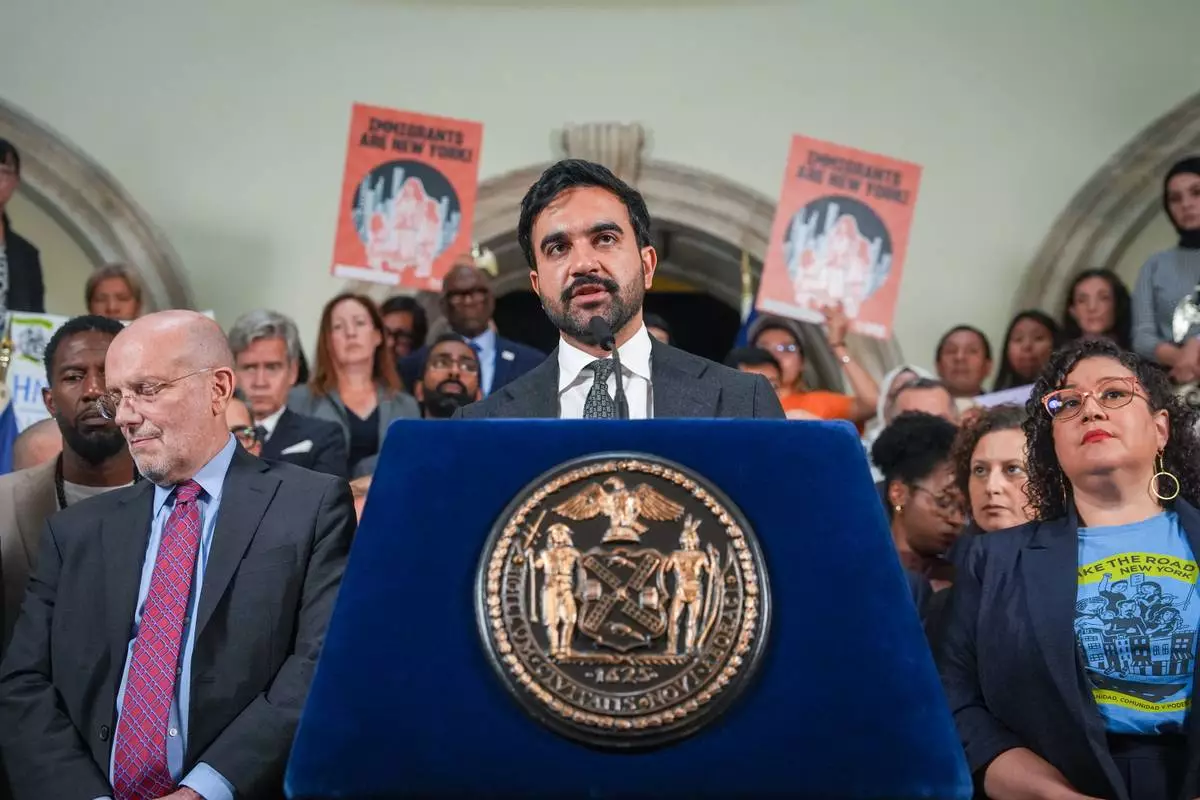
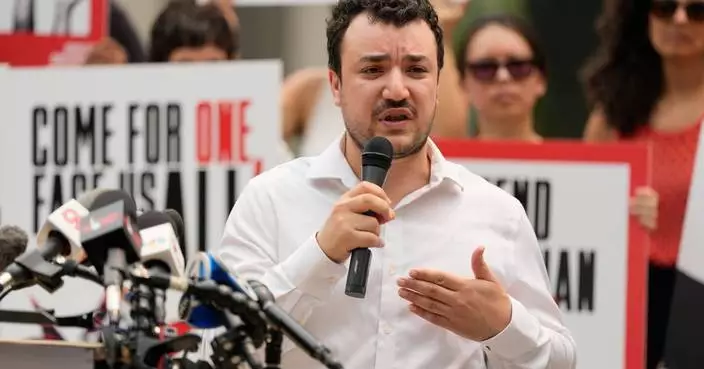
New York City Mayor Zohran Mamdani speaks during an announcement of a lawsuit filed by New York and 21 other states challenging the federal government's new public charge rule, on Monday, Sept. 14, 2026, in New York. (AP Photo/Ryan Murphy)
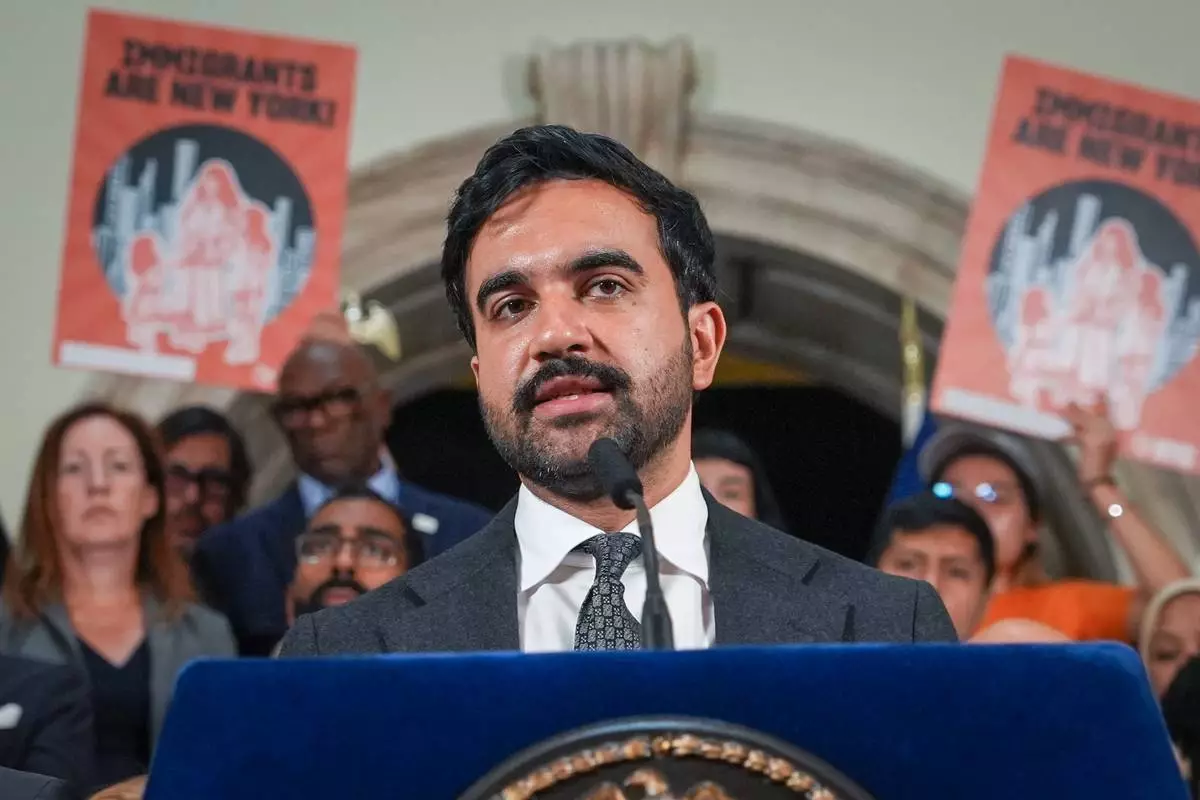
New York City Mayor Zohran Mamdani speaks during an announcement of a lawsuit filed by New York and 21 other states challenging the federal government's new public charge rule, on Monday, Sept. 14, 2026, in New York. (AP Photo/Ryan Murphy)
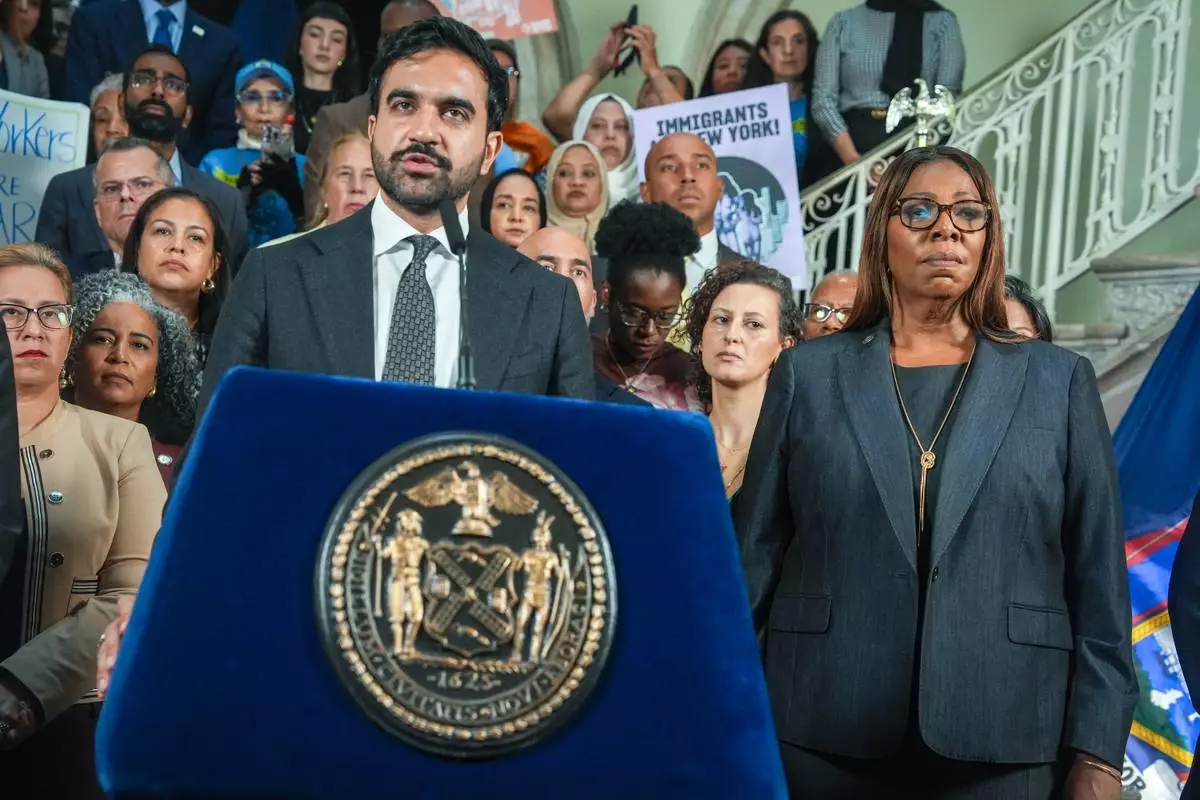
New York City Mayor Zohran Mamdani and New York Attorney General Letitia James announce a lawsuit filed by New York and 21 other states challenging the federal government's new public charge rule, on Monday, Sept. 14, 2026, in New York. (AP Photo/Ryan Murphy)
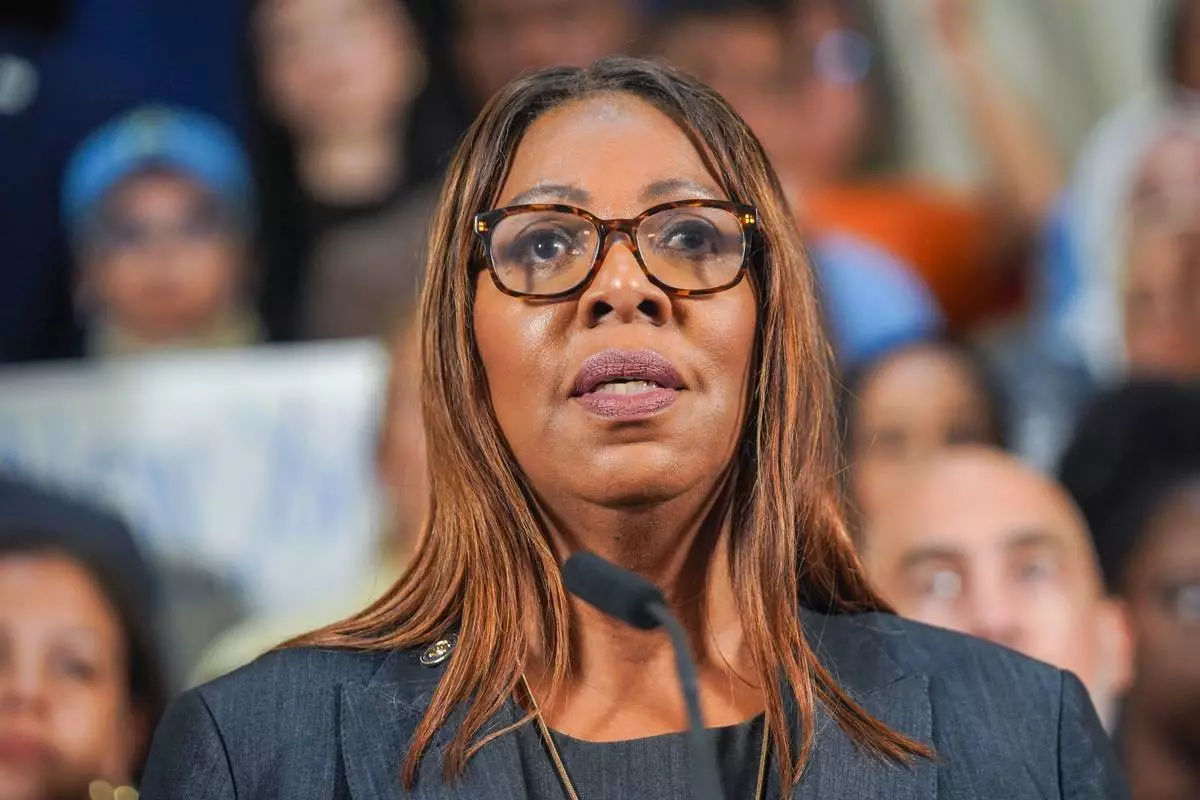
New York Attorney General Letitia James speaks during an announcement of a lawsuit filed by New York and 21 other states challenging the federal government's new public charge rule, on Monday, Sept. 14, 2026, in New York. (AP Photo/Ryan Murphy)
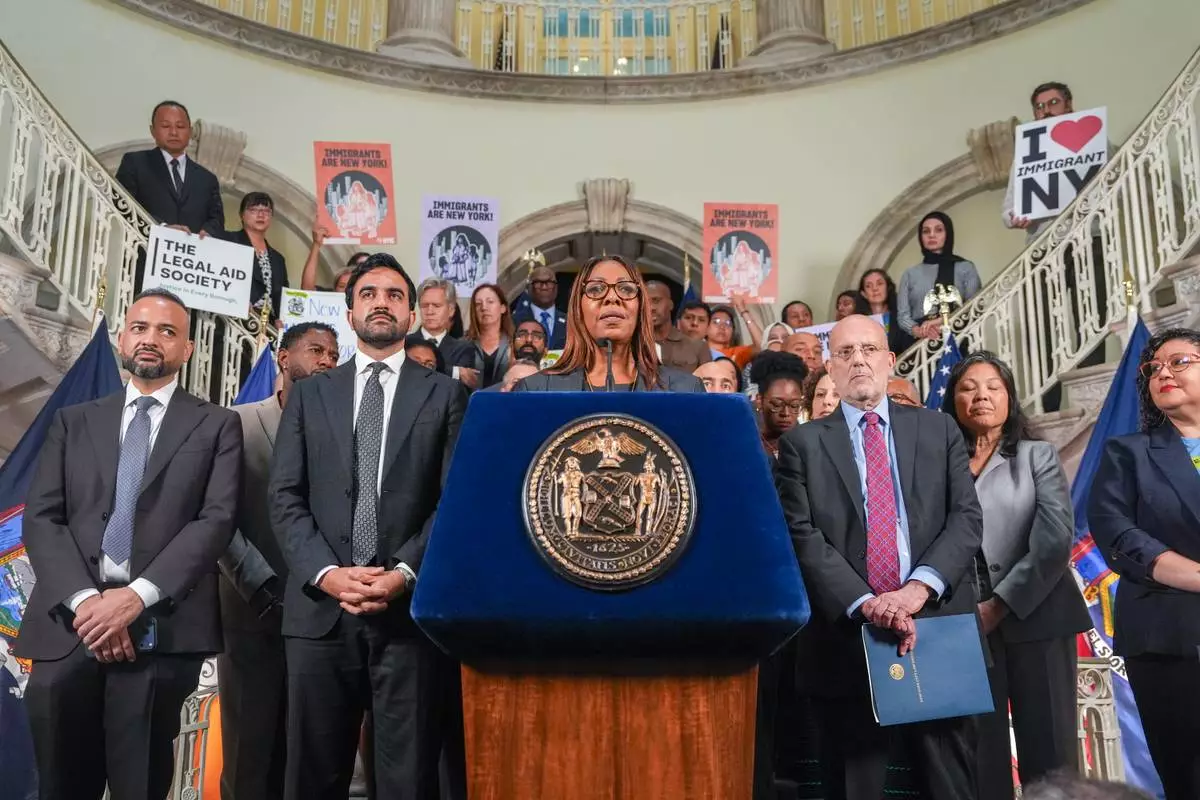
New York Attorney General Letitia James speaks during an announcement of a lawsuit filed by New York and 21 other states challenging the federal government's new public charge rule, on Monday, Sept. 14, 2026, in New York. (AP Photo/Ryan Murphy)