CHARLOTTE, N.C. (AP) — For the first time in four years, the Carolina Panthers woke up after a season opener not having to worry about a concerning performance from quarterback Bryce Young.
Their defense, now that's a completely another story.
Click to Gallery
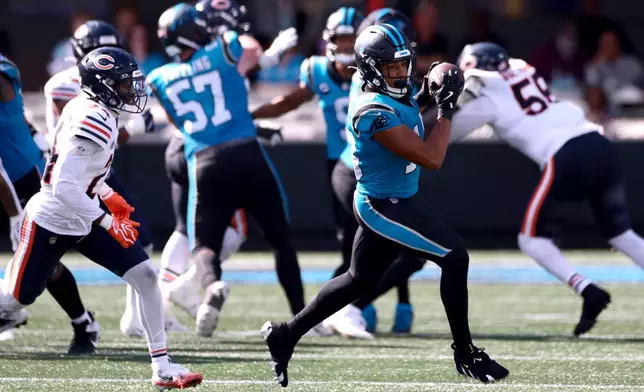
Carolina Panthers wide receiver Jalen Coker (18) makes a catch during the second half of an NFL football game, Sunday, Sept. 13, 2026, in Charlotte, N.C. (AP Photo/Scott Kinser)
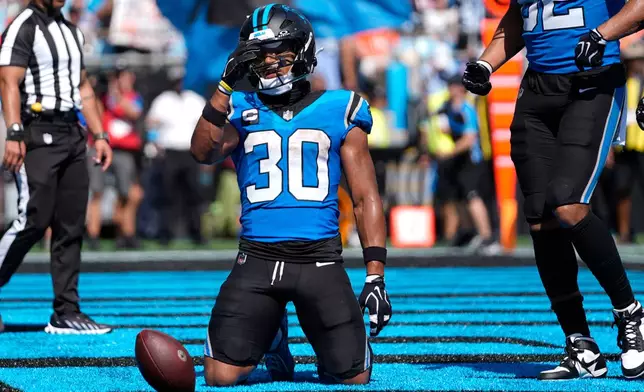
Carolina Panthers running back Chuba Hubbard (30) celebrates after scoring a touchdown during the second half of an NFL football game, Sunday, Sept. 13, 2026, in Charlotte, N.C. (AP Photo/Erik Verduzco)
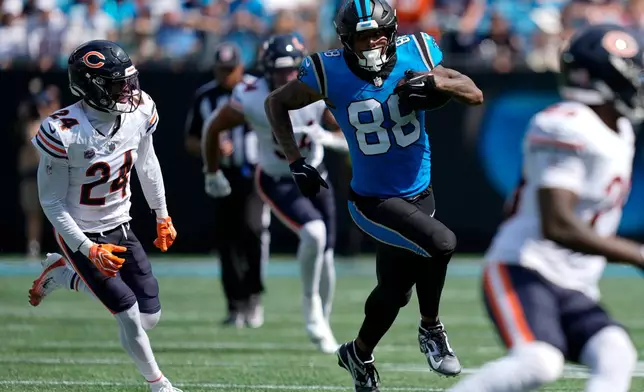
Carolina Panthers tight end Darren Waller (88) runs during the second half of an NFL football game, Sunday, Sept. 13, 2026, in Charlotte, N.C. (AP Photo/Erik Verduzco)
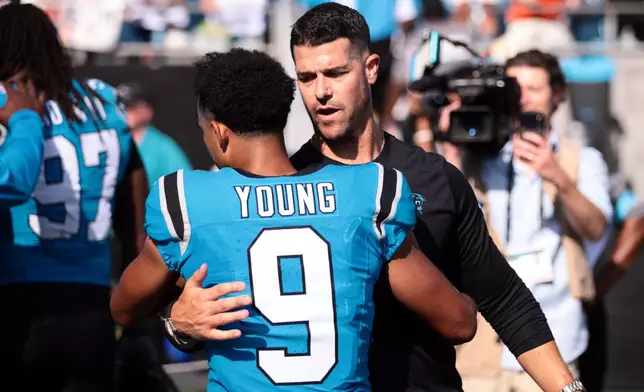
Carolina Panthers head coach Dave Canales embraces quarterback Bryce Young (9) after an NFL football game, Sunday, Sept. 13, 2026, in Charlotte, N.C. (AP Photo/Scott Kinser)
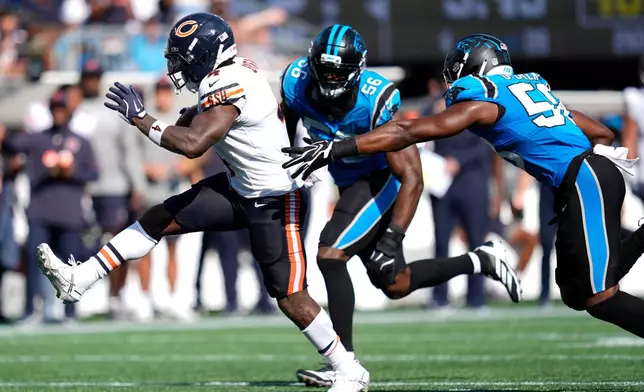
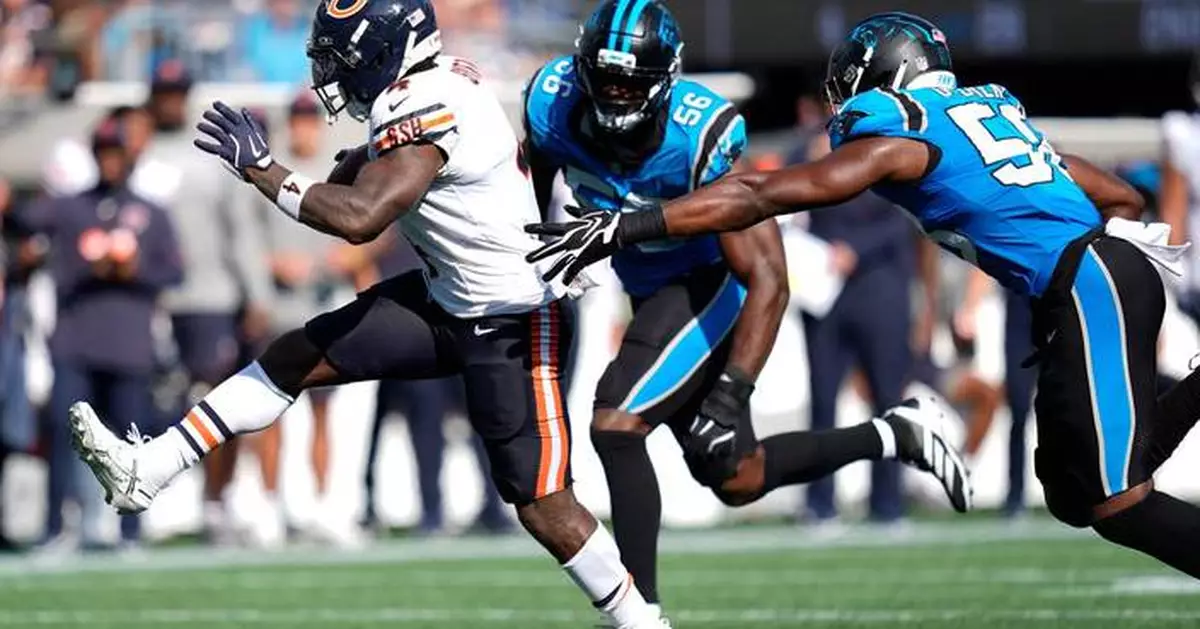
Chicago Bears running back D'Andre Swift (4) runs against Carolina Panthers linebacker Jeremiah Moon (56) and inside linebacker Bobby Okereke (58) to score a touchdown during the second half of an NFL football game, Sunday, Sept. 13, 2026, in Charlotte, N.C. (AP Photo/Erik Verduzco)
Young threw for 361 yards and three touchdowns and ran for another score, but it wasn't nearly enough to overcome a pathetic showing from the Panthers defense which allowed eight touchdowns and 552 yards in a 57-39 loss to the Chicago Bears on Sunday.
It was the most points allowed by the Panthers in the 32-year history of the organization.
Caleb Williams was 21 of 29 for 269 yards with two touchdowns while running 10 times for 65 yards and two TDs. D'Andre Swift added 124 yards rushing and three TDs and Kyle Monangai carried 10 times for 100 yards, including a 61-yard touchdown run.
The Bears scored two touchdowns in every quarter and had eight plays of 20 yards or longer.
All of that forced third-year coach Dave Canales to have some hard conversations with his staff about what happened.
Canales said Monday after watching game film the Panthers played hard, but “playing smart — that's where we fell short" referring to the team's 11 penalties, three turnovers and overall mental blunders on assignments.
“As a coaching staff we have to take responsibility of not just putting it on the coaching staff for execution, but what did our plan look like?," Canales said. “Did we have too little? Did we have too much? We have to ask all of those questions so we can get our guys executing at a high level.”
Canales said he still likes defensive coordinator Ejiro Evero's 3-4 scheme and feels good about the personnel the team has on hand, even after injuries to outside linebackers Nic Scourton and Patrick Jones.
“I have seen this scheme work at a high level,” Canales said.
But he said the defense won't work if the players aren't playing together and don't develop a trust in one another and the scheme.
“We have to be really connected on the front seven to make sure a lot of the runs are getting bottlenecked into the alleys,” Canales said.
Any concerns about Chuba Hubbard's hold on the starting job with Jonathon Brooks now healthy were alleviated when Hubbard ran for 49 yards and a touchdown on 10 carries and caught three passes for 38 yards and another score on Sunday. Hubbard looked fast, strong and confident. He played 71% of the team's offensive snaps, while Brooks played 19%.
Brooks worked as a change-of-pace back and ran four times for 14 yards and hauled in 48-yard reception. That big-play catch may earn Brooks more playing time on passing downs moving forward but right now Hubbard is locked in as a primary back.
Williams' ability to get out of the pocket and make plays with his feet might have exposed a major area of concern for the Panthers 3-4 defense — especially when facing mobile QBs moving forward. Time and time again Williams made plays with his arm and his legs after breaking containment. He ran for touchdowns of 29 and 9 yards and also found open receivers outside of the pocket.
Overall, the Panthers allowed 291 yards on the ground — the third-most yards ever — and a franchise-record six touchdowns rushing. Chicago averaged 7.5 yards per carry.
WR Jalen Coker. Coker emerged as Carolina's No. 2 wide receiver alongside AP Offensive Rookie of the Year Tetairoa McMillan late last season and showed why on Sunday. Coker had a huge opening day with eight catches on nine targets for a career-high 138 yards and two touchdowns against mostly man coverage. That comes after Coker caught nine passes for 134 yards and one touchdown against the Los Angeles Rams in the playoffs. An undrafted rookie in 2024 from Holy Cross, Coker could be emerging as one of the better wide receivers in the league.
Coker showed up in the locker room on Monday with a boot on his left foot. He said he injured ankle earlier in Sunday's game but played through it. He said the boot is precautionary and that he expects to play in Week 2.
DE Derrick Brown. He's one of Carolina's best defensive players, but Brown had a rough game against the Bears. His late hit on Caleb Williams on a second-and-20 allowed Chicago to keep a drive alive and score the go-ahead touchdown three plays later to make it 38-31. Brown also had a neutral zone infraction in the fourth quarter, nullifying an interception in the end zone by Bobby Brown.
Derrick Brown took accountability afterward for what he called two “bonehead” plays. “I made a lot of mistakes today,” Brown told reporters after the game. “Not normal, won’t happen again, and, as I said, I told these guys in here I’m accountable to each and every single one of them.”
The Panthers came out of the loss relatively unscathed. DT Bobby Brown struggled with back problems and was in and out of the game Sunday and will be evaluated this week.
110.3 — After failing to eclipse a quarterback rating of 50 in his first three season openers, Bryce Young had a respectable 110.3 rating on Sunday giving promise that he may be ready to take the next step.
The good news for the Panthers is that all four NFC South teams lost, so the defending champions didn't lose any ground in the division. They have a chance to rebound when they visit the Falcons on Sunday.
See AP’s full NFL coverage here
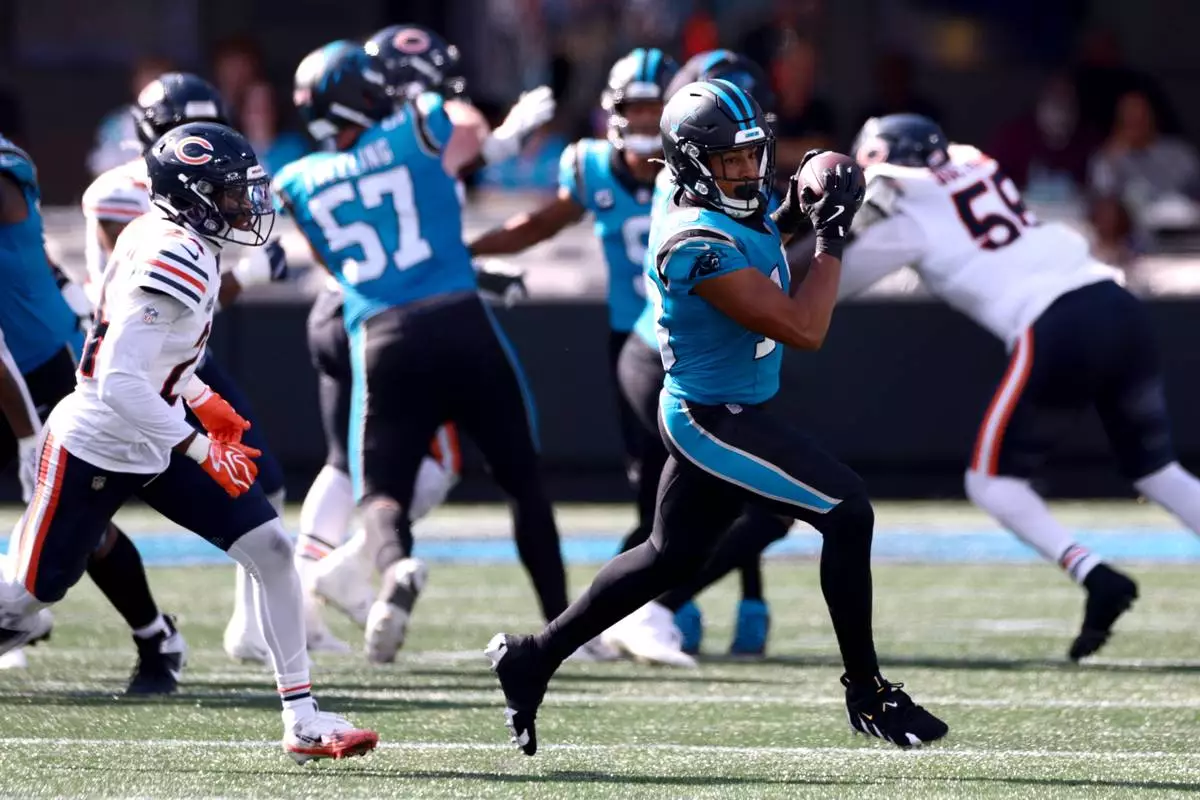
Carolina Panthers wide receiver Jalen Coker (18) makes a catch during the second half of an NFL football game, Sunday, Sept. 13, 2026, in Charlotte, N.C. (AP Photo/Scott Kinser)
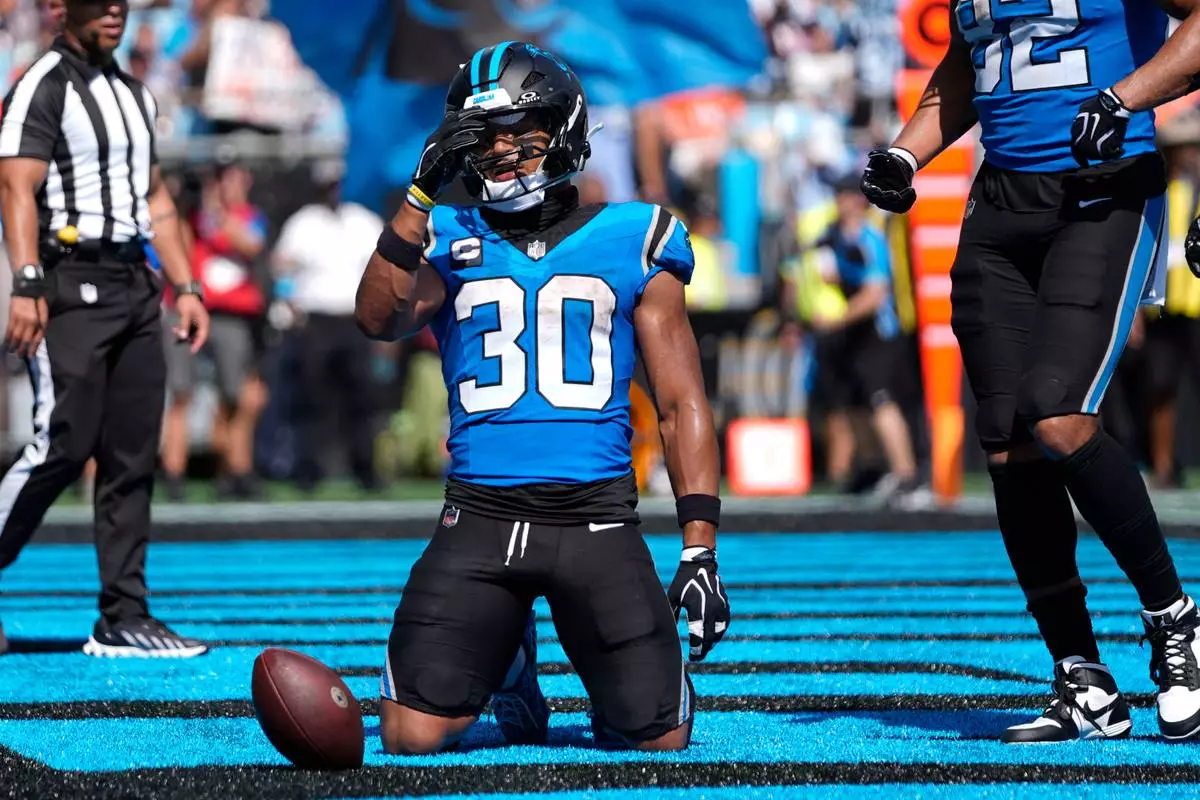
Carolina Panthers running back Chuba Hubbard (30) celebrates after scoring a touchdown during the second half of an NFL football game, Sunday, Sept. 13, 2026, in Charlotte, N.C. (AP Photo/Erik Verduzco)
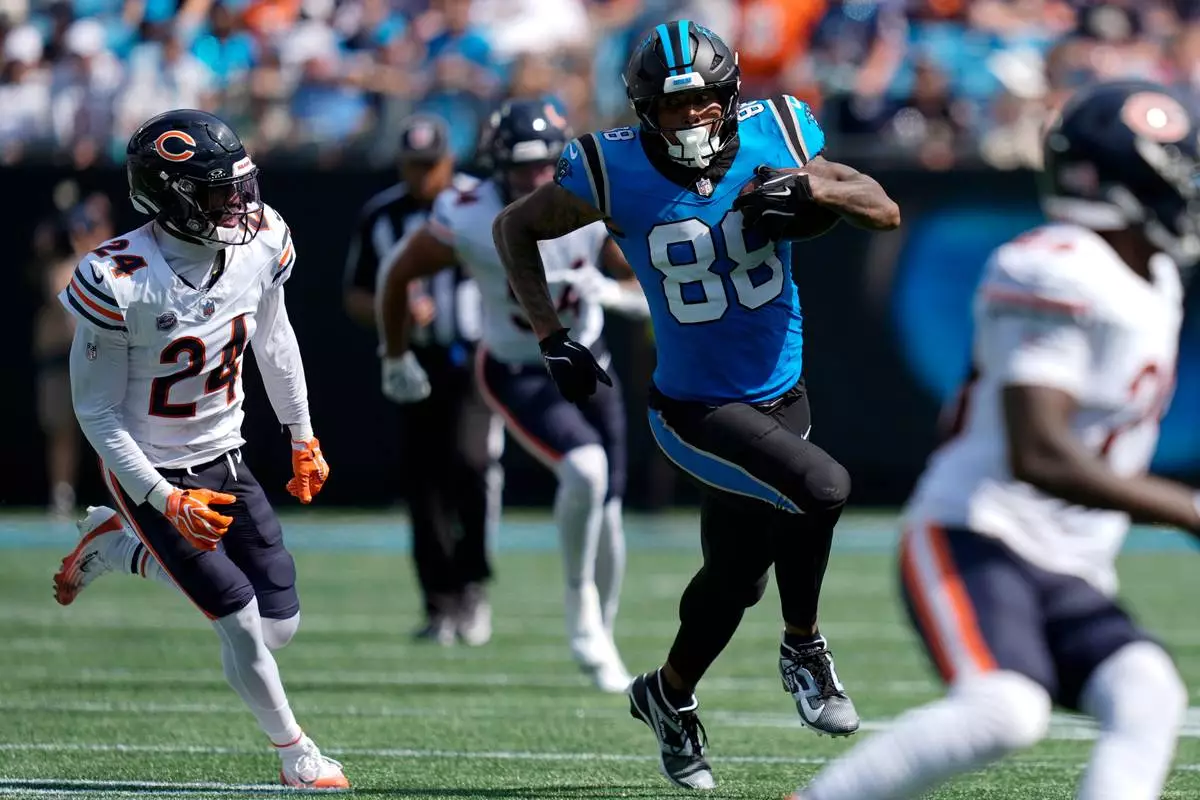
Carolina Panthers tight end Darren Waller (88) runs during the second half of an NFL football game, Sunday, Sept. 13, 2026, in Charlotte, N.C. (AP Photo/Erik Verduzco)
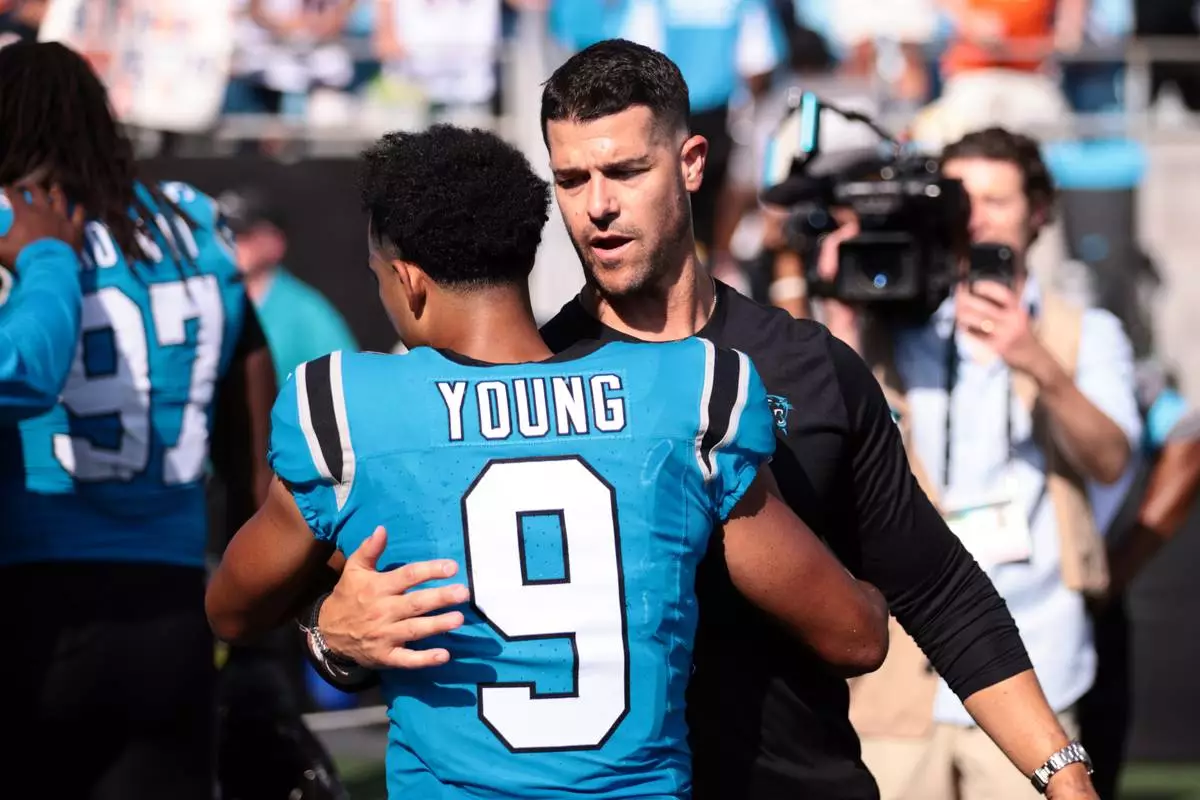
Carolina Panthers head coach Dave Canales embraces quarterback Bryce Young (9) after an NFL football game, Sunday, Sept. 13, 2026, in Charlotte, N.C. (AP Photo/Scott Kinser)
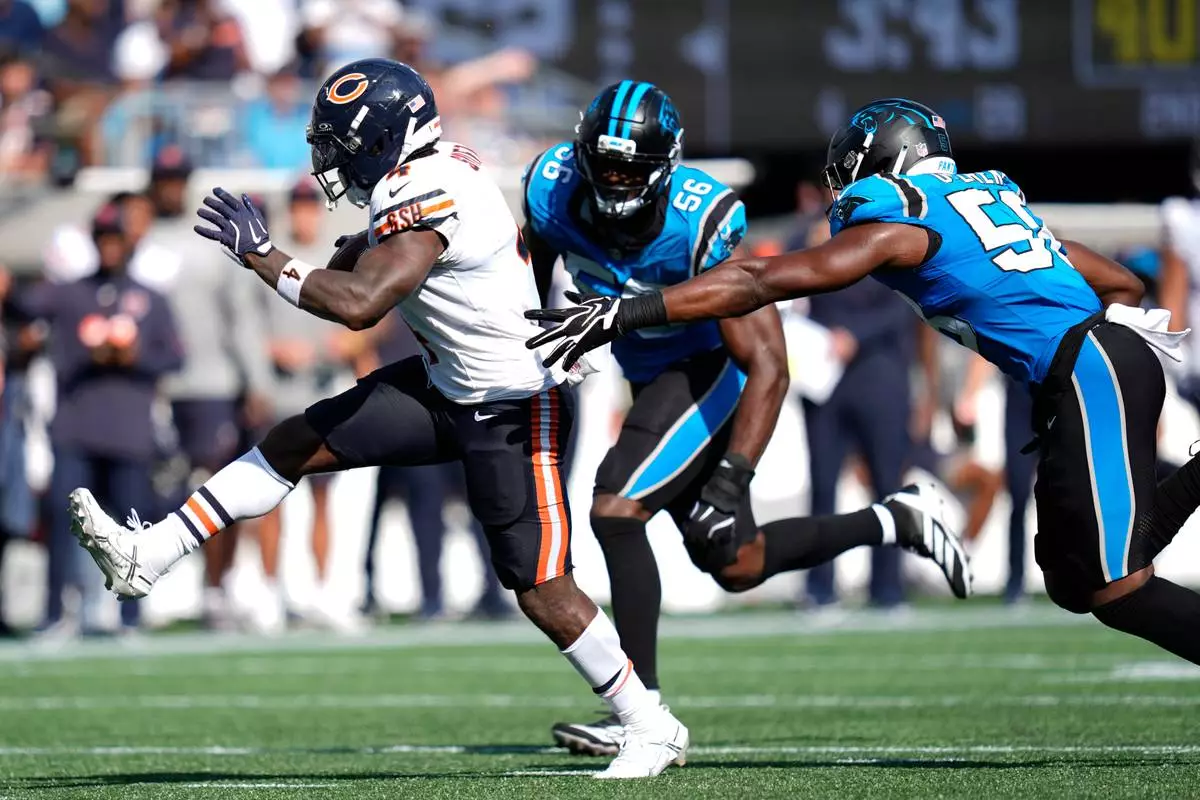
Chicago Bears running back D'Andre Swift (4) runs against Carolina Panthers linebacker Jeremiah Moon (56) and inside linebacker Bobby Okereke (58) to score a touchdown during the second half of an NFL football game, Sunday, Sept. 13, 2026, in Charlotte, N.C. (AP Photo/Erik Verduzco)