German companies increased their investment in China by around a third in the first half of 2026, while investment in the United States plunged 65 percent, according to analyses by the German Economic Institute (IW).
German companies' direct investment in China increased by around 5.6 billion euros (6.5 billion U.S. dollars) in the first six months of the year, about a third more compared with the same period last year, IW said in a report on Monday, citing data from the German central bank.
The report found that German companies' reinvested profits amounted to 7.8 billion euros (9 billion dollars) in 2025, during which year the companies, according to IW's earlier analysis, invested around 7 billion euros (8.1 billion dollars) in China.
Over the longer term, German investment in China has remained broadly stable at a relatively high level, with the average half-year figure between 2020 and 2025 also standing at around 5.6 billion euros, the report showed.
Most German companies remain committed to the Chinese market, said Juergen Matthes, an IW expert and author of the report.
More than 85 percent of German companies operating in China plan to maintain or expand their current level of engagement, while more than half intend to increase investment, Matthes said, citing a survey by the German Chamber of Commerce in China.
China is an important sales market (for German companies), and some use it as a 'fitness center,' Matthes said. Companies that can maintain their position in the Chinese market are also more likely to succeed globally, he added.
German investment in the United States, meanwhile, moved sharply in the opposite direction.
A separate IW analysis showed that German companies invested around 4.3 billion euros (4.96 billion U.S. dollars) in the United States in the first half of 2026, down 65 percent from a year earlier and nearly 80 percent from the first half of 2024, the final such period before U.S. President Donald Trump returned to the White House.
Heightened economic policy uncertainty in the United States was holding back German companies' new investment decisions, IW noted.
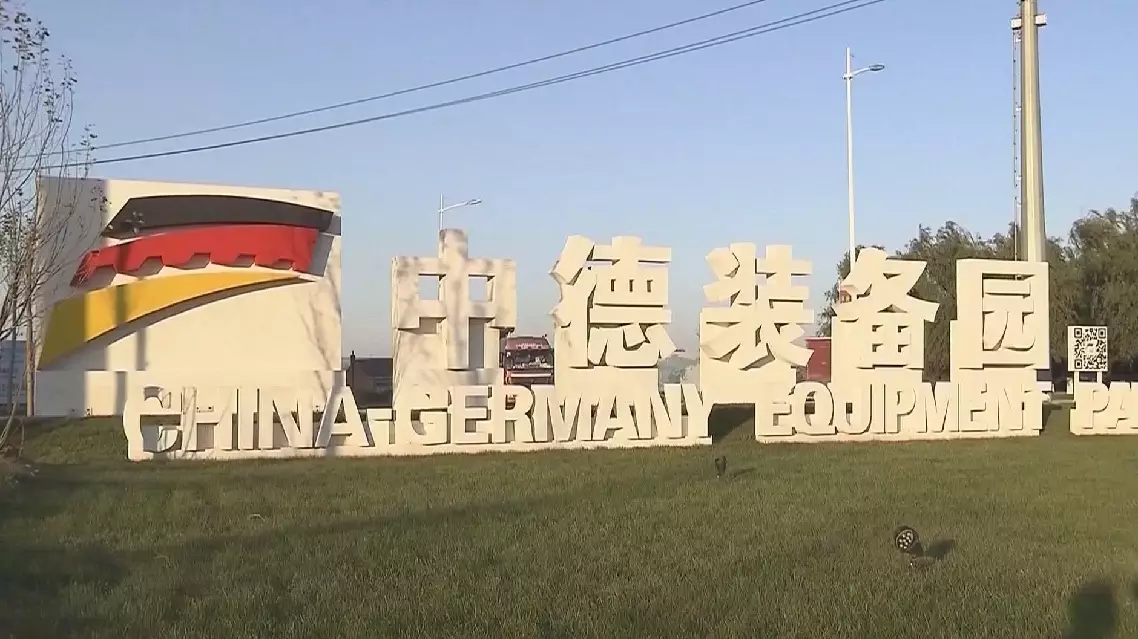
German investment in China rises by a third in H1: report
Chinese Foreign Minister Wang Yi held talks with Slovakia's Minister of Foreign and European Affairs Juraj Blanar in Beijing on Tuesday.
Noting that in recent years, under the guidance of the two countries' leaders, the China-Slovakia strategic partnership has maintained high-level momentum, Wang said the relationship has become a model for countries of different sizes and systems to coexist in friendship, treat each other as equals and pursue win-win cooperation.
Wang, also a member of the Political Bureau of the Communist Party of China (CPC) Central Committee, briefed the Slovak side on the fifth plenary session of the 20th CPC Central Committee. He said that China is ready to enhance experience sharing with Slovakia on party and state governance, make good use of mechanisms such as the intergovernmental cooperation committee, and increase people-to-people and grassroots exchanges.
China is ready to work with Slovakia to act on the vision of global governance featuring extensive consultation, joint contribution and shared benefits and jointly build a community with a shared future for humanity, Wang said.
China always believes that China and Europe should remain committed to properly resolving frictions and differences through dialogue and consultation, and hopes Slovakia will continue to play a constructive role in the sound and steady development of China-Europe relations, Wang noted.
Blanar congratulated China on the successful convening of the fifth plenary session of the 20th CPC Central Committee, saying that the overall leadership of the Party and long-term political and social stability are the institutional strength and political guarantee behind China's sustained and rapid development. Slovakia is ready to strengthen inter-party exchanges with China, he added.
Blanar noted that Slovakia firmly adheres to the one-China policy and always regards China as an important partner. Slovakia will continue to do its utmost to provide a stable and sound environment for Chinese enterprises to invest and cooperate in the country and offer greater facilitation for personnel exchanges, he said.
Slovakia is also ready to play a constructive role in Europe-China dialogue and cooperation and will continue to support and take part in China-Central and Eastern European Countries cooperation, Blanar added.
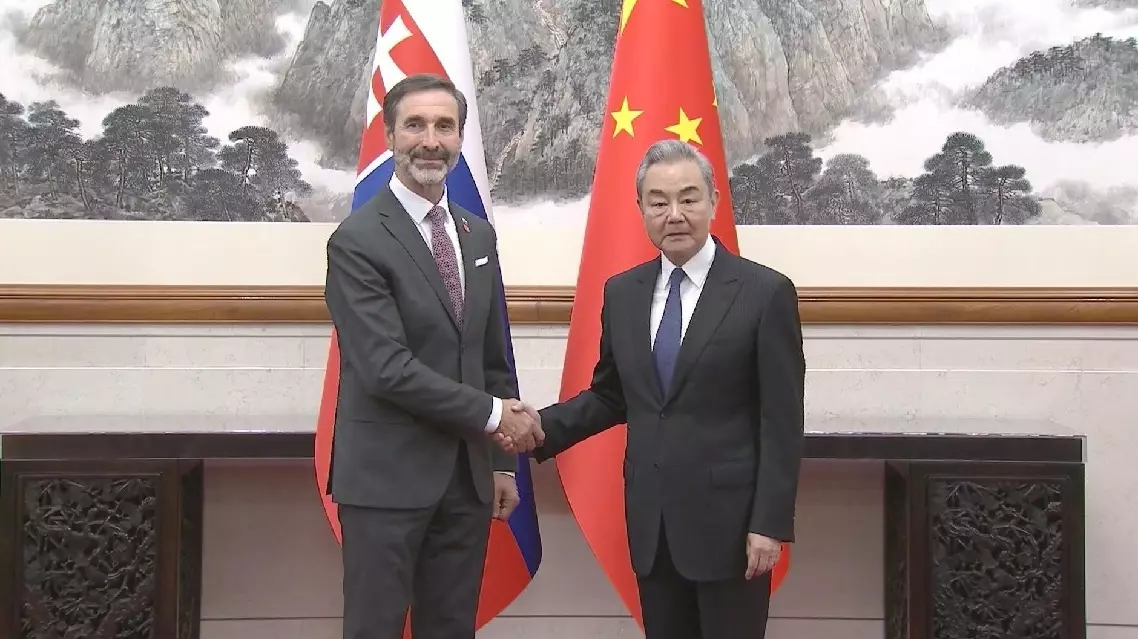
Chinese FM holds talks with Slovak counterpart