The Pinglu Canal, a key project of the New International Land-Sea Trade Corridor in western China, is set to open on Wednesday, marking a major step in the country's efforts to improve connectivity between its western inland region and global markets.
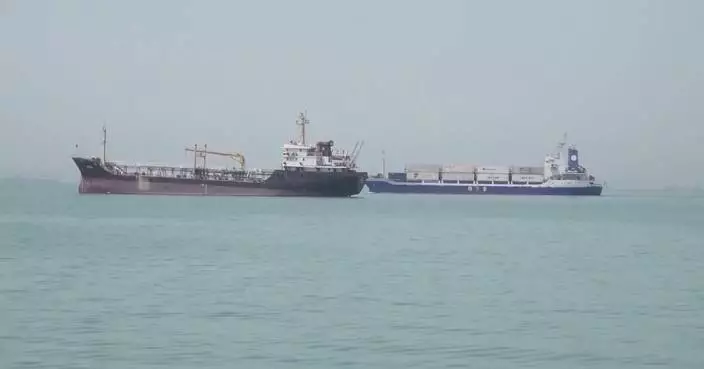
The 134.2-kilometer canal, which starts in Hengzhou City in Guangxi Zhuang Autonomous Region and runs south to the Beibu Gulf, will be navigable for vessels up to 5,000-tonnes. It creates the shortest water transport route from southwestern China to ASEAN countries.
"Compared with traditional sea routes, the Pinglu Canal shortens the inland waterway journey by more than 560 kilometers and saves over 5 billion yuan (about 745 million U.S. dollars) in transport costs annually. It has rewritten the history of the southwestern region having to take a detour to the sea," said Cheng Yaofei, commander of the canal's construction headquarters.
The canal's opening comes as construction of the broader New International Land-Sea Trade Corridor accelerates.
Key railway projects, including a bridge over the Hongshui River on the Huangbai Railway and a second line of the Guizhou-Guangxi Railway, are advancing. Two 100,000-tonne berths at the Tieshan Port West Port Area have passed acceptance checks.
With regular China-Laos-Thailand freight trains and more frequent China-Vietnam cross-border road services, the main corridor's routes now link 166 stations across 18 provincial-level regions in China, radiating to nearly 600 ports in more than 120 countries and regions. By Sept. 10 this year, the corridor had handled nearly 6 million twenty-foot equivalent units (TEUs) of container cargo, carrying more than 1,100 categories of goods, and cutting average transport time by more than 60 percent shorter compared to traditional river and sea routes.
"The opening and operation of the Pinglu Canal is significant for connecting the supply chain between Vietnam and China. More specifically, it helps build a supply chain for China's development with ASEAN countries, as well as connect with global supply chains. It creates favorable conditions for trade and exchanges among countries in the region and around the world," said Nguyen Minh Hoan, a standing member of the executive committee of the Vietnam-China Friendship Association.
The corridor is driving rapid growth in western China's foreign trade, helping boost imports and exports in the western region by 20.3 percent year on year. Trade with the 14 other member states of the Regional Comprehensive Economic Partnership (RCEP) is up 25.3 percent.
A Eurasian express line launched in May now carries more than 100 types of high-value-added products, including auto parts and medical devices, directly to Europe via a multimodal transport network.
The corridor is also encouraging businesses to invest in the region. In Yunnan's Funing Port, the green aluminum industry is expanding toward the sea, while Qinzhou port in Guangxi is now home to a cluster of coastal industries, with foreign trade container throughput up 38.7 percent in the first half. In Guigang, another city in Guangxi, shipyards are busy building 5,000-tonne and new-energy vessels.
"We have new orders for about 19 vessels, with new-energy ship orders up around 50 percent from previous years," said Huang Junchao, vice chairman of Hongxin Shipbuilding.
The development of the corridor is part of China's 15th Five-Year Plan which calls for improved connections along the Silk Road Economic Belt and the 21st Century Maritime Silk Road.
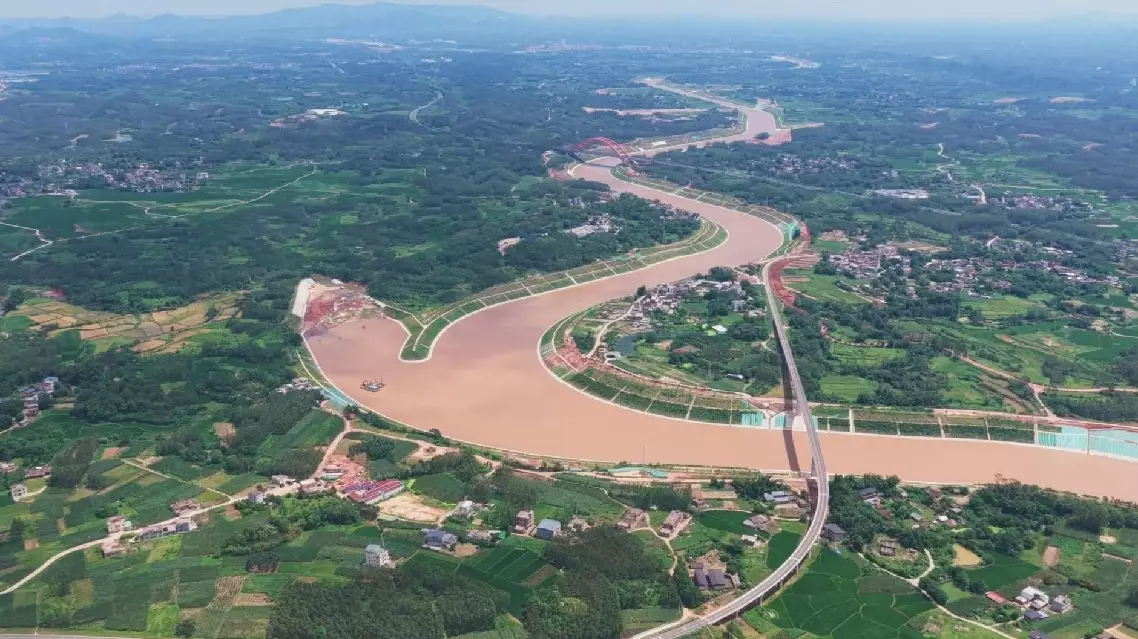
Pinglu Canal to open, boosting western China's land-sea corridor