Full text of the First Five-Year Plan for Economic and Social Development of the Hong Kong Special Administrative Region (2026-2030) (6)
Part 5 Enhance Social Well being and Refine the Social Protection Framework
5.1 The ultimate objective of governance lies in enhancing social well being. In the meantime, enhanced livelihood will stimulate market demand in society, energising market activities, propelling economic development. We will enhance our population strategies, with a view to promoting high-quality population development. To actively address the challenges arising from demographic changes, such as ageing population and declining birth rate, we will continue to pursue enhancements in various policy areas, including education and training, housing supply, labour and welfare, healthcare services, youth development, and child care support, etc. Co-ordinated efforts will be made to advance institutional improvement and service enhancement, so as to continuously strengthen the sense of fulfilment, happiness, and security in our community.
Chapter 18 Advance Quality Education
Section 1 Strengthen Future ready Education System
5.2 We will holistically enhance students' AI literacy while strengthening teachers' professional capacity. To nurture students' innovation capabilities, we will systematically drive comprehensive educational innovation and promote the progressive integration of AI into learning, teaching, and assessment across various Key Learning Areas (including Physical Education, and Arts Education, etc.) and cross-disciplinary domains (such as STEAM education¹). We will also advance school curriculum development to keep pace with the times, fostering students' spirit of "Technology for Good" with humanistic qualities.
5.3 We will foster cross-sectoral collaboration to forge a digital education ecosystem. By promoting digital education in primary and secondary schools, we will strengthen students' learning in mathematics, science, and technology, laying a solid foundation for their further studies in I&T, thereby nurturing innovative talent for the future. We will promote the digitalisation in kindergarten education administration, enhance the overall effectiveness of schools in leveraging I&T (such as AI), and create more space for teachers to cultivate children's curiosity, creativity, and exploratory spirit. We will enhance the compilation of teaching materials and the review mechanism for textbooks, and adopt digital technologies to strengthen support for learning and teaching.
5.4 We will deepen patriotic education, national education, national security education, and values education, and integrate them into daily teaching, with a view to nurturing a new generation with both virtue and ability, an affection for our country and Hong Kong, cultural confidence, proper values, and a global perspective. We will strengthen biliterate and trilingual education and the learning of other languages to promote cross-cultural exchanges, supporting Hong Kong's role as an East-meets-West centre for international arts and cultural exchange and a base for fostering cultural exchanges between our country and the rest of the world. We will make full use of the resources in the Mainland to advance patriotic education for young people and take forward the establishment of Patriotic Education Bases for Hong Kong and Macao Youth in an orderly manner. We will strengthen values education and ground students in Chinese culture, guiding them to take an interest in the well-being of mankind as a whole, with a view to cultivating among them a stronger sense of mission and responsibility towards "building a community with a shared future for mankind".
5.5 We will broaden the international horizons of Hong Kong students by driving post secondary institutions to actively organise more exchange activities, and making good use of various measures, such as the Funding Scheme for Chinese Mainland and Global Engagement and Student Learning Experience, to broaden the international horizons of Hong Kong students, enhance cross-cultural exchange on campus, and foster a diverse and inclusive international learning environment, while encouraging students to explore development opportunities both at home and abroad.
Section 2 Enhance the Allocation of Education Resources
5.6 We will enhance the allocation mechanism for education resources to tie in with demographic changes, enhance the dynamic adjustment of resources for basic education and their re-allocation to address surpluses and shortfalls, and facilitate further expansion and development of quality primary and secondary schools. We will also step up efforts to encourage and support school sponsoring bodies to merge quality primary and secondary schools with potential, and expedite resource consolidation for schools of a smaller scale, resulting in schools of larger scale, higher quality, and higher efficiency as their respective strengths and missions aggregate, thus achieving synergy.
5.7 We will strengthen the cultivation of teachers' morality and ethics, refine the training framework for teachers, enhance their professionalism and competencies, and promote the spirit of outstanding educators. We will enhance the teacher registration mechanism and set out specific training requirements and targets. In the meantime, we will also broaden the scope of the training mechanism and training modes while deepening co-operation with the Mainland.
5.8 We will promote capacity expansion and quality enhancement of Hong Kong's post-secondary education, so as to continuously consolidate and develop the unique advantages of Hong Kong's highly internationalised and diversified education system under "one country, two systems", advancing the high quality development of education. In line with the strategy of invigorating the country through science and education, we will step up efforts in developing basic and emerging disciplines, as well as interdisciplinary studies, and nurturing top-notch talent. We will deepen international exchanges and co-operation, promote collaboration between Hong Kong's institutions and academic and research institutions in the Mainland and overseas, as well as encourage local institutions to organise large-scale international events in Hong Kong, so as to consolidate and enhance Hong Kong's status in the international education arena. We will foster the mutual empowerment between I&T and talent cultivation to promote the integrated development of education, technology, and talent, with a view to better serving our country's endeavour to develop into a leading country in education.
Section 3 Nurture Cross-functional and Multi-skilled Talent
5.9 We will build a platform for the integration of industry and education to advance the high-quality development of vocational and professional education and training. We will foster global exchanges and collaboration across the industry and academia sectors by encouraging institutions to upgrade into universities of applied sciences, and substantially increasing the provision of applied degree programmes. By encouraging universities of applied sciences to offer programmes and conduct research projects in collaboration with the institutions in the Mainland and overseas, and adopting advanced modes of teaching for vocational and professional education and training, we will enhance the overall quality and recognition of our universities of applied sciences.
5.10 We will strengthen continuing vocational skills training to enhance the productivity and competitiveness of our workforce. We will enhance the depth and breadth of local continuing vocational skills training, and seek capacity expansion and quality enhancement in light of future trends in the application of skills and I&T, with a view to developing a high-quality, progressively-paced, and personalised skill-based training system for local workers. The Employees Retraining Board will be upgraded and become the "Upskil Hong Kong", which will foster closer communication and stronger ties with enterprises, thus facilitating its timely apprehension of and response to prevailing and future trends in skills demand and manpower requirements of various sectors amid social developments, providing multi-level opportunities of upskilling and continuous education through diversified channels for the entire workforce.
Chapter 19 Foster the Development of Young People, Women, Families, and a Harmonious Society
Section 1 Enhance Youth Development Opportunities
5.11 We will develop diversified platforms for exchange and practical experience to broaden the horizons of young people. Building on the Youth Development Blueprint, we will step up our focus on young people's education, employment, entrepreneurship, and home ownership. We will strive to help them overcome practical difficulties while providing them with broader platforms and more opportunities to grow and thrive. We will strive to nurture a new generation of young people with an affection for our country and Hong Kong, empowering them with a global perspective as well as an ambitious and positive mindset. Leveraging Mainland resources, we will organise a wide variety of in-depth youth exchange activities to the Mainland, passing on the spirit of loving our country and Hong Kong. We will support young people in better seizing opportunities arising from national development, with a focus on nurturing talent who can serve the needs of our country and leverage the strengths of Hong Kong. We will develop the Youth Development Summit as a flagship event to advance international youth exchange and collaboration, harnessing the power of young people to tell good stories of our country and Hong Kong.
5.12 We will strive to create a conducive environment for young people to fully realise their talents. We will widen the scope of the Young Talent Training Programme to more industry sectors, aiming to nurture quality young talent for more key areas under the development plans of our country and Hong Kong. Through a wide array of youth programmes and activities, we endeavour to holistically cultivate the diverse talents of young people, and offer them more opportunities to explore, including participation in exchanges regarding public affairs, science, arts, and sports, thereby unleashing their potential and enhancing the effectiveness of talent development.
Section 2 Support Young People in Pursuing Their Dreams
5.13 We strive to foster better development for our young people through strengthening collaboration among the Government, the business sector, and the community. We will provide young people with more internship and exchange opportunities to sharpen their competitive edge in both local and international job markets. We will also enhance the education and employment prospects for young people of ethnic minority through internship opportunities, language education, and support at district level.
5.14 We will foster youth entrepreneurship with support measures such as funding and incubation services, with a view to transforming youth innovation and creativity into new impetus for economic development. We will better leverage the one-stop platform that is the Alliance of Hong Kong Youth Innovation and Entrepreneurial Bases in the Greater Bay Area to provide holistic support for our young people's entrepreneurial endeavours.
5.15 We will strengthen support for youth employment. We will enhance youth employment support services, monitor the impact of technology application on the labour market for young people, and assist young people (fresh graduates in particular) in securing on-the-job training opportunities and work experience, thereby enhancing their employability.
Section 3 Empower Women to Realise Their Potential
5.16 We are committed to creating an environment conducive to driving women's development, protecting their rights, and promoting their well-being. We strive to empower women across all roles, social positions, and life stages so that they can realise their multifaceted potential amid Hong Kong's high-quality development.
Section 4 Foster Family Harmony and a Culture of Social Cohesion
5.17 We will advocate good family virtues, strengthen family bonds, education, and traditions, and promote good family values, thereby consolidating the family as the cornerstone of social harmony.
5.18 We will facilitate communication and development with and among the rural communities. We will reinforce the role of Heung Yee Kuk and clansmen associations as a key force dedicated to the country and Hong Kong and promote the spirit of loving the hometown, with a view to fostering mainstream values which are characterised by patriotism as well as affection for Hong Kong and in conformity with the principle of "one country, two systems".
5.19 We encourage religious communities in Hong Kong to sustain their efforts in fostering social harmony and inclusion, and take part in the provision of educational, medical, and welfare services. With the concerted efforts of all walks of life, we will strive to create an equal and caring society characterised by diversity and inclusiveness. We will enhance the support for ethnic minorities with a view to increasing their understanding of the development of our country and striving for the betterment of Hong Kong together.
Chapter 20 Deepen Healthcare System Reform
Section 1 Advance the High-quality Development of Primary Healthcare
5.20 We will develop a sustainable governance system for primary healthcare¹. To strengthen legal protection in the healthcare sector, we will empower the Primary Healthcare Commission through legislation to establish multi-disciplinary, evidence-based, co-ordinated, and coherent service and referral standards. We will also set up a statutory register of primary healthcare service providers to enhance service quality.
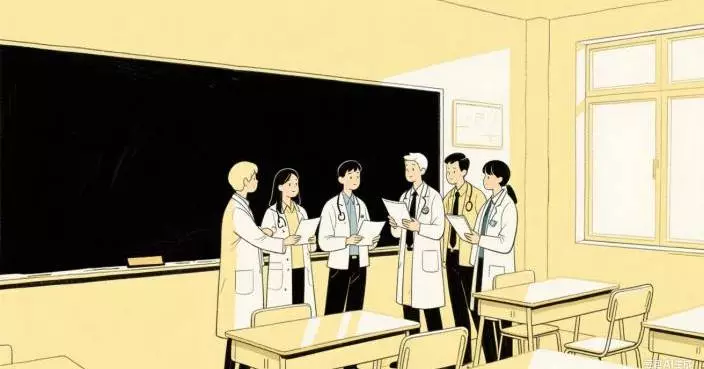
5.21 We will develop the Primary Healthcare Co-care Network and the District Health Network in a co-ordinated manner, expanding service coverage to the elderly, women, and newborn infants, strengthening multi-disciplinary collaboration, and connecting primary healthcare with secondary²and tertiary²¹ healthcare services. We will strive to substantially complete the establishment of District Health Centres in all 18 districts across Hong Kong within five years, and strengthen community support for mental health and psychological well-being. By leveraging the District Health Network, we will promote personalised Life Course Preventive Care Plan built on a family medicine model, providing citizens across different life stages with screening for chronic diseases and cancers as well as health advice, with a view to actualising early prevention, early identification, and early management.
| Table 32 Enhancing Primary Healthcare Services |
1. Enhancing the accessibility of primary healthcare services
|
2. Strengthening public-private collaboration
|
3. Increasing resource allocation
|
- Within five years, further enhance the accessibility of primary healthcare service, bringing the cumulative membership of District Health Centres to one million, including 700000 members receiving services under the Primary Healthcare Co-care Network.
- In line with the Primary Healthcare Blueprint, enhance the family doctor system across both the public and private sectors, expand the list of primary healthcare service providers, reinforce the bi-directional referral mechanism, and enhance the co-ordination between community-based primary healthcare and hospital services.
- Steadily increase government resource allocation to primary healthcare programmes, with an estimated rise of about 30% from the current level by 2030-31, to promote systematic preventive care through a life-course approach.
Section 2 Enhance the Resilience of Hong Kong's Healthcare Services
5.22 We will deepen public healthcare reform. In the interest of the public, we will reform the subsidisation structure of public healthcare services with greater efforts, as well as to enhance the protection for "poor, acute, serious, critical" patients on all fronts. We will strive to make the healthcare system more sustainable to better cope with an ageing society, the increasing prevalence of chronic diseases, and the development of innovative drugs and medical devices, thereby strengthening the role of the public healthcare system as a safety net for all. Under the principles of "the Government's overall commitment will not be lessened" and sustainability of subsidisation, we will continue to implement the healthcare service reform.
5.23 We will enhance the quality and efficiency of private healthcare services. We will implement the statutory premises-based regulatory regime under the Private Healthcare Facilities Ordinance to ensure the facility safety and service quality of private hospitals, day procedure centres and clinics as well as to enhance their price transparency, thereby protecting patients' safety and rights. We will also promote the integration of private healthcare data, the standardisation of the scope of healthcare services and chargeable items, and the development of evidence-based clinical guidelines as well as quality and efficiency standards, with a view to enhancing overall service quality and efficiency.
5.24 We will promote comprehensive, high-quality, and high-standarddevelopment of Chinese medicine. By inheriting the wisdom of Chinese medicine and leveraging our country's development experience and resources, we will make good use of Chinese medicine to provide Hong Kong citizens with higher quality and more comprehensive healthcare services for better health outcomes.
5.25 We will advance the development of healthcare infrastructure. The public hospital development plan has been rolled out progressively to raise the overall healthcare capacity and quality. We will press full steam ahead with the works projects²² under the First Hospital Development Plan, which upon completion will increase the total number of public hospital beds under the Hospital Authority to about 35 000 in 2031, and that of operating theatres to about 360. We are taking forward the eHealth+ development plan to develop a digital health network that covers the whole city and connects with the Guangdong-Hong Kong-Macao Greater Bay Area. We will develop new functions and expand the scope of services, integrate all government subsidised health programmes, and transform the eHealth App into an integrated health tool for citizens.
5.26 We will advance the development of smart hospitals. Following the two major strategic directions of "Provide Smart Care" and "Develop Smart Hospitals", we will leverage digitalisation, the use of data, and AI to holistically advance the digital transformation of public hospitals in five key areas, namely "smart care", "smart hospital management", "smart hospital support", "smart staff", and "smart facilities and infrastructure".
5.27 We will enhance the development of healthcare professionals. Through the systematic projection of healthcare manpower, we will strive to strengthen the training of local healthcare professionals and the strategies for talent attraction, and actively advance the relevant infrastructure development. We will promote exchanges between local and Mainland healthcare professionals and facilitate the alignment of healthcare professionals training in the Guangdong-Hong Kong-Macao Greater Bay Area with international standards, thereby further fostering the interactions and development of healthcare professionals in Hong Kong and the Mainland.
Section 3 Concerted Efforts to Build a Healthy and Vibrant Hong Kong
5.28 We will strengthen our disease prevention and control system and smart anti-epidemic measures. We will comprehensively enhance the multi-point triggered monitoring and early warning system for communicable diseases as well as our emergency response capacity, while continuously optimising the disease prevention and control system to prevent the importation of cases. We will also strengthen manpower training and the review of our vaccination strategy, alongside the establishment of a scientific, precise, and holistic disease prevention and control system, so as to consolidate frontline defence against communicable diseases. We will participate actively in the World Health Organization's laboratory networks in promoting R&D as well as clinical trial of vaccines, supporting the translation of R&D outcomes. In the meantime, we will advance the digital intelligence transformation of the communicable disease prevention and control system, focusing on building an "integrated epidemic management system" with an emergency response function to enable accurate risk assessment. Before proceeding with the planned long term development of Hetao, we will continue to fully utilise the temporary structures and facilities of the Central Government Aided Emergency Hospital to provide day-to-day healthcare services.
5.29 We will deepen joint prevention and control. We will consolidate the co-operation mechanism for epidemic notification and joint prevention and control between Hong Kong and the Mainland (in particular other Guangdong-Hong Kong-Macao Greater Bay Area cities) and make it a normal practice. We will also deepen information sharing, technological collaboration, and talent training with Mainland and overseas disease control institutions. All these will improve the quality of collective efforts in early warning and risk assessment.
5.30 We will strive to raise public health awareness and build a smoke-free city. We will fully implement the Life course Health Promotion Strategy and the Action Plan on Weight Management while commencing a new round of territory-wide Health Behaviour Survey in parallel to improve the life-course health monitoring system. By leveraging big data integration and analytics, we aim to deliver evidence-driven insights to inform healthcare policy formulation and resource allocation so as to reduce the burden of non-communicable diseases at source. We will bring home the messages on healthy eating, regular physical activity, and mental health to the education and work environment to guide the public towards a healthy lifestyle. We will also strengthen tobacco control measures to build a smoke-free city.
5.31 We will participate actively in international healthcare affairs. We will advance international co-operation on the health front through active participation in international healthcare conferences, as well as the deliberation and formulation of international standards and specifications, etc, while making ongoing efforts to deepen health exchange and co-operation with various regions. We will host major international healthcare events such as the Asia Summit on Global Health, building a high-level international exchange platform to play a more important role in global health governance and make positive contribution to enhancing the health and well-being of mankind.
Chapter 21 Enhance and Diversify the Housing System
Section 1 Strive to Resolve the Housing Issue
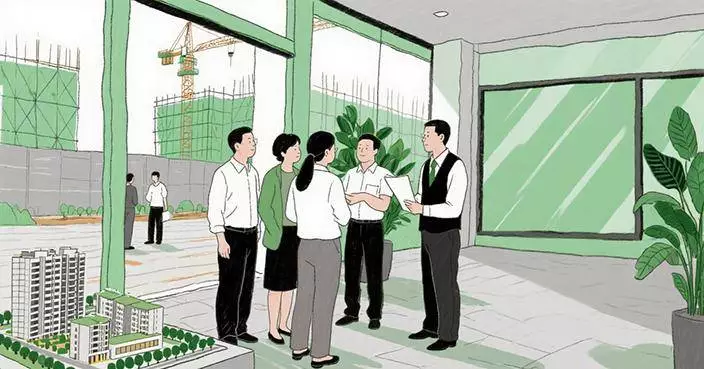
5.32 We will eradicate substandard subdivided units in an orderly manner to safeguard the basic housing needs of the grassroots. By implementing systematic housing policies and significantly increasing public housing supply through continuously enhancing quantity, speed, efficiency, and quality (including the completion of approximately 30 000 Light Public Housing units), we will have laid down a solid foundation for expediting public housing allocation to the grassroots, such that they may be caught by the public housing safety net the soonest. We are pressing ahead with the Basic Housing Unit regime to ensure that subdivided units in residential buildings are in compliance with the statutory requirements on safety, fire protection, and hygiene, etc.
| Table 33 Eradicating Substandard Subdivided Units in an Orderly Manner |
Resolving the issue of substandard subdivided units
|
- Target to resolve the issue of substandard subdivided units in residential buildings by 2030, safeguarding the life and property of residents.
5.33 We will substantially increase public housing supply and take forward the Long Term Housing Strategy on all fronts. We will update the long term housing demand projection annually and formulate a rolling 10-year housing supply target in light of social, economic, and market changes. In the next decade, housing supply will be planned with a distribution of 40% for public rental housing (PRH) units, 30% for subsidised sale flats, and 30% for private residential properties. We remain committed to refining policy arrangements along three key directions, namely adhering to the "supply-led" principle, ensuring the rational use of PRH resources while encouraging upward mobility, and enhancing the housing ladder to promote home ownership among young people. Through these efforts, we strive to establish a new paradigm of sustainable, multi-strata housing supply.
5.34 We will continue to take forward the Light Public Housing initiative in an orderly manner as a groundbreaking and innovative type of temporary housing to address the pressing needs of residents, improving their living environment and quality. Through the extensive use of the Modular Integrated Construction approach and the adoption of innovative construction technologies to expedite construction, as well as the conversion of school premises, the remaining small number of units will be completed in 2027 to achieve the target of providing 30 000 Light Public Housing units, such that grassroots families waiting for traditional PRH can move into Light Public Housing with an improved living environment at a lower rent than that of traditional PRH, moving out of inadequate housing the soonest.
| Table 34 Substantially Increasing Public Housing Supply |
1. Increasing Public Housing Production
|
2. Shortening the composite waiting time
|
- Taking into account Light Public Housing, the total public housing production in Hong Kong will reach around 196000 units in the coming five years (i.e. from 2026-27 to 2030-31).
- With the persistent increase in the total public housing production, the Composite Waiting Time forSubsidised Rental Housing will reduce to 4.5 years in 2026-27, and is expected to further reduce to less than four years in 2030-31.
5.35 We will continue to enhance the housing ladder to enable those of different income groups to achieve home ownership. We will continue to increase the supply of subsidised sale flats while refining sale and resale arrangements. We will also continue to pursue policy innovation and optimisation in relation to the housing ladder, so as to establish a multi-layered and diversified housing supply system. These measures will assist young people in achieving home ownership, support PRH residents and subsidised sale flat owners in moving up the housing ladder, and expedite the turnover of housing resources, thereby fundamentally strengthening Hong Kong's housing system and housing ladder.
5.36 In planning public housing units for completion over the next decade, the internal floor area of these units will be progressively enhanced and the proportion of larger units for newly-built subsidised sale flats will also be increased. In the meantime, the design of subsidised sale flats will be reviewed so as to cater for the lifestyle of the younger generation.
5.37 We will drive the development and application of construction technologies to enhance the speed and quality in housing production. We will actively promote the application of smart construction technologies such as Modular Integrated Construction with a view to advancing by two years the adoption of Modular Integrated Construction in not less than half of the public housing projects scheduled for completion in the five-year period of 2026-27 to 2030-31. In the long run, the second generation of Modular Integrated Construction or its further refined and developed new versions will be adopted at the planning and design stage in all new Modular Integrated Construction public housing projects to further boost the efficiency of housing production. We will strengthen collaboration among the Government, the industry, academia, and research institutions, so as to enhance the construction technology innovation platform, with a view to transforming public housing projects into a "housing innovation and technology incubation hub". We will also promote integration into the innovation and industry chains of the Guangdong-Hong Kong-Macao Greater Bay Area and drive the synergised development of areas such as innovative housing technologies, smart construction, resource conservation, low carbon and emission reduction, and housing safety, etc.
Section 2 Enhance the Use of Housing Resources
5.38 We will sustain efforts to create land and build up the land reserve. To meet the socio economic development needs of society, we will take the lead in supplying land. The 10 year formation forecast of "spade-ready sites" will be updated annually to enhance predictability and transparency in land supply. Through the annual Land Sale List and co-ordinating land supply sources such as railway property developments and the Urban Renewal Authority's projects, land will be disposed in an orderly manner to facilitate the steady and healthy development of the property market. We will continue to introduce innovative land development models to further incentivise development and channel private capital to participate actively in strategic land and comprehensive community development projects, thereby driving the co-ordinated development of industries and high quality residential neighbourhoods.
| Table 35 Sustained Efforts in Land Creation |
Sustained efforts in land creation, building up the land reserve
|
- In the next 10 years (i.e. 2027-28 to 2036-37), the estimated output of "spade-ready sites" is about 2500 hectares, among which about 1400 hectares would be ready in the next five years (i.e. 2027-28 to 2031-32).
5.39 We will regenerate old districts with a new mindset. We will use land in new development areas to support the redevelopment of old districts to overcome the bottleneck of saturated infrastructure capacity that makes redeveloping old districts difficult, including reserving sites in the NDAs of the Northern Metropolis such that the Urban Renewal Authority can offer a new "Flat-for-Flat" arrangement. We will ease restrictions for the Urban Renewal Auhority to take on redevelopment projects and review the "Seven-year Rule" compensation arrangement. In the next five years, the Urban Renewal Authority will commit at least around $40 billion for urban renewal initiatives. To encourage the market to participate actively in the regeneration of old districts, we will introduce policy innovations by suitably increasing the plot ratio of private redevelopment projects on a pilot basis and implementing cross-district transfer of plot ratio. When implementing redevelopment projects, the regeneration of old districts will be integrated with environmental enhancement and regional development instead of following the "demolish and rebuild" approach for standalone building blocks, which will in turn reshape urban spaces, enhance community functions, improve transport connectivity, and enhance greening and public spaces (including waterfront areas), thereby transforming old districts into new communities that are smart and green, meeting modern living standards.
5.40 We will enhance the safeguarding mechanisms and monitoring practices for PRH to ensure the efficient use of public housing resources. Multi-pronged measures, such as optimising allocation of PRH and facilitating transition to subsidised home ownership, etc, will be implemented to encourage upward mobility and home ownership of PRH residents who have the means, thereby increasing the turnover rate of units, benefiting more families in need. We will apply information technology and data analysis to enhance detection of and combating abuses of PRH, with a view to expediting flat recovery for allocation to those who have been waiting.
¹That is Science, Technology, Engineering, the Arts, and Mathematics education.
¹Primary healthcare is the first tier of the healthcare system, serving as the first point of contact for individuals and families in continuing healthcare process.
²Secondary healthcare services include acute and convalescent in-patient care, day surgery, specialist out-patient, and Accident and Emergency services.
²¹Tertiary healthcare refers to highly complex and costly hospital care, usually with the application of advanced technology and multi-disciplinary specialised expertise. Tertiary healthcare services are usually required by patients with complicated but relatively less common diseases, or those suffering from catastrophic injuries or illnesses.
²²Projects expected to be completed between 2026 and 2030 include the redevelopment of Kwai Chung Hospital, the new Kai Tak Hospital, the redevelopment of Grantham Hospital (phase 1), the redevelopment of Our Lady of Maryknoll Hospital, the expansion of Lai King Building in Princess Margaret Hospital, the redevelopment of Prince of Wales Hospital, phase 2 (stage 1), the expansion of United Christian Hospital, the redevelopment of Kwong Wah Hospital, and the redevelopment of Shek Kip Mei Health Centre. Two other projects, namely the expansion of North District Hospital and the development of Health Integrated Building at On Sau Road, Kwun Tong, are expected to be completed in 2031 and 2032 respectively.
(To be continued.)

Source: AI-found images