Government announces the First Five-Year Plan for Economic and Social Development of the Hong Kong Special Administrative Region (2026-2030)
The Government of the Hong Kong Special Administrative Region (HKSAR) today (September 16) announced the First Five-Year Plan for Economic and Social Development of the Hong Kong Special Administrative Region (2026-2030) (Hong Kong's First Five-Year Plan).
Formulated in the opening year of the National 15th Five-Year Plan, this inaugural Five-Year Plan for Hong Kong represents a major initiative of the HKSAR Government to uphold and enhance the executive-led system, and to improve the efficacy of its governance. It also addresses the strategic planning need for Hong Kong to proactively align with national development strategies, so as to better integrate into and serve the national development.
The Chief Executive, Mr John Lee, said, "This inaugural Five-Year Plan for Hong Kong is of monumental significance. Not only is it an action agenda for Hong Kong to better capitalise on the aggregate advantages arising from national and international opportunities, but also a pathway for continuously enhancing social well-being. By formulating the Five-Year Plan, it shall shed light on Hong Kong's directions of development, optimise resource allocation, enhance social expectation certainty, and better protect social well-being as well as the interests of investors across the world. Hong Kong will become a more attractive, vibrant and opportunity-rich world city."
Open up new horizons and drive Hong Kong forward
Under Hong Kong's First Five-Year Plan, Hong Kong will focus on strengthening the four centres, developing the hub for high-calibre talent, consolidating and enhancing its competitive edge as an international city; expedite the development of the Northern Metropolis (NM) to spearhead spatial layout optimisation; deepening the development of the Guangdong-Hong Kong-Macao Greater Bay Area and creating an international collaboration network; enhancing social well-being and refining the social protection framework; as well as adopting a holistic approach to development and security while enhancing public governance efficacy. Hong Kong's First Five-Year Plan sets out a total of 105 indicators covering a wide range of areas, including 22 major indicators in Part 1, as well as 57 and 26 work indicators contained in the tables and main text of individual chapters respectively.
Strengthen the four centres, develop the hub for high-calibre talent, consolidate and enhance Hong Kong's edge in global competition
In the coming five years, Hong Kong will continue to consolidate and enhance "four centres and one hub", that is to consolidate and enhance its status as an international financial, maritime, and trade centre, and an international aviation hub, while expediting the city's development into an international innovation and technology (I&T) centre, and building an international hub for high-calibre talent, attracting global capital, talent, and financial enterprises.
To consolidate and enhance its status as an international financial centre, Hong Kong will strengthen its roles as a global offshore Renminbi business hub, an international asset and wealth management centre, and an international risk management centre, while developing a commodity trading ecosystem and aligning financial services with the needs of the real economy.
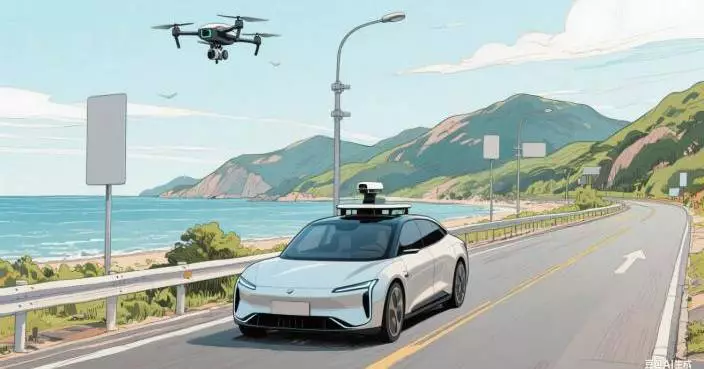
As an international maritime centre, Hong Kong will stabilise its container throughput, add value and strengthen synergy, driving a "volume to value" transformation of the Hong Kong Port through developing a high value-added maritime service ecosystem. To enhance Hong Kong's status as an international aviation hub, it will deeply engage in the development of the national aviation network and continue to launch new routes. Hong Kong will also develop an aviation industry ecosystem with a global edge and build Hong Kong into the Asia-Pacific hub for innovative low-altitude applications.
As an international trade centre, Hong Kong will continue to uphold free trade, maintain a zero custom tariff, and support the rules-based multilateral trading system. Hong Kong will continue to expand its international economic and trade network, develop a high value-added supply chain services centre, continuously pursue the comprehensive upgrade of the Mainland and Hong Kong Closer Economic Partnership Arrangement (CEPA), and develop digital trade as well as cross-border e-commerce.
For the development of an international I&T centre, Hong Kong will press full steam ahead with the development of the new "three major I&T parks and five key research and development institutions" paradigm. The three major I&T parks, i.e. the Hong Kong Park of the Hetao Shenzhen-Hong Kong Science and Technology Innovation Co-operation Zone and San Tin Technopole, the Science Park, and Cyberport, will form the "north-central-south" development paradigm in Hong Kong. In alignment with the core areas of strategic frontier technologies in the country and Hong Kong, the five key research and development institutions (i.e. the Hong Kong Productivity Council, the Hong Kong Applied Science and Technology Research Institute, the Hong Kong Microelectronics Research and Development Institute, the Hong Kong Artificial Intelligence Research and Development Institute and the Life and Health Technology Research Institute) will enhance Hong Kong's public research system and the efficacy of its I&T framework. Through promoting new industrialisation, Hong Kong will foster the upgrading and transformation of traditional industries, developing and strengthening emerging industries, and planning for future industries. Hong Kong will also intensify the regulatory reform of drugs and medical devices, build a comprehensive infrastructure and digital portal for clinical trial, and nurture local medical innovation talent, with a view to developing Hong Kong into an international health and medical innovation hub.
To develop an international hub for high-calibre talent, Hong Kong will promote the integrated development of education, technology, and talent, by which it will cultivate and attract talent for technological innovation and industry development, aligning with national strategic needs. At the same time, Hong Kong will establish the "Study in Hong Kong" brand, attracting and retaining non-local talent.
Hong Kong will continue to leverage its advantages as an international city. With the unique edge as a common law jurisdiction under the "one country, two systems" principle, Hong Kong will deepen the efforts to develop the city into a centre for international legal and dispute resolution services, a hub for high-calibre legal talent, and a global capital of mediation. Hong Kong will develop a regional intellectual property trading centre through forging an intellectual property trading ecosystem. It will also develop an East-meets-West centre for international cultural exchange, through which Hong Kong will deepen the integrated development of culture, sports and tourism, and develop diverse arts, culture, and creative industries. Hong Kong will drive wider participation in sports, develop elite sports, maintain the city as a centre for major international sports events, enhance professionalism in sports, and develop sports as an industry. Hong Kong will also develop a core demonstration zone for multidestination tourism.
Expedite the development of the Northern Metropolis, spearhead spatial layout optimisation
The Northern Metropolis is a new engine for Hong Kong to develop new quality productive forces. It is also a main platform for Hong Kong to deeply participate in the development of the Guangdong-Hong Kong-Macao Greater Bay Area, and to actively integrate into and serve the overall national development. A blissful, vibrant and innovative metropolis will be developed through an approach that is planning-oriented, infrastructure-led, industry-driven, and people-oriented, with the NM University Town, I&T, industry, and an environment suitable for living, work, and travel as the development objectives. The Government will develop the San Tin, Hung Shui Kiu, and Ta Kwu Ling University Towns based on the development concept of "One Town, Five Elements", i.e. education, technology, industry, talent, and urban development. Each university town comprises a campus area, a technology area, an industry area, and a living community area, forming a hub for talent development. The San Tin University Town will be positioned to focus on the development of medicine, life and health technology, AI, robotics, microelectronics, and emerging industries, serving as the core of future I&T development in Hong Kong. The Hung Shui Kiu University Town is positioned as a cultivation centre for smart manufacturing applied post secondary education and internationalised talent, fostering a diverse range of industries. Meanwhile, the Ta Kwu Ling University Town will incorporate arts and blue green development elements, while reserving strategic development space to support future development needs.
Deepen the development of the Guangdong-Hong Kong-Macao Greater Bay Area and create an international collaboration network
Hong Kong will continue to deepen its participation in the development of the Guangdong-Hong Kong-Macao Greater Bay Area. Hong Kong will continue to promote the "hard connectivity" of infrastructure, including cross-boundary railway projects. It will foster "soft connectivity" by deepening the alignment of rules and mechanisms, such as facilitating the mutual recognition of professional qualifications in the Guangdong-Hong Kong-Macao Greater Bay Area and facilitating a cross-boundary flow of factors. To achieve "connectivity of hearts" among the residents of Guangdong, Hong Kong and Macao, Hong Kong will advance collaboration in health care, elderly care, environmental protection, sports, culture and tourism, etc, developing the Guangdong-Hong Kong-Macao Greater Bay Area into an international first-class bay area with global influence. At the same time, Hong Kong will continue to deepen international co-operation and exchanges, leverage its strengths as a world city to actively participate in the work of international organisations, and deeply participate in the high-quality co-operation under the Belt and Road Initiative, so as to create an international collaboration network.
Enhance social well-being and refine the social protection framework
The ultimate objective of governance lies in enhancing social well-being. The dedicated part in Hong Kong's First Five-Year Plan sets out clearly the strategic direction in livelihood-related areas such as education, youth and women's development, a harmonious and inclusive society, health care, housing, strengthened support for the disadvantaged groups, labour protection, elderly care, green transformation, etc, so as to continuously strengthen the sense of fulfilment, happiness, and security in the community, enabling the citizens to benefit from the high-quality development of the country and the city.
Adopt a holistic approach to development and security, enhance public governance efficacy
Security is the prerequisite for development, while development reinforces security. Under the guidance of the holistic national security approach, Hong Kong will strengthen the top-level structure, and enhance the legal system and enforcement mechanism for safeguarding national security. Hong Kong will actively explore the development of the "AI City Brain" integrated city management system and strengthen disaster prevention, mitigation and response capabilities so as to enhance the resilience of its economy and society across the board. Meanwhile, Hong Kong will deepen the reform for the public governance implementation mechanism, and advance the digitalisation and intelligentisation of public administration, thereby building an efficient government.
A framework is established under Hong Kong's First Five-Year Plan where "Five Year Plan leads, Policy Address implements, Budget supports, annual report gives accounts", delineating division of labour to advance the relevant tasks in an orderly manner. The implementation of the Five-Year Plan will be monitored and assessed, with adjustments made in light of actual circumstances.
Mr Lee concluded, "The Government will stay committed to the 'people-oriented' ethos, strive relentlessly to enhance social well-being, and sustain economic development, so as to build a Hong Kong that is more open, more inclusive, more liberal, more prosperous and safer."
For the full document of Hong Kong's First Five-Year Plan and related information, please visit the dedicated website (www.hk5yplan.gov.hk).
Source: AI-found images