The new fishing season in the Yellow Sea and East China Sea kicked off on Wednesday after a four-month summer fishing moratorium.
This marks the resumption of fishing across all four major seas under China's jurisdiction, namely the Bohai Sea, the Yellow Sea, the East China Sea, and the South China Sea.
At noon on Wednesday, a grand ceremony was held for the new fishing season at a fishing port in Xiangshan County of Ningbo City in east China's Zhejiang Province.
Ningbo City's Shipu port is one of the biggest fishing ports in China.
At 12:00 sharp (local time), over 1,000 fishing boats sailed off the port, heading towards the East China Sea.
Patrol boats from the maritime and border inspection authorities were also on duty to ensure the safe and orderly departure of the fishing vessels.
Months ahead of the opening of the fishing season, fishermen already began preparing for the voyage. They repaired the boats, mended nets, and painted new registration numbers on the hulls.
Ice cubes for preserving their catch have been loaded, and fishermen also stocked up various living supplies, including drinking water, fruit, vegetables, snacks, and beverages, making sure they were sufficiently equipped to spend the next two weeks or a month at sea.
Beginning on Saturday, fishing boats will start returning to port with fresh catches. The first batch of seafood caught during this year's fishing season is expected to reach consumers around Sunday.
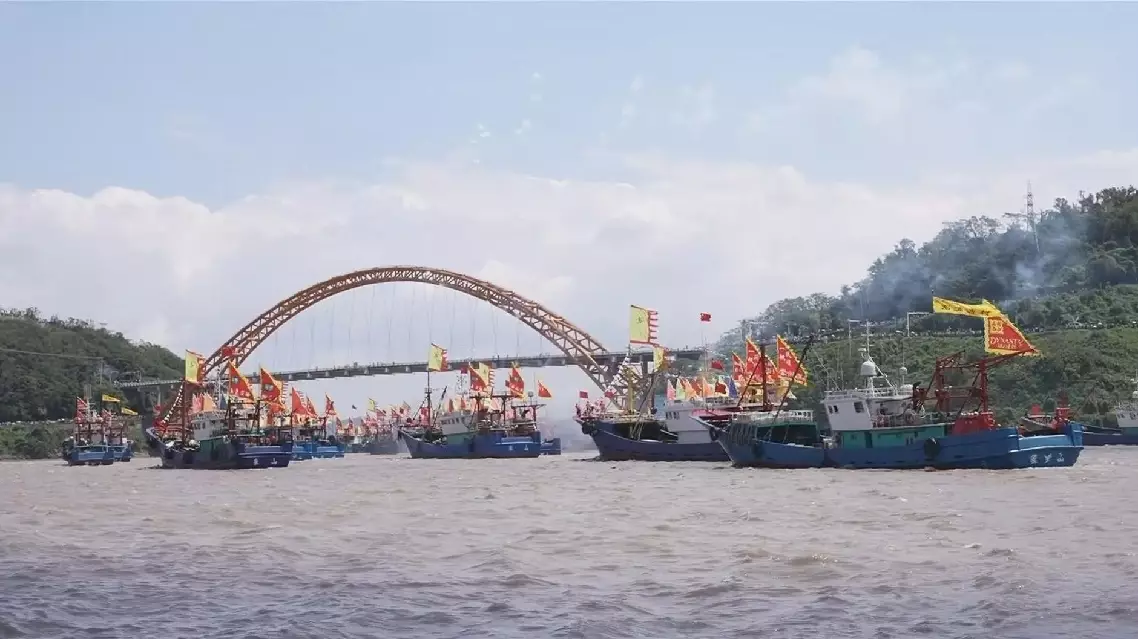
New fishing season starts in Yellow, East China seas
Vietnam's Can Tho port is set to welcome the first cargo vessel arriving from China's newly operational Pinglu Canal, which opened on Wednesday to give China's landlocked southwest a logistics shortcut to Association of Southeast Asian Nations (ASEAN) markets.
Built at a cost of 72.7 billion yuan (about 10.83 billion U.S. dollars), the 134.2-kilometer Pinglu Canal runs from Nanning, capital of south China's Guangxi Zhuang Autonomous Region, to the Beibu Gulf, the closest maritime outlet for much of southwest China.
The canal stretches along the New International Land-Sea Trade Corridor, a strategic trade route connecting China's inland regions with ASEAN and other global markets. It is the first river-to-sea canal project planned and coordinated at the national level since the founding of the People's Republic of China in 1949.
After days of voyage, the first export-oriented shipment of goods via the canal, including steel, sheet materials, auto parts and chemical materials from southwestern China, will arrive at the Can Tho Port, one of the most important ports and inland river hubs in southern Vietnam. Can Tho is the fifth largest city in Vietnam and one of the core cities in the Mekong Delta.
Staff at the port are preparing for the upcoming cargo shipment from China.
The Pinglu Canal opened alongside Vietnam's efforts to enhance the handling capacity of the Can Tho Port and build it into an international seaport. Meanwhile, the construction of infrastructure connecting the Can Tho Port with other regions in southern Vietnam is also accelerating.
The port is also accelerating its connectivity with Vietnam's national logistics information platform and promoting the construction of bonded warehouses, cold chain facilities, inspection and certification centers, and lighting facilities.
Currently, Vietnam Maritime Corporation is working with China's Beibu Gulf Port Group to open multiple routes for river-sea transportation via the Pinglu Canal. Vietnam expects to export more fruits and aquatic products to China through routes via the canal.
China and ASEAN have been each other's largest trading partners for many consecutive years, with the annual trade volume reaching 7 trillion yuan (1.04 trillion U.S. dollars) and still growing at a faster pace.
Vietnam has become China's largest trading partner in ASEAN and ranks among its top four global trading partners, with the trade volume between the two countries exceeding two trillion yuan (298.2 billion U.S. dollars) annually.
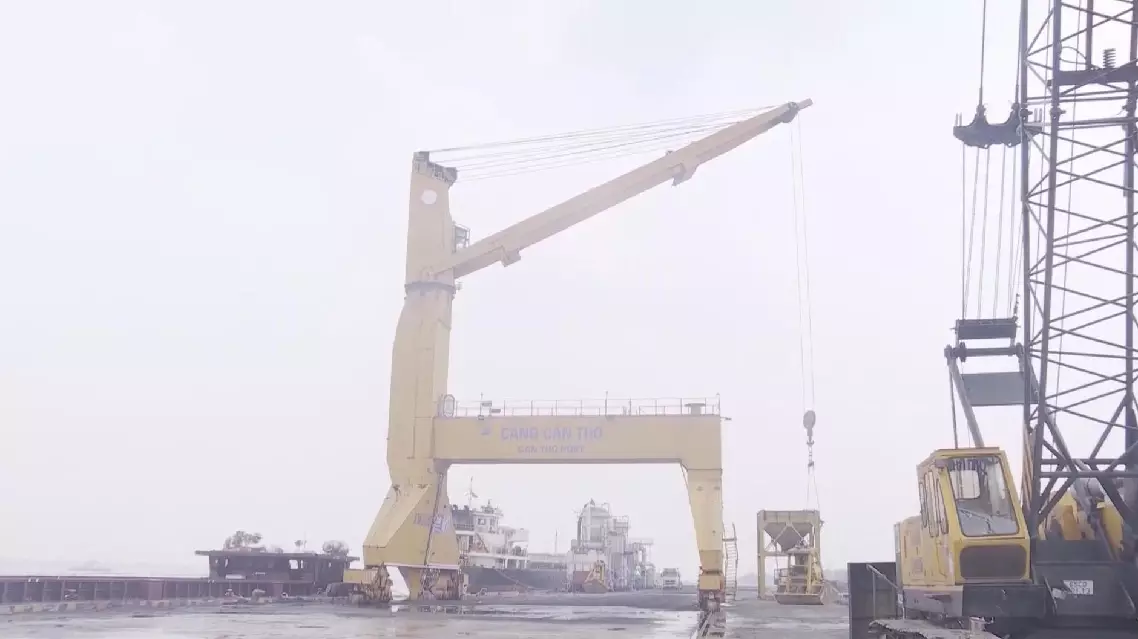
Vietnamese port set to welcome first cargo vessel from newly-opened Pinglu Canal