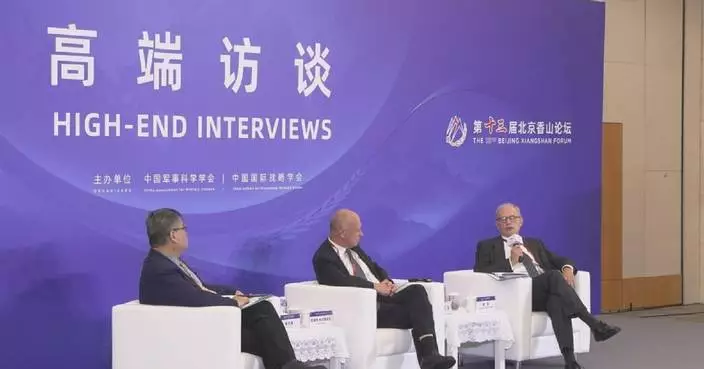
Chinese Vice President Han Zheng on Tuesday addressed the welcome banquet of the 13th Beijing Xiangshan Forum, which was attended by official representatives from nearly 100 countries, regions and international organizations.
Han said despite the complex challenges facing the world today, the trend of the times featuring peace, development, cooperation and win-win results is irresistible, and the general trend toward world multipolarity and economic globalization is irreversible.
The peoples of all countries have an ever-stronger aspiration for development and security, and their call for international fairness and justice is growing louder, he said.
Han stressed the need to uphold the purposes and principles of the UN Charter, uphold true multilateralism, resolve differences and disputes through dialogue and consultation, put people first, and ensure that technology benefits humanity.
As a responsible major country and the largest developing country, China always views its own development within the context of human development, and contributes its share to world peace, stability, development and prosperity through Chinese modernization, Han said.
He noted that over the 20 years since its founding, the Beijing Xiangshan Forum has played an important role in building consensus on security, promoting defense cooperation and safeguarding regional peace and stability.
He expressed the hope that participating guests would engage in in-depth exchanges during the forum to make new contributions to advancing international security cooperation and safeguarding world peace and stability.
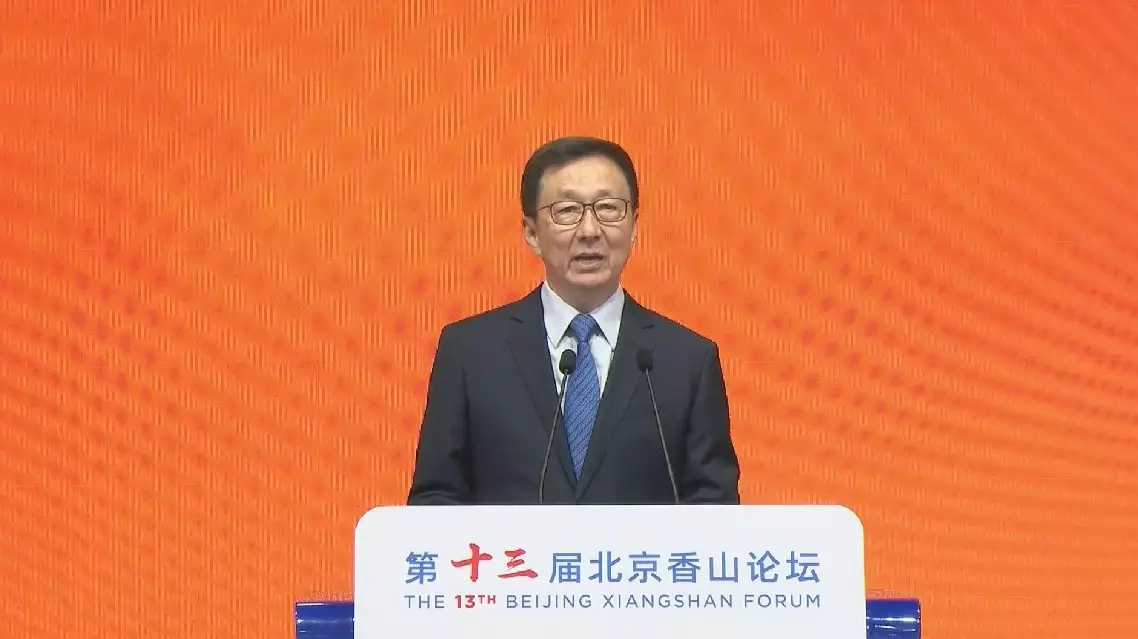
Chinese vice president addresses welcome banquet of Xiangshan Forum in Beijing
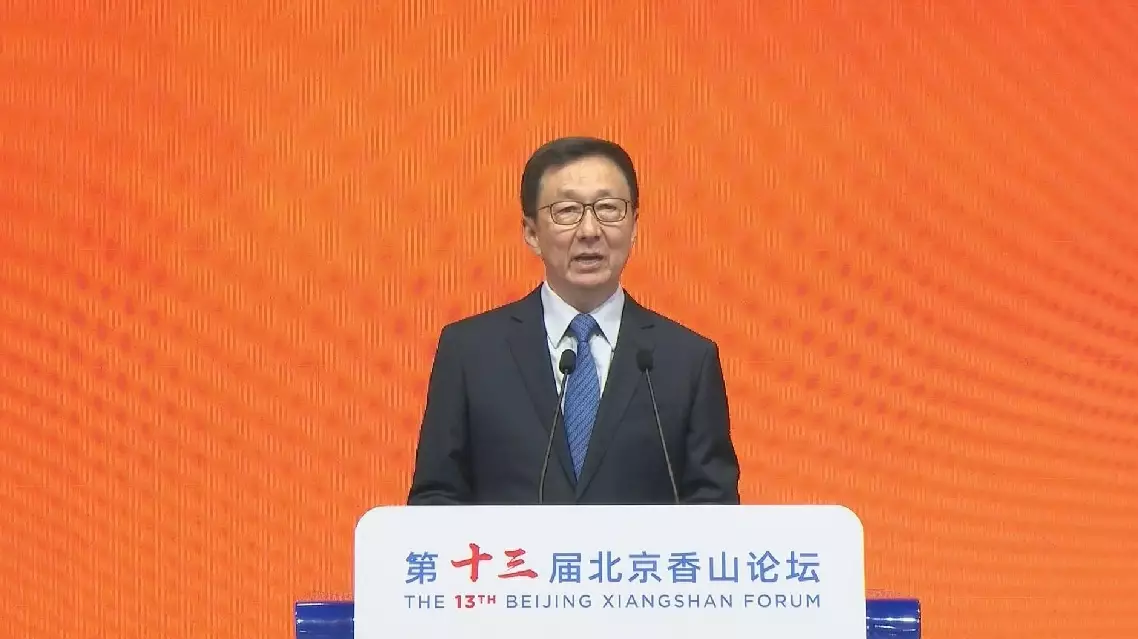
Chinese vice president addresses welcome banquet of Xiangshan Forum in Beijing
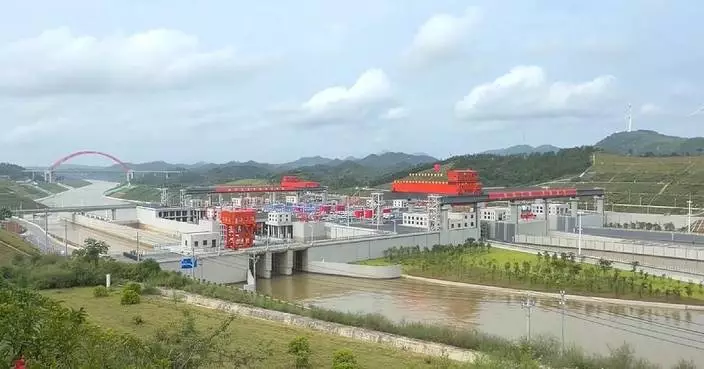
China's landmark Pinglu Canal heralds a new era for economic and infrastructure cooperation between China and the Association of Southeast Asian Nations (ASEAN) countries, said a scholar from Malaysia.
The river-to-sea waterway opened on Wednesday, giving China's landlocked southwest a shortcut to the coast and overseas markets, particularly those in ASEAN, the country's largest trading partner.
Phar Kim Beng, director of the Institute of International and ASEAN Studies at International Islamic University Malaysia, highlighted the project's transformative impact in an exclusive interview with China Global Television Network via video link on Wednesday.
"It's the first project that is connected to one of the major rivers or canals of China to help Southeast Asia. Insofar as Sino-ASEAN trade is concerned, obviously, China is now the first leading partner of ASEAN. Everyone is actually surprised, I'm referring to the policymakers, the think tanks in ASEAN, that the project has been completed in a very smooth manner, and Guangxi all of a sudden is becoming the main geographical focus of trade between China and ASEAN, because coming from Southeast Asia, most of us assume that the Pearl River Delta that connects all the way to Shanghai, Zhejiang [including] Ningbo would be the customary or traditional commercial route. But Pinglu is trying to change the commercial dynamic altogether," said Phar.
The canal took over four years to build, overcoming significant engineering challenges presented by the terrain in China's southwest. Now that it is completed, coal, ore, grain, new-energy materials and auto parts from provinces there can take a more direct route to overseas markets.
According to Phar, increased connectivity through such megaprojects goes to the very core of healthy regional development.
"Aside from becoming a stable political and security community, the very DNA of ASEAN is actually focused on social, cultural and economic integration. But then you cannot achieve that, not unless the logistical connections and networks are all in place. The Pinglu Canal provides an additional brick, additional supplement, and enhances Sino-ASEAN trade now," he said.
In deeper analysis, the scholar said that three factors shed light on the importance of the Pinglu Canal for China-ASEAN ties.
"First, it has actually transformed the commercial and geo-economic imaginations of both sides. Secondly, insofar as Guangxi is concerned, it's also connected all the way to cities such as Chongqing and Chengdu. Now that's a new feature. Because we have always assumed that in order to connect to large and populous cities such as Chongqing and Chengdu, we have to use the flying routes. But in this particular case, the Pinglu Canal has changed the way we can actually work and do business with China and vice versa. And third, finally, this is actually consistent with what ASEAN has been trying to achieve, but not as successfully as China. ASEAN has this dream of trying to enhance its connectivity and infrastructure. But then it seems that China has taken the lead and ASEAN is more than willing to follow," he said.
Built at a cost of 72.7 billion yuan (about 10.7 billion U.S. dollars), the 134.2-kilometer canal runs from Nanning, capital of south China's Guangxi Zhuang Autonomous Region, to the Beibu Gulf, the closest maritime outlet for much of southwest China.
The canal stretches along the New International Land-Sea Trade Corridor, a strategic trade route connecting China's inland regions with ASEAN and other global markets. It is the first river-to-sea canal project planned and coordinated at the national level since the founding of the People's Republic of China in 1949.
The canal shortens the inland waterway journey for goods from southwest China to the sea by more than 560 kilometers compared with traditional routes through ports in Guangdong Province. It is expected to reduce overall logistics costs by 18 to 30 percent and save more than 5 billion yuan in transportation costs each year.
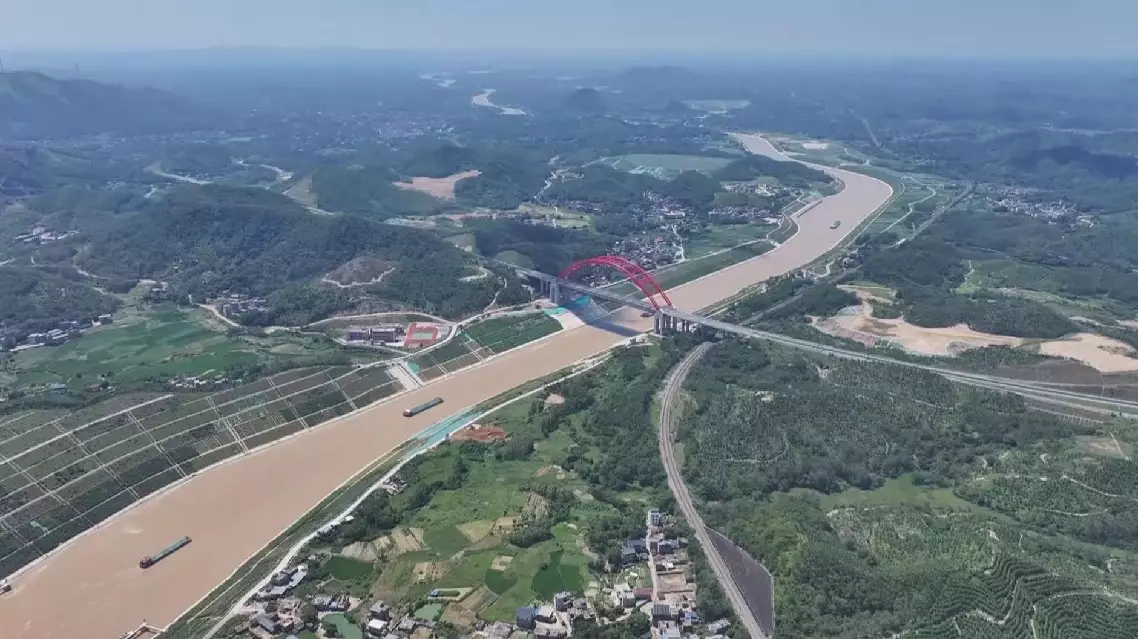
Pinglu Canal opens up new route for cooperation between China, ASEAN: scholar