NEW YORK--(BUSINESS WIRE)--Sep 16, 2026--
Faruqi & Faruqi, LLP, a leading national securities law firm, is investigating potential claims against Baidu, Inc. (“Baidu” or the “Company”) (NASDAQ: BIDU) and reminds investors of the November 13, 2026 deadline to seek the role of lead plaintiff in a federal securities class action that has been filed against the Company.
This press release features multimedia. View the full release here: https://www.businesswire.com/news/home/20260916136621/en/
Faruqi & Faruqi is a leading national securities law firm with offices in New York, Pennsylvania, California and Georgia. The firm has recovered hundreds of millions of dollars for investors since its founding in 1995. See www.faruqilaw.com.
As detailed below, the complaint alleges that the Company and its executives violated federal securities laws by making false and/or misleading statements and/or failing to disclose that: (1) that the Company had overstated the ability of its AI business to mitigate rapid declines in its legacy online marketing business; (2) that, as a result, the Company’s revenue was reasonably likely to decline; and (3) that, as a result of the foregoing, Defendants’ positive statements about the Company’s business, operations, and prospects were materially misleading and/or lacked a reasonable basis.
On August 18, 2026, before the market opened, the Company reported second quarter 2026 financial results, revealing that Baidu General Business revenue fell 4% year over year to RMB25.2 billion (or $3.71 billion), with Legacy Business revenue falling 23% year over year to RMB10.4 billion and total Online Marketing Services revenue falling 19% year over year to RMB13.1 billion. Critically, the Baidu Core AI-powered business fell 8% quarter over quarter to RMB12.5 billion (or $1.86 billion), its year-over-year growth having decelerated from 49% in the first quarter of 2026 to 25%, and its largest component, AI Cloud Infra, having fallen 17% quarter over quarter from RMB8.8 billion to RMB7.3 billion.
On this news, the price of Baidu ADS fell $13.25 per share, or 12.73%, to close at $90.87 on August 18, 2026, thereby injuring investors.
The court-appointed lead plaintiff is the investor with the largest financial interest in the relief sought by the class who is adequate and typical of class members who directs and oversees the litigation on behalf of the putative class. Any member of the putative class may move the Court to serve as lead plaintiff through counsel of their choice, or may choose to do nothing and remain an absent class member. Your ability to share in any recovery is not affected by the decision to serve as a lead plaintiff or not.
Faruqi & Faruqi, LLP also encourages anyone with information regarding Baidu’s conduct to contact the firm, including whistleblowers, former employees, shareholders and others.
To learn more about the Baidu class action, go to www.faruqilaw.com/BIDU or call Faruqi & Faruqi partner Josh Wilson directly at 877-247-4292 or 212-983-9330 (Ext. 1310).
Follow us for updates on LinkedIn, on X, or on Facebook.
Frequently Asked Questions (FAQ) for Investors Regarding the Baidu Securities Class Action Lawsuit:
What is the Baidu securities fraud lawsuit about?
The lawsuit alleges Baidu misled investors about its AI business’s ability to offset declines in its legacy online marketing business and failed to adequately disclose the risk of declining revenue.
Who may be eligible to participate in the lawsuit?
Investors who purchased or acquired Baidu (NASDAQ: BIDU) securities between November 18, 2025 and August 17, 2026 may be eligible if they suffered losses.
What is a lead plaintiff, and how can I seek appointment?
A lead plaintiff represents the proposed class during the litigation. Eligible investors must file a motion with the court by November 13, 2026. Investors may participate without serving as lead plaintiff.
Why should investors contact Faruqi & Faruqi, LLP?
Faruqi & Faruqi, LLP has represented investors in securities litigation for decades and has recovered hundreds of millions of dollars for shareholders. Investors who purchased Baidu securities during the Class Period may contact the firm to discuss their legal rights, potential claims, and the lead plaintiff process at no cost or obligation.
Attorney Advertising. The law firm responsible for this advertisement is Faruqi & Faruqi, LLP ( www.faruqilaw.com ). Prior results do not guarantee or predict a similar outcome with respect to any future matter. We welcome the opportunity to discuss your particular case. All communications will be treated in a confidential manner.
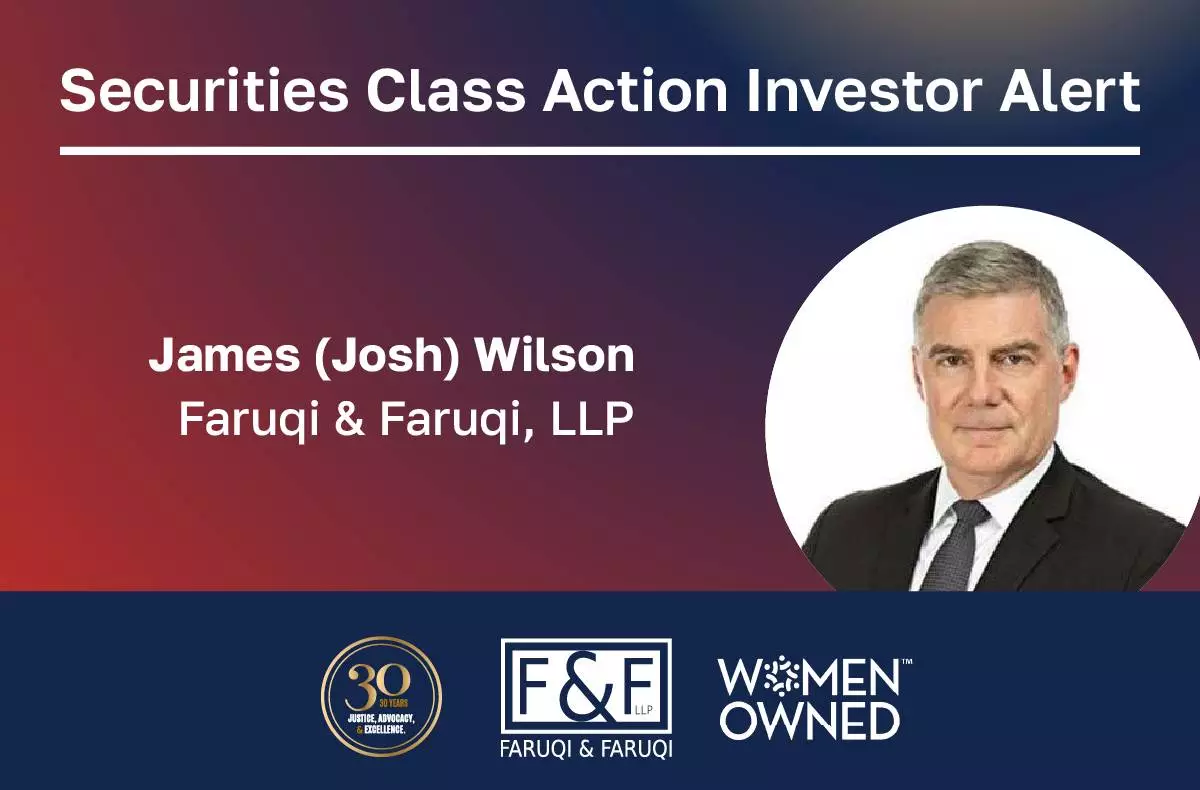
BIDU DEADLINE ALERT: Faruqi & Faruqi, LLP Reminds Baidu (NASDAQ: BIDU) Investors of Securities Class Action Lawsuit Deadline on November 13, 2026
WASHINGTON (AP) — The Federal Reserve raised its benchmark interest rate Wednesday for the first time since 2023 in an effort to quell stubbornly-high inflation and the central bank also signaled that another rate hike could occur later this year.
The quarter-point increase lifts the Fed’s key rate to about 3.9% and, over time, could result in higher borrowing costs for mortgages, auto loans, and credit cards. In a set of quarterly projections, the Fed also signaled that its rate-setting committee could hike rates a second time to 4.1%.
The move comes as Americans are already struggling with high costs for groceries, gas, and housing. Affordability has taken on a leading role in the upcoming midterm elections, just seven weeks away.
In a press conference following the Fed's announcement, Chair Kevin Warsh emphasized that the economy has shown signs of gathering speed since the central bank decided to keep rates unchanged in late July. Inflation has also remained stubbornly above the Fed's 2% target, and he noted that there is little sign it is cooling.
“The plain fact is that inflation is too high and has been for too long,” Warsh said. “We must be confident that underlying inflation is moving to our objective clearly and at sufficient speed. Today the FOMC decided that this standard has not been satisfied,” he added, referring to the policy-setting Federal Open Market Committee, an arm of the Fed.
“Warsh’s tough talk around inflation in the post-meeting press conference suggested that he may be pushing for higher rates in meetings to come,” said Preston Caldwell, chief U.S. economist at Morningstar.
Warsh also said renewed combat between the U.S. and Iran, which has driven up gas prices, had convinced Fed officials to support rate hikes.
“There’s no hiding from hot spots around the world,” he said.
Warsh noted that other central banks are hiking interest rates in response to global turmoil and higher gas prices. The European Central Bank raised its key rate last week, and the Bank of Japan is expected to do the same Sept. 18.
The Fed next meets in late October and most economists expect officials will keep rates unchanged then because it is just a week before the midterm elections. But Wall Street analysts now see a rate hike by December as a near certainty, according to futures prices.
Also late Wednesday, the yield, or interest rate, on the 2-year Treasury rose to 4.74% from 4.67%, another sign investors expect the Fed to potentially lift rates further. Still, if inflation does show signs of cooling in the coming months, that could change.
Since taking the lead at the Fed in May, Warsh has said it is firmly committed to taming inflation, and that policymakers would take their cues from the data to determine if inflation was going in the right direction.
The rate hike marks a turnaround for Warsh, who was appointed by President Donald Trump. Warsh often suggested last year when under consideration by Trump that the Fed could reduce its key rate, echoing the president’s call for lower borrowing costs.
And in April, when Warsh’s nomination was under consideration by the Senate Banking Committee, Trump said in a television interview that he would be disappointed if Warsh didn’t cut rates. On the same day, however, Warsh told the committee he did not promise Trump he would cut rates and said he would be “an independent actor” as Fed chair.
Yet the ongoing disruptions from the Iran war, which have pushed up average gas prices more than 7% from just a month ago, threaten to spread through the economy and keep broader inflation stubbornly high. An inflation report last week showed core prices, which exclude food and energy, accelerated a bit in August.
According to the Fed’s preferred measure, inflation was 3.7% in July compared with a year ago, up from 2.3% in April 2025, just before Trump unveiled sweeping tariffs. Core inflation, which excludes the volatile food and energy categories, was 3.3% in July, the latest data available, up from 3% just before the Iran war and far above the Fed’s target.
Fed policymakers unanimously supported the rate hike, compared with late July when the central bank kept rates steady and three officials dissented in favor of higher rates. Sixteen of the eighteen Fed policymakers who submitted growth and interest rate projections penciled in at least one further rate hike this year, with four supporting two more increases.
Earlier Wednesday, the government said retail sales jumped 1.2% in August from the previous month, a sign that consumers are still spending at healthy levels despite sentiment surveys that indicate Americans remain gloomy about the economy. Strong spending is a sign that interest rates at current levels aren’t necessarily restricting the economy and cooling inflation.
“While uncertainty remains elevated owing, in part, to geopolitical developments, domestic spending has been resilient,” the Fed said, a likely reference to ongoing consumer spending and strong investment in AI data centers by large technology companies.
Higher inflation isn’t all about gas prices. Ongoing investment in AI has driven up prices for computer chips and other electronic gear, adding to overall inflation. Tariffs may still be elevating some costs, such as appliances, which jumped in price last month.
Trump harshly criticized Warsh’s predecessor, Jerome Powell, for not cutting rates quickly enough. His Justice Department even launched a criminal investigation into Powell over brief testimony he delivered to Congress last year, though that probe was eventually dropped.
When asked Wednesday how the president might react to the rate increase, Warsh said, “I’ve got nothing for you on a discussion with the president.”
Trump again called for lower interest rates in a social media post late Wednesday, but didn't comment on the Fed's action. On Sunday, Kevin Hassett, Trump’s top economic adviser, was asked in an interview with Fox News how Trump might react to a rate hike.
“I’m sure he’s not going to be super happy about it, but he will defend the independence of Kevin Warsh above all,” Hassett said.
Warsh might also have a measure of protection from the fact that his father-in-law is Ronald Lauder, a friend of Trump’s and a billionaire donor to his campaigns.
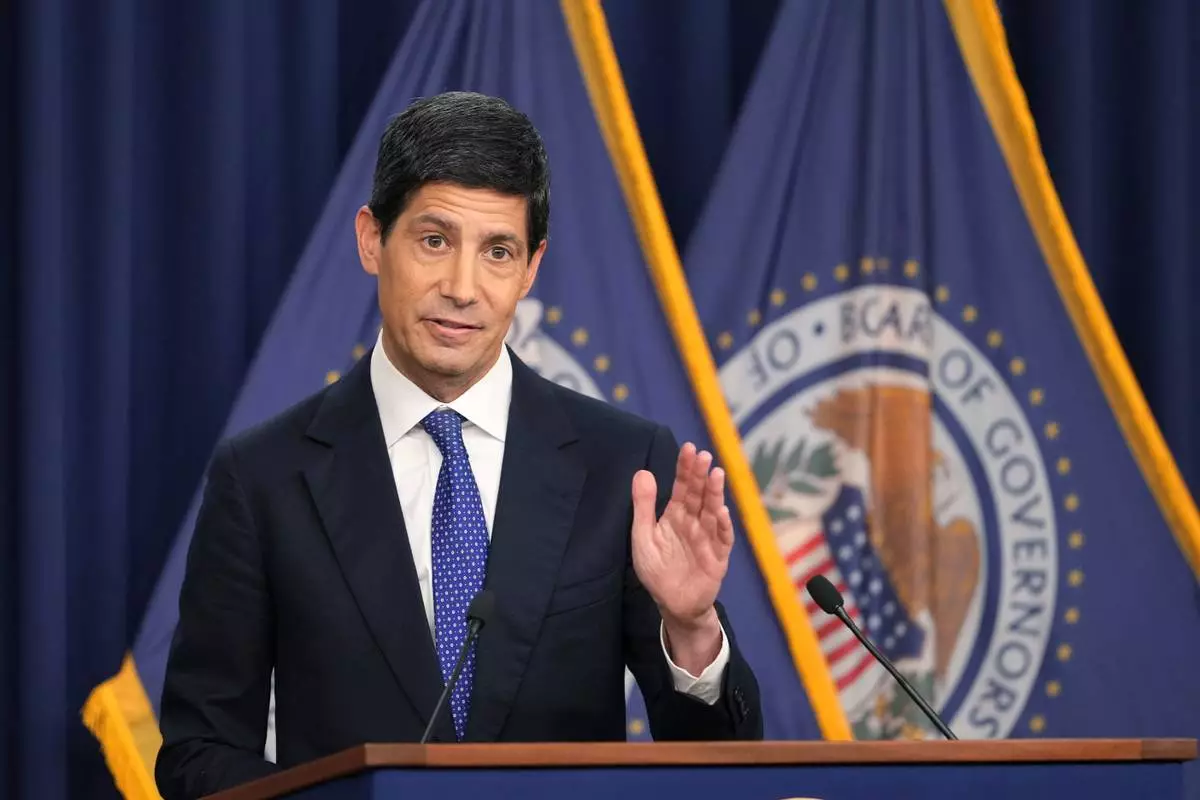
Federal Reserve Board Chairman Kevin Warsh speaks during a news conference at the Federal Reserve in Washington, Wednesday, Sept. 16, 2026. (AP Photo/Mark Schiefelbein)
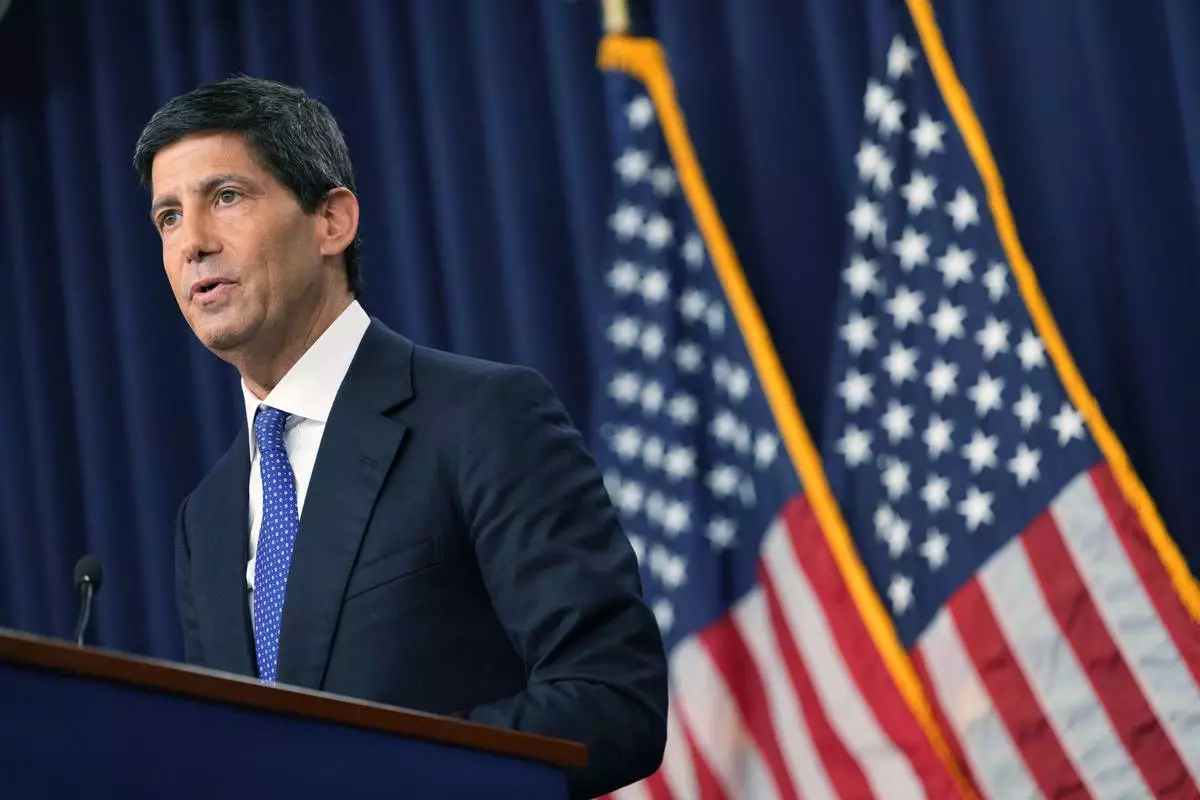
Federal Reserve Board Chairman Kevin Warsh speaks during a news conference at the Federal Reserve in Washington, Wednesday, Sept. 16, 2026. (AP Photo/Mark Schiefelbein)
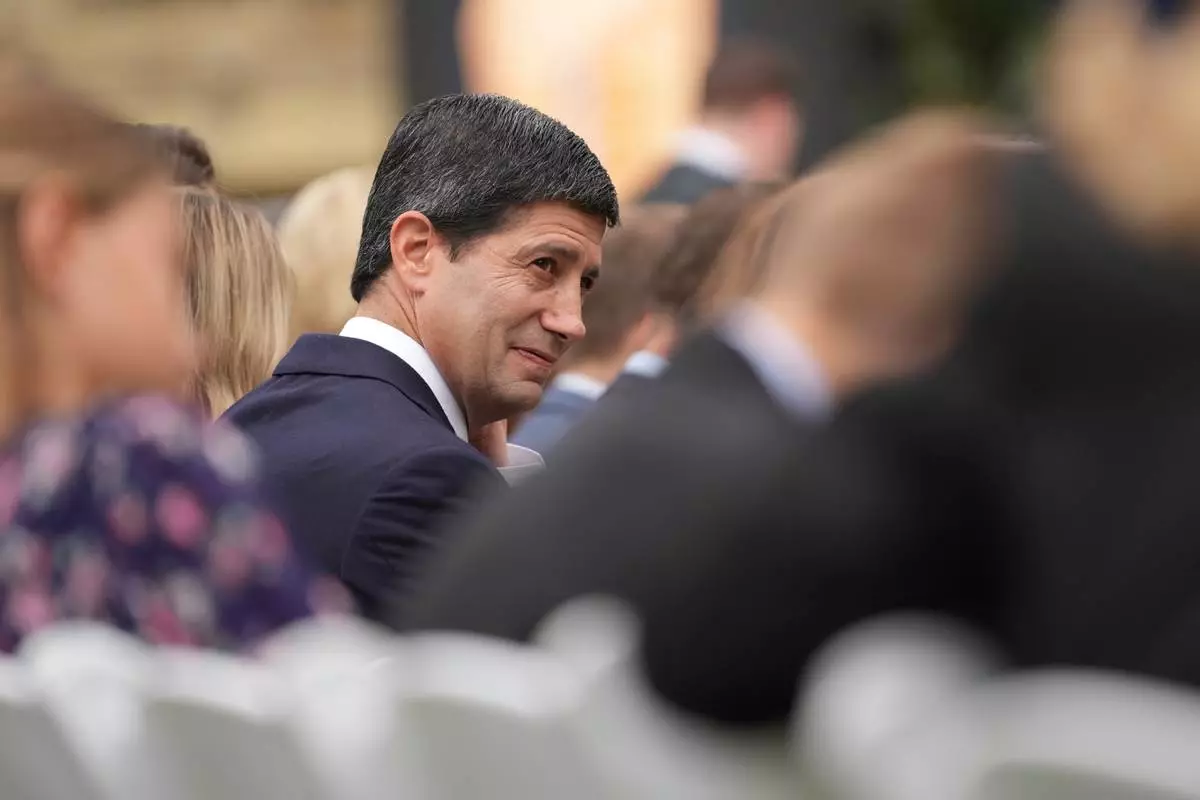
Federal Reserve Board Chairman Kevin Warsh attends an observance ceremony on the 25th anniversary of the 9/11 attacks, Friday, Sept. 11, 2026, at the Pentagon in Washington. (AP Photo/Mark Schiefelbein)