FLOWERY BRANCH, Ga. (AP) — As Atlanta Falcons coach Kevin Stefanski said Monday he's not ready to announce a starting quarterback for Sunday's home opener against Carolina, Cooper Rush's one-week hold on the job is in jeopardy.
Michael Penix Jr. may be close to reclaiming his role as the starter, especially since Tua Tagovailoa was held out on Wednesday after leaving practice on Thursday with an oblique injury.
Rush started in the Falcons’ 20-13 opening loss at Pittsburgh last Sunday as Penix and Tagovailoa were inactive. Rookie Jack Strand was the backup but did not play.
Rush’s performance in the loss was shaky. He threw two interceptions, including T.J. Watt’s pick-6 in the fourth quarter. Rush completed 12 of 22 passes for 143 yards and a touchdown.
Penix did not play in the preseason as he continues his recovery from a torn ligament in his left knee that ended his 2025 season.
Penix was cleared for full team drills late in training camp, but said he wanted to avoid rushing his return since this is his third major knee injury.
“I know we’re ready to see Mike,” running back Bijan Robinson said Wednesday. “I know Mike’s ready for himself. Forget what we think. It’s him. I know he wants to play football. I pray for the guys every day, all the quarterbacks, but I know he wants to get out there and play because it’s been a long time since he’s been out there.”
Robinson said it is “a little bit of a challenge” to install a game plan without knowing who will start at quarterback.
Tagovailoa was selected as the starter at the beginning of the Falcons' practice week for the opener at Pittsburgh before suffering the oblique injury on Thursday. One day later, Tagovailoa was ruled out and Rush was selected as the starter. Rush made the start despite suffering back spasms on Saturday.
When asked Monday if he knows who will start at quarterback, Stefanski said “Not yet. We’ll work through that this week.”
He acknowledged it's not ideal to again face a possible late-week decision at quarterback.
“Of course, ideal world, I think everybody, every team, you’d love to know who’s playing at every position,” Stefanski said. “That’s a no-brainer. I get that part. But we’re gonna be flexible and make sure that we’re giving all of our guys the ability to go play and play well. ... It’s truly day to day.”
Penix said last week he felt “really close” to being ready to play.
The Falcons were 3-6 in Penix's nine starts in 2025, his second season. The team was 1-2 in his three starts in his 2024 rookie season after being the No. 8 overall pick in the draft.
With Rush behind center, the Falcons had a conservative passing game. The majority of his passes were short attempts, and Robinson turned one into a 23-yard touchdown catch.
Robinson had 21 carries for 83 yards and eight receptions for 90 yards, leading to concerns he couldn't continue to handle such a heavy workload.
Stefanski said Wednesday that Tagovailoa was “getting better” and added he is not ruling out any of the four quarterbacks this week.
When asked if Penix has said he feels ready to make his 2026 debut, Stefanski said “I feel really good about the plan and where we are. I’m not going to get into specific conversations with our players, but Mike’s progressing and doing a good job.”
See AP’s full NFL coverage here

Atlanta Falcons running back Bijan Robinson (7) runs the ball in for a touchdown during an NFL football game against the Pittsburgh Steelers, Sunday, Sept. 13, 2026, in Pittsburgh. (AP Photo/Justin Berl)

Atlanta Falcons quarterback Cooper Rush (13) looks to pass the ball during an NFL football game against the against the Pittsburgh Steelers, Sunday, Sept. 13, 2026, in Pittsburgh. (AP Photo/Gene J. Puskar)

Atlanta Falcons quarterback Cooper Rush (13) warms up with Atlanta Falcons quarterback Tua Tagovailoa (1) and Atlanta Falcons quarterback Michael Penix Jr. (9) behind him before an NFL football game, Sunday, Sept. 13, 2026, in Pittsburgh. (AP Photo/Justin Berl)
The Trump administration has ordered caregivers for migrant children to stop reporting human trafficking concerns directly to the office created to help victims, a change that critics say could make some vulnerable minors easier to deport.
The directive, in a Sept. 10 memo reviewed by The Associated Press, could mean that some victims would be denied services and face tougher odds of obtaining asylum and visas allowing them to stay in the United States.
“This is going to harm children,” said Jean Bruggeman, co-executive director of Freedom Network USA, a coalition that advocates for human trafficking survivors. "This makes it more likely they will be deported before they get the services they need and put back into harm's way."
The order added another plank to the Trump administration's hard-line immigration agenda that has forged the most restrictive policies toward immigrants in more than a generation. Some of those efforts have been stopped by courts but many others have taken root.
The memo said the change would “streamline the reporting, tracking and referral of trafficking-related concerns.” An administration statement said the change was an effort to reduce the high number of claims that did not rise to the level of criminal human trafficking but nonetheless triggered the award of benefits and relief.
But Democratic Sen. Ron Wyden of Oregon said the change requires children and their advocates to report human trafficking to the same agency that is holding them in custody. “This move to sideline human trafficking experts is more evidence that the Trump administration will deport kids to score political points rather than actually protect them,” he said.
The change applies to 1,800 children who are in federal custody after arriving in the United States without parents or being arrested with parents who were not legally present, and others who have been released but remain under supervision.
Under longstanding policy, caregivers are required to conduct an initial screening of unaccompanied children for potential labor or sex trafficking within five days of admission to a facility or shelter. If they suspect the child is a victim, they have been required within 24 hours to notify the Office of Trafficking in Persons, which was created in 2015 to prevent human trafficking and protect victims.
If the office certifies the claim, the minors become eligible for a program that gives them greater freedom by allowing them to move out of short-term housing, placing them in foster care and allowing them to attend public school. It does not protect them from deportation immediately, but they can use the determination to pursue visas for victims of trafficking or asylum claims. It also grants eligibility for nutrition, housing and other public benefits once they are released from federal custody.
Thousands of unaccompanied minors have benefited from the office's determinations. They are particularly susceptible to labor and sex trafficking, including in their home countries, on their way to the U.S. and after they arrive, and that's why Congress has given them protections, Bruggeman said.
Under the change ordered last week by the administration, federal employees and care providers were told to no longer report labor and sex trafficking claims involving the minors to the Office on Trafficking in Persons.
Instead, the memo said those claims should be submitted only to the Office of Refugee Resettlement, which oversees the housing of unaccompanied minors. That office will now investigate the claims and decide which ones should be forwarded to the Office on Trafficking in Persons for further review, the memo said, warning that providers “must respond promptly to requests for information.”
In a statement, the Office of Refugee Resettlement said the change was driven by a review last year that found 95% of more than 9,000 reports “were determined not to be viable trafficking leads" for criminal investigators.
“The vast majority of the reports detailed instances of alleged abuse or neglect, not forced labor or commercial sex as defined in human trafficking statutes,” the statement said.
Even so, 58% of reports from shelter employees and case managers qualified for trafficking-related benefits. The change in reporting will “strengthen integrity, reduce improper referrals, reduce fraud, and ensure that children who may have experienced trafficking receive immediate support,” the statement said.
Jen Smyers, who served as deputy director of the Office of Refugee Resettlement during the Biden administration, said the claim that the change will streamline reporting is questionable. She said ORR already gets the human trafficking reports but has no special expertise in evaluating them, unlike the office created for that purpose.
The fear is that legitimate claims will get delayed or missed during the new layer of review, and career employees will face political pressure to refer fewer cases, she said.
“It’s the opposite of streamlining,” Smyers said.
Smyers noted the change comes after what she called an “ onslaught ” of Trump administration policies that have undermined the ability of unaccompanied minors to gain legal status, including making it harder to leave federal custody, arresting sponsors in the middle of the release process, and cutting their legal representation.
“What they are trying to do is deport as many as possible. What interferes with deporting children is if they are eligible for protections Congress has given them,” she said.
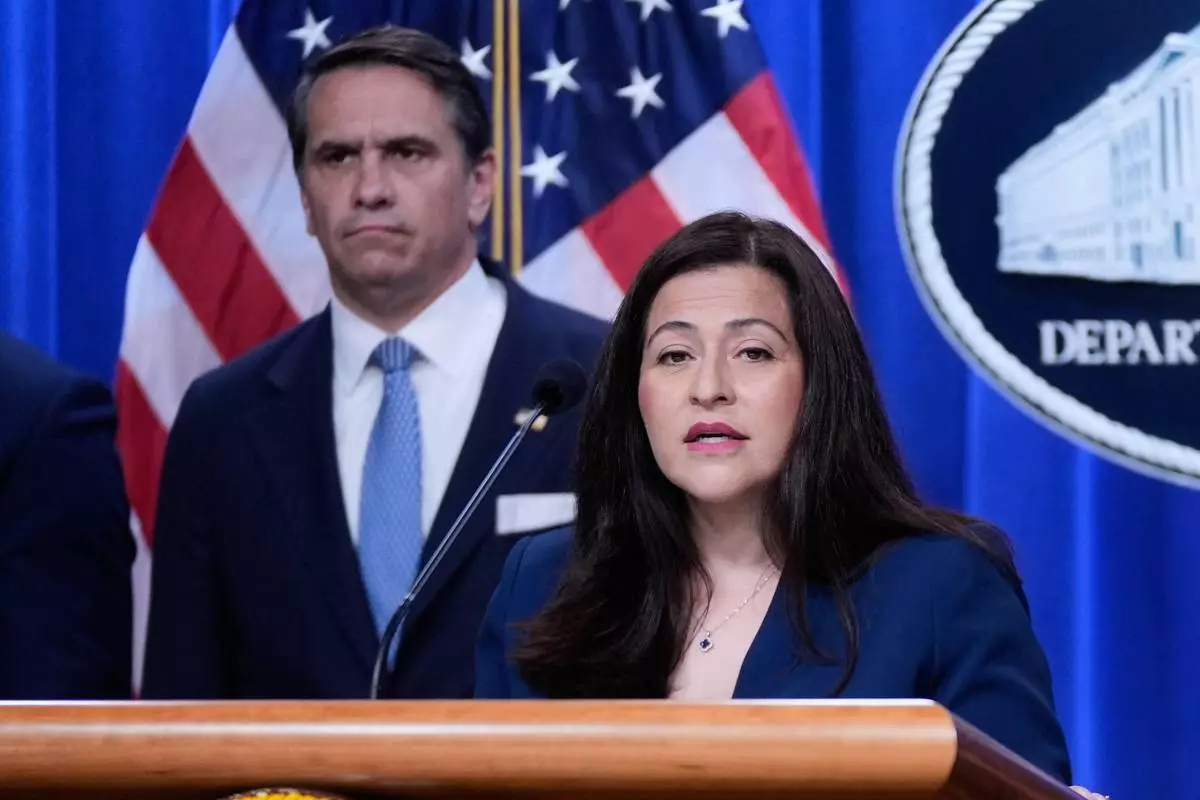
FILE - Acting Attorney General Todd Blanche listens as Angie Salazar, acting director of the Administration for Children and Families in the Office of Refugee Resettlement, speaks during a news conference on unaccompanied children at the Justice Department, June 11, 2026, in Washington. (AP Photo/Manuel Balce Ceneta, File)
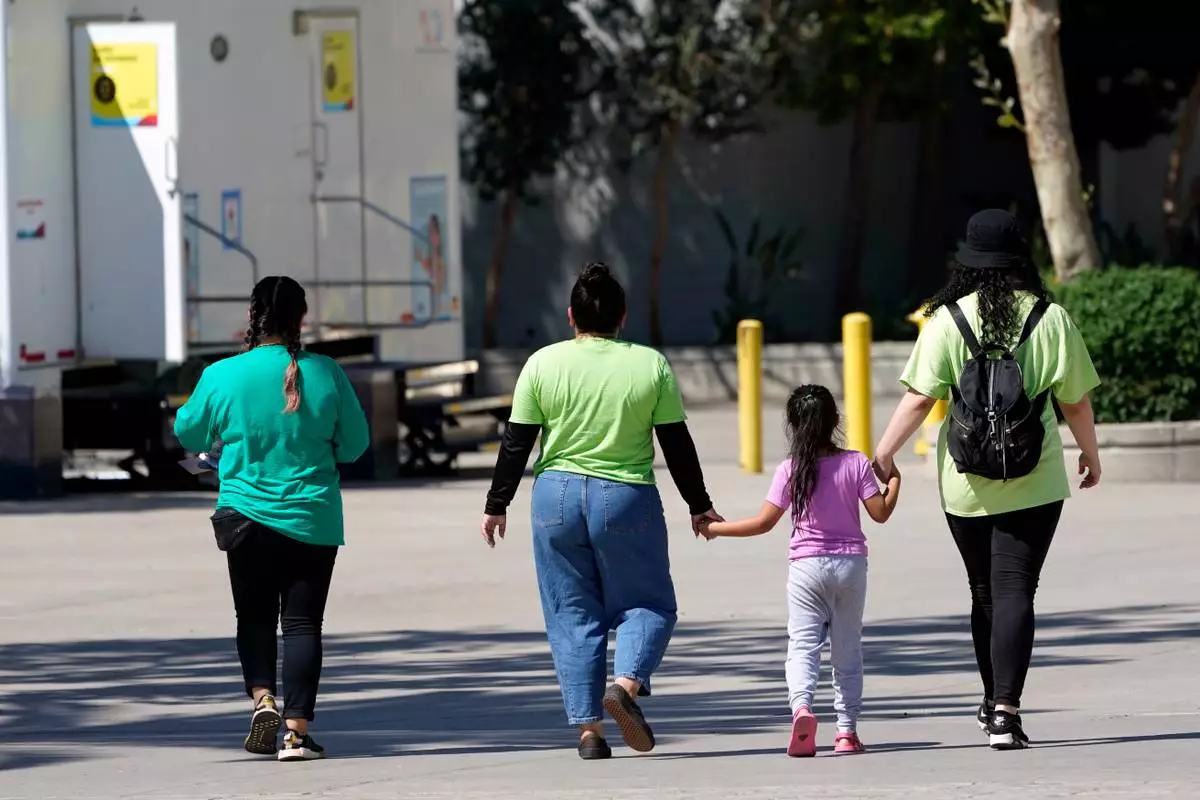
FILE - A child holds hands with workers at an emergency shelter for migrant children, July 2, 2021, in Pomona, Calif. (AP Photo/Marcio Jose Sanchez, Pool, File)