DES MOINES, Iowa (AP) — Big money groups aligned with President Donald Trump are pouring huge sums of cash into midterm races in the final sprint toward Election Day.
The groups have now reserved more than $130 million in advertising, according to AdImpact, which tracks ad buys and media spending.
The flood shows Trump’s willingness to spend part of his own stockpile on Republican candidates who were desperate for his financial support, but its impact remains uncertain. Advertising rates are higher now, meaning the money may not go as far even though some voters are just starting to tune in.
The spending includes $27 million from Safety and Affordability PAC, a new group that is affiliated with Trump's main political committee, MAGA Inc., according to a person with direct knowledge of the organization who spoke on condition of anonymity to discuss private plans. The connection was first reported by The New York Times.
The biggest spending, by far, has come from No Going Back, which has reserved more than $98.5 million in advertising. The organization is also connected to MAGA Inc., which had more than $400 million in the bank at the end of July.
MAGA Inc. has reserved $11 million this cycle under its own name.
According to Federal Election Commission records, the Safety and Affordability PAC was formed Sept. 1, the same date as No Going Back PAC. Both list the same treasurer in their filings as MAGA Inc.
A MAGA Inc. spokesperson declined to comment.
The spending comes after Republicans in vulnerable districts had begged the president and his team to come to their aid as the party fights to hold onto the House and Senate in a challenging political environment. The president's approval ratings remain underwater as voters grapple with higher prices, especially for fuel, during the unpopular war with Iran.
The Safety and Affordability PAC appears focused on House races, while No Going Back has invested most heavily in competitive Senate races.
That includes in Michigan, where No Going Back is now the second-biggest Republican spender in a high-profile Senate race, after the Senate Leadership Fund. Former Rep. Mike Rogers is up against Democratic nominee Abdul El-Sayed as Republicans try to flip the seat being vacated by Sen. Gary Peters.
Combined, the two groups are now the biggest spenders in New York’s 17th congressional district, where the party is trying to defend U.S. Rep. Mike Lawler, who is considered one of the nation's most vulnerable Republicans. He's up against Democratic nominee Cait Conley.
There have been costs to waiting. Super PACs like MAGA Inc. and its spinoffs are charged higher rates for television advertising than a candidate’s campaign pays.
The disparity grows in the final 60 days of the campaign, when the individual candidate campaigns qualify by law for a broadcaster’s lowest rates, while super PACs are charged market rates that increase as air time becomes more scarce. That means the spending buys less time than it would have if they had they made the purchases before Sept. 4.
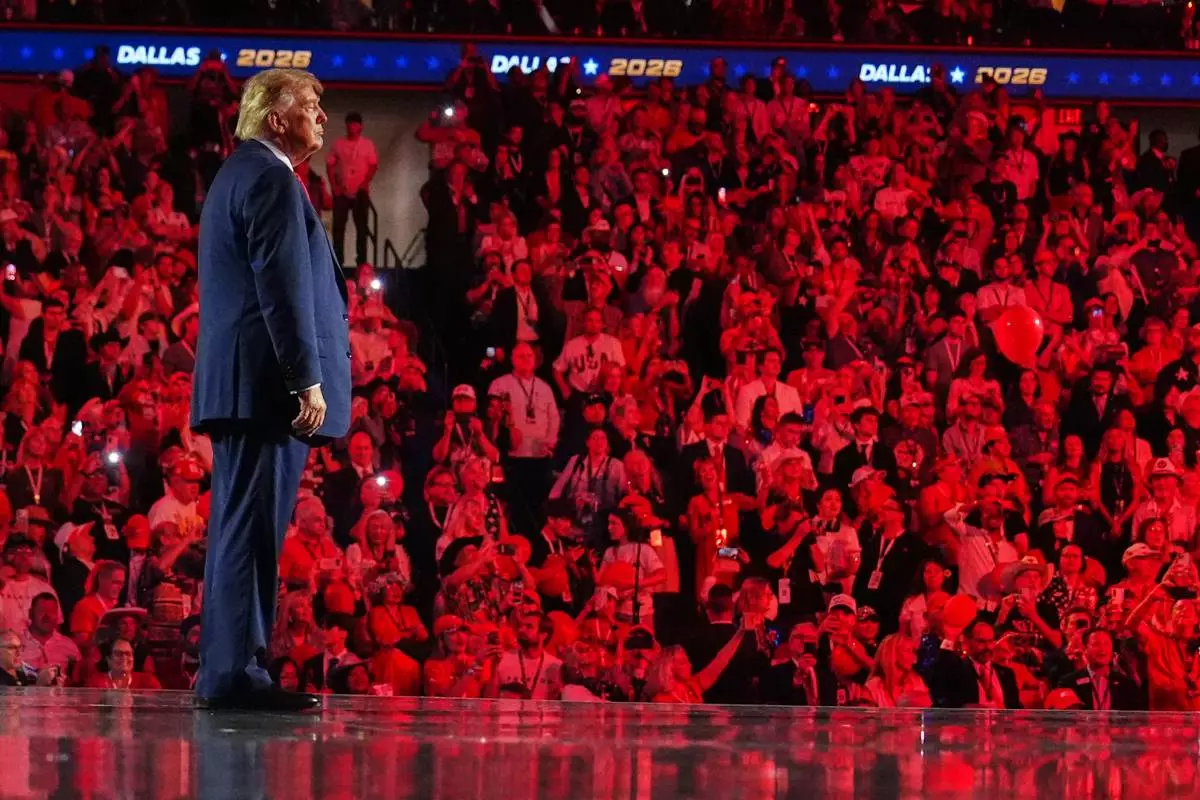
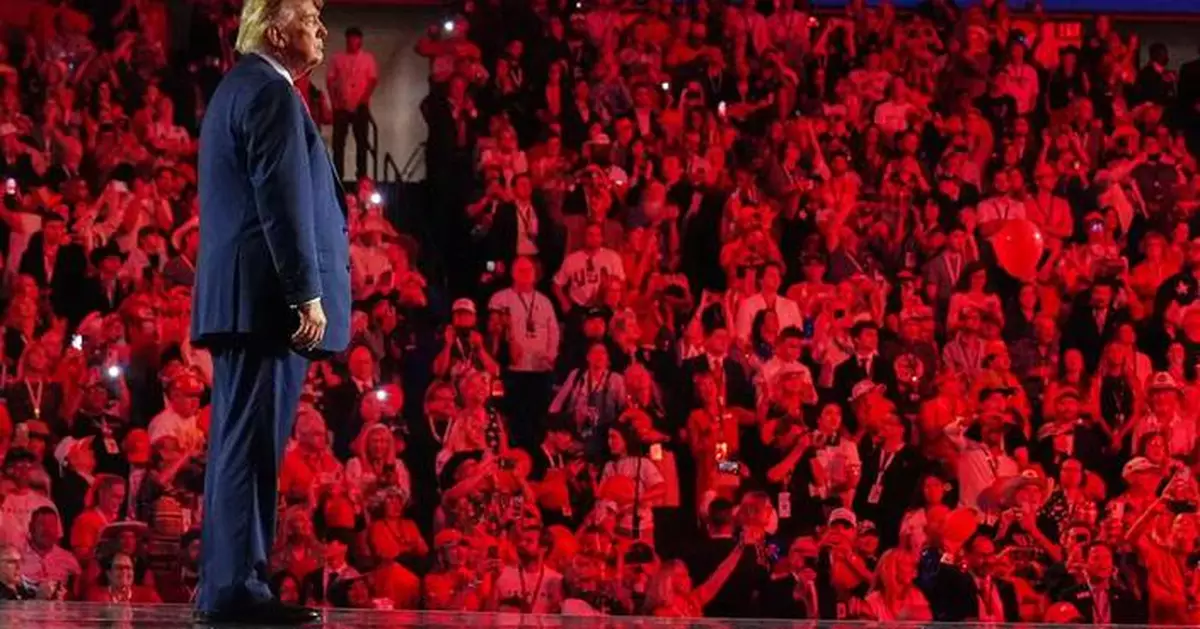
President Donald Trump stands on stage after speaking at the Republican convention, Thursday, Sept. 10, 2026, in Dallas. (AP Photo/Julia Demaree Nikhinson)
President Donald Trump is traveling to North Carolina for a campaign rally Wednesday evening with Republican Senate nominee Michael Whatley as the former national party chairman tries to shore up his campaign against Democratic former Gov. Roy Cooper.
The trip marks Trump’s first campaign rally since his unusual midterm convention in Dallas. The president, despite voter frustrations over the Iran war and his economic leadership, has promised dozens more trips ahead of Election Day. Trump's involvement creates a balancing act for Republicans like Whatley, who depend on the president’s core supporters to turn out while also trying to appeal to moderates and disaffected conservatives who are unhappy with the direction of the country.
Whatley was the president’s pick for the Senate race and, before that, Trump’s pick to lead the Republican National Committee before that. Republicans viewed him as a strong recruit to hold the seat being left open by Sen. Thom Tillis, who decided to retire after clashing with the president last year. But Whatley, who is making his first bid for public office, has trailed Cooper in fundraising in recent months and polling over the summer showed Cooper with at least a slight lead.
Trump has acknowledged the challenging landscape but believes his presence will be a clear boost.
“In North Carolina, you have a little more difficult case, because people don’t quite get it, but they’re going to find out,” Trump said during his keynote speech in Dallas.
Democrats have not won a Senate contest in the state since 2008, and Trump has carried North Carolina three times since. The seat is critical to Democrats' effort to flip control of the Senate. Cooper was perhaps Democrats’ best recruit this cycle, having never lost a statewide race in North Carolina through four terms as attorney general and two terms as governor.
Republican pollster Paul Shumaker, who worked on Tillis’s and North Carolina Sen. Ted Budd’s campaigns, said Trump will energize Republicans who may not be as excited about the campaign as Democrats are. But he noted that registered Democrats and Republicans in North Carolina are split about evenly, while independent voters outnumber both. That cohort of more than 3.5 million voters, he said, is more concerned about the economy, an issue where Trump is weaker than he was in 2024, than with crime or immigration, issues where North Carolina Republicans might still have an advantage over Democrats.
“They see the White House more focused on everything but the economy,” Shumaker said. “So that narrative has to change to give them a path here in North Carolina.”
Whatley, for his part, has not distanced himself from Trump. During a brief speech in Dallas, he praised Trump’s agenda, especially the tax cuts included in his “big beautiful bill” last year. But instead of lavishing praise on the president himself, he spent most of his time unloading on Cooper, calling him soft on crime and bad for North Carolinians’ wallets.
“Under Roy Cooper’s reign, North Carolina became the most expensive state in the nation for health care costs,” he said.
It was part of his effort to counter the former governor’s emphasis on the economy under Trump, especially gas and grocery prices. But Whatley's claim also hinges on a Forbes study whose methodology has been questioned by North Carolina health insurance analysts and the Republican state auditor, among others.
Cooper’s campaign pushed back against Whatley’s criticisms and noted that the Republican has faced scrutiny for recently having a convicted sex offender offer the opening prayer at one of his campaign events.
Whatley, meanwhile, is leaning heavily on Trump and national Republican donors to reach voters on TV and online. According to data from AdImpact, which tracks campaign advertising, total Republican spending on the contest has topped $50 million, while Democrats have spent almost $35.2 million, with Trump's MAGA Inc. and other conservative PACs accounting for the overall Republican advantage.
Cooper has no public events Wednesday, but the state Democratic Party sought to keep the spotlight on Trump, Whatley and inflation. In a morning news conference, speakers noted the Republican nominee's oil and gas investments as the energy sector amasses profits while the Iran war drives up fuel costs. Whatley's personal financial disclosures to the Senate show investments in ExxonMobil, Chevron, Shell and other energy firms. A former energy lobbyist, Whatley backs Trump's actions in Iran.
“Why would Whatley back a war that is driving up prices for North Carolina families at a time when it’s already too hard for us to get by?” state Sen. Woodson Bradley, D-Charlotte, asked. “He’s already shown us everything we need to know.”
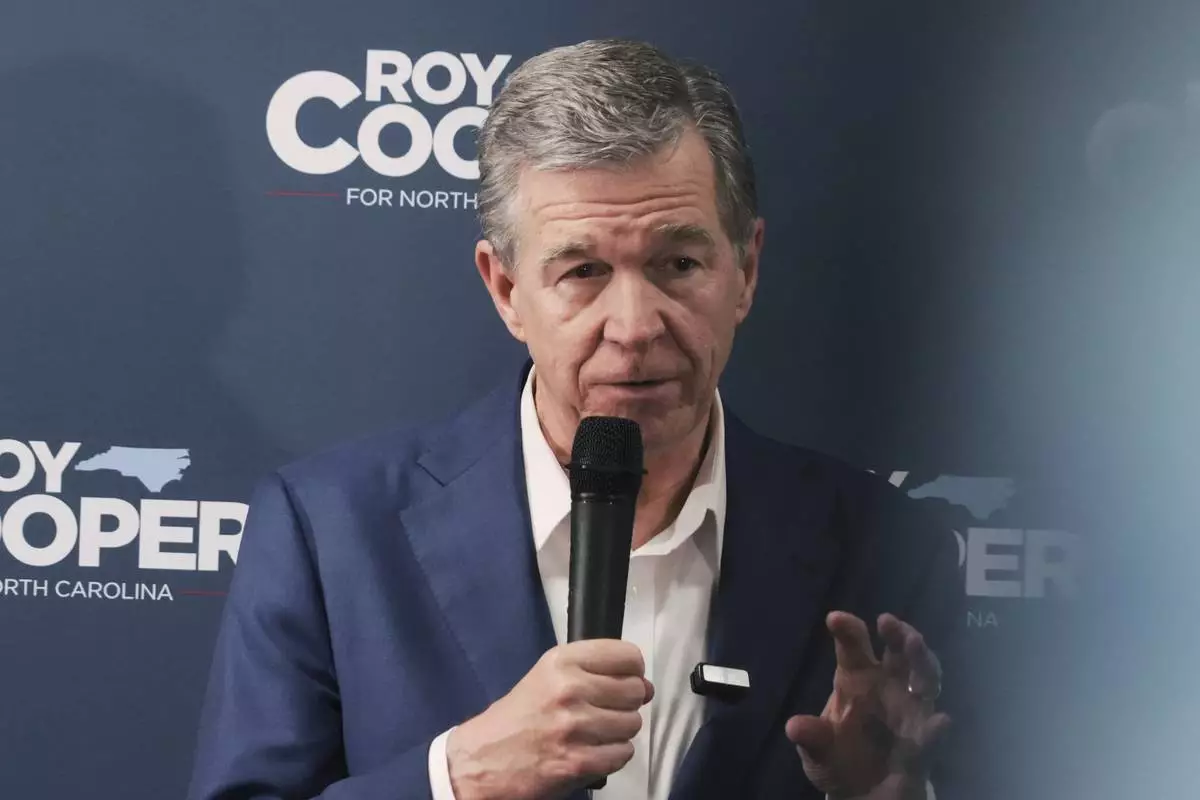
Former Democratic Gov. Roy Cooper, who is running for U.S. Senate, speaks to supporters at St. James African Methodist Episcopal Church in Goldsboro, N.C., on Thursday, Sept. 10, 2026. (AP Photo/Allen G. Breed)
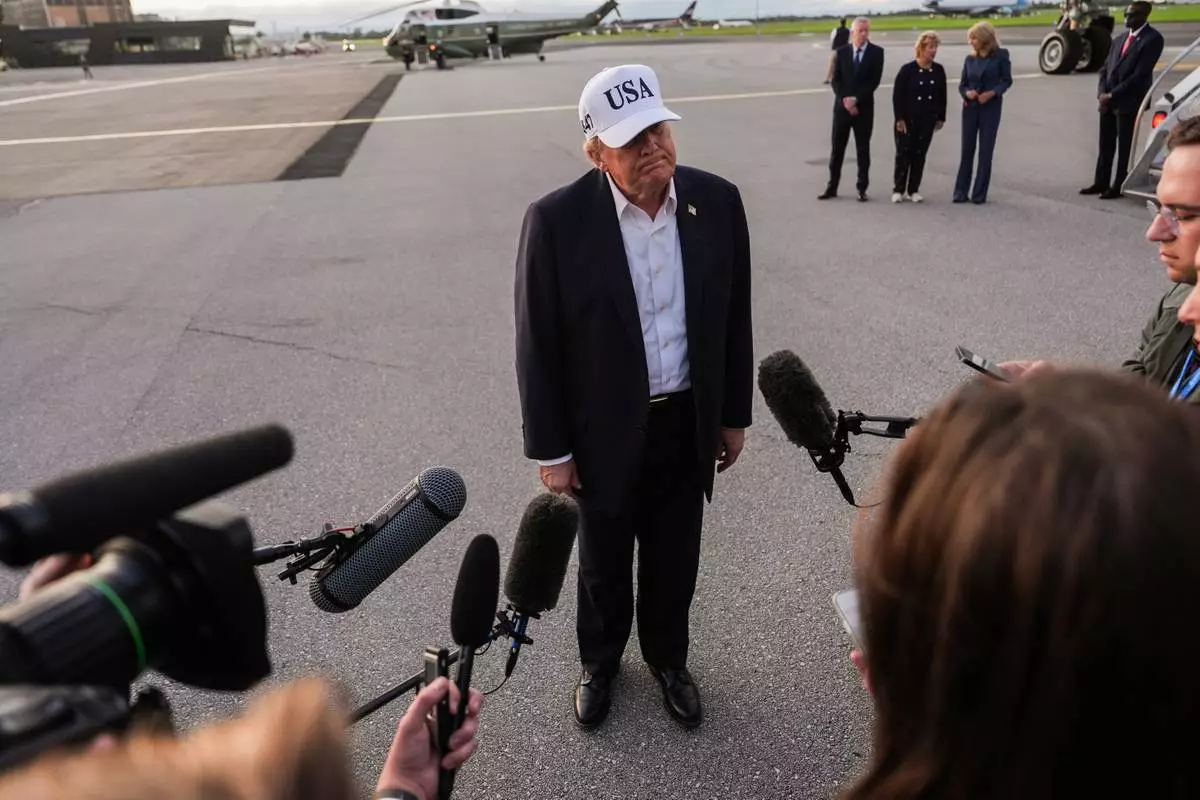
President Donald Trump speaks with reporters before boarding Air Force One at Shannon Airport, Sunday, Sept. 13, 2026, in Shannon, Ireland. (AP Photo/Julia Demaree Nikhinson)
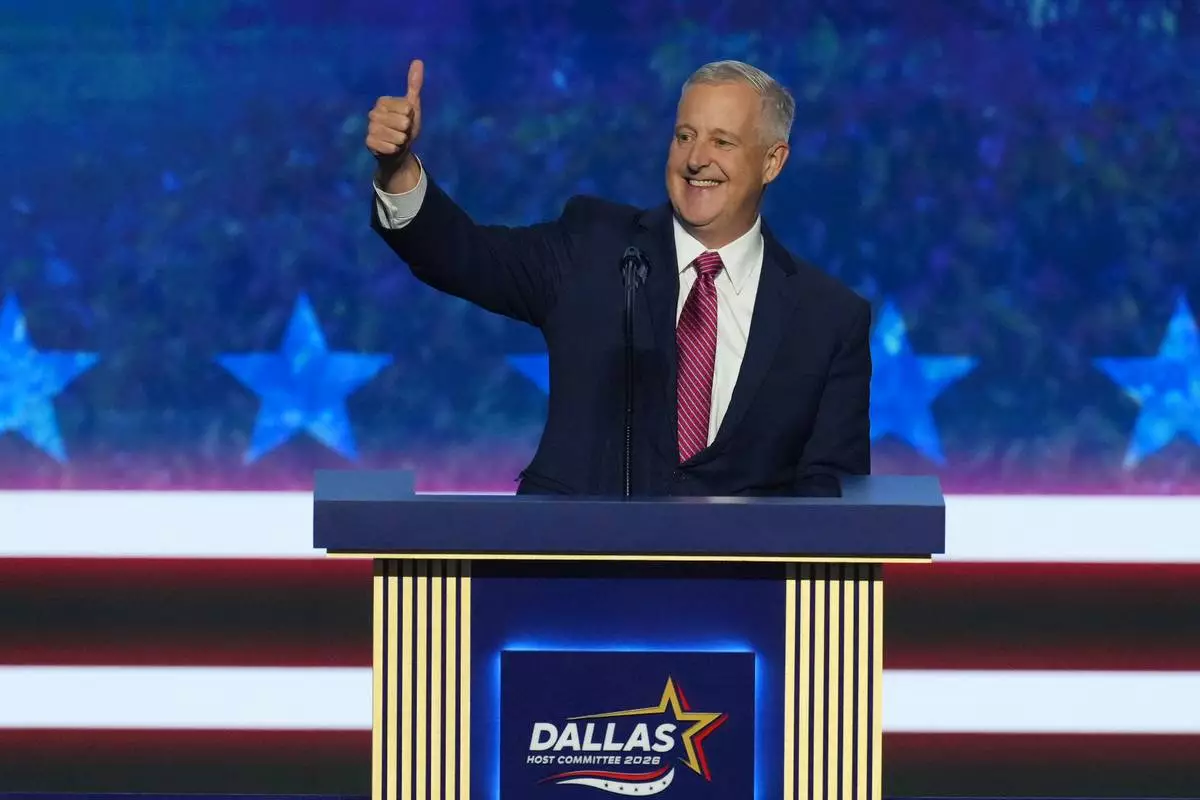
Michael Whatley, North Carolina senatorial candidate, greets delegates as he takes the stage at the Republican convention in Dallas, Wednesday, Sept. 9, 2026. (AP Photo/Tony Gutierrez)