The China-Laos Railway, a 1,035-kilometer rai line connecting Kunming in southwest China's Yunnan Province with Vientiane in Laos, handled 3.82 million tonnes of import and export cargo worth 23.38 billion yuan (about 3.48 billion U.S. dollars) in the first eight months of this year, with cargo value up 31.5 percent year on year, according to Kunming Customs.
Export value reached 11.24 billion yuan and import value 12.14 billion yuan, both increasing 31.5 percent compared with the same period last year, underscoring the railway's growing role as a "golden route" for regional trade.
Fresh tropical fruit, including durian and mangosteen, accounted for a major share of inbound trade, with imports valued at 5.26 billion yuan, up 12.3 percent year over year and making up 43.4-percent of the railway's total import value.
Imports of bulk commodities such as metal ores reached 2.49 billion yuan, an increase of 28.7 percent year on year.
On the export side, mechanical and electrical products totaled 7.42 billion yuan, a year-on-year increase of 58.4 and accounting for 66 percent of the railway's total export value. Among them, solar panels, new energy vehicles and lithium batteries posted standout growth. Photovoltaic product exports reached 2.04 billion yuan, up 245.3 percent, while new energy vehicle exports hit 690 million yuan, up 326.1 percent, reflecting the accelerating overseas expansion of China's smart manufacturing.
The China-Laos Railway, a landmark project under the Belt and Road Initiative, began operations in December 2021.

Foreign trade via China-Laos Railway up 31.5 pct in first 8 months of 2026
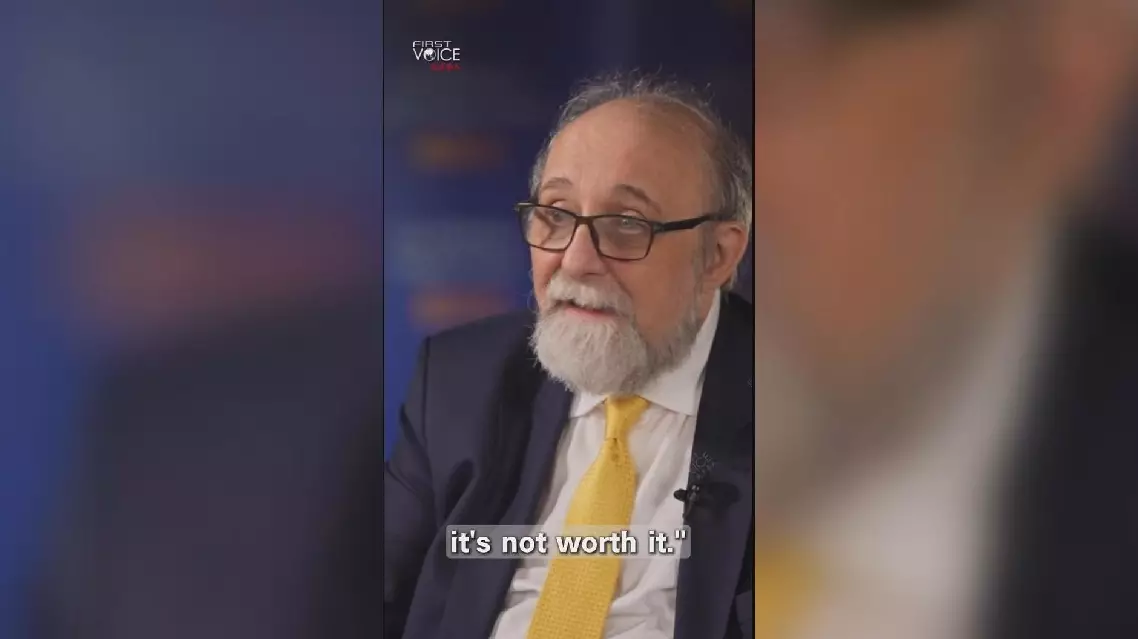
Miguel Nicolelis, widely known as the "father of brain‑computer interface (BCI)" and a pioneer of invasive BCI research, has recently warned about the risks of invasive BCI implants.
Although prominent tech figures such as Elon Musk see brain implants as a transformative technology for human‑machine interaction, Nicolelis, who is Professor Emeritus of Neuroscience at Duke University, cautioned against the approach, saying that patient safety should come first in a recent interview with the China Global Television Network in Beijing.
Nicolelis' warning carries extra weight given his own foundational work in the field. He said his medical background and feedback from paralyzed patients drove his shift away from invasive implants.
"Well, it's kind of ironic, because John Chapin and I created the brain-machine interface approach, and we were known for that. And everybody asked me that question: 'Why? You spent 20 years of your life publishing papers in animals, hundreds of papers in animals, about invasive approaches.' However, as I said in the discussion today, I went to medical school. I'm a doctor by training, and I learned since very early with the best doctors in Brazil, who were my professors in the '80s. They told me, 'Look, it doesn't matter if the technology is phenomenal. If in the laboratory it looks like the most spectacular thing you may have, if it doesn't help the patient, and if it's not safe enough, it's not worth it,'" said Nicolelis.
Those clinical principles were reinforced when Nicolelis interviewed prospective participants for his research project. Their reluctance toward brain surgery prompted his team to pursue alternative technical solutions.
"So when I started talking to paraplegic patients in Brazil, and I interviewed several to my project, the Walk Again Project, most of them said, 'Oh, I don't want a surgical procedure. I don't want an invasive device. I don't want to take the chance.' The chances of complications are very small. It's not a trivial procedure, but nevertheless, they exist," said Nicolelis.
"Imagine you're paralyzed from the chest down for a decade, and suddenly someone says, 'Oh, I'm going to put something in your head.' Well, if it goes bad, the only thing you have is your brain at this point, right? So most of the patients in 2012 that I interviewed would look at me and say, 'No, we want to participate if we have a non-invasive approach, something that is 100 percent safe.' And I said, 'Well, if this is what the patients want, I had to scratch my head and find a way to create the non-invasive approach.' And we spent a year thinking about it, and eventually it did work," he said.
"Father of brain-computer interface" warns about risks of invasive BCI