Skip to Content Facebook Feature Image

Airbus' Tianjin assembly line offers opportunity for China's high-end aviation manufacturing

China

China

China

Airbus' Tianjin assembly line offers opportunity for China's high-end aviation manufacturing

2026-09-17 10:24 Last Updated At:14:46

Airbus's expanding industrial footprint in north China's port city of Tianjin is opening new opportunities for Chinese high-end manufacturers to increase their share of the global aviation market, as the company deepens cooperation with local suppliers across the aircraft lifecycle.

The assembly plant in Tianjin is one of Airbus' four aircraft final assembly bases worldwide and the company's first final assembly line outside Europe.

That cooperation reached a new milestone on Wednesday, when Airbus delivered the first aircraft assembled at its new final assembly line for A320 family aircraft in Tianjin, the second of its kind in both China and Asia.

The delivery represents a major milestone in Airbus' industrial footprint expansion in China and across its global industrial system, the company said.

"Airbus's presence has driven the localization of the aviation industry chain. According to our statistics, there are about 23 Chinese and foreign companies in Tianjin that are now supporting the Airbus project, delivering their products directly to the Airbus final assembly line. It has also driven the gathering of the entire aviation industry chain in Tianjin, including production, air transportation, logistics services and on-site services, involving more than 100 companies," said Zheng Jian, director of the Aviation Industry Development Bureau of Tianjin Port Free Trade Zone.

In recent years, Airbus has continued to upgrade its industrial layout in China. Cooperation with China now covers the entire lifecycle of an aircraft, from research and design, manufacturing and final assembly, to operational support and dismantling and recycling after retirement.

China's improving equipment manufacturing capabilities and increasingly complete logistics and transportation system -- from the precise transfer of large components to the efficient connection of production processes -- have provided solid support for the landing and development of Airbus projects in China.

"We see on the other side a need for innovation and continual progress, and that's very much what we like and are looking at - to take part in this immense Chinese speed, as we call it, and see what innovation we can take, we can work with and maybe put on the aircraft later on," said Erik Buschmann, chief operating officer of Airbus China.
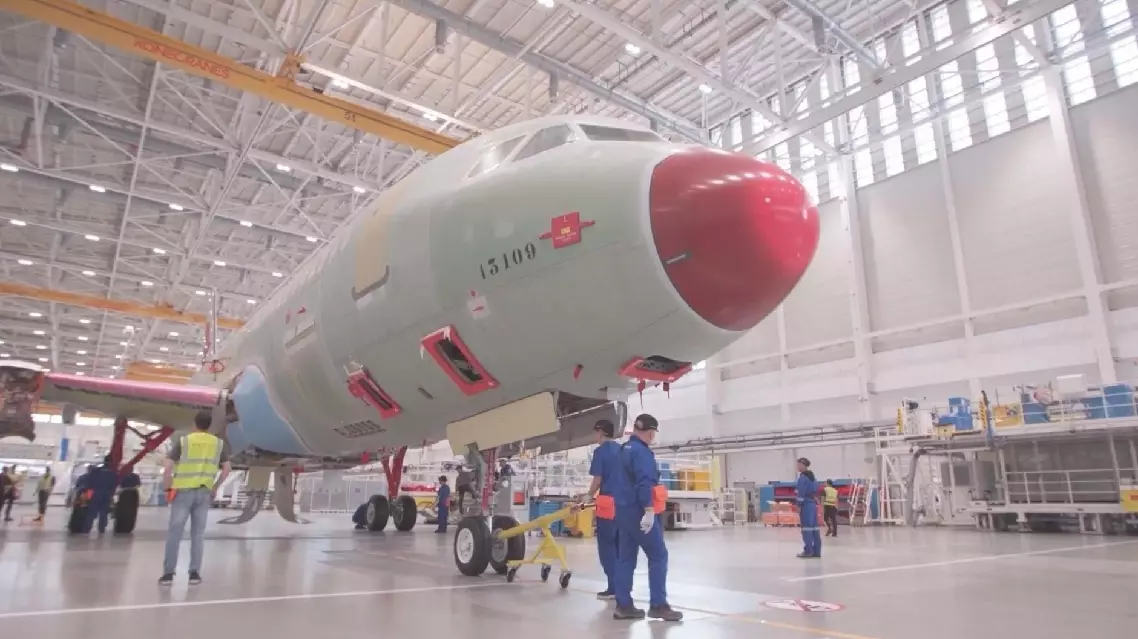
Airbus' Tianjin assembly line offers opportunity for China's high-end aviation manufacturing

Airbus' Tianjin assembly line offers opportunity for China's high-end aviation manufacturing

New Zealand's ruling National-led coalition has secured a parliamentary majority in the general election, preliminary results showed early Sunday, putting Prime Minister Christopher Luxon on course to retain power for a second term.

The Election Commission's tally of all voting places has resulted in 11 "overhang" seats, increasing to 131 the total number of seats in parliament, which normally has 120.

Among the seats, the National Party, ACT New Zealand and New Zealand First collectively secured 67, giving the three-party coalition a narrow majority to continue governing, while the opposition bloc of the Labor Party, the Green Party and the Maori Party garnered 57 in total.

The contest between the National and the Labor, led by former prime minister Chris Hipkins, remained exceptionally close, with each securing over 29 percent, according to preliminary figures.

Addressing supporters in Auckland, Luxon said the election was "too close to call," with the final outcome hinging on special votes to be counted. He acknowledged that negotiations and compromise would be needed to form the next government.

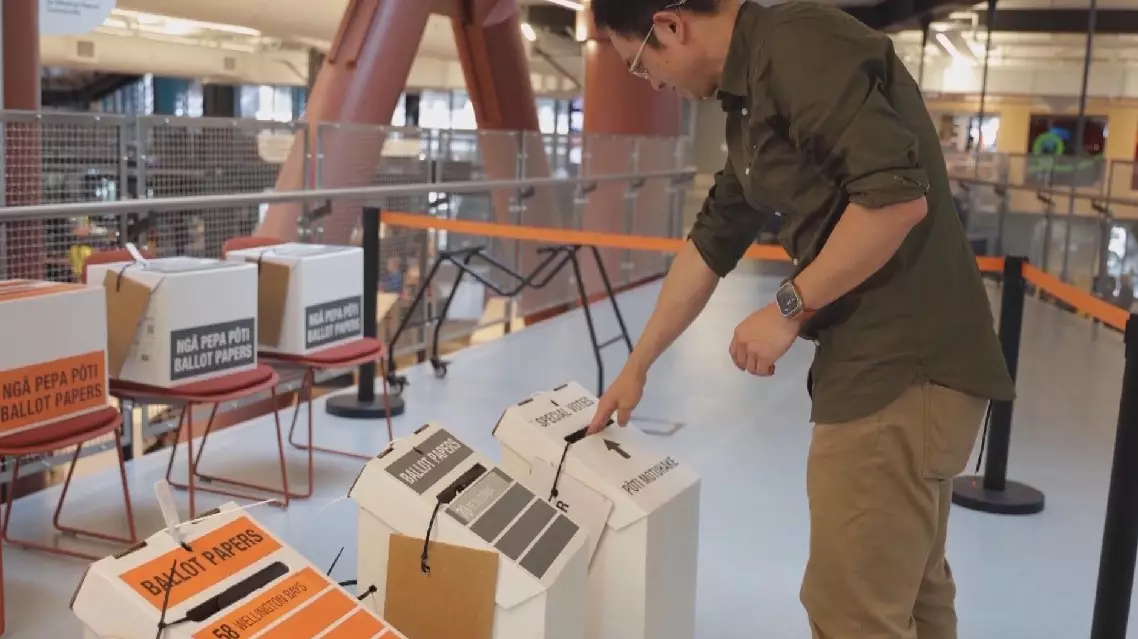
The outcome could still change when 700,000 special votes are counted days later. These include ballots cast by overseas voters and people voting outside their electorates, and are not included in the preliminary results, according to the Electoral Commission, which is scheduled to release the final official results, including special votes, on Nov. 27.

The Green Party has won a record 16 seats in parliament. The centrist Opportunity Party has also made a parliamentary breakthrough, projected to win seven seats, preliminary results showed.

The country has nearly 3.8 million provisionally enrolled voters for the 2026 general election, representing 93.6 percent of the estimated eligible population, below the final enrolment rates of 94.7 percent in 2023 and 94.1 percent in 2020, the commission said.

New Zealand uses the mixed-member proportional voting system to elect its parliament. Under this system, voters cast two ballots, one for a political party and another for their local electorate candidate. The government is usually formed by two or more parliamentary political parties.

New Zealand's National-led coalition wins majority parliamentary seats: preliminary results

New Zealand's National-led coalition wins majority parliamentary seats: preliminary results

Recommended Articles