CHICAGO (AP) — Once again, Patrick Kane took the ice for the start of training camp with the Chicago Blackhawks. That used to be his regular routine, but it was a different experience for him this time around.
Kane is getting used to his old surroundings as he begins his 20th NHL season in the same place where he started his career. The veteran forward signed a $16 million, two-year contract with Chicago in free agency.
“A lot of it is so familiar in a lot of ways, and then you get out there on the ice and you look at all the players out there and everyone’s completely different, right?” a chuckling Kane said Thursday. “So different coaches, different players. So different in that way, but yeah, so exciting.”
Chicago is hoping the offseason additions of Kane and defenseman Bo Byram — alongside the growth of its young core — will help lift the team into contention in the rugged Western Conference. The Blackhawks went 29-39-14 last year, an 11-point improvement from the previous season and still last in Central Division.
“We wouldn’t make some of the transactions we made if we didn’t believe there was a step to be had here,” general manager Kyle Davidson said. “Now, there’s a lot that goes into it. ... It’s all about showing up and expecting something every night and we should expect to arrive and win. And so, where that ends up at the end of the year, we’ll see.”
Going to the postseason with Chicago used to be an annual occurrence for Kane, who turns 38 in November. He skated in playoff games with the Blackhawks for nine straight years beginning in 2009, winning the Stanley Cup in 2010, 2013 and 2015.
Kane, who won the 2016 Hart Trophy as NHL MVP, isn’t the same player he was during those previous playoff runs. But he had 16 goals and 41 assists in 67 games with Detroit last season. He has at least 50 points in 18 of his 19 seasons.
“He’s still a great player,” Chicago goaltender Spencer Knight said. “You can tell the skill he has, his awareness on the ice with the puck and without the puck, so I think that’s something that’s going to really help us. ... I think he’s going to bring a lot of skill and talent out of a lot of other players, which is what I think will be so good for us.”
Kane skated on a line with Frank Nazar, 22, and rookie Roman Kantserov on the first day of camp. Kantserov turns 22 on Sunday.
The Blackhawks open the season on Sept. 29 at Vegas, so coach Jeff Blashill doesn't have much time to tinker with his lines.
“Patrick is a super high IQ hockey player, and a lot of give-and-go to his game,” Blashill said. “Both Frankie and Roman can play some of that give-and-go game with him; they think it a little bit the same way. Historically, when Patrick has had a center that can create lanes with his speed, it has helped him. Frankie, with his speed through the middle, will open up some different passing lanes, as well."
Blackhawks captain Connor Bedard is expected to miss the start of the season as he continues his recovery from left shoulder surgery. He could play alongside Kane on the team's top line when he returns.
Kane has been getting to know all the team's young players. He likes Nazar's competitiveness and he said Kantserov is very smooth.
“I thought, you know, as a line today, we got more and more chemistry as the day went on and things got better and better,” Kane said. “So excited to keep building with them.”
See AP’s full NHL coverage here
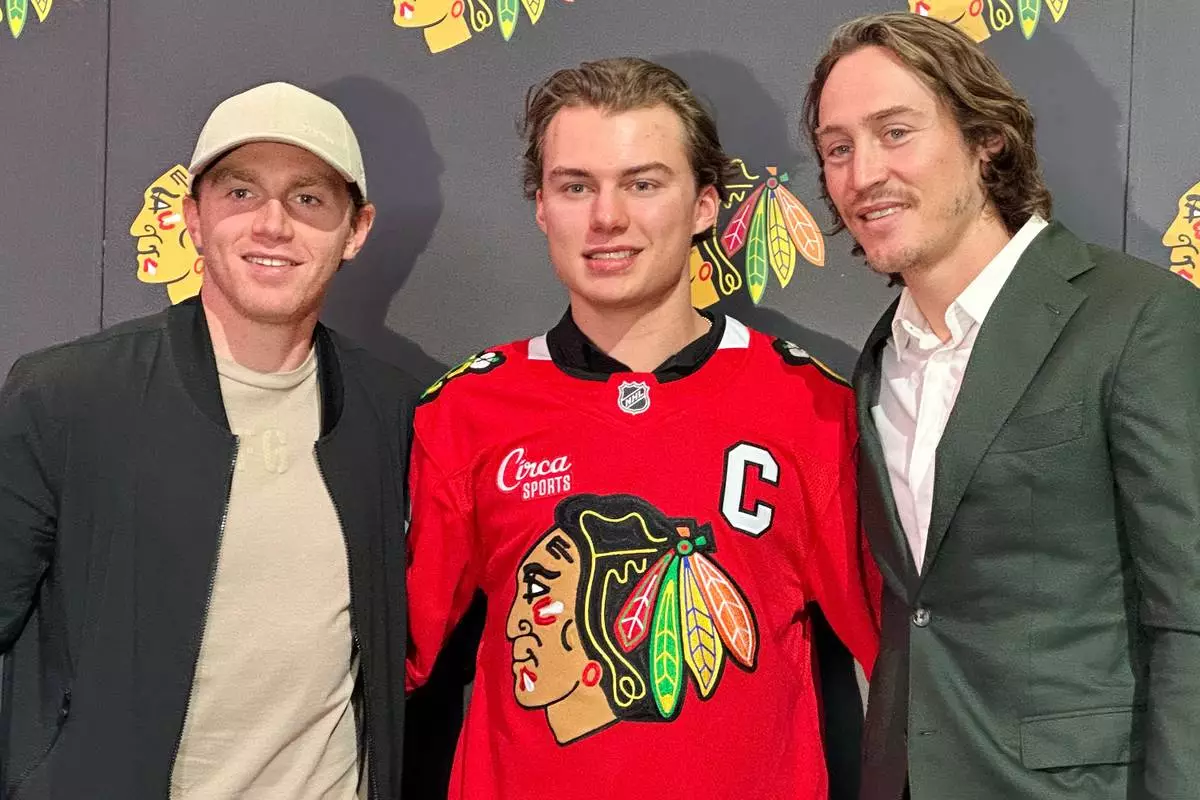
In this photo taken with a smartphono, Chicago Blackhawks players, from left, Patrick Kane, Connor Bedard and Tyler Bertuzzi pose during a news conference introducing Bedard as the new captain of the NHL hockey club, Tuesday, Sept. 15, 2026, in Chicago. (AP Photo/Jay Cohen)

FILE - Chicago Blackhawks' Patrick Kane smiles during an NHL hockey game on Jan. 19, 2023, in Philadelphia. (AP Photo/Matt Slocum, File)
BILLINGS, Mont. (AP) — Killing endangered animals while logging a forest or building a dam would not be considered illegal unless the animals were specifically targeted, under a new interpretation of the Endangered Species Act by President Donald Trump's administration that marks a sea change in how the landmark environmental law is enforced.
A directive sent to U.S. Fish and Wildlife Service employees this week says imperiled animals or plants must be intentionally targeted for their killing to be considered illegal.
That's a sharp turnaround from past practice at the wildlife service, which historically held people liable even for accidentally harming protected species such as grizzly bears, manatees and spotted owls.
Experts said the change would allow timber companies to log forests in the Pacific Northwest even if they knew that doing so could kill imperiled birds nesting in the trees, or for developers to build a dam knowing it would kill salmon.
“This cuts against the entire history of the Endangered Species Act,” said Dan Ashe, who led the Fish and Wildlife Service under former President Barack Obama.
“It just creates a huge loophole,” added Ashe, who is now president of the Association of Zoos and Aquariums. “It completely relieves people of any responsibility for their actions, even consequences that can be easily predicted.”
Encouraged by Republican lawmakers and industry lobbyists, officials under Trump have moved to dismantle key parts of the endangered species law and make companies exempt from its regulations. Administration officials have said they are returning the law to its original intent, following a 2024 Supreme Court decision that limited the authority of federal agencies to interpret environmental statutes passed by Congress.
States and conservation groups have filed numerous lawsuits seeking to turn back the changes.
The new interpretation of what it means to harm — or “take” — a species was detailed in a Sept. 14 directive from Fish and Wildlife Service Director Brian Nesvik.
“Felling a tree is not a take of the bats roosting in it unless the tree is felled for the purpose of killing or capturing them,” Nesvik wrote, adding that the bats would only be impacted “indirectly and accidentally.”
The directive, reported earlier by The New York Times, leans heavily on a dissenting opinion from former Justice Antonin Scalia in a 1995 Supreme Court case. It comes on the heels of a new rule from the wildlife service in July that narrowed the definition of “harm” under the Endangered Species Act, or ESA.
Nesvik's directive will guide how that new rule is put into action, according to a Thursday statement from the Interior Department, which includes the Fish and Wildlife Service.
“Under the guidance, the ESA’s prohibition on ‘take’ continues to prohibit conduct including harassing, pursuing, hunting, shooting, wounding, killing, trapping, capturing or collecting protected wildlife,” Interior Department officials said.
For decades, the government had defined harm to imperiled animals broadly to include encroachments on places where they live. Environmentalists warn the recent moves, if allowed to stand, will speed extinctions by letting protected species be killed and opening the door to habitat destruction.
“This is basically a free for all,” said Noah Greenwald with the Center for Biological Diversity, an environmental group. “It's a radical reinterpretation that would put polluters and other industry before the natural world.”
Federal officials have long worked with companies and individuals to minimize harm to species by crafting habitat protection plans and issuing permits for some incidental killings.
Under the new interpretation of the law, the only people needing such a permit would be those acting directly against animals, such as hunters, trappers, anglers and perhaps pesticide users, said Sandi Snodgrass, an attorney with Holland and Hart in Denver whose clients include developers, energy companies and utilities.
But Snodgrass said some companies may still seek permits to guard against changes by future administrations or to protect themselves against citizen lawsuits.
The Endangered Species Act is credited with bringing back iconic animals — including the bald eagle, American alligator and California condor — from the brink of extinction.
Republicans rolled back several provisions of the law in Trump’s first term, only to have those moves reversed under Democratic President Joe Biden, then revived yet again during Trump's second term.
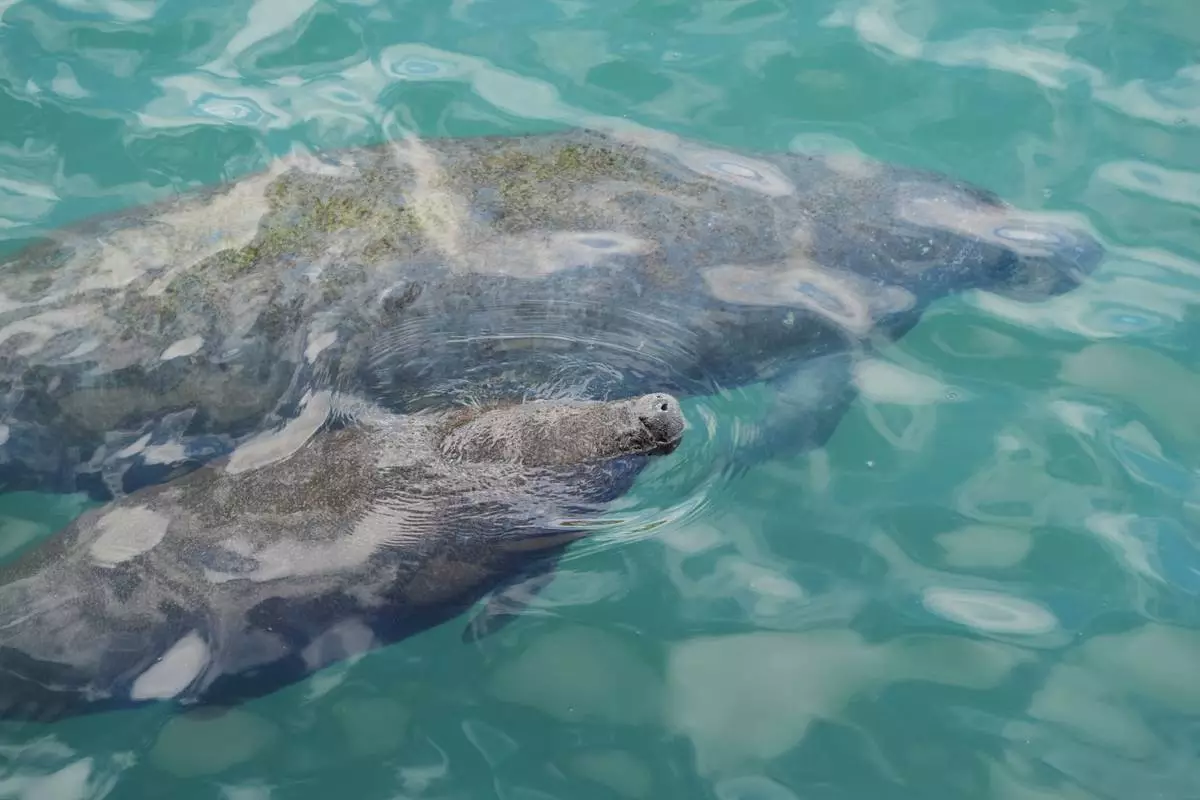
FILE - A baby manatee swimming beside its mother comes to the surface to breathe, at Manatee Lagoon, in Riviera Beach, Fla., Jan. 10, 2025. (AP Photo/Rebecca Blackwell, File)
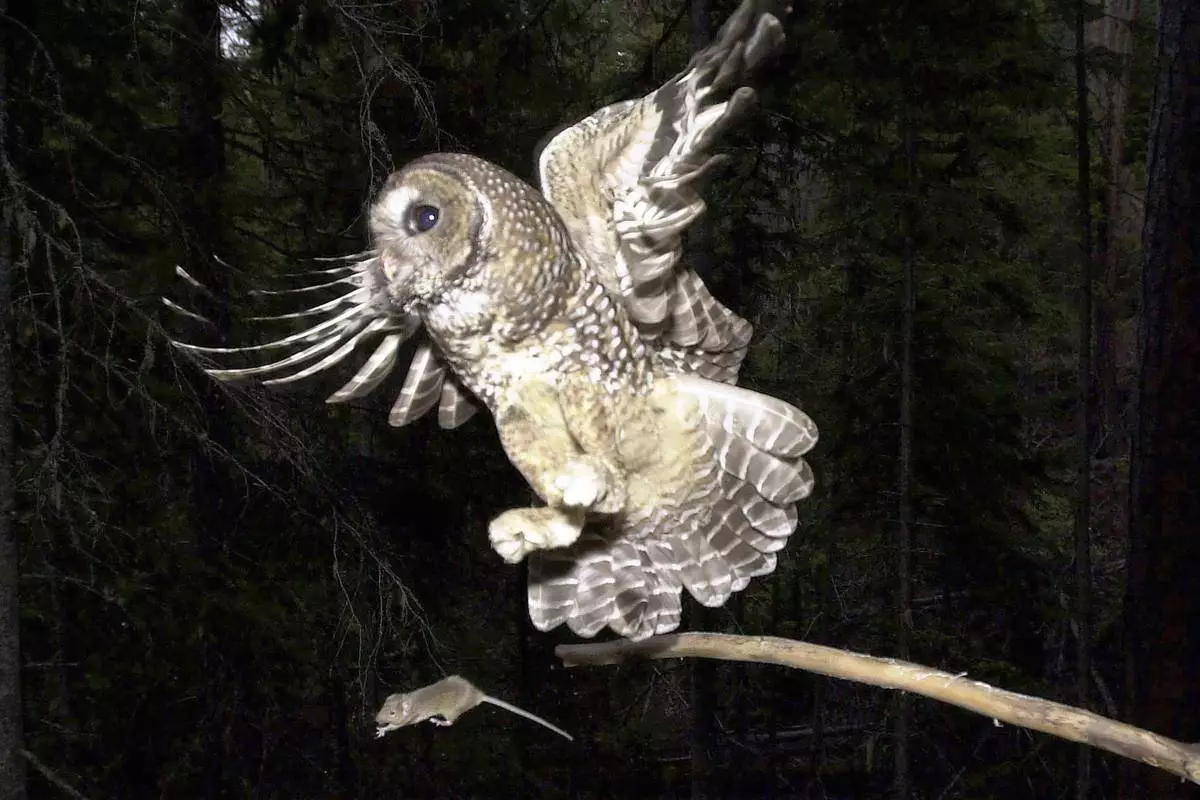
FILE - A northern spotted owl flies after a mouse jumping off the end of a stick in the Deschutes National Forest near Camp Sherman, Ore., May 8, 2003. (AP Photo/Don Ryan, File)