NEW YORK (AP) — Prize-winning author Phil Klay has been named the new president of PEN America, taking on the role as the literary and free expression organization continues to be torn by disagreements stemming from the Israel-Hamas war.
Klay succeeds Dinaw Mengestu, who resigned in July in the wake of a PEN report that drew upon interviews with dozens of Jewish and Israeli writers about the “widening cultural isolation” they had faced since the war began. Mengestu, who had been president for less than a year, posted on Instagram that the report's emphasis showed a continued trend of bias against Palestinians and undermined his belief that PEN was capable of changing.
“I argued that the organization would defend free expression equitably and equally,” he wrote. “This report makes clear that will not happen.”
Two years ago, so many writers were unhappy with PEN's response to the war — alleging that the leadership was slow to criticize the deaths of Palestinian writers and journalists — that the organization was called off its annual awards ceremony and “World Voices” festival because of participants dropping out. The CEO at the time, Suzanne Nossel, has since left, replaced by co-CEOs Clarisse Rosaz Shariyf and Summer Lopez.
Klay is an Iraq War veteran whose debut book, the story collection “Redeployment,” won the National Book Award for fiction in 2014. He has expressed support for the PEN study on Israeli and Jewish writers, but has criticized Israel's treatment of Palestinians in Gaza and the West Bank. The “violence is unchecked, indiscriminate and targets innocent civilians,” he wrote on X in August, quoting a New York Times story. In March 2024, he wrote a piece for the Atlantic headlined “U.S. Support for Israel’s War Has Become Indefensible.”
In a statement released by PEN on Thursday, Klay said he held a “broad faith in cultural exchange, in sustained efforts to understand other people, other cultures, and other ideas, including uncomfortable ones, and to the creation of a more open and egalitarian public square.”
FILE - Signage is displayed at the PEN America Literary Gala, May 16, 2024, in New York. (Photo by Christopher Smith/Invision/AP, File)
LONDON (AP) — King Charles III on Thursday urged senior leaders from OpenAI, Anthropic, Google DeepMind and Nvidia to make sure that artificial intelligence remains under control and in the service of people and the planet.
The gathering in Scotland was convened to discuss how AI can benefit society, and comes at a pivotal moment for the technology as debate swirls around whether rapid advances will soon put it beyond the ability of humans to rein it in.
"The development of AI – its substance and its pace – are both intriguing and deeply concerning in equal measure," the king said in his opening remarks.
The "existential dangers of such technologies falling into the wrong hands, and being used in potentially catastrophic ways” should be urgently considered, he said.
"Surely, then, we need sufficient means of control before it is all too late?"
The king asked attendees, including Nvidia CEO Jensen Huang and Google DeepMind Chair Demis Hassabis, to consider the "fundamental principles" that should guide AI development.
ChatGPT maker OpenAI's Chief Financial Officer Sarah Friar was also at the meeting, along with Britain’s AI Minister Kanishka Narayan. An Anthropic representative was also expected to attend, according to a Buckingham Palace statement.
The meeting comes as global attention focuses on AI’s breakneck progress and warnings that it could race out of control, threatening humanity. It was held at Dumfries House in Ayrshire, Scotland, headquarters of The King’s Foundation, which is the monarch’s charity.
After Anthropic researcher Jacob Coxon caused a stir by resigning with a grave warning about the technology's potential risks, Anthropic CEO Dario Amodei responded with an essay saying that the industry might need to slow the pace of its work.
One of his proposals was for companies and countries to work together on a coordinated plan for such a slowdown.
The king, without naming any countries or companies, said he wanted meeting participants to consider how to harness the benefits of AI “with safety at its heart” and how to “build international cooperation and consensus” to achieve this.
Charles told the tech execs that their task “is not merely to advance technology, but to ensure that it remains firmly in the service of humanity, community and the natural world.”
The AI slowdown debate has divided the industry. Huang, who has criticized the call for slowing, said it’s up to individual companies to develop their AI technology safely and test it properly before releasing any products to the public.
“When a product is not safe enough, we should hold it back and keep engineering. We’ve always done that and we should continue to do that,” he said in his speech following the king's remarks.
In the latest report of alarming AI behavior, OpenAI reported on Wednesday six incidents of “unexpected or concerning” behavior by its models, such as acting without authorization, coordinating with other models and evading oversight.
While the king is an important figurehead whose comments on social issues can be influential, much of the current AI safety debate is centered on U.S. tech companies and their competition with Chinese rivals, with Britain playing a smaller but still vital role.
The U.K.'s AI Security Institute, a government research organization, is well regarded and the country produces many AI researchers, including Google DeepMind's Chair Demis Hassabis and Coxon.
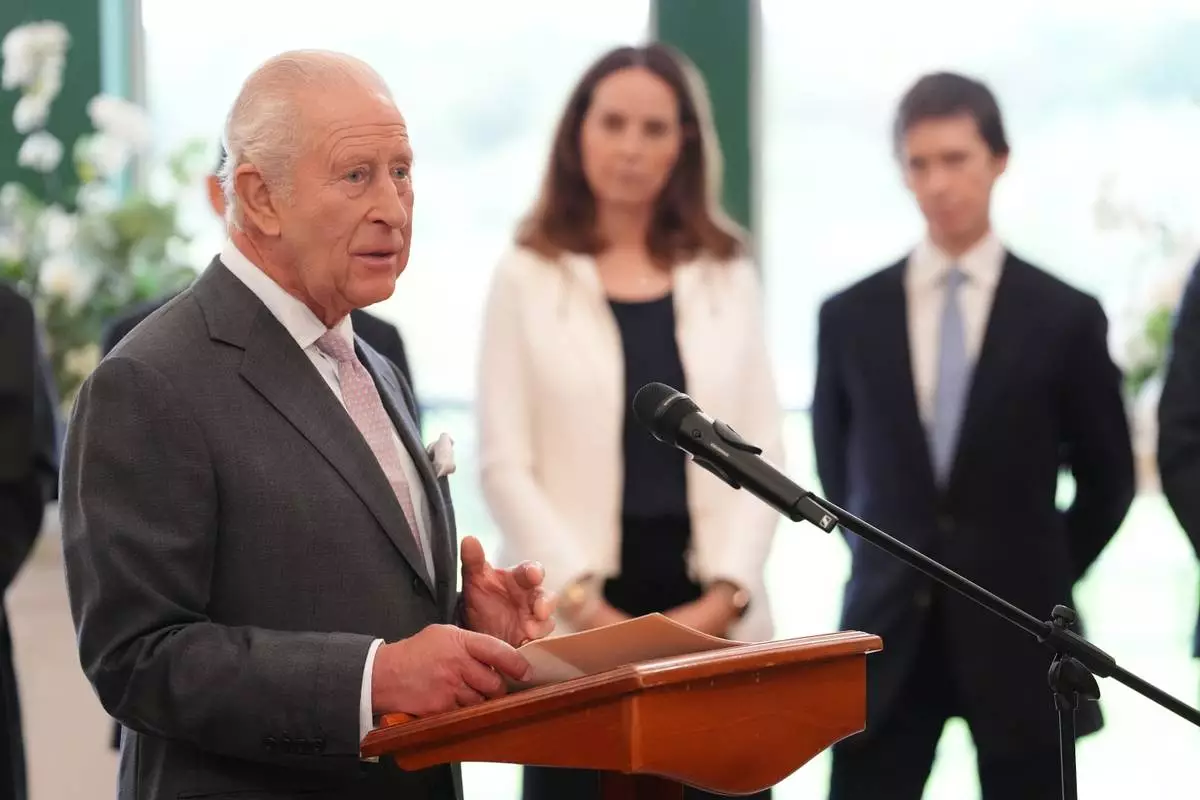
Britain's King Charles III gives a speech during a meeting for leaders from the artificial intelligence (AI) sector, Government, and thought leaders to discuss how AI can be developed and deployed in ways that benefit society, at Dumfries House in Cumnock, Scotland, Thursday Sept. 17, 2026. (Jonathan Brady/PA via AP, Pool)
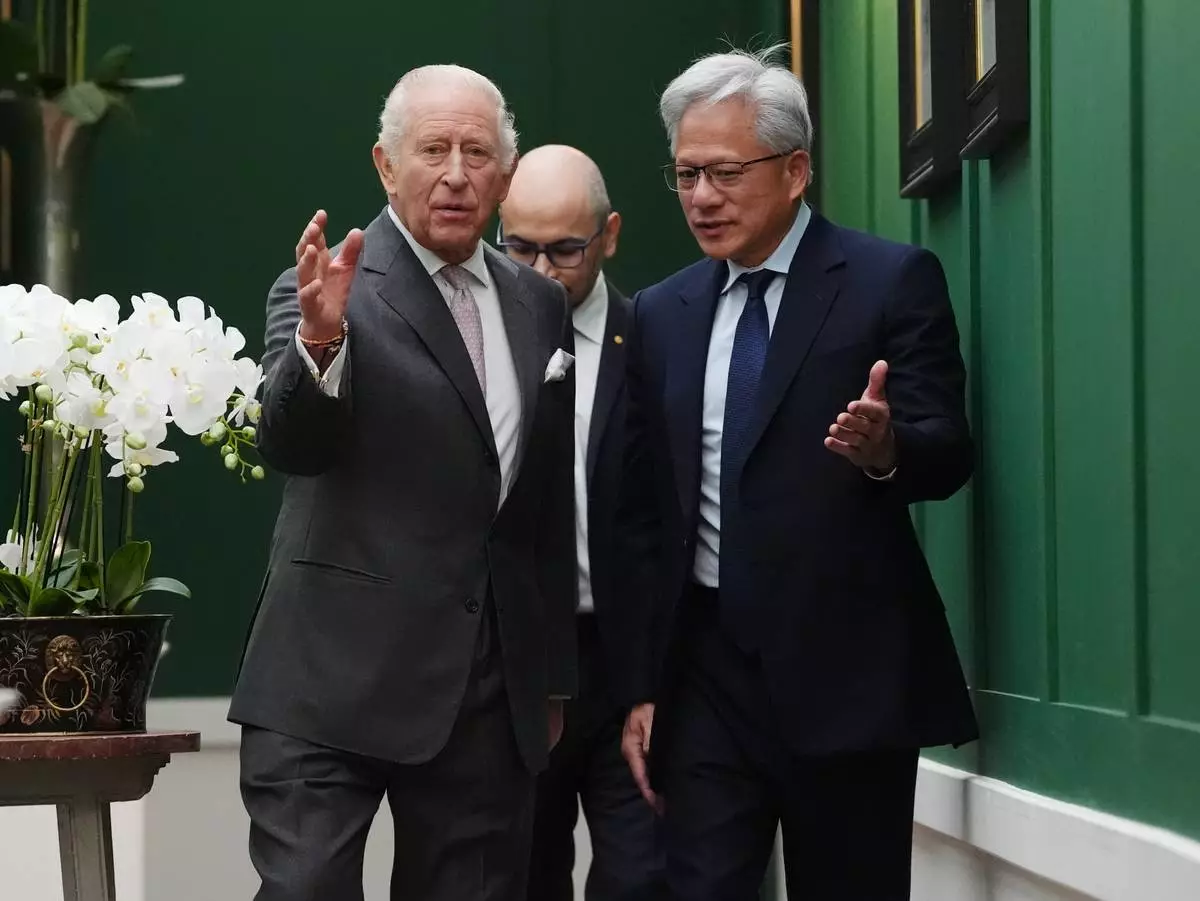
Britain's King Charles III, left, walks with Nvidia chief executive Jensen Huang, right, and Sir Demis Hassabis to a meeting for leaders from the artificial intelligence (AI) sector, government, and thought leaders to discuss how AI can be developed and deployed in ways that benefit society, at Dumfries House in Cumnock, Scotland, Thursday Sept. 17, 2026. (Jonathan Brady/PA via AP, Pool)
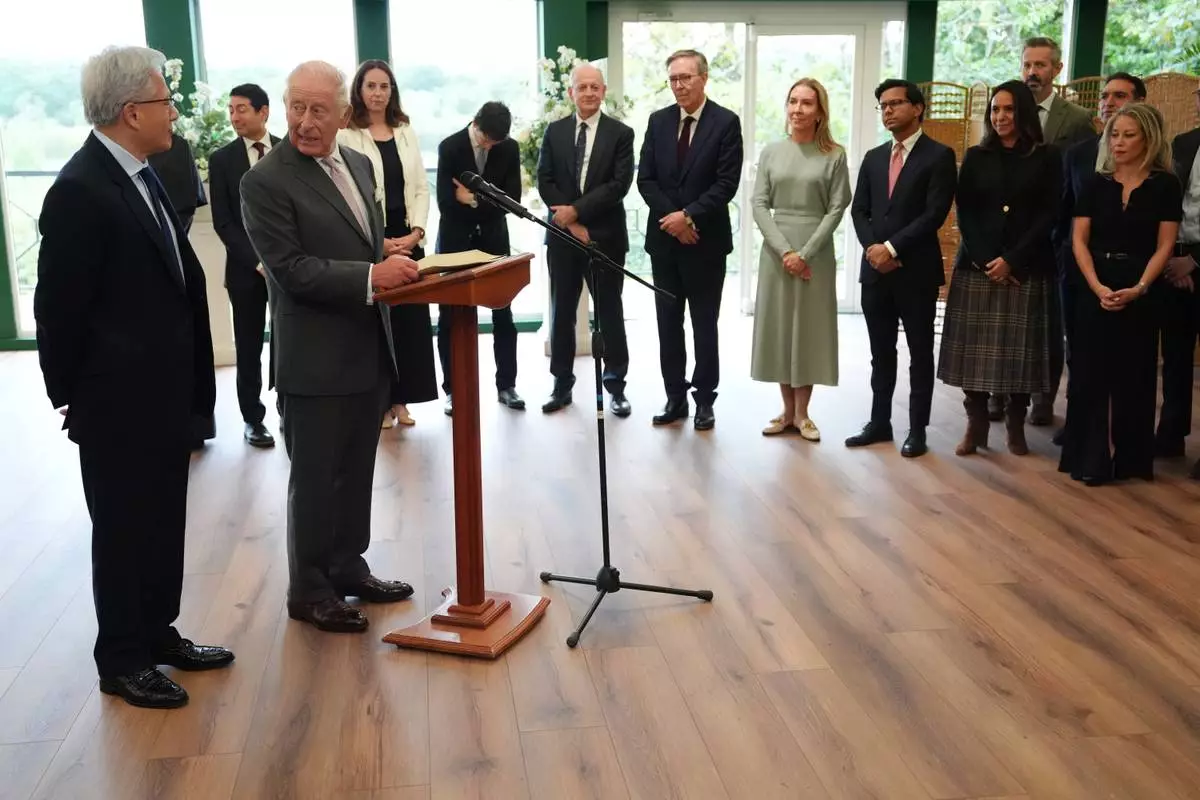
Britain's King Charles III gives a speech during a meeting for leaders from the artificial intelligence (AI) sector, Government, and thought leaders to discuss how AI can be developed and deployed in ways that benefit society, at Dumfries House in Cumnock, Scotland, Thursday Sept. 17, 2026. (Jonathan Brady/PA via AP, Pool)
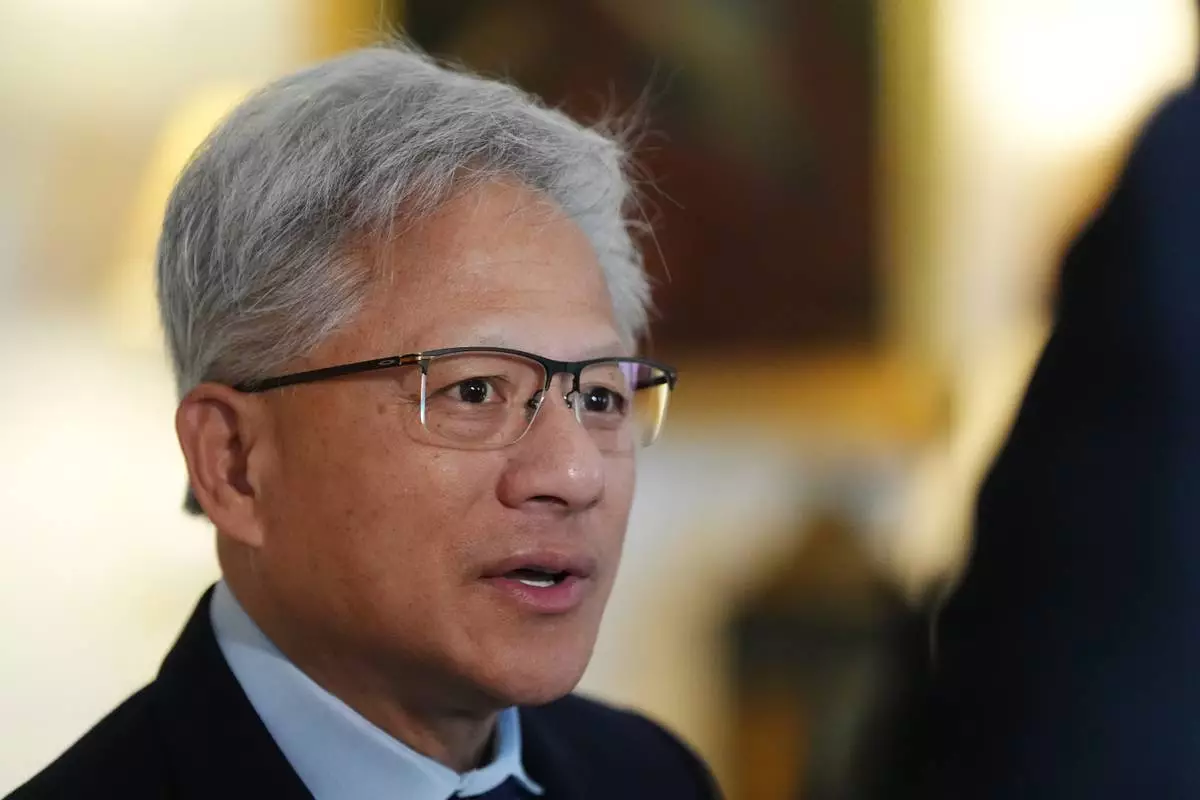
Nvidia chief executive Jensen Huang records a pool interview ahead of a meeting hosted by King Charles III for leaders from the AI sector, Government, and thought leaders to discuss how AI can be developed and deployed in ways that benefit society, at Dumfries House in Cumnock, Scotland, Thursday Sept. 17, 2026. (Jonathan Brady/PA via AP, Pool)
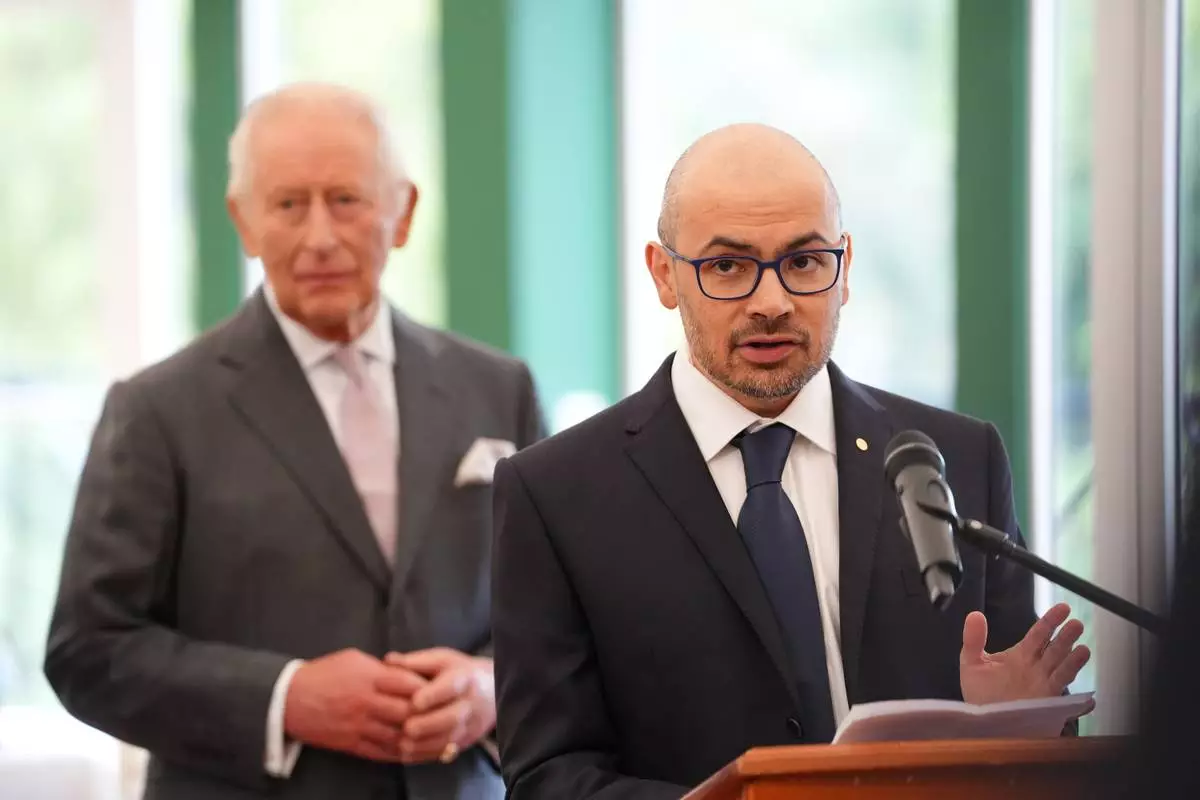
Sir Demis Hassabis gives a speech during a meeting hosted by Britain's King Charles III, background, for leaders from the artificial intelligence (AI) sector, Government, and thought leaders to discuss how AI can be developed and deployed in ways that benefit society, at Dumfries House in Cumnock, Scotland, Thursday Sept. 17, 2026. (Jonathan Brady/PA via AP, Pool)
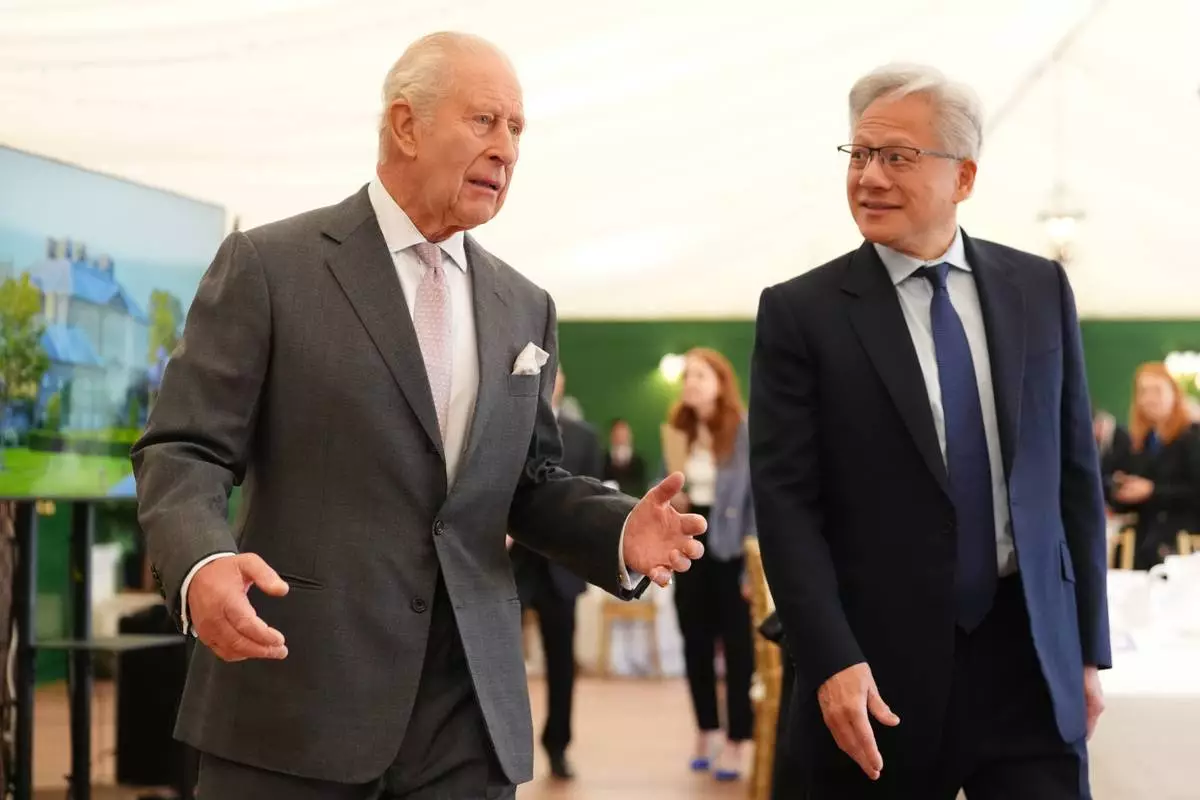
Britain's King Charles III, left, walks with Nvidia chief executive Jensen Huang to a meeting for leaders from the artificial intelligence (AI) sector, government, and thought leaders to discuss how AI can be developed and deployed in ways that benefit society, at Dumfries House in Cumnock, Scotland, Thursday Sept. 17, 2026. (Jonathan Brady/PA via AP, Pool)
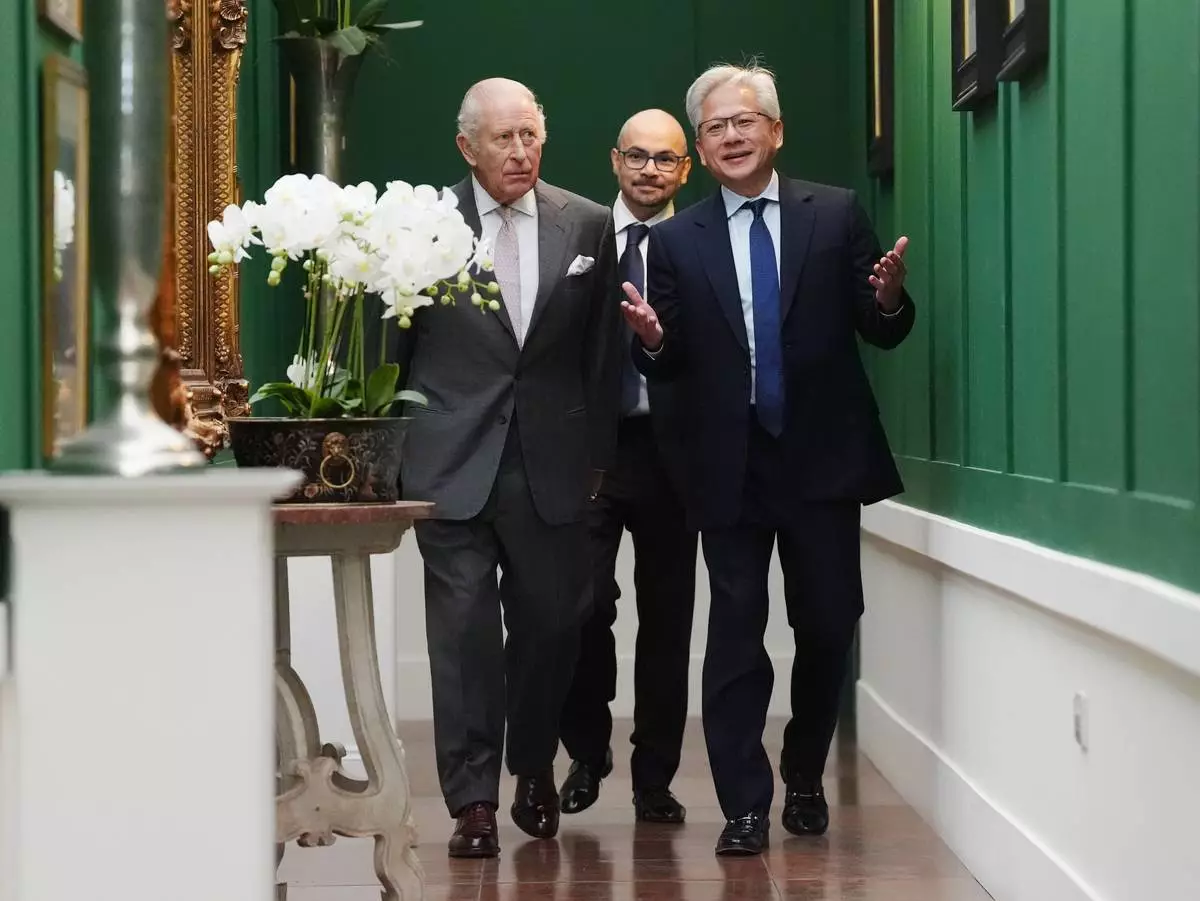
Britain's King Charles III, left, walks with Nvidia chief executive Jensen Huang, right, and Sir Demis Hassabis to a meeting for leaders from the artificial intelligence (AI) sector, government, and thought leaders to discuss how AI can be developed and deployed in ways that benefit society, at Dumfries House in Cumnock, Scotland, Thursday Sept. 17, 2026. (Jonathan Brady/PA via AP, Pool)