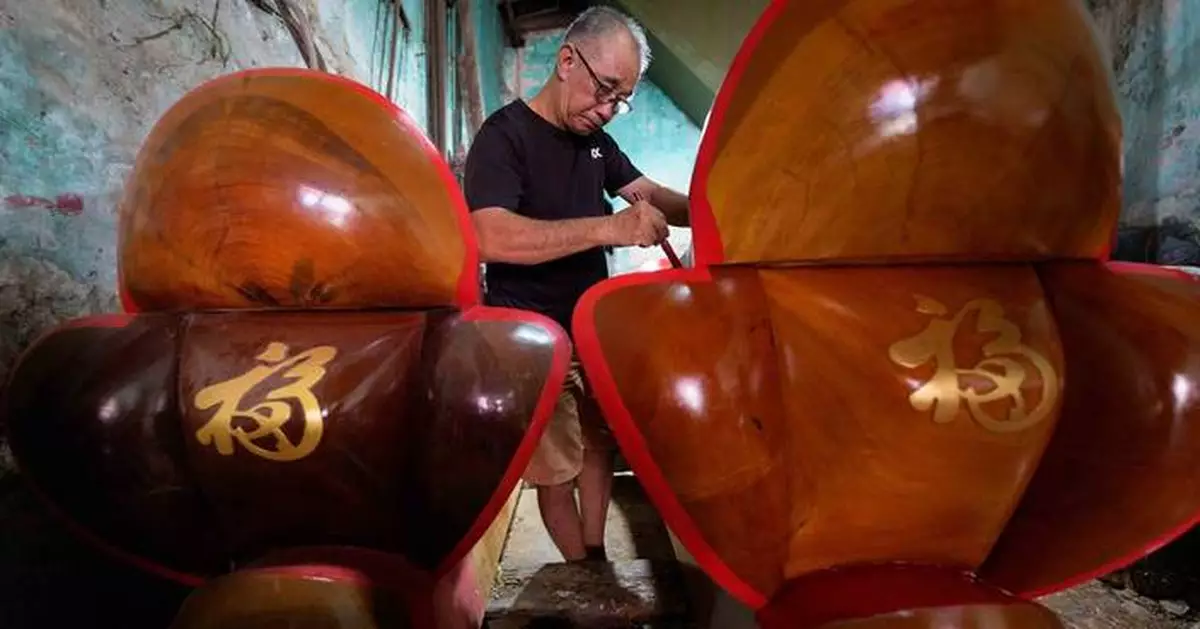
MUAR, Malaysia (AP) — It’s been 52 years since Goh Khuay Par carved his first Mei Hua coffin.
The traditional Chinese design takes its name from the plum blossom, or “mei hua” in Mandarin, and has been part of his family’s trade in Malaysia for three generations.
Click to Gallery
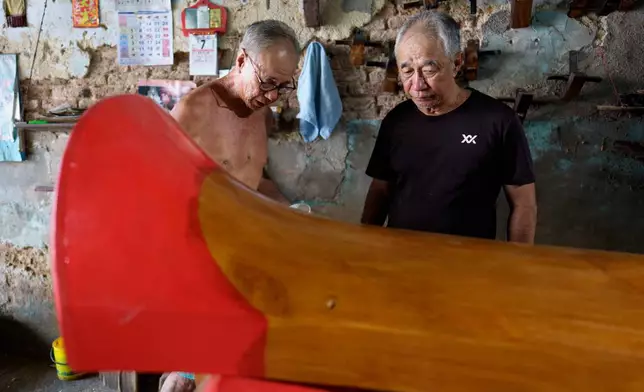
Bothers Goh Khuay Par, left, and Goh Khuay Hou inspect a completed Mei Hua coffin at their family's workshop in Muar, Malaysia, Monday, Sept. 7, 2026. (AP Photo/Vincent Thian)
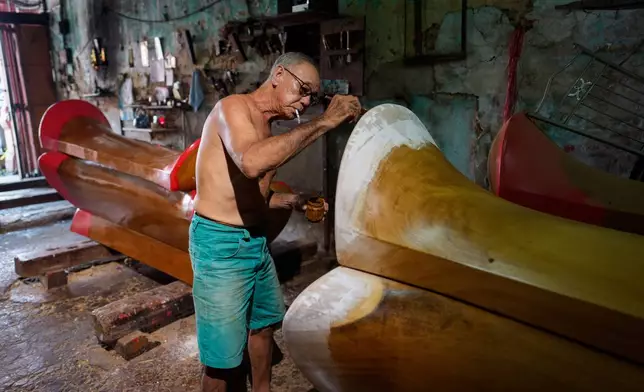
Goh Khuay Par applies a coat of finish to a Mei Hua coffin at his family's workshop in Muar, Malaysia, Monday, Sept. 7, 2026. (AP Photo/Vincent Thian)
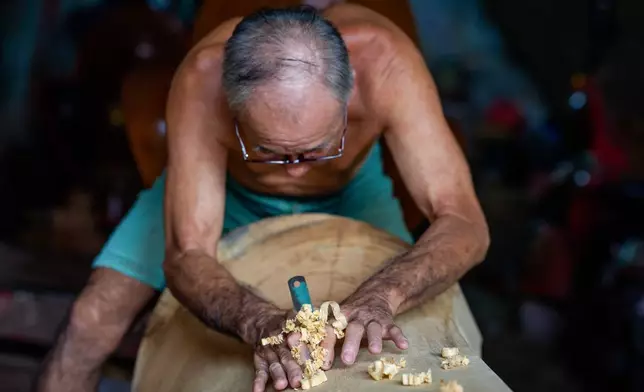
Goh Khuay Par works on a Mei Hua coffin at his family's workshop in Muar, Malaysia, Thursday, Sept. 3, 2026. (AP Photo/Vincent Thian)
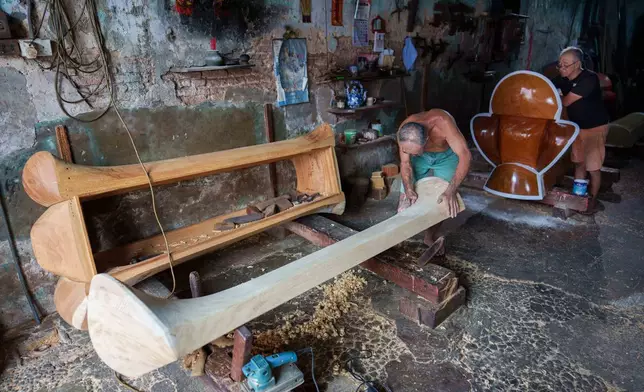
Traditional Chinese coffin maker Goh Khuay Par, left, carves a Mei Hua coffin as his brother Goh Khuay Hou paints another at their workshop in Muar, Johor state, Malaysia, Thursday, Sept. 3, 2026. (AP Photo/Vincent Thian)
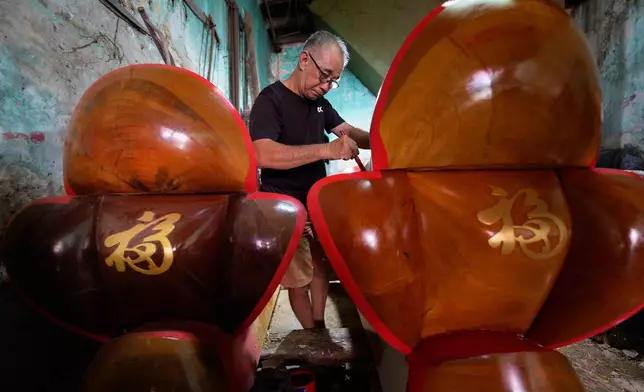
Goh Khuay Hou applies red paint to a Mei Hua coffin at his family workshop in Muar, Malaysia, Tuesday, July 14, 2026. (AP Photo/Vincent Thian)
“My father was my master,” said Goh, now 69, at the modest workshop he runs with his brother in the town of Muar, about 175 kilometers (110 miles) southeast of Kuala Lumpur. “He taught me for two and a half years.”
Goh no longer recalls details of his first coffin. It was most likely a small, thin piece, like the ones his father had him make when he was just starting out. His products became thicker over time for a more striking appearance.
Each coffin is made by hand and requires extensive work. Years ago, when the workshop had more craftsmen and more orders, they could turn out up to five a month. These days Goh and his brother make about two every six to seven weeks.
“In the past there weren’t newer styles, so people used this kind,” Goh said. “Now there are many different kinds to choose from.”
His workshop has long served Malaysia’s Chinese community, where coffins are intertwined with traditions related to death and burial. Ethnic Chinese currently make up about 22% of Malaysia’s population, according to the country’s Department of Statistics.
On occasion, Goh's workshop also made coffins for clients in Singapore, home to another large Chinese diaspora community. Those orders have ceased.
“Times have changed,” he said. “This line of work will eventually be phased out. There’s no one to take over.”
Traditional Chinese beliefs envisioned an afterlife that in many ways mirrored the world of the living, rather than the Christian or Islamic conception of heaven or hell as a person’s ultimate destination. Over time, Buddhism introduced ideas of reincarnation and karmic retribution, linking a person’s fate after death to their actions in life.
“Chinese funeral rituals, burial practices, and tomb designs must almost all be understood through this lens,” said Ling Tek Soon, a scholar at the University of Malaya’s Institute of China Studies.
Ling said Taoist funeral rituals include the symbolic crossing of the “Naihe Bridge,” or Bridge of Helplessness. The rite symbolizes the deceased’s final departure from the world of the living and helps the family come to terms with the loss. Other traditions, however, provide ways for the living to maintain a connection with the dead.
During the Qingming Festival, observed each year in April, families visit ancestral graves with food offerings and burn incense and paper replicas of everyday goods for their ancestors.
“The symbolism behind this practice is that burning transfers these physical worldly goods to the deceased,” Ling said. “These actions are all modes of communicating with the ancestors.”
The bond between the living and their ancestors can also have a physical dimension.
“In traditional Chinese belief, the coffin is viewed as the permanent physical resting place for the deceased,” Ling said.
It should be made from natural, heavy and durable materials — much like the wood used by Goh — and, when affordable, from the finest timber.
“Providing such a coffin expresses the family’s respect and filial piety toward the deceased,” Ling added.
A high-quality coffin can also reflect the prestige and dignity of both the deceased and their family. But its significance can extend beyond status, reflecting an ancient aspiration for immortality.
“Preserving the physical body in a premium-quality coffin subtly holds a lingering hope for a future resurrection or rebirth,” Ling said.
Those beliefs have long shaped the role of traditional coffins in Chinese funeral customs. Yet changing attitudes toward death and the body have gradually altered that role.
Cremation has become more widely accepted across generations, contributing to the decline of traditional crafts like Goh’s.
“It was widely believed that burning the human form through cremation was an act of disrespect,” Ling said. “With changing times, the vast majority of Chinese people today — across the entire Greater China cultural sphere — have come to accept the concept.”
Goh begins each coffin by tracing the outlines on the wood with a pencil before cutting and shaping it. He uses hand tools including an adze and an axe.
His coffins are made from a Malaysian timber known as “keledang,” traditionally prized for coffin-making among the country’s Chinese community. Goh said the wood once came from southern Malaysia but must now be sourced from the north.
To assemble a coffin, Goh starts with the two sides, adding smaller pieces in the middle and, eventually, the top and bottom. The pieces fit together like a puzzle, with nails used only to hold them in place.
He said the basic process has remained unchanged over the years, providing him with a livelihood for more than five decades.
“It’s been all right,” Goh said. “It puts food on the table.”
A few other craftsmen once carved coffins in Muar and worked alongside Goh at his family’s workshop. But they retired, leaving only Goh and his brother to carry on the family trade.
His work demands physical strength, and some coffins are harder to make than others. The one currently taking shape in his workshop is among the difficult ones, Goh said, because of the hardness of the wood.
“When you come across very hard wood, that’s what you dread,” he said. “The thing you fear most is getting a really hard piece.”
Those physical demands also leave Goh wondering about the future of his craft.
“It’s not about hoping,” he said. “Young people, would they want to do it?”
Hernández reported from Beijing. AP video journalist Syawalludin Zain contributed to this report.
Associated Press religion coverage receives support through the AP’s collaboration with The Conversation US, with funding from Lilly Endowment Inc. The AP is solely responsible for this content.
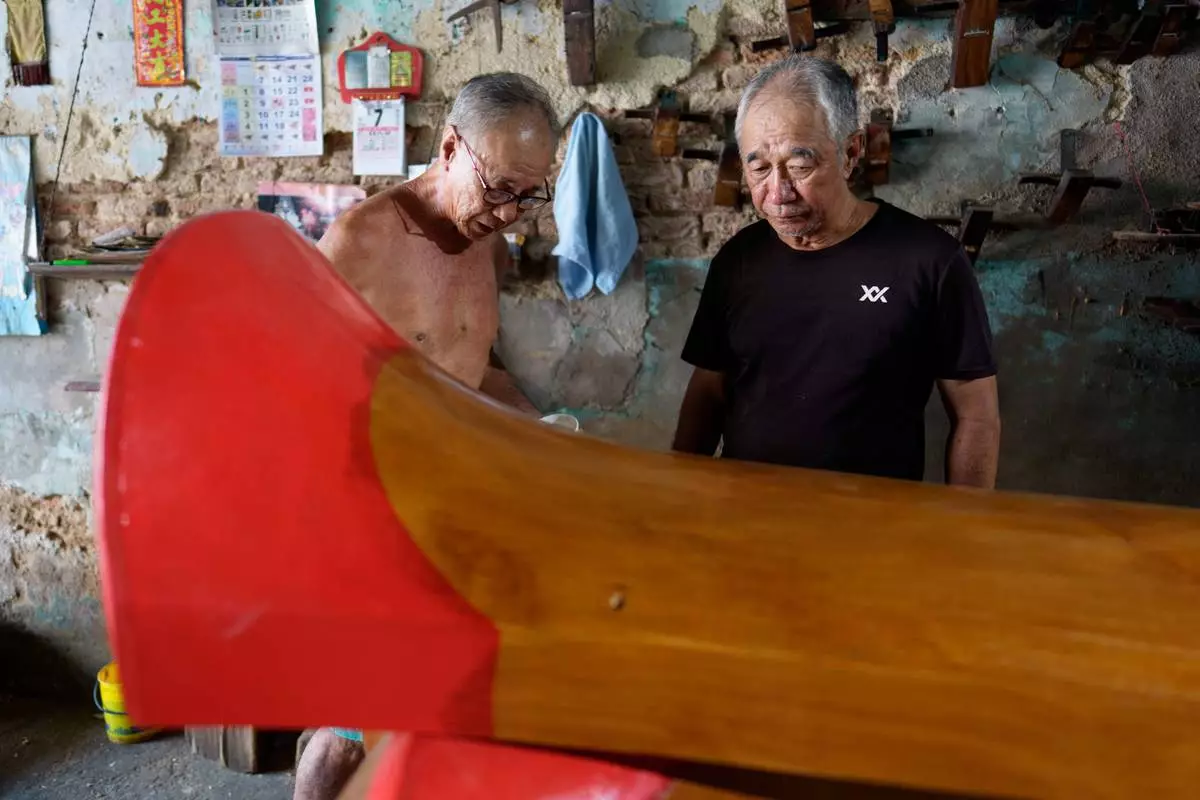
Bothers Goh Khuay Par, left, and Goh Khuay Hou inspect a completed Mei Hua coffin at their family's workshop in Muar, Malaysia, Monday, Sept. 7, 2026. (AP Photo/Vincent Thian)
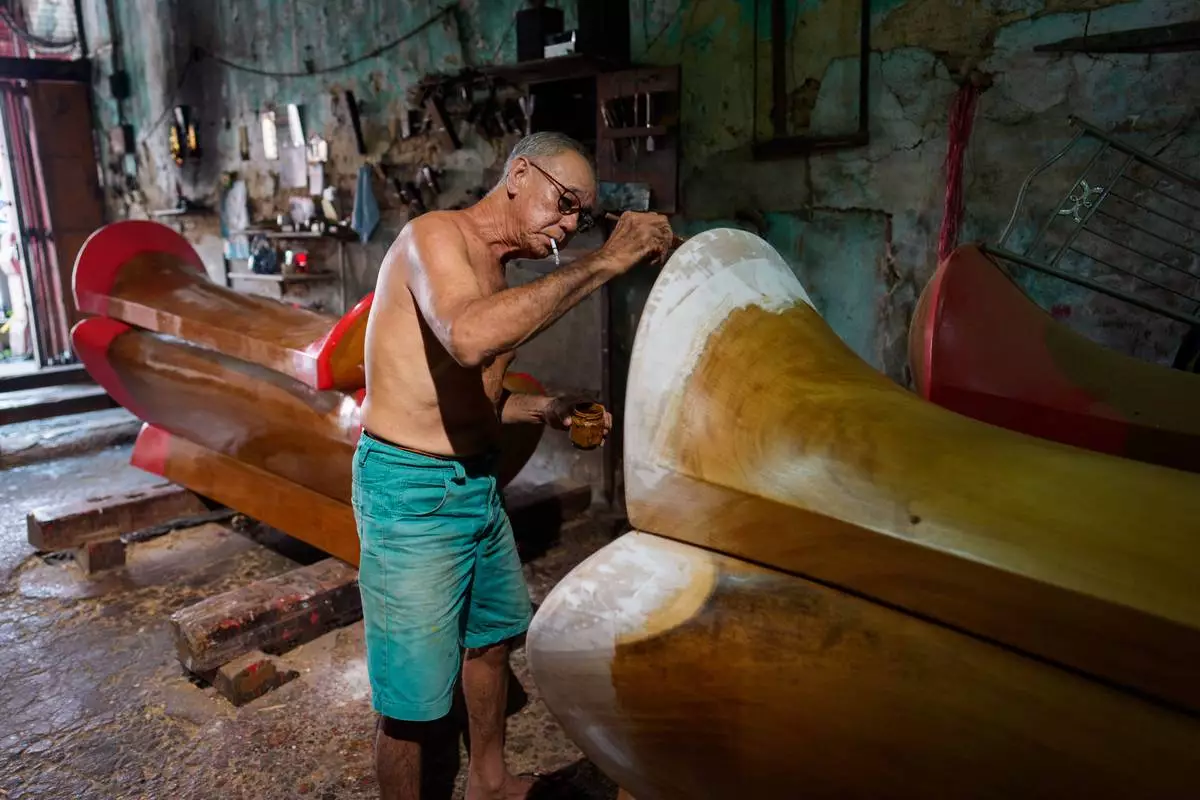
Goh Khuay Par applies a coat of finish to a Mei Hua coffin at his family's workshop in Muar, Malaysia, Monday, Sept. 7, 2026. (AP Photo/Vincent Thian)
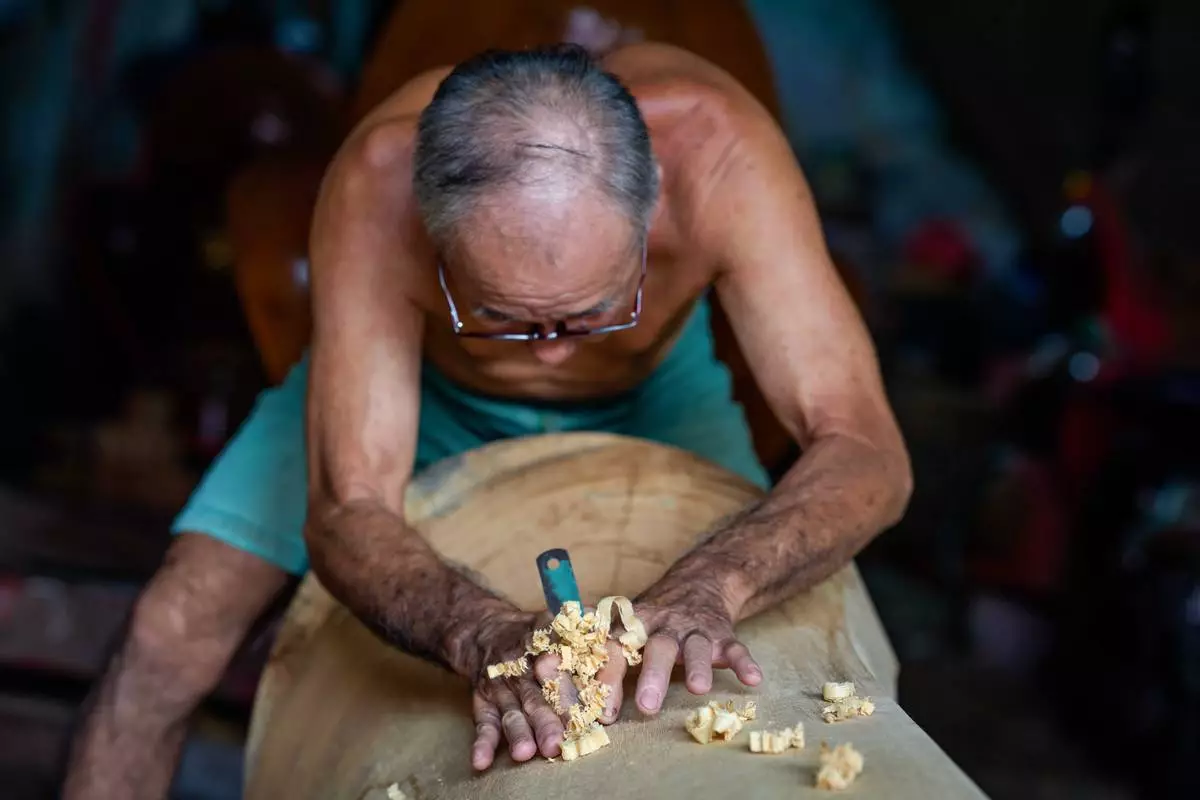
Goh Khuay Par works on a Mei Hua coffin at his family's workshop in Muar, Malaysia, Thursday, Sept. 3, 2026. (AP Photo/Vincent Thian)
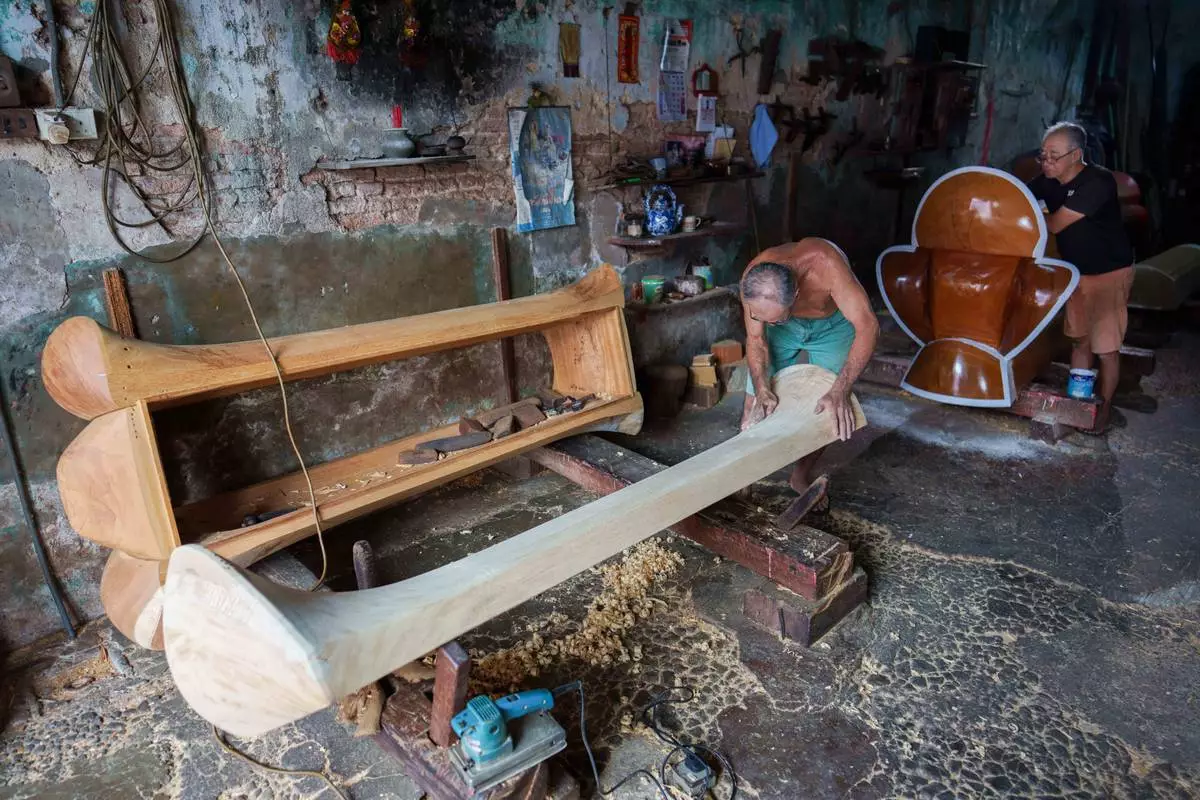
Traditional Chinese coffin maker Goh Khuay Par, left, carves a Mei Hua coffin as his brother Goh Khuay Hou paints another at their workshop in Muar, Johor state, Malaysia, Thursday, Sept. 3, 2026. (AP Photo/Vincent Thian)
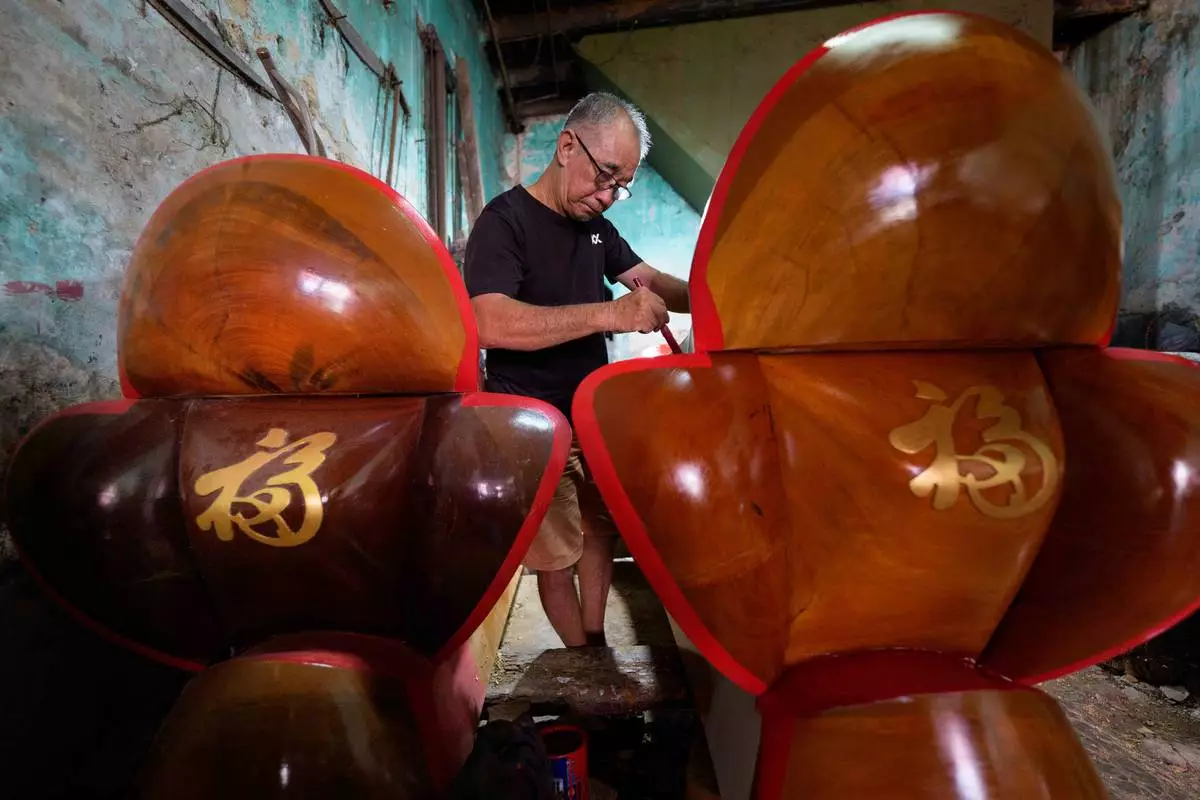
Goh Khuay Hou applies red paint to a Mei Hua coffin at his family workshop in Muar, Malaysia, Tuesday, July 14, 2026. (AP Photo/Vincent Thian)