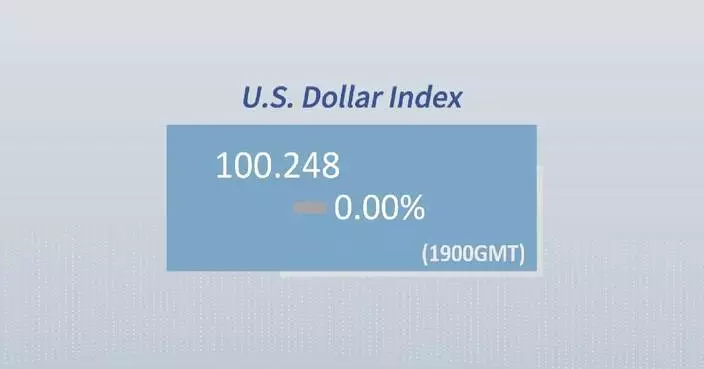
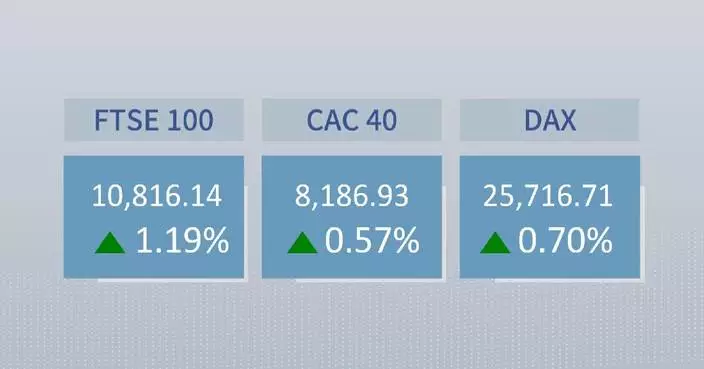
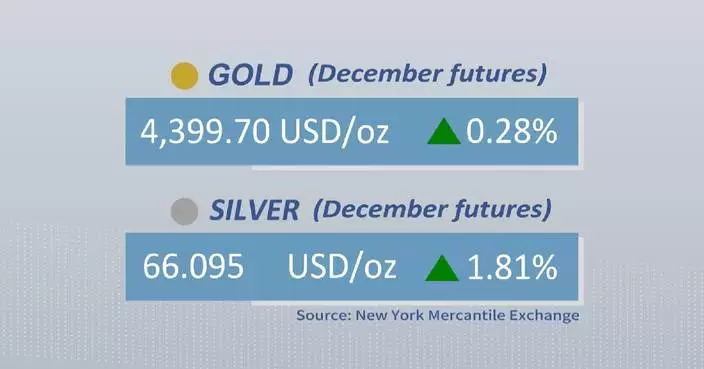
U.S. stocks rebounded on Thursday as crude oil prices edged lower and investors digested the Federal Reserve's first interest rate hike in over three years.
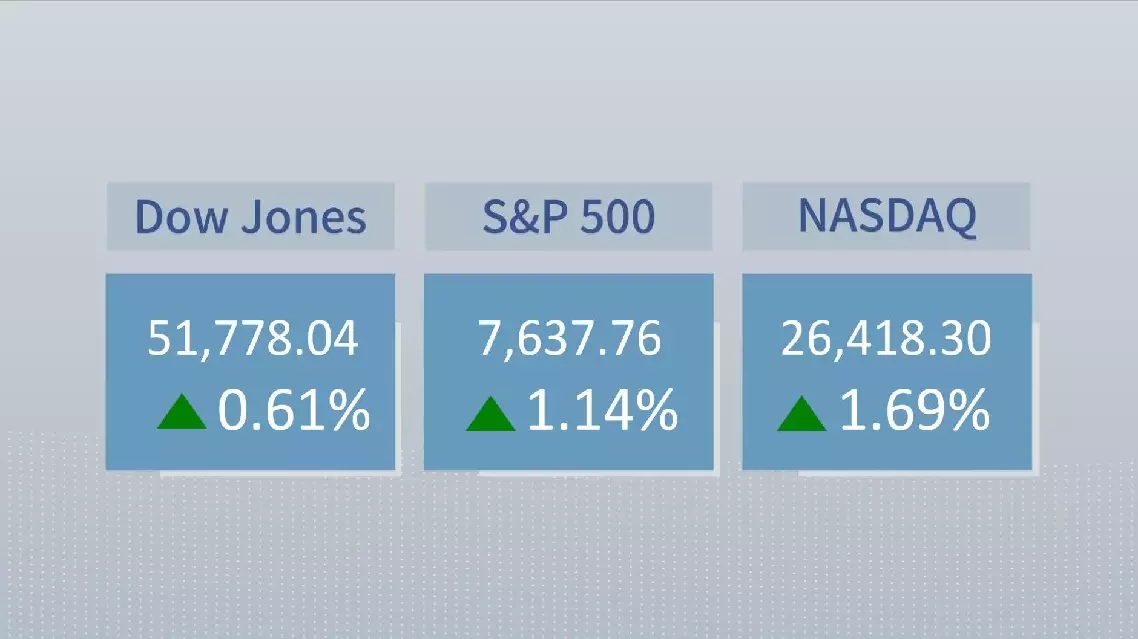
The Dow Jones Industrial Average rose 316.14 points, or 0.61 percent, to 51,778.04. The S&P 500 added 85.95 points, or 1.14 percent, to 7,637.76. The Nasdaq Composite Index increased by 439.88 points, or 1.69 percent, to 26,418.3.
Nine of the 11 primary S and P 500 sectors ended in the green, with technology and consumer discretionary leading the gainers by adding 2.2 percent and 1.43 percent, respectively. Financials and consumer staples were the only laggards by falling 0.1 percent and 0.01 percent, respectively.
Equities found upward momentum as market participants reassessed Federal Reserve Chairman Kevin Warsh's hawkish remarks at a post-meeting press conference. Analysts noted that the policy move helped reinforce the central bank's inflation-fighting credibility.
Meanwhile, global energy markets retreated modestly after U.S. Energy Secretary Chris Wright stated that Saudi Arabia's East-West pipeline, a critical bypass route for oil supplies disrupted around the Strait of Hormuz, is expected to return to operation soon.
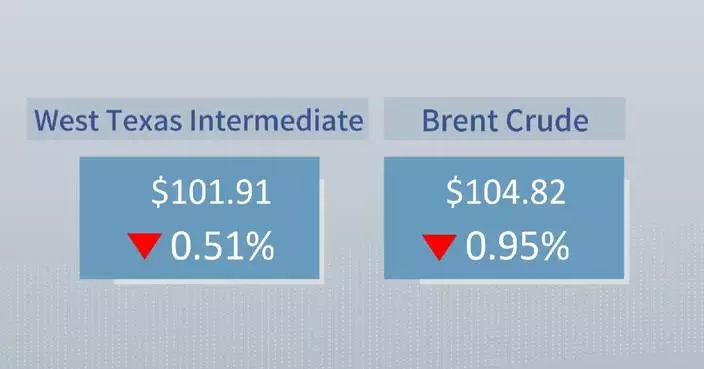
The West Texas Intermediate for October delivery lost 52 cents, or 0.51 percent, to settle at 101.91 U.S. dollars a barrel on the New York Mercantile Exchange. Brent crude for November delivery decreased by 1.01 dollars, or 0.95 percent, to settle at 104.82 dollars a barrel on the London ICE Futures Exchange.
The 10-year Treasury yield, which serves as a benchmark for a wide range of interest rates, including those for mortgages, corporate bonds, and other loans, recently traded around 4.94 percent.
However, "the odds see the 10yr yield breaking back above 5 percent in the days and weeks ahead," wrote analysts with international banking institution ING. "If so, the market will begin to settle at above 5 percent, and ponder the 5.25 to 5.5 percent range as an area that is perfectly attainable in light of the still quite loud mood music that has been driving long-end yields."
The technology sector spearheaded Thursday's advance, lifted by renewed buying interest across mega-cap leaders and AI hardware providers. Nvidia and Amazon both climbed more than 2 percent, while Microsoft gained 1.5 percent. Other semiconductor equities extended their gains, with Qualcomm advancing more than 2 percent and Intel surging more than 7 percent to pace the broader tech rally.
US stocks rise as retreating oil, Fed rate hike ease inflation concerns
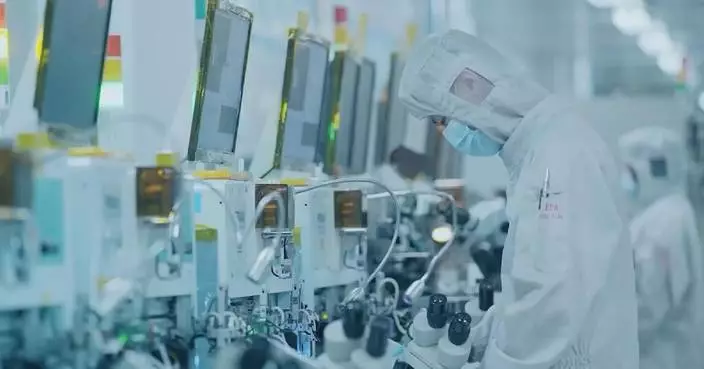
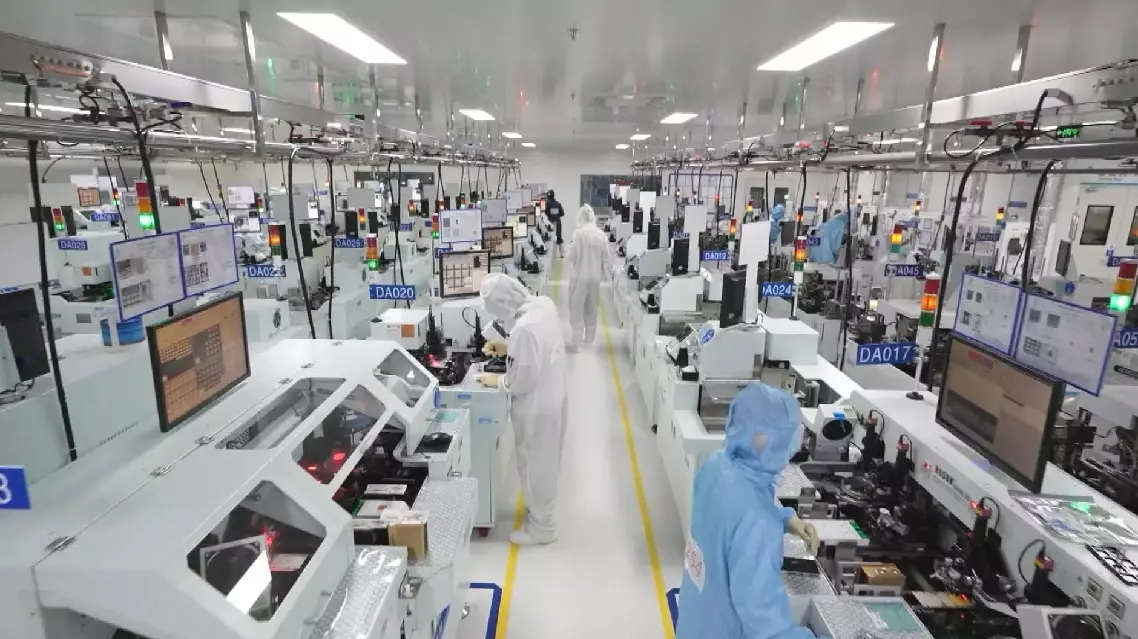
At a two-day national conference on advanced manufacturing which concluded in Beijing on Thursday, industry experts called for leveraging artificial intelligence and intensifying efforts to overcome key technology bottlenecks to propel the sector's development.
The event brought together government officials and industry experts to discuss measures aimed at boosting innovation, competitiveness, and overall strength of the advanced manufacturing sector.
Placing a strong emphasis on innovation, the conference underscored the need to fortify basic research and accelerate the translation of sci-tech achievements into practical, commercial applications.
Attendees also highlighted the necessity of promoting the large-scale development of emerging industries while drawing up forward-looking plans for future industries.
A major focal point of the gathering was the deep integration of AI into the industrial sector. Participants advocated for advancing the "AI plus manufacturing" initiative, calling for enhanced policy support to facilitate the digital and intelligent transformation of enterprises.
"First, we must continuously elevate our level of sci-tech innovation. Second, we need to advance new-generation intelligent manufacturing. The booming development of artificial intelligence can play a highly significant role in boosting production efficiency across the manufacturing sector," said Tian Jietang, director of industrial economy research at the State Council Development Research Center.
"Efforts should be made to achieve breakthroughs in critical core technologies, focusing on key areas such as high-end machine tools, advanced semiconductors, and critical materials. We should also actively advance the 'AI plus manufacturing' initiative, driving the deep integration of next-generation information technologies, represented by AI, into every stage of the value chain, including research and development, design, production, operation management, and marketing," said Zhang Li, director of the China Center for Information Industry Development (CCID).
Beyond technological breakthroughs, the conference stressed the importance of cultivating advanced manufacturing clusters tailored to local conditions, promoting tiered and categorized quality upgrades across different regions.
"We should leverage the role of leading enterprises in driving industrial chain integration, and encourage small and medium-sized enterprises (SMEs) to deeply cultivate niche markets and enhance their specialized capabilities, so as to foster a fair, orderly, and vibrant industrial ecosystem," said Zhang.
Experts call for leveraging AI, breaking key tech bottlenecks to propel advanced manufacturing