The Bank of England (BoE) on Thursday kept its benchmark interest rate unchanged at 3.75 percent, as surging global energy prices pushed up inflation and raised the prospect of further price pressures in Britain.
According to the bank, global energy prices had risen significantly since the July Monetary Policy Report and remained volatile. Spot prices of Brent crude and British wholesale gas had risen by 36 percent and 78 percent, respectively, since the period leading up to the July Report, it said.
Data released by the Office for National Statistics on Wednesday showed that Britain's consumer price index (CPI) rose 3.1 percent year on year in August, up from 2.9 percent in July. On a monthly basis, motor fuels made the largest upward contribution.
The bank expected CPI inflation to rise further to around 3.75 percent in the last quarter of 2026 and to reach slightly above 4 percent in the first quarter of 2027, based on energy prices at the close of business on Monday.
The bank said the monetary policy was being set to ensure inflation comes down to 2 percent sustainably as the economy adjusts to the energy shock. The policy stance required to achieve this will depend on the scale and duration of the shock and how it feeds through the economy.
So far, higher global energy costs have had "a limited effect" on price and wage-setting in Britain, said Andrew Bailey, governor of the BoE. But he also noted that "the longer this volatility persists, the bigger the impact it will have on inflation, and the more likely it is we will need to raise bank rate to ensure that inflation falls back to our 2 percent target."
The decision to hold the interest rate came as the BoE's Monetary Policy Committee voted 6-3, with three members voting to increase the rate by 0.25 percentage points to 4 percent.
"Monetary conditions in this country have tightened quite a bit this year because we were expected to cut rates and we haven't," Bailey said.
The bank also noted that, given the time it takes for inflationary pressures to spread, it should not wait too long for evidence that inflation was becoming more entrenched in the economy before raising interest rates.

Bank of England holds interest rate at 3.75 pct despite energy price hikes
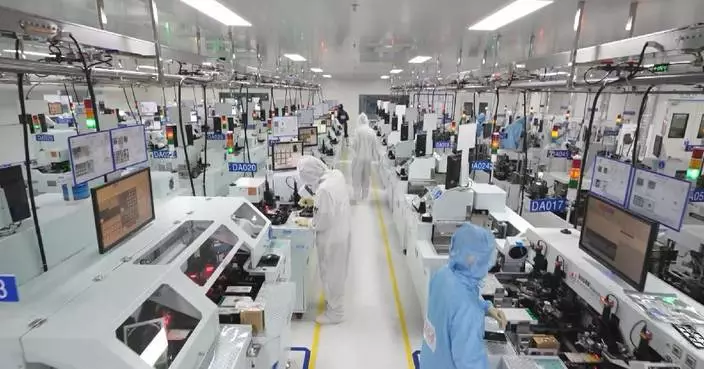
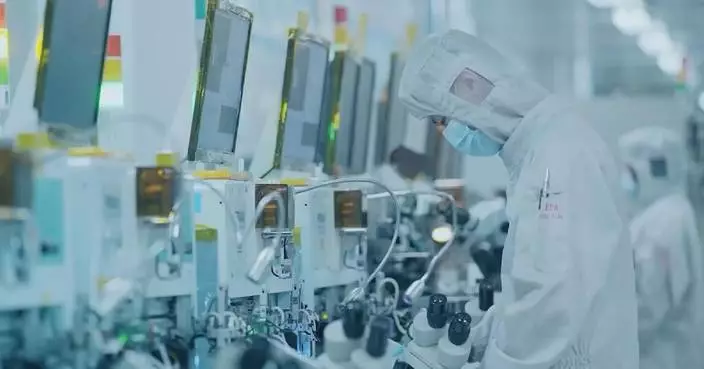
Global financial and consulting firms have expressed confidence in China's manufacturing transformation, saying the country's push toward smarter, greener and more integrated advanced manufacturing is injecting strong momentum for global growth.
For the smart manufacturing sector, China has accelerated its adoption of digital and artificial intelligence (AI) technologies across the manufacturing industry.
Data from the Ministry of Industry and Information Technology showed that the scale of China's core AI industry exceeded 1.2 trillion yuan (about 167 billion U.S. dollars) in 2025, with the industrial internet covering all 41 major industrial categories, and over 500 excellence-level smart factories cultivated nationwide.
According to a report of Goldman Sachs, Chinese companies' overseas expansion has entered a 3.0 version in which exporters have increasingly sold AI-driven industrial capabilities, as frontier areas, such as embodied intelligence and humanoid robots, has been moving toward commercialization.
"After we visited many domestic humanoid-robot companies, one could find that on the components side, 80 percent to 90 percent have been already supplied by domestically made parts rather than relying on foreign-funded components. As a result, this industry achieved domestic substitution in many areas at a very early stage. That kind of full industrial-chain capability is uncommon. Leveraging these unique competitive advantages, Chinese companies are playing an increasingly important role on the global stage," said Du Qian, head of China Industrial Technology Research at Goldman Sachs.
In green transition, China has sped up its shift toward low-carbon manufacturing. China's new energy vehicle (NEV) output and sales have ranked first globally for 11 consecutive years, while the country has built more than 8,000 national-level green factories. Energy and water use per unit of industrial value-added companies have continued to decline, as the country has placed greater emphasis on green and low-carbon development.
"In China, we do buy into the structural growth story that is China, and China has really marked itself out as a tech innovator, a tech adopter. So, in terms of the green energy transition, EV, manufacturing processes, that is a strong structural growth driver. So, as a long-term investor, that earns a place in the global asset allocation from our perspective," said John O'Toole, global head of Solutions and chief investment officer for Asia at French asset management company Amundi.
On the industrial integration, China's manufacturing upgrade is deep cross-sector integration and brand elevation. Data from National Bureau of Statistics, in 2025, equipment manufacturing and high-tech manufacturing accounted for 36.8 percent and 17.1 percent of value-added industrial output, respectively.
The label of "Made in China" has been actively transitioning from low cost toward high-tech and high-premium brand identity.
"China is gradually transitioning from a manufacturing powerhouse to a technology and brand powerhouse. This process will bring massive growth opportunities. We have every reason to believe that in the next decade and beyond, more and more global brands will be born in China," said Zhang Yun, CEO of the U.S. consulting agency of Ries Global and chairman of Ries China.

Global institutions voice confidence in China’s manufacturing upgrades