Canadian Prime Minister Mark Carney said Thursday that no country could dictate Canada's language, culture or international partnerships, responding to U.S. President Donald Trump's threat over closer ties between Canada and the European Union.
Speaking to the press after addressing the European Parliament in Strasbourg, Carney said, "Canadians are united that nobody is going to tell us what language we speak. No one can restrict our culture, or limit our partnerships abroad."
He also said this EU-Canada alliance is a positive process that would strengthen Canada's sovereignty, resilience and prosperity, adding that a stronger, more resilient Canada would be a more effective partner for the United States.
His remarks came after Trump said Canada's becoming an "associate member" of the EU could be considered a "hostile act" and threatened to impose heavy tariffs on Europe.
Carney also said any final arrangement with the EU would be subject to democratic scrutiny at home.
"There will be debates" in Canada's parliament, he said, adding that the final structure of the proposed alliance would ultimately be put to a parliamentary vote.
Canada and the EU are expected to discuss details of the initiative at their next summit in Montreal at the end of October.
In her annual State of the Union address to the European Parliament in Strasbourg on Wednesday, European Commission President Ursula von der Leyen proposed opening the door for Canada to become the first "associate member" of the EU.
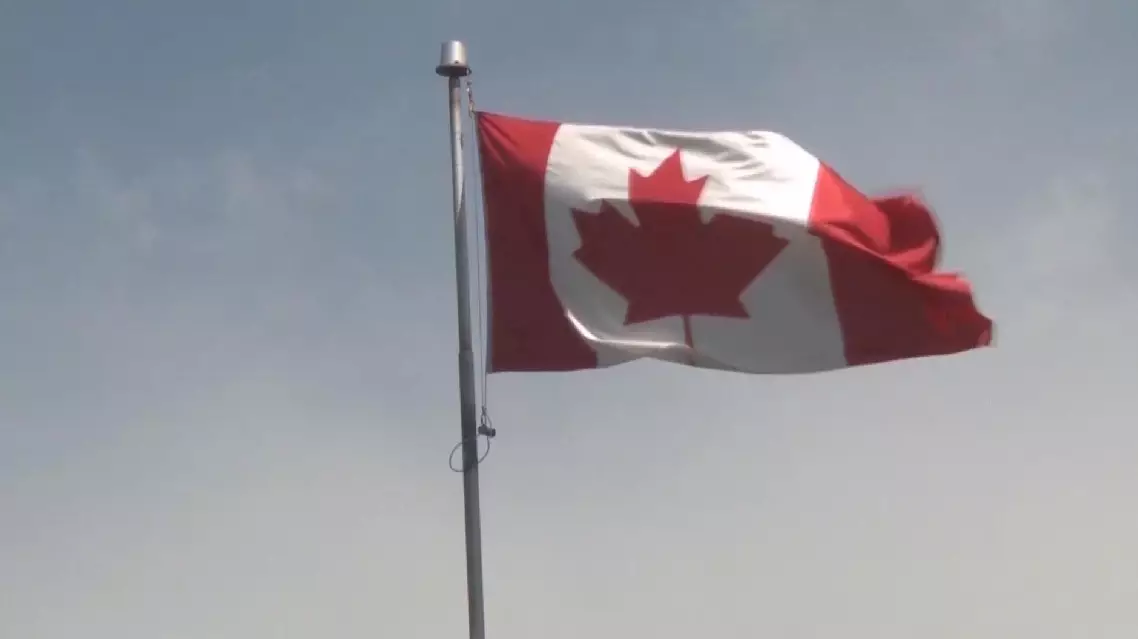
Carney says no one can dictate Canada's partnerships amid Trump threat
The United States returned a total of 64 pieces (sets) of cultural relics and paleontological fossils to China on Wednesday and Friday.
China's National Cultural Heritage Administration received the artifacts and fossils in Washington, D.C. and New York City.
They were seized by law enforcement agencies in the United States.
"The cultural relics returned this time cover different eras and materials. They include 58 items (sets) of artifacts and paleontological fossils returned by the Homeland Security Investigations of the United States, as well as cultural relics returned by the Manhattan District Attorney's Office. And this is the fifth time that the Manhattan District Attorney's Office returned cultural relics to China," said Zhu Ye, deputy head of the Office for the Recovery and Restitution of Lost Cultural Property under the National Cultural Heritage Administration of China.
"This is another significant achievement over the past two years, after the Chinese Embassy in the U.S. received precious cultural relics including Wuxing Ling and Gongshou Zhan -- two volumes of the Zidanku Silk Manuscripts -- and a tiger-shaped plaque artifact from the Warring States period (475-221 BC)," said Chinese Ambassador to the U.S. Xie Feng.
The two sides said that the latest return is the newest result of China-U.S. cooperation on cultural heritage in jointly implementing the consensus reached by the two heads of state during their meeting in Beijing, and will promote bilateral people-to-people exchanges.
"We have been able to accomplish quite a lot in the past couple of years, and we jointly work to ensure China's history and cultural heritage is safe and preserved," said Ricardo Mayoral, Assistant Director of U.S. Homeland Security Investigations.
"The cultural relics returned by the U.S. this time and previously will all be showcased at an exhibition on the outcomes of the recovery and restitution of lost cultural property, and we are preparing for it. I believe that these treasures of civilization will enable the Chinese people to feel the deep friendship of the American people, and help the two countries draw positive energy of mutual respect, peaceful coexistence and win-win cooperation from exchange and cooperation in cultural heritage, so that the international community can better see the endeavor of China and the U.S. in shouldering due responsibilities of major countries from their joint efforts to protect and carry forward the achievements of human civilizations," said Rao Quan, Vice Minister of Culture and Tourism and head of the National Cultural Heritage Administration of China.
China and the U.S. signed a memorandum of understanding (MoU) that aims to prevent the illegal importation of Chinese cultural artifacts into the United States in 2009, and extended it in 2014, 2019 and 2024.
Under the MoU, import restrictions will be imposed on items from the Paleolithic period to the Tang Dynasty (618-907), and on monumental sculptures and wall art at least 250 years old.
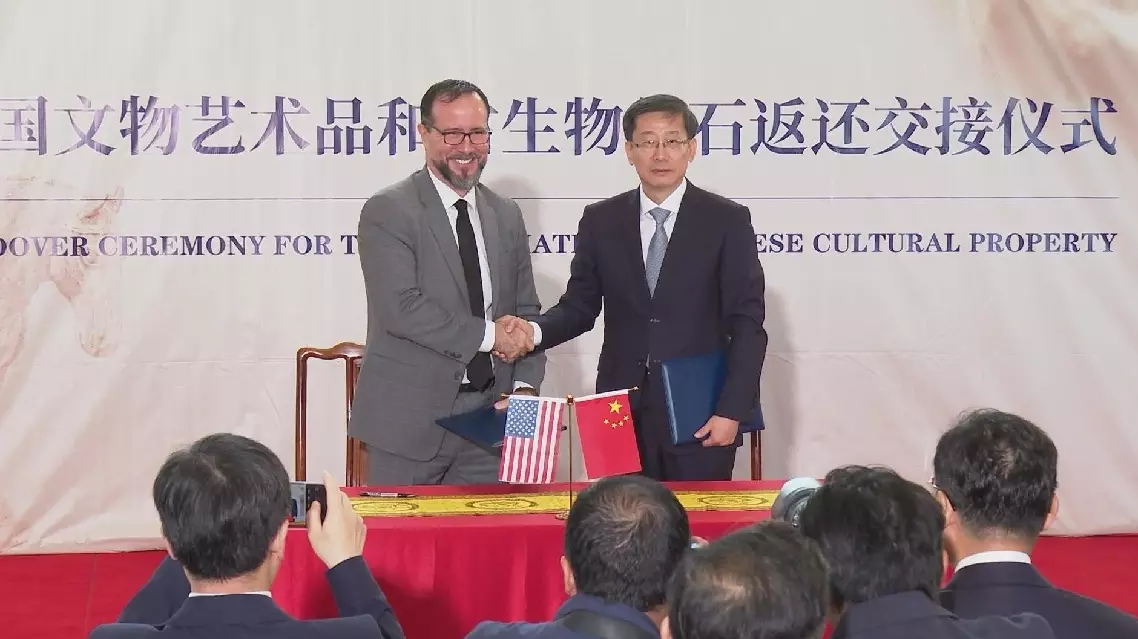
U.S. returns 64 cultural relics, fossils to China