OMAHA, Neb. (AP) — Even in the age of algorithms, short attention spans and TikTok teases, Warren Buffett continued to profit with his patient bargain-hunting approach while offering folksy advice on investing and life.
As chairman and CEO of Berkshire Hathaway, Buffett became famous for his unwavering and methodical investing style: Buy good businesses when their prices are low, stay on the sidelines when prices are too high and be patient with well-chosen picks. He rode that to decades of beating the rest of the U.S. stock market before he retired as Berkshire's chairman on Friday, less than a year after giving up his role as CEO.
The formula of buying good things at low prices sounds simple, and it’s the foundation of a style of investing called “value” hunting. But it periodically comes under criticism when the hot new thing is enthralling Wall Street, whether it's dot-com stocks in the late 1990s or gold when its price was setting records early this year. (Buffett is famously skeptical of gold as an investment, saying it “has two significant shortcomings, being neither of much use nor procreative.”)
The investing world has had other celebrities. J.P. Morgan built his reputation by investing in railroads during the 19th century. Andrew Carnegie helped build the U.S. steel industry and became famous for his philanthropy. Jim Cramer and Kevin O'Leary are on TV shows. But few ever cracked into the national consciousness like Buffett, and none did so from near the geographic center of the country in Omaha, Nebraska.
Many professional investors also adhere to Buffett's style of bargain-hunting. But none have had the kind of folksy humor and candor that can draw hordes of investors each year, like those attending Berkshire Hathaway's annual shareholder meeting.
More than 40,000 people would pack an Omaha arena on the first Saturday in May to hear from Buffett and his longtime investing partner, Charlie Munger, who died in 2023 and espoused a similar take-it-slow and make-it-right approach to investing. Besides talking about how they hunted for well-run businesses and the news of the day, they would also regularly confess to their own mistakes and crack wise.
“Not a day goes by where what I've learned about Warren doesn't affect me positively, both personally and financially,” said Todd Finkle, a retired professor. He grew up in Omaha, knows Buffett's children and wrote the book, “Warren Buffett: Investor and Entrepreneur.”
When Finkle would bring students to visit the “Oracle of Omaha” for extended Q-and-A meetings, Finkle said the first topic Buffett would discuss was never financial.
“He didn’t say anything about money. The first topic that he would always bring up is that the most important thing you’ll do in your life is to pick who to marry.”
Following a scandal at Salomon Brothers, in which Berkshire Hathaway had an ownership stake, Buffett became chairman and testified in Congress. He said all employees were told, “After they first obey all rules, I then want employees to ask themselves whether they are willing to have any contemplated act appear the next day on the front page of their local paper to be read by their spouses, children and friends with the reporting done by an informed and critical reporter.”
That reputation for honesty, along with his famed patience for investments, helped Buffett stay famous even in this “post-truth” era where people scroll through feeds at finger-flicking speed. He's such an icon that scammers would use him in AI-generated videos that appeared to show him endorsing questionable investments or political candidates.
On Reddit's WallStreetBets forum, traders share picks for potential get-rich-quick opportunities in day-trading stocks and options. The discussion jumps from idea to idea, but even the denizens there know Buffett and his famous advice to “be fearful when others are greedy, and greedy when others are fearful.”
His reputation is so strong and his advice so well-known that some memes on the forum ironically joke about doing the opposite, with a picture of Buffett suggesting that everyone freak out and sell in a panic.
Bob Miles, who has taught a college course about Buffett for 16 years, said that people might initially get attracted to Buffett because he is rich and has made many Berkshire shareholders wealthy. But their interest deepens after reading Buffett’s annual letters, which became required reading for many investors, and hearing him speak in interviews.
Through reading and listening, people would glean nuggets from Buffett like his core rules for investing: “Rule No. 1: Never lose money. Rule No. 2: Never forget Rule No. 1.” Or that “you only find out who is swimming naked when the tide goes out,” referencing how tough times will quickly show who has been taking too much risk. He also suggested that “who you associate with is just enormously important. Don’t expect that you’ll make every decision right on that. But you are going to have your life progress in the general direction of the people you work with, that you admire, that become your friends.”
“People associate him with successful investing, but I look at him more and more as kind of a guide toward how to live a successful life, whatever your talents happen to be,” Miles said.
At the University of Pennsylvania's Wharton School of business, trips for students to Berkshire's annual meetings were always a hot ticket. “I don’t know of any time that it wasn’t popular,” said David Musto, a finance professor at the school and faculty director of the Jacobs Master of Science in Quantitative Finance.
With Buffett’s departure from the stage, the obvious question is whether anyone else could replace him as the world’s most famous value investor.
Musto said some other big names still exist in the investing world, such as Will Danoff at Fidelity Investments, who is retiring from day-to-day management at the end of the year. But it's difficult to find someone with as strong and as long a track record as Buffett's. Or the wit and personality.
Musto said it's important for value investing to remain a force in the market, particularly when traders are jumping into meme stocks, obscure cryptocurrencies and other bets built more on hope that their prices will go up than belief that it's a good business trading at a good price.
“It certainly helps to have people in the middle,” Musto said, “thinking about the value of a stock.”
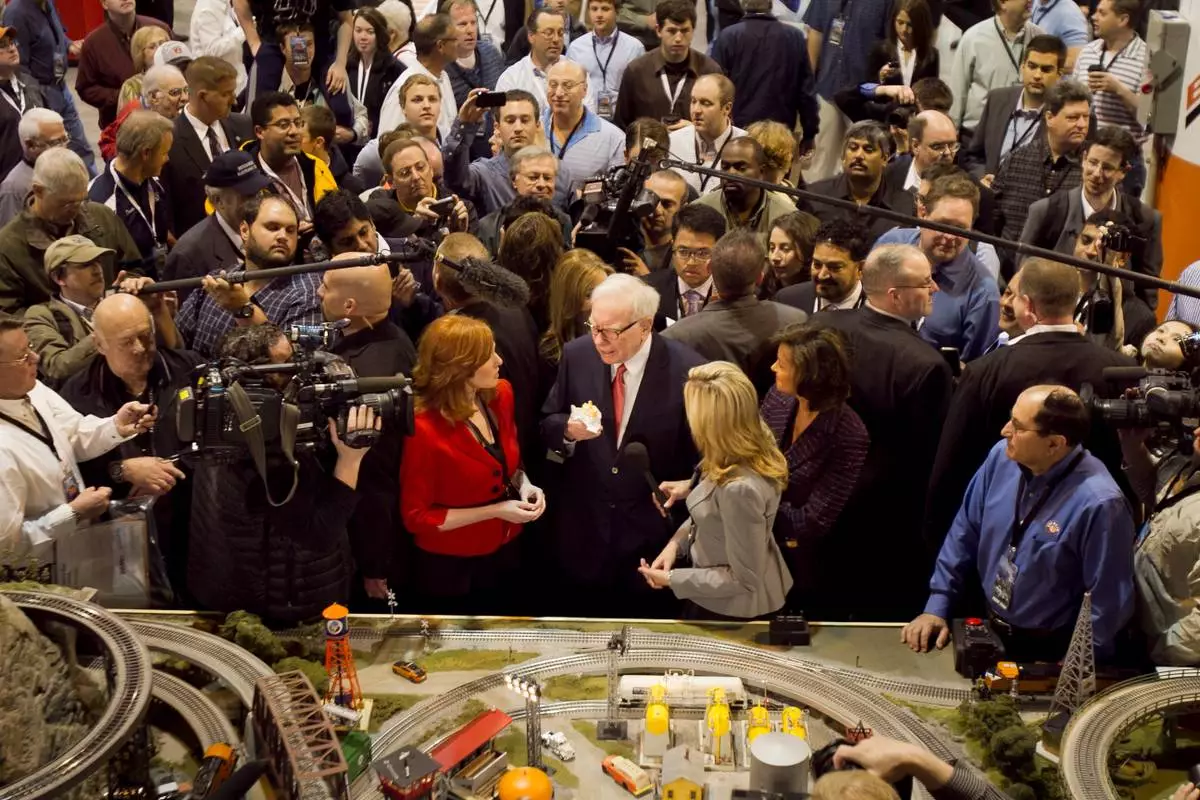
FILE - Berkshire Hathaway Chairman and CEO Warren Buffett, center, is surrounded by journalists and shareholders as he stops by a model railroad while touring the exhibit floor where Berkshire subsidiaries display their products in Omaha, Neb., April 30, 2011, prior to presiding over the annual Berkshire Hathaway shareholders meeting. (AP Photo/Nati Harnik, File)