Over the past five years of in-orbit operation of China's space station, the country's aerospace health support system has met the highest international standards, and the space station's long-term resident support capability has been continuously enhanced, according to a conference on aerospace medical engineering held Saturday in north China's Tianjin Municipality.
China has established a five-in-one aerospace health support system encompassing weightlessness protection, nutritional support, medical monitoring and care, psychological support, and environmental safety, which has reached the international advanced level overall, the conference said.
"At present, Chinese astronauts have stayed on the space station for up to 210 days on a single mission, so our country is fully capable of supporting stays of more than half a year," said Wu Dawei from the China Astronaut Research and Training Center.
In terms of the life support system, China is committed to building a more advanced and sustainable life support system. The moon-landing spacesuit is named Wangyu, meaning gazing into the cosmos, developed for manned lunar missions, targets lightweight, miniaturized, and highly safe and reliable design, having made breakthroughs in dozens of key technologies to provide solid support for extravehicular activities in the complex lunar surface environment.
In the field of space brain science, a number of internationally pioneering devices for weak-stimulation brain-computer interaction and group brain collaborative testing and regulation have been deployed aboard the space station. Through multiple batches of in-orbit experiments and trial operations by astronauts, breakthroughs have been achieved in several world-firsts, with new technologies successively verified and new discoveries made.
At present, research on adaptation mechanisms to special environments in aerospace medicine is exploring extensions into the civilian medical field.
"Our space station has been operated safely in orbit for five years, and now with the participation of artificial intelligence, astronauts' physical adaptability is constantly improving. As astronauts, our wish is to be able to complete as many tests as possible during the limited space stay, so that scientists' dreams can be realized in space," said Chen Dong, an astronaut.
The Earth Star-3 (DiXing-3) bed rest experiment program concluded at the end of August. By simulating a weightless environment, the experiment studies physiological changes in the human body while verifying physiological protection against one-year weightlessness aboard a space station and low-variable gravity protection technology for manned lunar exploration, laying the foundation for the health protection of astronauts undertaking longer-term missions in the future.
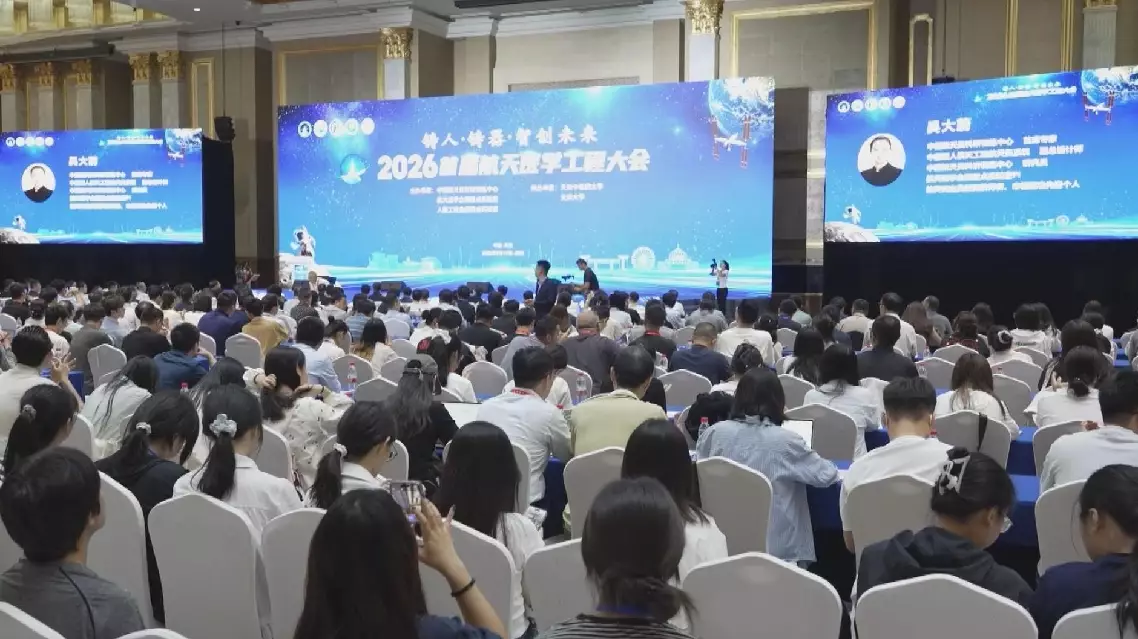
China's aerospace health guarantee system meets highest international standards