LONDON (AP) — England’s new test cricket coach Stephen Fleming has set his sights on taking the team back to number one in the world for the first time in more than a decade.
The former New Zealand captain was appointed in July but has just taken the reins after sitting out the 3-0 victory over Pakistan due to family commitments.
Fleming immediately made his ultimate aim clear: to lift the side from fifth in the ICC test rankings back to the summit for the first time since 2012 and put right the team's dreadful record in the World Test Championship.
“I would love to be in charge of the number one test team in the world. That would be my aspiration,” he said. “There have been some really good moments (for this side) but I think there’s more to give.
“One of the dark arts of coaching is timing and my honest appraisal is that it’s a great time to be the head coach. It’s one of the most prestigious jobs in cricket. I was very honoured to be asked. The opportunity to take up this role was one you don’t turn down.”
England have never come close to reaching the WTC final in the four editions since it was launched — and lie sixth in the current table — but Fleming is keen to oversee a change of emphasis when it comes to that competition.
“England could do much better than that,” Fleming said. “If that’s one of the pinnacle trophies in world cricket, why would we not be trying to get it along with every other marquee event that comes our way?
“It’s aspirational and that’s why I’m here. That opportunity is real, but there’s a huge amount of work to do.”
That work does not entail convincing former captain Ben Stokes to reverse his dramatic decision to retire from international cricket and play a part in next year’s Ashes.
Stokes has continued playing for Durham and has also signed up for a stint with Adelaide Strikers in the Big Bash League. And speculation that he might make a grand return for one last crack at Australia next summer refuses to go away.
“I went up to Durham and spoke to Ben, which was good. He’s really happy and seemed to be really at peace with his decision,” Fleming said.
“My view is when a player decides to retire, it’s a big decision and I have the utmost respect for that decision, so that’s where it sits.”
Fleming has spent his first week in the country checking in with his captain Joe Root, director of cricket Rob Key and ground-hopping with visits to five county championship matches in three days.
On Saturday, he was at Emirates Old Trafford to link up with his predecessor Brendon McCullum, who remains in charge of the one-day and Twenty20 teams.
Fleming, a title winner with Nottinghamshire in 2005 and a former player for both Middlesex and Yorkshire, began rebuilding his connection with a domestic game that often felt alienated under McCullum and Stokes.
“It’s been a tour of love,” he said. “I have been kissing county coaches’ heads, meeting new players, reintroducing myself to players I played with who are now in positions of authority at counties.
“I have a deep respect for the county game and what it can offer. It is a key part of English cricket so to reconnect, do some miles on the M1 and immerse myself in that over the last three days has been really good.”
See AP’s full cricket coverage here
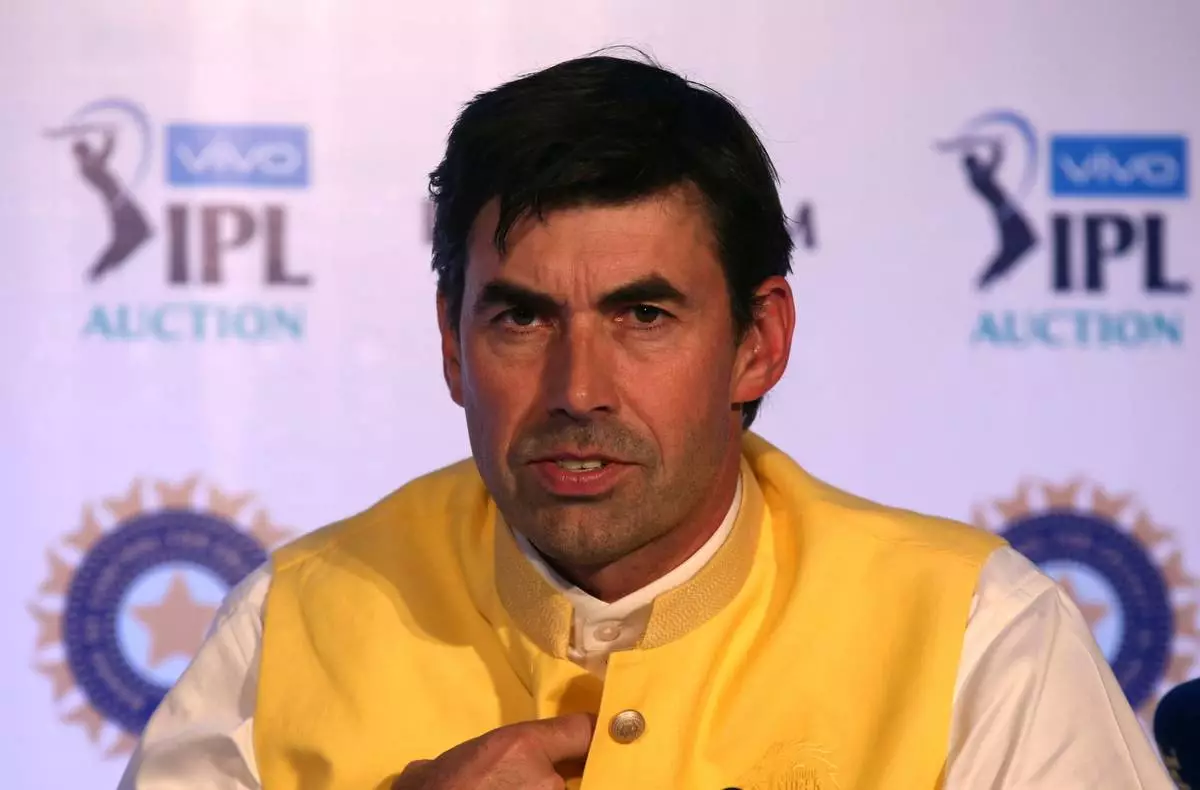
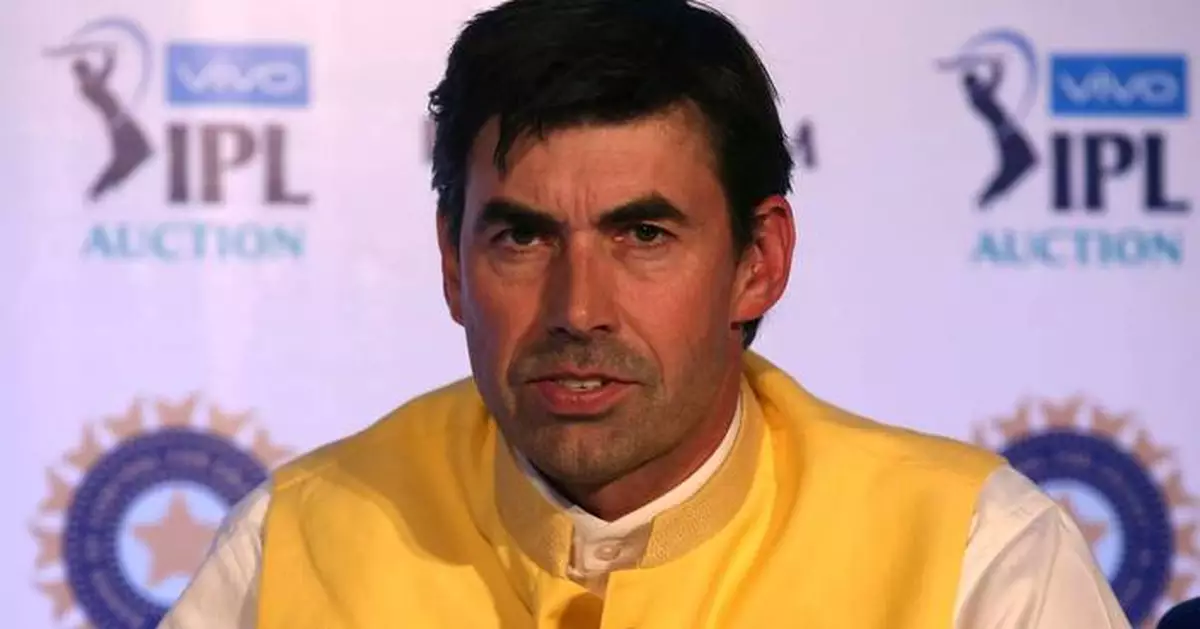
FILE - Former New Zealand cricketer and Chennai Super Kings team coach Stephen Fleming speaks during a press conference on the first day of the Indian Premier League (IPL) player auction in Bangalore, India, Saturday, Jan. 27, 2018. (AP Photo/Aijaz Rahi, file)
WASHINGTON (AP) — President Donald Trump has renewed his attacks on the Federal Reserve after it hiked its benchmark interest rate Wednesday, but the Fed matters less than broader economic trends when it comes to longer-term borrowing costs, economists say.
The economy is growing steadily despite being hit with repeated shocks — and may even be accelerating — while inflation remains stubbornly high. And big tech firms are borrowing huge amounts of cash to plow into data center construction while the federal government is still running large yearly budget deficits. All these trends point to higher interest rates regardless of what the Fed does, analysts say.
As a result, the low interest-rate, low-inflation world that lasted for nearly 15 years after the Great Recession is over and a higher-priced, higher-rate world is taking its place. Mortgage rates fell into the 3% range in the 2010s and even lower during COVID-19, but such deals are long gone. The average 30-year mortgage rate reached 6.95% last week, the highest in more than a year and a half.
Joe Brusuelas, chief economist at RSM, a tax consulting firm, said that a big reason for the change is a shift from the pre-pandemic economy in which consumer and business demand was weak, to the current economy in which healthy consumer and business spending is colliding with supply shocks and bottlenecks. In addition to higher oil and gas prices because of the Iran war, the AI buildout has struggled with an insufficient supply of computer chips, electronic equipment, and workers to put it all together.
“We’ve undergone a structural transformation of the economy,” Brusuelas said. “The regime change in inflation and interest rates is the outcome.”
The shift, in many ways, returns the economy to where it was before the financial crisis in December 2007 that lasted through June 2009.
But even after the downturn ended, consumer and business spending remained weak. Millions of Americans in the 2010s focused on paying down outsized mortgages and credit card debt instead. Businesses saw few investment opportunities, and many big tech firms such as Alphabet’s Google and Meta’s Facebook piled up cash.
Now those companies are using those stockpiles to build out AI data centers, and are borrowing even more money to do so. And American consumers — despite surveys finding they are pessimistic about the economy — are still spending at a healthy pace. A recent report showing that retail sales picked up last month led economists at Bank of America to forecast growth will reach a healthy 3% at an annual rate in the July-September quarter.
Federal Reserve Chairman Kevin Warsh highlighted the shift in a speech at the central bank's annual conference in Jackson Hole, Wyoming last month.
After 2008, “it was a widely held view that an excess of capital would sit on the sidelines for a long, long time, because there just wouldn’t be enough compelling investment opportunities,” Warsh said. “All the good stuff had been invented. So growth would be low and slow.
“Well, times sure have changed,” he continued. “Ever-expanding pools of capital are pouring into AI-related infrastructure of all sorts.”
The additional spending and investment has contributed to higher longer-term interest rates on government bonds that are competing for lenders. The yield on the 10-year Treasury bond topped 5% this year for the first time since 2023, even before the Fed raised its benchmark short-term rate Wednesday.
At the same time, political polling and consumer sentiment surveys continue to find that many Americans are struggling to keep up with rising prices, and affordability remains a top concern heading into the midterm elections. Even as the economy expands, inflation has outpaced the annual growth in average wages for the past five months.
Brusuelas said the U.S. economy's expansion is “imbalanced” with growth “entirely dependent” on the AI buildout and strong spending by wealthier consumers, who have benefited from rising stock prices driven by hopes that AI will lift profits.
After the Fed lifted its rate to 3.9% Wednesday, Trump said on Truth Social that U.S. rates should be 1% instead.
Yet many of Trump's policies have contributed to higher borrowing costs, in particular the Iran war that has driven up gas prices. When inflation persists, investors demand higher interest rates on longer-term Treasury bonds, such as the 10-year, which strongly influences mortgage rates.
“The president can say he wants interest rates lower all he wants, and yet he continues to push the button on all the policies that raise rates," said Elizabeth Pancotti, vice president of policy, advocacy and research at the progressive Groundwork Collaborative.
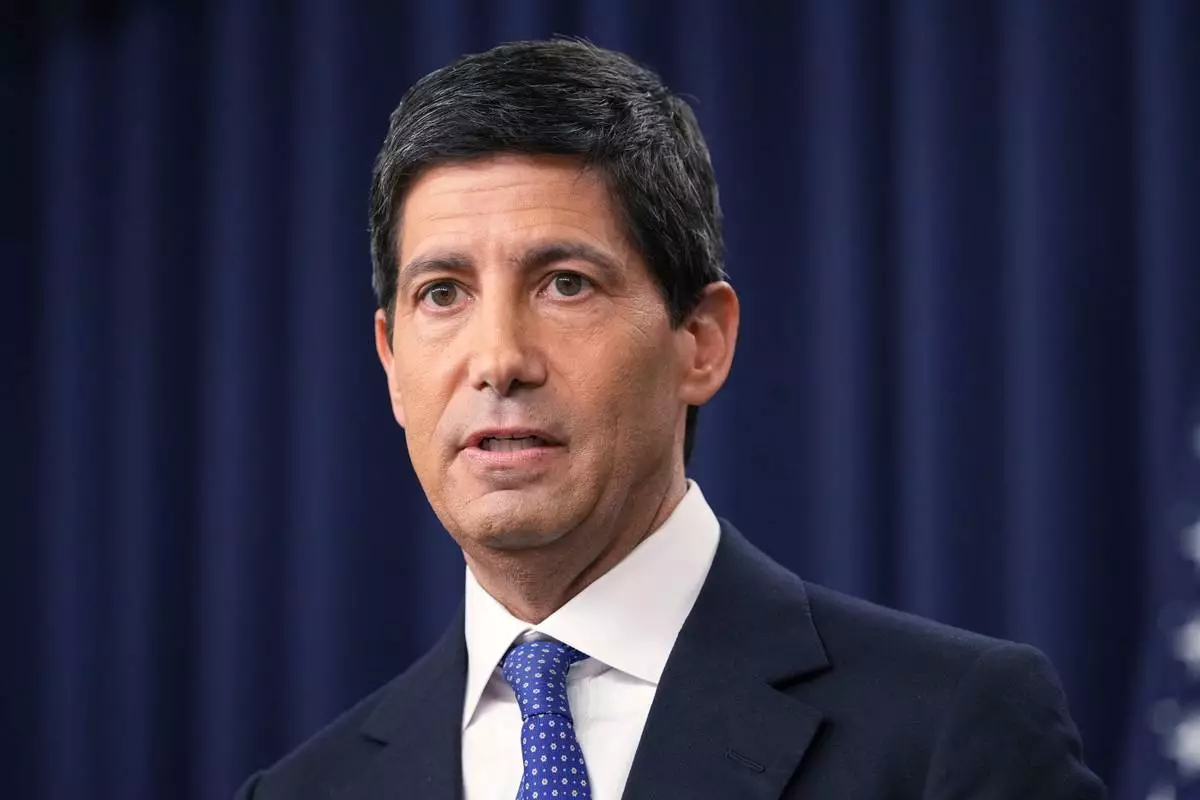
Federal Reserve Board Chairman Kevin Warsh speaks during a news conference at the Federal Reserve in Washington, Wednesday, Sept. 16, 2026. (AP Photo/Mark Schiefelbein)
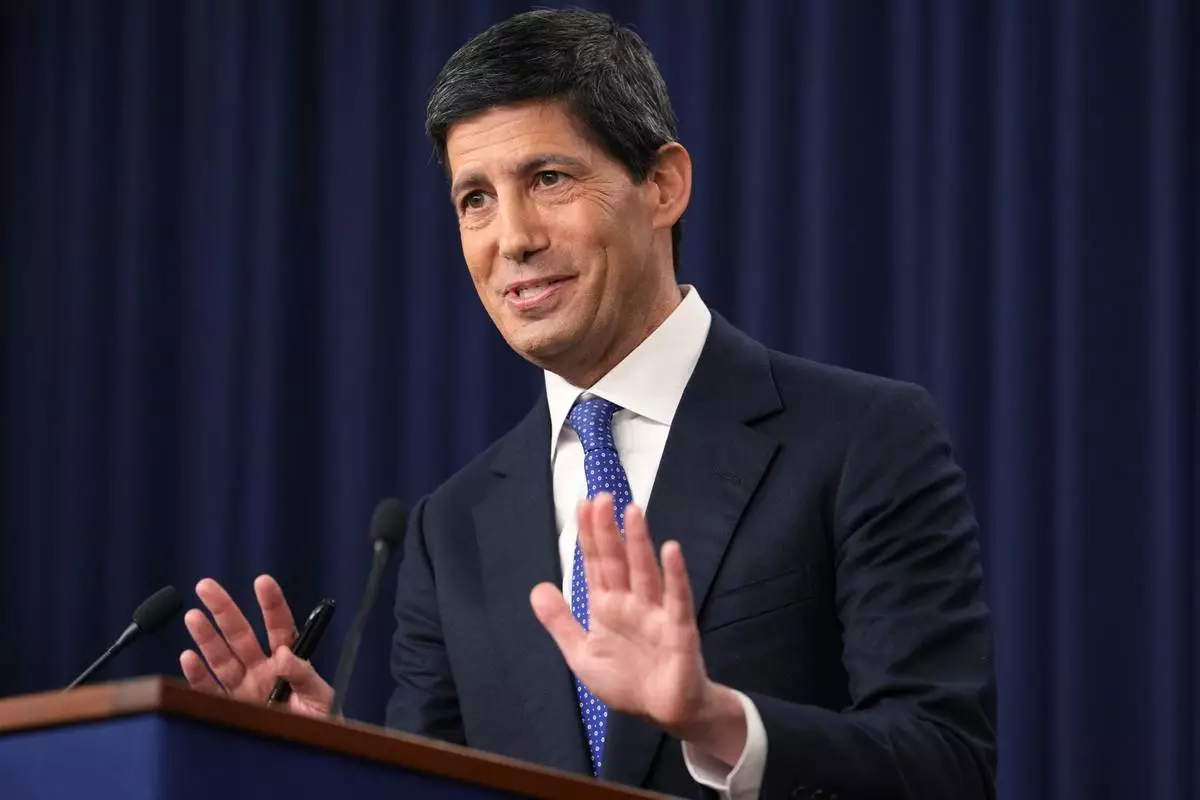
Federal Reserve Board Chairman Kevin Warsh speaks during a news conference at the Federal Reserve in Washington, Wednesday, Sept. 16, 2026. (AP Photo/Mark Schiefelbein)