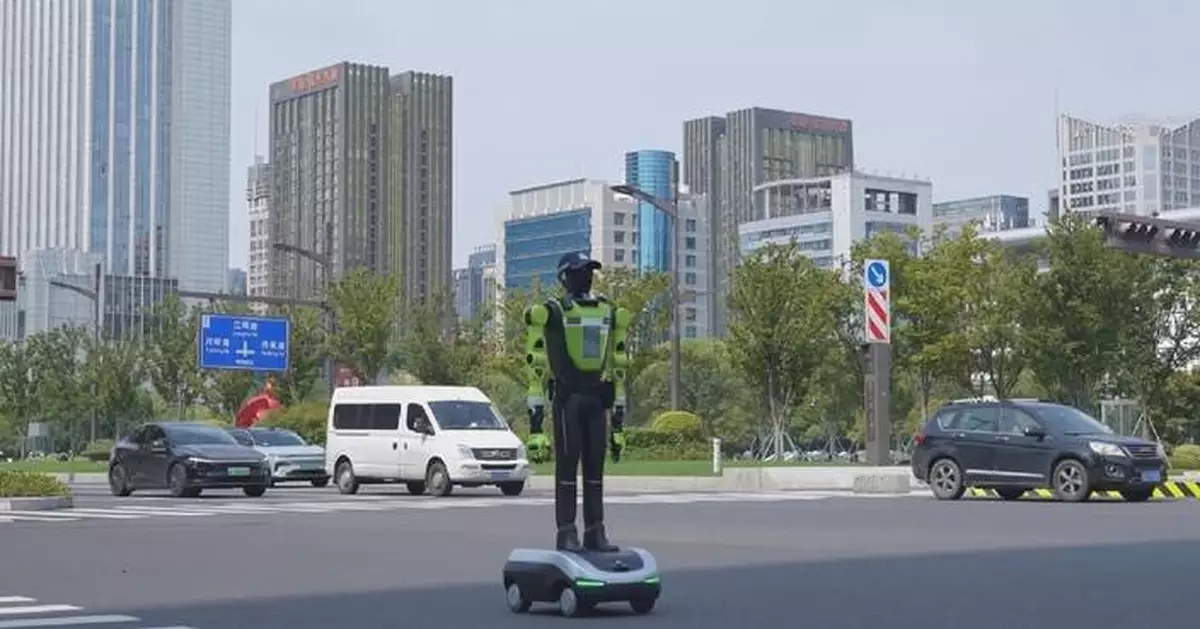
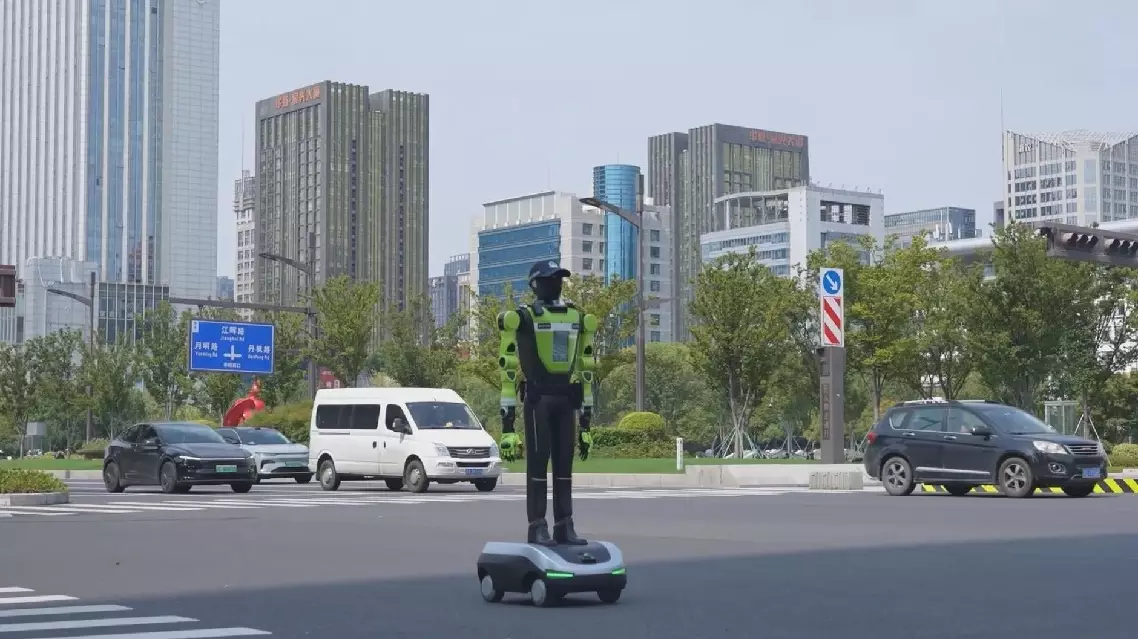
China’s first robot traffic police squad, deployed in Hangzhou, east China’s Zhejiang Province, has completed a comprehensive functional upgrade following its official launch in early May this year.
Now operating across urban roadways, the upgraded robots deliver remarkable improvements in public service interaction, autonomous patrol performance and human-machine collaborative traffic management, empowering smarter and more efficient urban traffic governance.
Early in the morning on Jiangnan Avenue in Hangzhou, traffic robots conducted routine patrols at multiple road intersections. The intelligent devices autonomously patrol duty points, deterring non-motor vehicles from stopping beyond limit lines and reminding pedestrians to cross streets efficiently.
"I live nearby. I just passed by and saw these robots patrolling back and forth at every intersection. They are far smarter than when I first saw them before. They are bringing more benefits to ordinary citizens," said a local resident.
Traffic police officials said previous robots operated with fixed patrol angles and could only monitor a single direction at intersections, leaving traffic management blind spots. Equipped with panoramic motion control, the new robots can flexibly adjust their orientation in real time based on on-site traffic conditions to provide precise guidance.
"The robots have achieved substantial improvements in positioning accuracy and autonomous navigation versatility. They can independently plan travel routes and dynamically avoid obstacles according to real-time road conditions. Meanwhile, they strictly follow traffic signals when crossing zebra crossings. The upgraded robots can also autonomously adjust patrol duration based on on-site traffic order, gradually realizing full-time autonomous patrol at key road intersections," said Han Qiuyue, a traffic police officer.
Data from the Hangzhou Public Security Bureau's traffic management detachment showed that since the robots entered service on May 1 this year, the traffic robot squadron has provided public services more than 11,000 times and dissuaded drivers and pedestrians from over 230,000 traffic violations. The intelligent patrol system has reduced police staffing pressure by 30 to 50 percent during peak hours at key intersections.
China's first robot traffic squad receives upgrades