Skip to Content Facebook Feature Image

What's next for Germany's troubled chancellor after a string of state election defeats

News

What's next for Germany's troubled chancellor after a string of state election defeats
News

News

What's next for Germany's troubled chancellor after a string of state election defeats

2026-09-21 16:46 Last Updated At:16:50

BERLIN (AP) — Friedrich Merz says he intends to stay on as the leader of Germany and his party after a string of state election defeats. But it's unclear how much room for maneuver the chancellor still has, only 16 months after he took office.

The 70-year-old sought within minutes of polls closing Sunday in Mecklenburg-Western Pomerania and Berlin to shore up his position in his center-right Christian Democratic Union. He made a highly unusual election evening appearance to insist that he would press ahead with reforms meant to get the sluggish economy moving.

“What has to be done now requires backbone, steadfastness and patience,” Merz said. “I will demonstrate that as the CDU party leader and above all as chancellor of our country.”

The big question is whether the CDU will support him in that, and for how long.

The party's eight state governors publicly backed him before Sunday's two elections. But Merz's statement on Sunday itself underlined the erosion of his authority in recent weeks, and it remains to be seen whether support from powerful regional leaders and lawmakers will hold.

Merz has one advantage: there's no single obvious successor waiting in the wings. Potential options who have been named include the governors of North Rhine-Westphalia, Hendrik Wüst; Bavaria, Markus Söder; and Hesse, Boris Rhein.

For now, though, no one has signaled any interest in taking over, and Wüst has an election to fight next spring in his own state, Germany's most populous.

Survival is one thing, but this month's state elections haven't made it easier for Merz to govern effectively.

Merz already agreed the outline of proposed reforms with his junior governing partners, the center-left Social Democrats. But politicians on both sides of the governing coalition have questioned details of them during these election campaigns, particularly aspects of an overhaul of the pension system, and it's unclear whether he can get them through parliament the way he planned.

The governing coalition has only a 12-seat majority in the 630-seat Bundestag, the national parliament's lower house. It will need to show discipline that it hasn't always mustered to pass the reform plans, which won't be easy if lawmakers grow more nervous. But that thin majority also complicates any plan to replace Merz: any successor would need to get elected in the Bundestag.

Merz could, at least in theory, choose to turn over the task of managing his party to someone else and concentrate on running the country.

There is a precedent: Angela Merkel gave up the CDU leadership after a poor state election result in 2018 but remained chancellor until 2021. Her Social Democratic predecessor, Gerhard Schröder, did the same in 2004 after his popularity sank during a drive to reform Germany's welfare system.

But there's no obvious candidate in this case either, and Merz has made clear that he doesn't want to hand over the party leadership.

Sunday's results have deepened his problems, focusing attention even more closely on his ability to deliver reforms while also keeping the governing coalition and his own party together. And Merz himself said as he insisted on the need for change that “not everything will win quick applause.” He also has to keep an eye on the threat from the far-right Alternative for Germany party.

Even if he remains in charge, there's only a seven-month respite until the next round of state elections — though none of those are in Alternative for Germany’s eastern heartland. And another setback could quickly revive questions over his leadership.
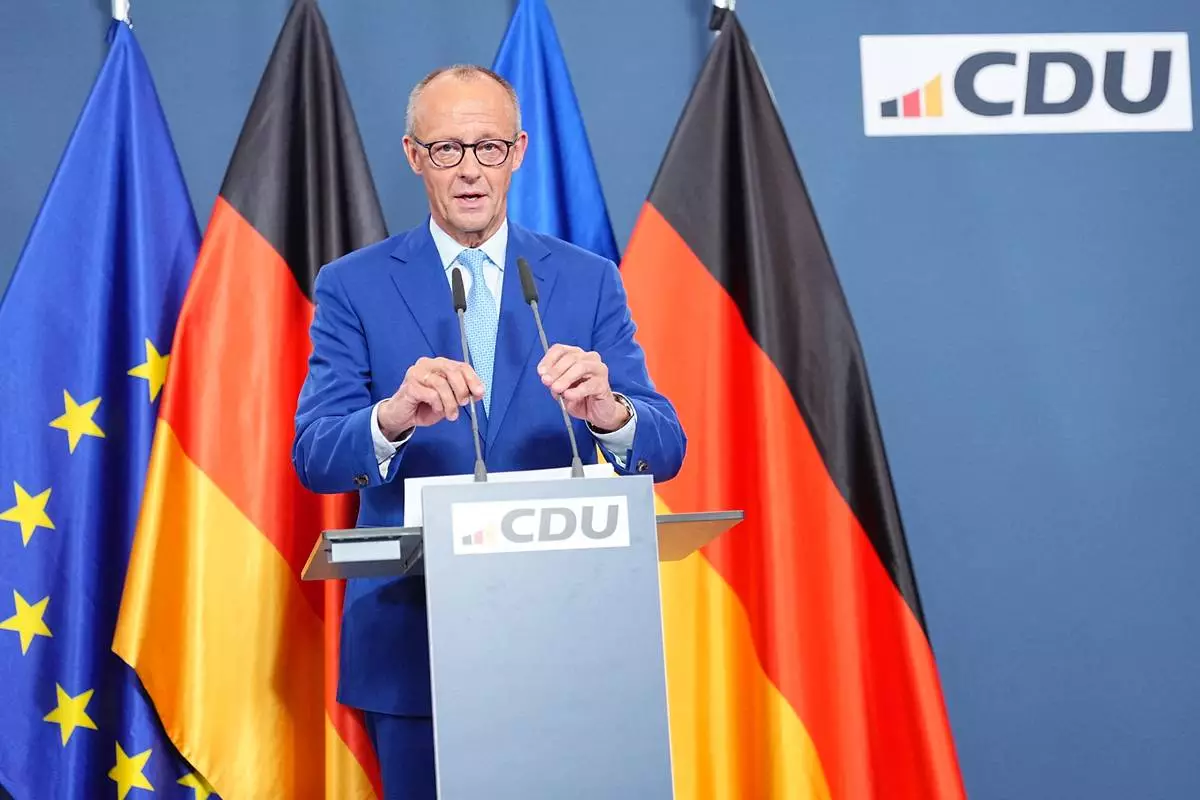
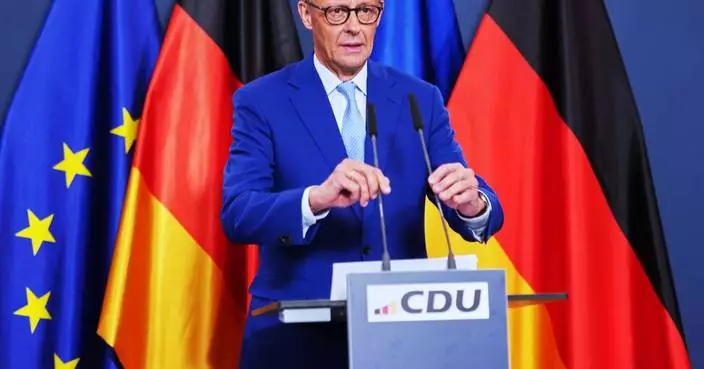
Chancellor Friedrich Merz (CDU) speaks at the Konrad Adenauer House following the elections in Berlin and Mecklenburg-Western Pomerania, in Berlin, Sunday, Sept. 20, 2026. (Michael Kappeler/dpa via AP)
Chancellor Friedrich Merz (CDU) speaks at the Konrad Adenauer House following the elections in Berlin and Mecklenburg-Western Pomerania, in Berlin, Sunday, Sept. 20, 2026. (Michael Kappeler/dpa via AP)

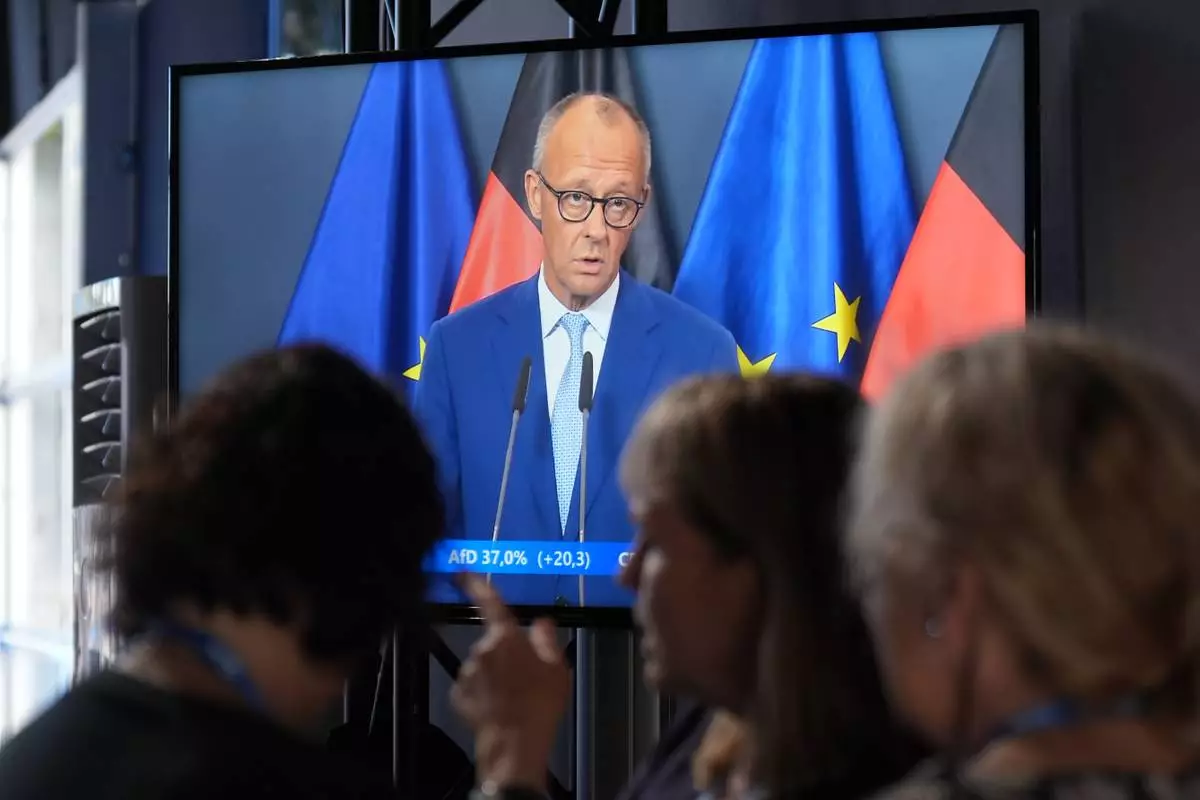
In the ARD election studio, a monitor shows Federal Chancellor Friedrich Merz (CDU) speaking following the elections in Berlin and Mecklenburg-Western Pomerania, in Berlin, Sunday, Sept. 20, 2026. (Marcus Brandt/dpa via AP)

In the ARD election studio, a monitor shows Federal Chancellor Friedrich Merz (CDU) speaking following the elections in Berlin and Mecklenburg-Western Pomerania, in Berlin, Sunday, Sept. 20, 2026. (Marcus Brandt/dpa via AP)
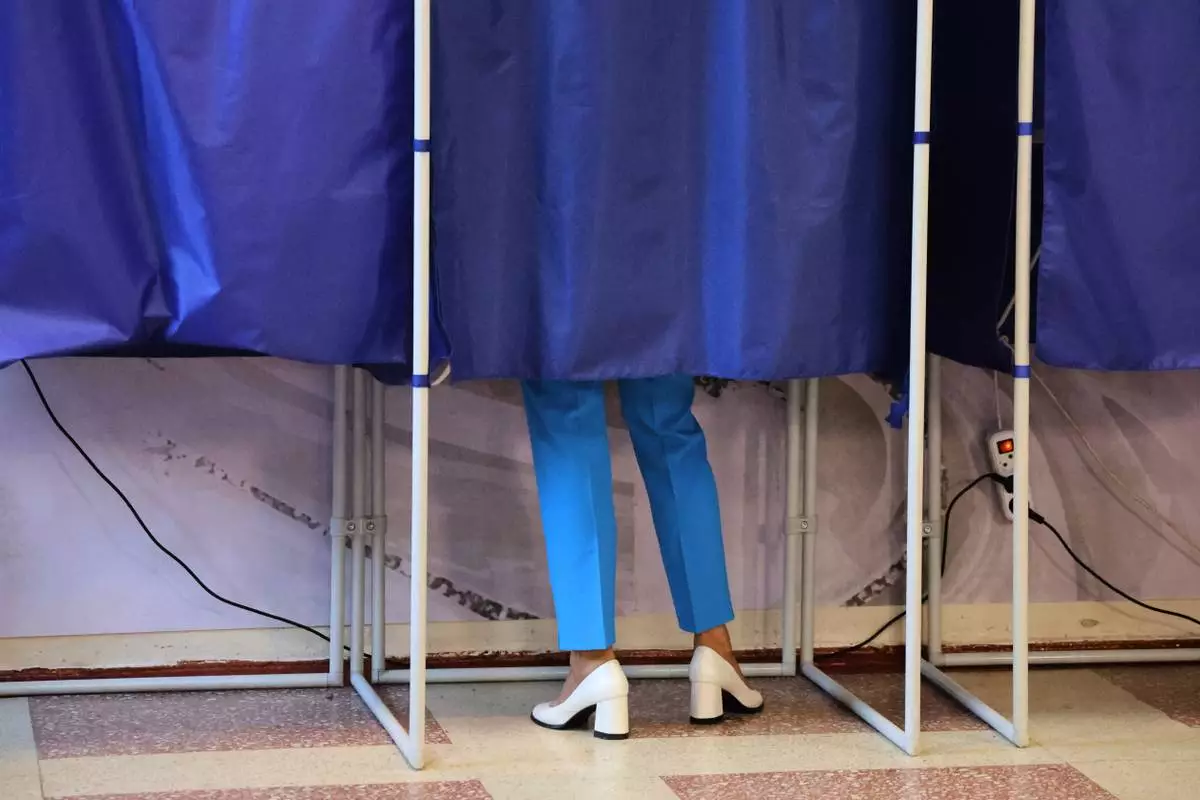
The main Kremlin party retained its majority in Russia’s parliament, election officials said Monday, after a carefully orchestrated balloting that excluded most opposition candidates and helped the government maintain its tight grip on power.

Results from over 95% of the polling stations gave the Kremlin’s United Russia party just under 58% of the vote for the 225 seats apportioned by parties, according to the Central Election Commission. Another 225 lawmakers were chosen in single-ballot races, and the results showed United Russia candidates leading in 208 of those races.

Central Election Commission chair Ella Pamfilova said the preliminary results indicated that United Russia would get 355 seats out of 450.

It was the first parliamentary election held since President Vladimir Putin launched the full-scale invasion of Ukraine in 2022, and the first to include residents of four regions of that country that were seized and illegally annexed by Moscow later that year. Voting also was held in Crimea, which was illegally annexed by Russia in 2014. Kyiv denounced the voting in those regions as illegal.

The Kremlin tightened its crackdown on opposition ahead of the election, including barring Russia’s only liberal, anti-war party from the ballot and allowing it to compete only in single-ballot races.

Along with United Russia, several other parties that almost always vote for Kremlin initiatives also won seats in the State Duma, the lower house of parliament.

The Kremlin has sought the parliamentary election to showcase popular support for the war, and strove to avoid political risks by stamping out any dissent.

A massive state media campaign and tight control over the election in the absence of genuine opposition left little doubt that Kremlin will keep tight control of Russian politics as economic costs rise and Ukrainian drone attacks increase deep inside the country.

Voters cast two separate ballots, filling half of the Duma’s 450 seats by selecting political parties listed on the ballot. The rest were contested in single-seat constituencies, with voters choosing individual candidates.

The liberal Yabloko party, the only registered political entity that dared to publicly criticize the war, was removed from the ballot last month by Russia’s Supreme Court, and only has a few dozen candidates in the single-constituency races. Additionally, some anti-war politicians were imprisoned or forced to flee abroad ahead of the campaign.

Yabloko and the Communist Party, which has criticized some aspects of government policy but carefully avoided any criticism of Putin, said many of their observers were turned away from polling stations.

Russia didn’t invite observers from the Organization for Security and Cooperation in Europe, with the Russian Foreign Ministry accusing the body of “double standards” for its criticism of Russia. OSCE Parliamentary Assembly President Pere Joan Pons said that the decision was a breach of Russia’s commitments as a member state of the organization.

At one polling station in the Russian-held part of the Donetsk region, voters dropped their ballots in a box as an armed Russian soldier stood nearby and watched.

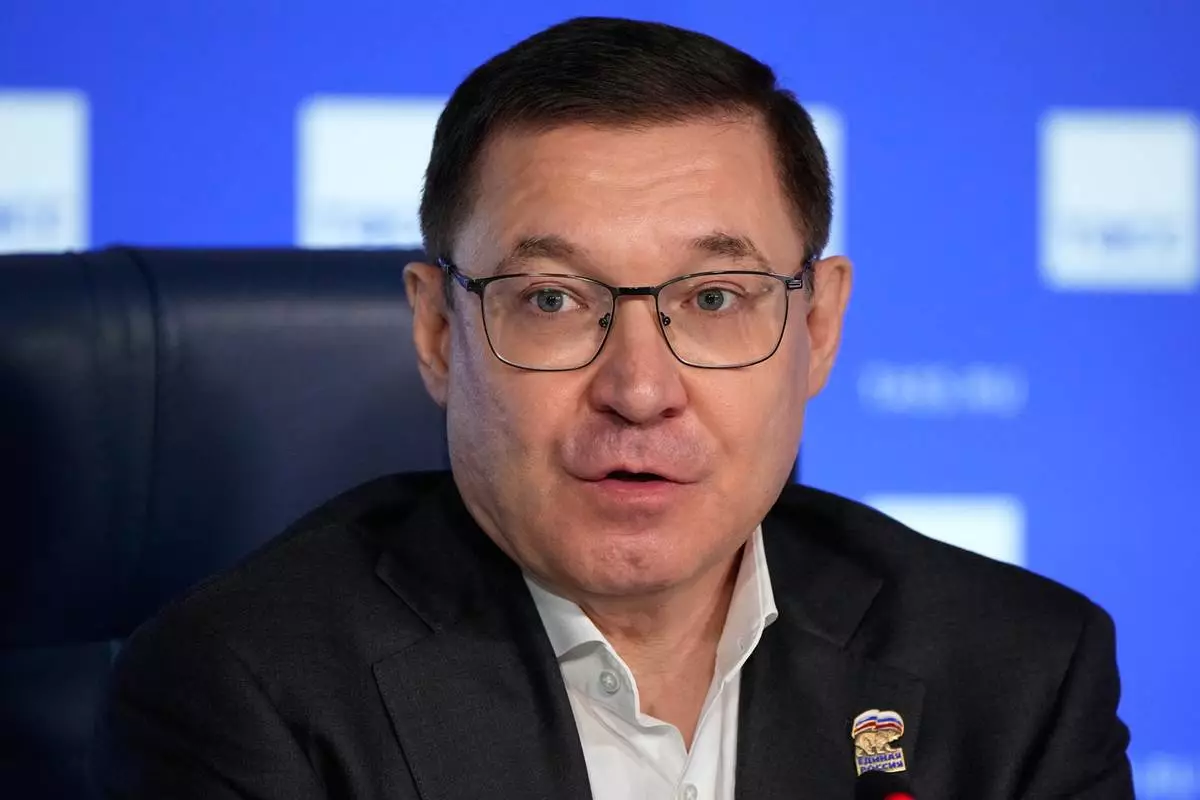
Vladimir Yakushev, a secretary of the General Council of the United Russia party, speaks during a news conference following parliamentary elections, in Moscow, Russia, Monday, Sept. 21, 2026. (AP Photo/Alexander Zemlianichenko)

Vladimir Yakushev, a secretary of the General Council of the United Russia party, speaks during a news conference following parliamentary elections, in Moscow, Russia, Monday, Sept. 21, 2026. (AP Photo/Alexander Zemlianichenko)

A voter fills-in a ballot during Russia's parliamentary election in Donetsk, in the Russian-controlled part of the Donetsk region, Ukraine, Friday, Sept. 18, 2026. (AP Photo)

A voter fills-in a ballot during Russia's parliamentary election in Donetsk, in the Russian-controlled part of the Donetsk region, Ukraine, Friday, Sept. 18, 2026. (AP Photo)

Recommended Articles