SEOUL, South Korea (AP) — An explosion injured three South Korean military officers Monday inside the heavily fortified Demilitarized Zone separating the Koreas, officials said.
South Korea’s Defense Ministry said the explosion occurred during an unspecified operation near the military demarcation line within the border buffer zone between the two nations, which is commonly referred to as the DMZ.
The cause of the blast was not immediately clear, the ministry said.
South Korean officials did not say whether it was possible the explosion was caused by a land mine planted by North Korea, which has added mines, anti-tank barriers and other front line fortifications in recent months as relations between the war-divided rivals have sharply deteriorated.
Two of the officers were airlifted from the site by helicopter, while the third was transported by land before being airlifted, according to the ministry. The officers are being treated at a military hospital near the capital Seoul.
The DMZ, which is 248 kilometers (155 miles) long and 4 kilometers (2.5 miles) wide, is one of the world’s most heavily armed borders. An estimated 2 million mines are peppered inside and near the border, which also is guarded by barbed wire fences, tank traps and combat troops on both sides. The zone is a legacy of the Korean War from 1950 to 1953, which ended with an armistice but not a peace treaty.
There have been growing concerns in South Korea about increased activity by North Korean soldiers near the military demarcation line as the North strengthens its border defenses during prolonged tensions between the countries. The South Korean military has not officially confirmed media reports that North Korean soldiers crossed the MDL more than 20 times during front line operations in August alone.
The South’s military fired warning shots to repel some 10 North Korean soldiers who crossed the military demarcation line at the eastern section of the DMZ in April 2025. The North Korean soldiers retreated after the South broadcast audio warnings and fired the shots and there were no clashes. In June 2024, North Korean troops crossed the border three times, prompting South Korea to fire warning shots.
North Korean leader Kim Jong Un in recent years has suspended virtually all cooperation and diplomacy with South Korea while declaring Seoul as his most hostile enemy during a stalemate in his larger nuclear negotiations with Washington.
North Korean mines in past years have occasionally washed down a swollen river into South Korea, killing or injuring civilians. In August 2015, land mine blasts maimed two South Korean soldiers and caused tensions between the two Koreas to flare.
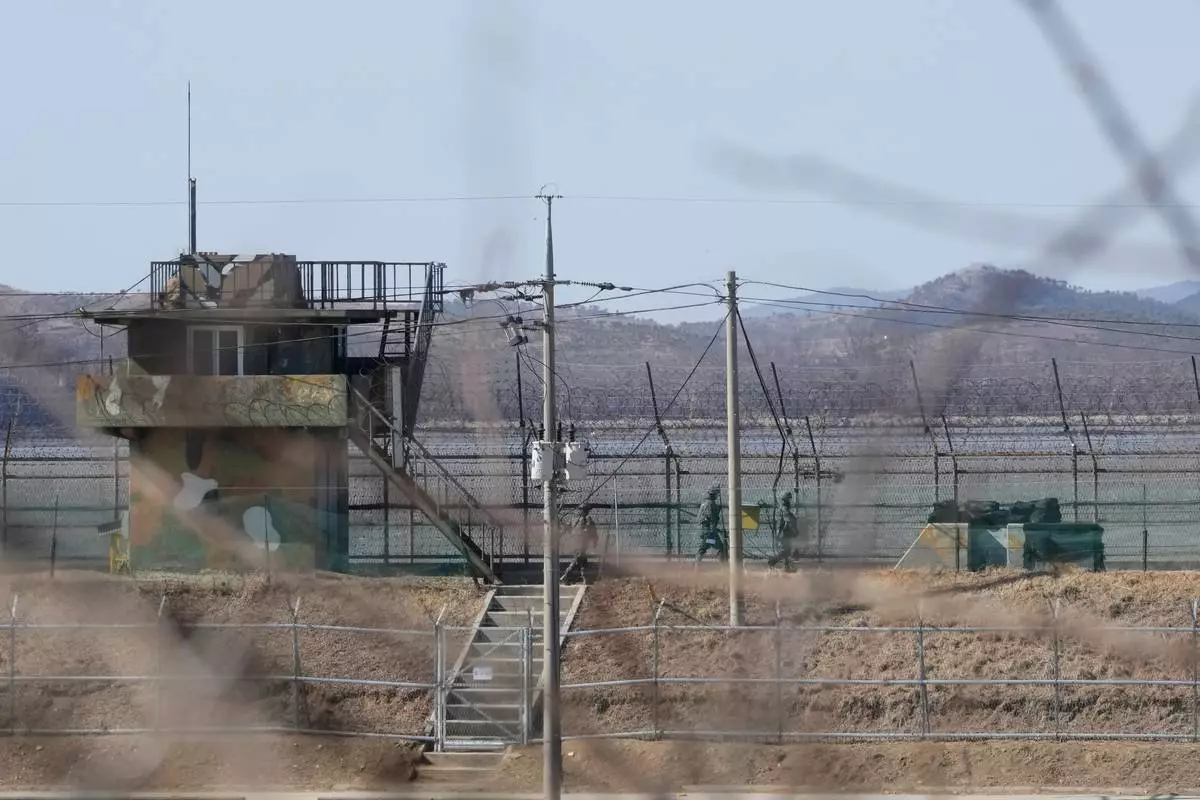
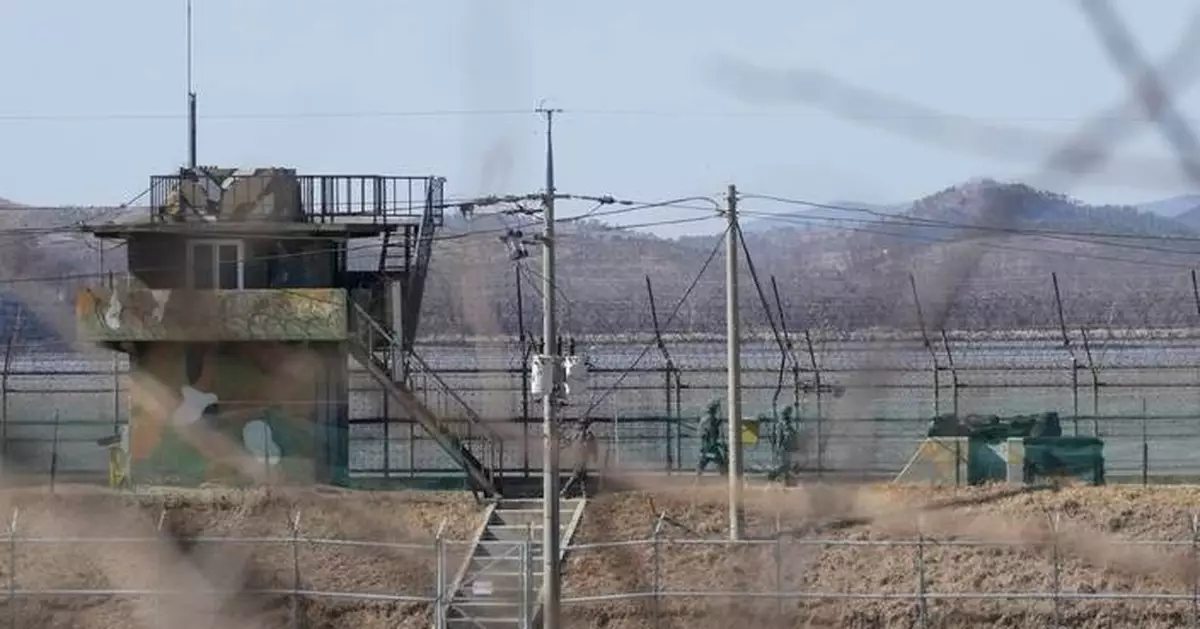
FILE - South Korean army soldiers patrol along the barbed-wire fence in Paju, South Korea, near the border with North Korea, on Feb. 18, 2025. (AP Photo/Ahn Young-joon, File)
BERLIN (AP) — German Chancellor Friedrich Merz faced a struggle to stabilize his position and keep his agenda on track Monday after voters inflicted two more defeats on his party, ejecting it from a state legislature for the first time in its eight-decade history.
The unpopular Merz vowed to stay on and push through reforms to Germany, Europe's biggest economy, minutes after polls closed Sunday in regional elections in Berlin and in Mecklenburg-Western Pomerania, a largely rural eastern region on the Baltic Sea coast.
Still, final results underlined the extent of what Merz conceded was a “disaster” in Mecklenburg-Western Pomerania. His center-right Christian Democratic Union fell just below the 5% of the vote needed to keep seats in the regional parliament, the first time that has happened in 77 years of modern Germany's federal republic, after losing more than half its support.
The CDU also dropped to second place in Berlin behind the hard-left Left Party, which is in pole position to lead the next city government — though Merz's party could, depending on how coalition talks go, still retain city hall.
Neither state is one of Germany's political heavyweights. The CDU's 2023 win in Berlin was its only one in the past 25 years in the capital, which has tended to lean left, and the party was already weak in Mecklenburg-Western Pomerania.
But the manner of its defeat in the latter in particular adds to the headwinds Merz faces after a stinging defeat by the far-right Alternative for Germany two weeks ago in Saxony-Anhalt, another region in the formerly communist east, damaged his authority and set off speculation that he might be replaced.
Alternative for Germany, or AfD, emerged as the strongest party in Mecklenburg-Western Pomerania, but the center-left Social Democrats — the junior party in Merz's national governing coalition — were fairly close behind after a campaign focused squarely on the state governor, Manuela Schwesig, as a bulwark against the far-right party. That polarization helped squeeze other mainstream parties, including the CDU.
A left-leaning three-party coalition under Schwesig would have a majority in the new regional legislature.
Schwesig and others in the governing parties have cast doubt on aspects of the federal government's reform agenda, which is meant to bolster a chronically sluggish economy. The reform plans include a potentially painful overhaul of the creaking pension system, a reduction of Germany’s stifling bureaucracy and cuts to income tax for low- and middle-income families.
The head of the Social Democrats' group in the national parliament, Matthias Miersch, said it was clear that “we need reforms.” But he told ARD television that “we must also take people's concerns seriously.”
Merz faces more meetings Monday with his party's leadership. Much will depend on the CDU's influential regional leaders; the party's eight state governors last week backed the chancellor, though questions remained about how wholehearted their support was.
There are at least no more electoral tests this year. However, five state elections are scheduled next year, three of them in April.
They include one in North Rhine-Westphalia, Germany's most populous state, currently led by a prominent CDU figure often cited as a possible successor to Merz, Hendrik Wüst. None of the five elections is in the east, where AfD is strongest.
“I don't see that swapping out a leadership figure would really bring a change,” Education Minister Karin Prien, who is also a deputy CDU leader, told Phoenix television, adding that she doesn't see “another personnel offer” coming.
“So we must now discuss with one another — together with the chancellor as a government, and on the other hand as a party — how we win more acceptance and more credibility among the population,” Prien said.

Manuela Schwesig (SPD), center, minister-president of Mecklenburg-Western Pomerania, stands on stage alongside members of the Rostock shanty choir Luv un Lee at a campaign event in Warnemünde, Germany, on Friday, Sept. 18, 2026. (Bernd Wüstneck/dpa/via AP)
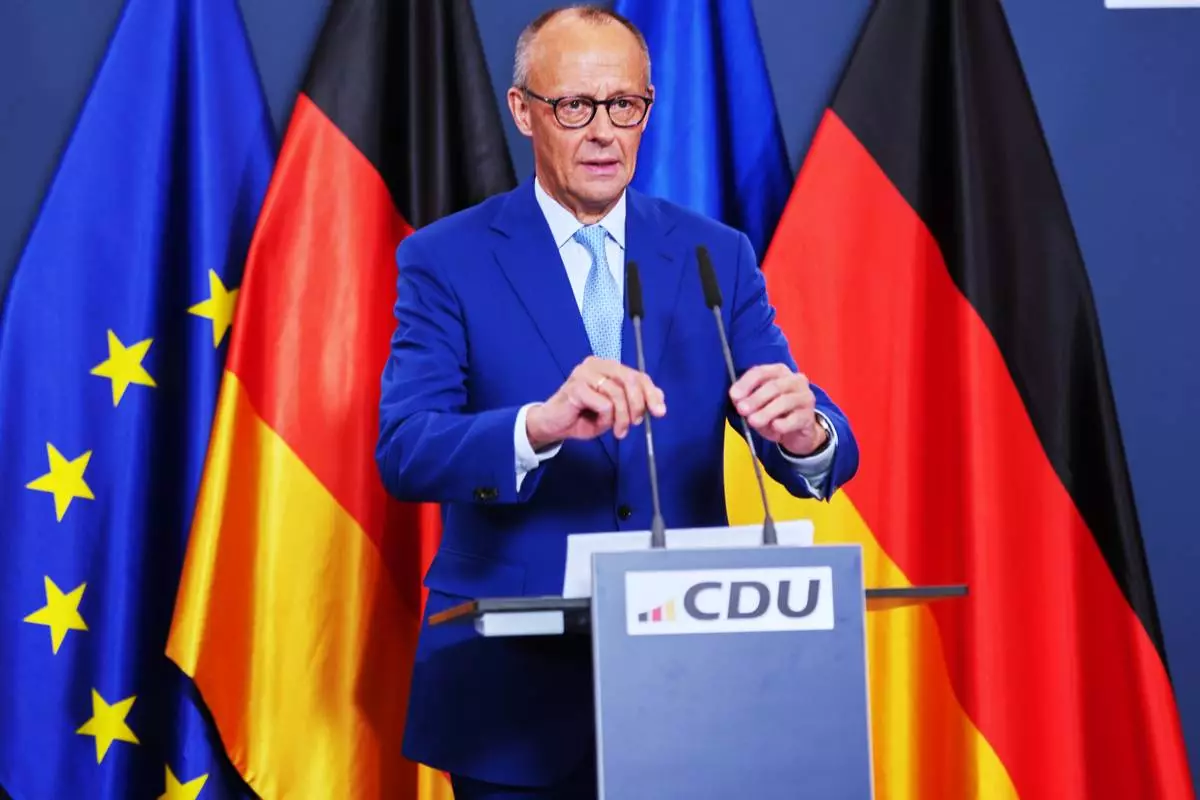
German Chancellor Friedrich Merz speaks to media at the Christian Democratic Union party headquarters in Berlin, Germany, Sunday, Sept. 20, 2026. (AP Photo/Markus Schreiber)