BERKELEY, Calif.--(BUSINESS WIRE)--Sep 21, 2026--
Bruker Corporation (Nasdaq: BRKR) today announced a multi-system order from the University of California, Berkeley for high-field Nuclear Magnetic Resonance (NMR) instrumentation at the Pines Magnetic Resonance Center. The investment will enhance access to next-generation NMR technologies, including 800 MHz–class instrumentation. These capabilities strengthen research in chemistry, materials science, structural biology, and related fields across UC Berkeley and Lawrence Berkeley National Laboratory.
This press release features multimedia. View the full release here: https://www.businesswire.com/news/home/20260921533654/en/
The Pines Magnetic Resonance Center (PMRC) comprises faculty, technical staff, and postdoctoral researchers. The PMRC Core NMR facility is a leading shared NMR resource, offering 24/7 access to researchers from academia, national laboratories, and industry. By integrating high-performance instrumentation with method development, training, and analytical services, the facility enables multidisciplinary studies of molecular structure, dynamics, and function.
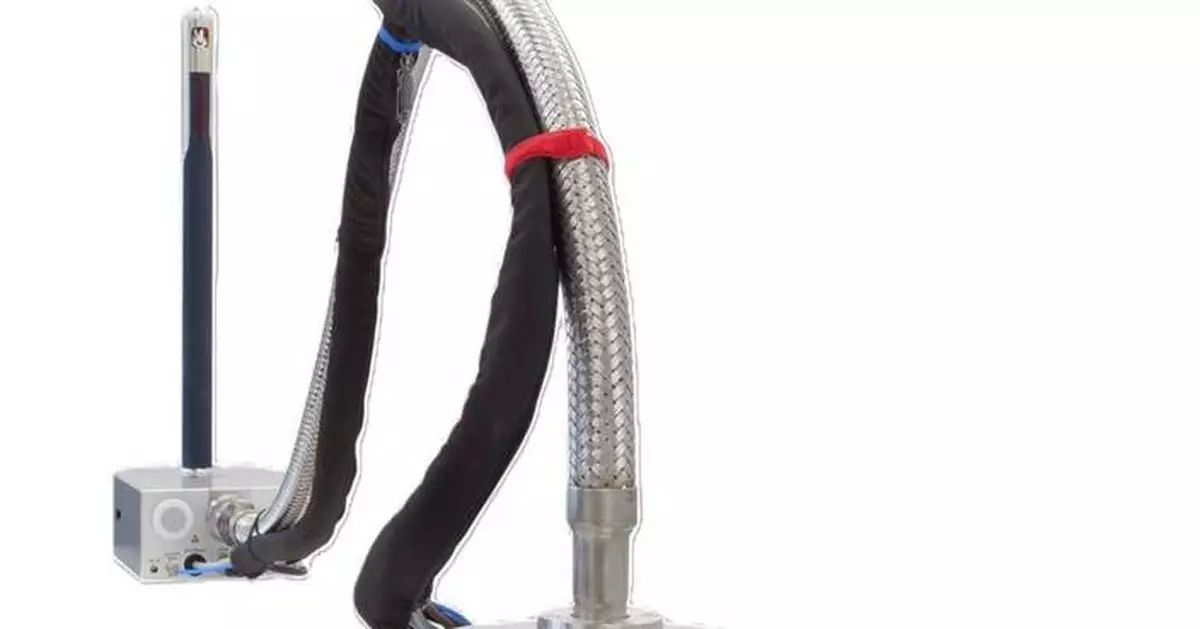
The investment is centered on a Bruker AV NEO-X 800 MHz spectrometer equipped with a cryogenically cooled MAS CryoProbe, complemented by several additional NMR systems and upgrades supporting solid-state, solution-state and Dynamic Nuclear Polarization (DNP) research.
“This expansion will propel UC Berkeley, an institution with an exceptionally strong tradition in magnetic resonance, to the forefront of high-impact innovation for years to come,” said Professor Tatyana Polenova, Director of the Pines Magnetic Resonance Center. “By integrating next-generation NMR and DNP with advanced methodologies, including fast magic-angle spinning, MAS CryoProbes, computational analysis, and quantum sensing and control, we are opening new avenues to address previously inaccessible structural and mechanistic questions across a broad range of systems, including intact cells and organisms, macromolecular assemblies, bio-inspired materials, inorganic materials, and molecules at interfaces and surfaces.”
“Translating cutting-edge NMR technologies into robust, reproducible workflows is critical,” said Dr. Patrick Wikus, Head of Product Management at Bruker BioSpin. “The AV NEO-X platform provides a robust foundation for advanced solid-state, solution-state, and DNP NMR experiments, combining highest performance and enabling new capabilities with reliable day-to-day operation.”
The UC Berkeley NMR order exceeds $6 million and is expected to be delivered in 2027.
About Bruker Corporation – Leader of the Post-Genomic Era (Nasdaq: BRKR)
Bruker is enabling scientists and engineers to make breakthrough post-genomic discoveries and develop new applications that improve the quality of human life. Bruker’s high-performance scientific instruments and high-value analytical and diagnostic solutions enable scientists to explore life and materials at molecular, cellular, and microscopic levels. In close cooperation with our customers, Bruker is enabling innovation, improved productivity, and customer success in post-genomic life science molecular and cell biology research, in applied and biopharma applications, in microscopy, as well as in industrial and cleantech research, and semiconductor metrology in support of AI. Bruker offers differentiated, high-value life science and diagnostics systems and solutions in preclinical imaging, proteomics and multiomics, spatial and single-cell biology, structural and condensate biology, as well as in clinical microbiology and molecular diagnostics. For more information, please visit www.bruker.com.
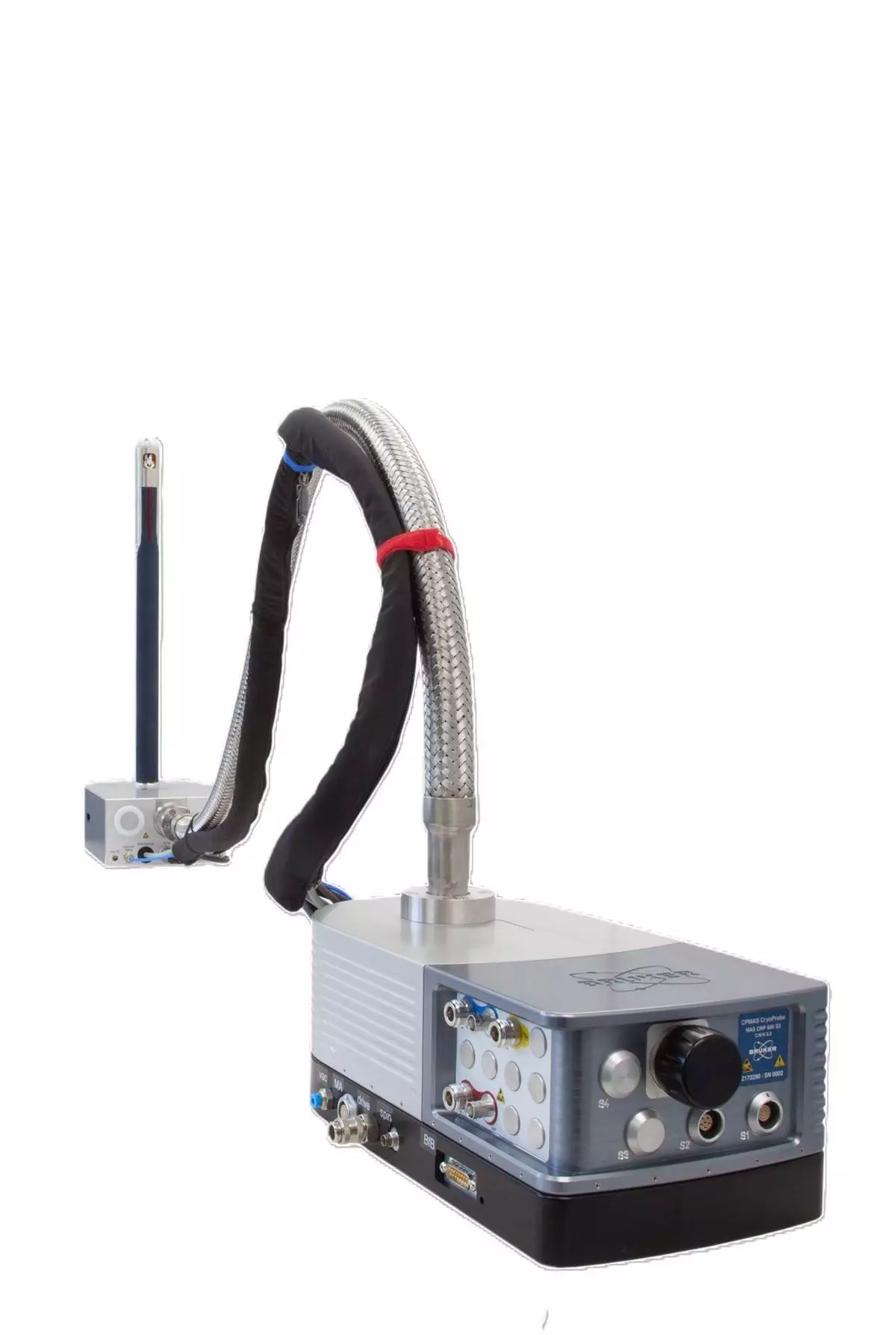
Bruker MAS CryoProbe for high-sensitivity solid-state NMR research
NEW YORK (AP) — U.S. stocks are climbing with markets worldwide on Monday after oil prices and yields in the bond market gave back some of their jumps from last week.
The S&P 500 rose 0.6% and pulled back within 1.3% of its all-time high set last month. The Dow Jones Industrial Average was up 224 points, or 0.4%, as of 9:35 a.m. Eastern time, and the Nasdaq composite was 0.8% higher.
They got some help from the price for a barrel of Brent oil falling 3.1% to $100.62. While that’s still much higher than its roughly $72 price from earlier this summer, it’s down from the nearly $110 it touched last week.
Oil prices are swinging up and down as some crude from the Middle East is able to sail through the Strait of Hormuz, though nowhere close to as much as the industry and customers would like because of the war with Iran. Morgan Stanley’s Michael Wilson said another swing higher in prices for oil, gasoline and other refined products is the main risk he sees in the near term that could keep the U.S. stock market from rising to his forecast for the year’s end.
The average price for a gallon of regular gasoline across the United States has already climbed to nearly $4.48, according to AAA. That's up from less than $4.32 just a week earlier and from $3.18 a year ago.
Monday’s pullback in oil prices helped lower the pressure coming from the bond market. The yield on the 10-year Treasury eased to 4.96% from 5.01% late Friday after it crossed above the 5% threshold last week for the first time in three years.
Higher yields slow the economy by making it more expensive to borrow money, hurting not just the U.S. government that has to borrow to pay its bills but also U.S. households and businesses.
Worries of course remain about how much oil is available for customers worldwide, ING commodities strategists Ewa Manthey and Warren Patterson wrote in a commentary on Monday. However, they said profit-taking by investors after the recent jump in oil prices, together with hopes for constructive discussions at this week’s U.N. General Assembly and at a meeting between China’s and the United States’ leaders, helped improve market sentiment.
Treasury Secretary Scott Bessent told reporters following talks Sunday with Chinese Vice Premier He Lifeng in New York that the U.S. had “a very successful engagement” with the Chinese side. Bessent said talks with China touched on trade and AI. China and the United States have been discussing reciprocal tariff reductions on $30 billion worth of goods from each side.
In Beijing, China’s Foreign Ministry on Monday confirmed that Xi Jinping will pay a state visit to the U.S. between Sept. 23 and 25. Experts and policymakers believe trade, tariffs, AI safety, among other items, are likely to be on the agenda. The war in Iran and developments in the Middle East and ties between China and Iran could also be discussed.
On Wall Street, stocks in the artificial-intelligence industry continue to stabilize following their worldwide slide at the start of last week. Leaders of the AI industry have recently warned a slowdown is needed in the industry’s development for the safety of humanity.
Advanced Micro Devices climbed 4.8%, while Nvidia added 0.4%.
Stocks enmeshed in the cryptocurrency industry, meanwhile, rallied after bitcoin's price rose back above $85,000 and returned to where it was in January. Coinbase Global jumped 5.4%, and Robinhood Markets rose 2.8%.
Stock indexes around the world also climbed thanks to the easing of oil prices and bond yields. Indexes gained 1% in France, 1.2% in Hong Kong and 1.6% in South Korea.
AP Business Writers Chan Ho-him and Michelle Chapman contributed to this report.
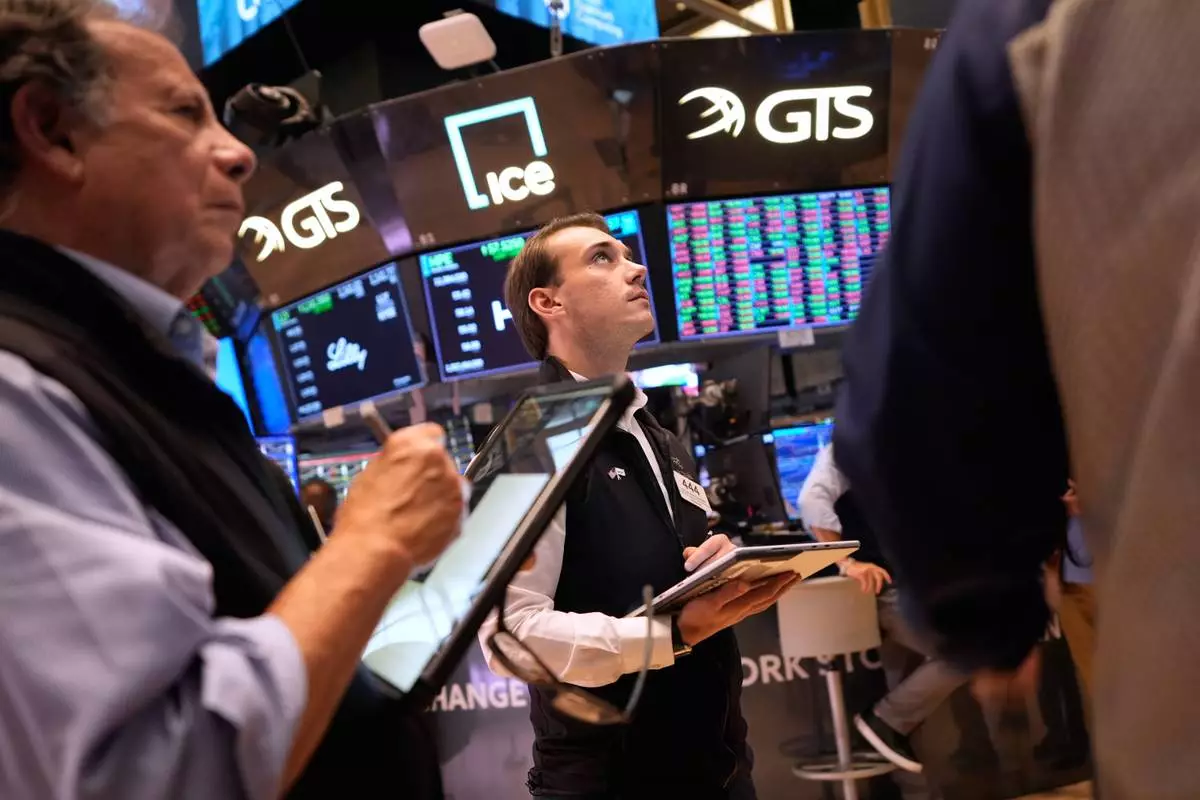
Traders work on the floor at the New York Stock Exchange in New York, Wednesday, Sept. 16, 2026. (AP Photo/Seth Wenig)
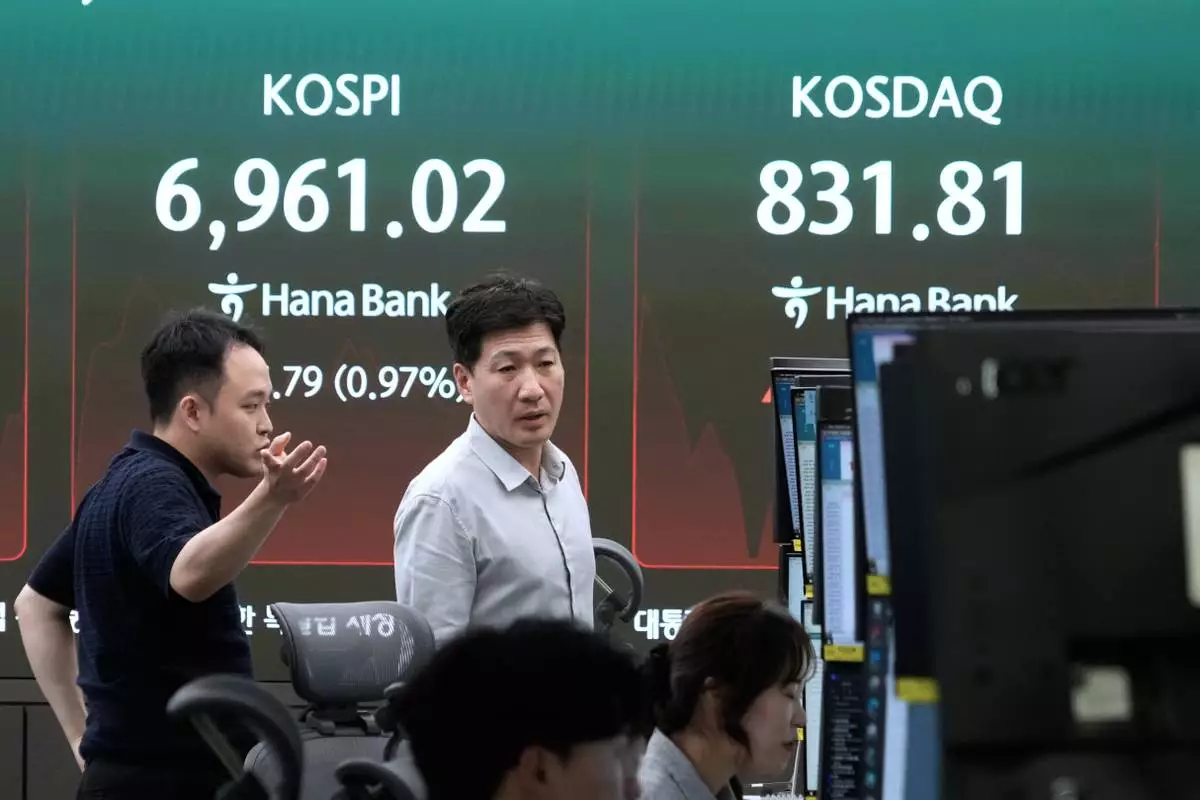
Currency traders work near a screen showing the Korea Composite Stock Price Index (KOSPI) in the foreign exchange dealing room at the Hana Bank headquarters in Seoul, South Korea, Monday, Sept. 21, 2026. (AP Photo/Ahn Young-joon)
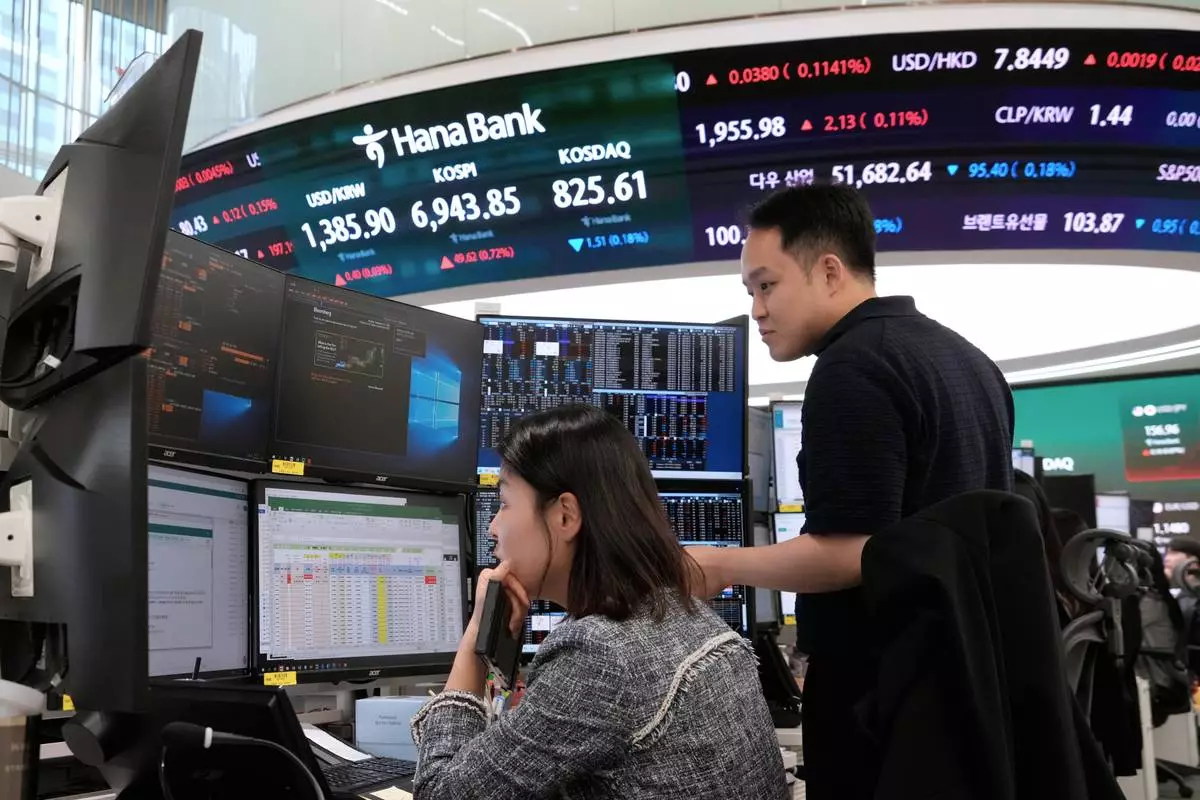
Currency traders work in the foreign exchange dealing room at the Hana Bank headquarters in Seoul, South Korea, Monday, Sept. 21, 2026. (AP Photo/Ahn Young-joon)
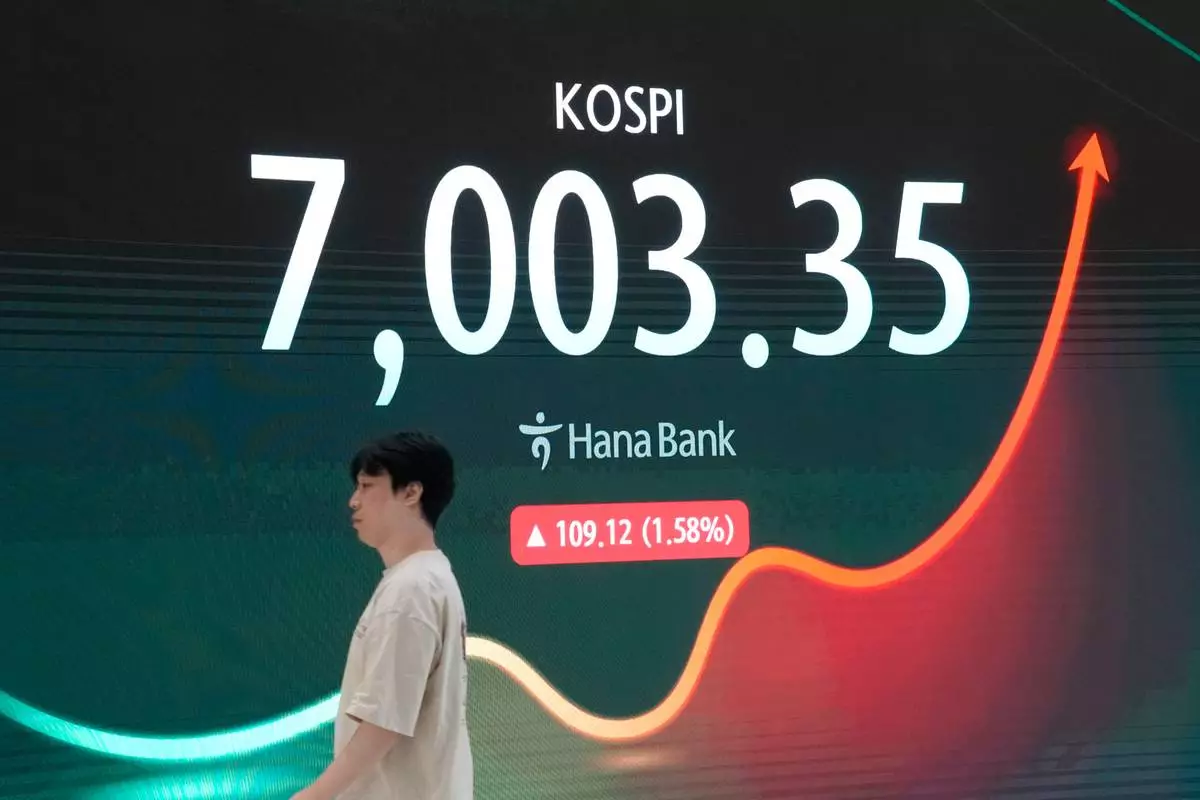
A screen shows the Korea Composite Stock Price Index (KOSPI) in the foreign exchange dealing room at the Hana Bank headquarters in Seoul, South Korea, Monday, Sept. 21, 2026. (AP Photo/Ahn Young-joon)