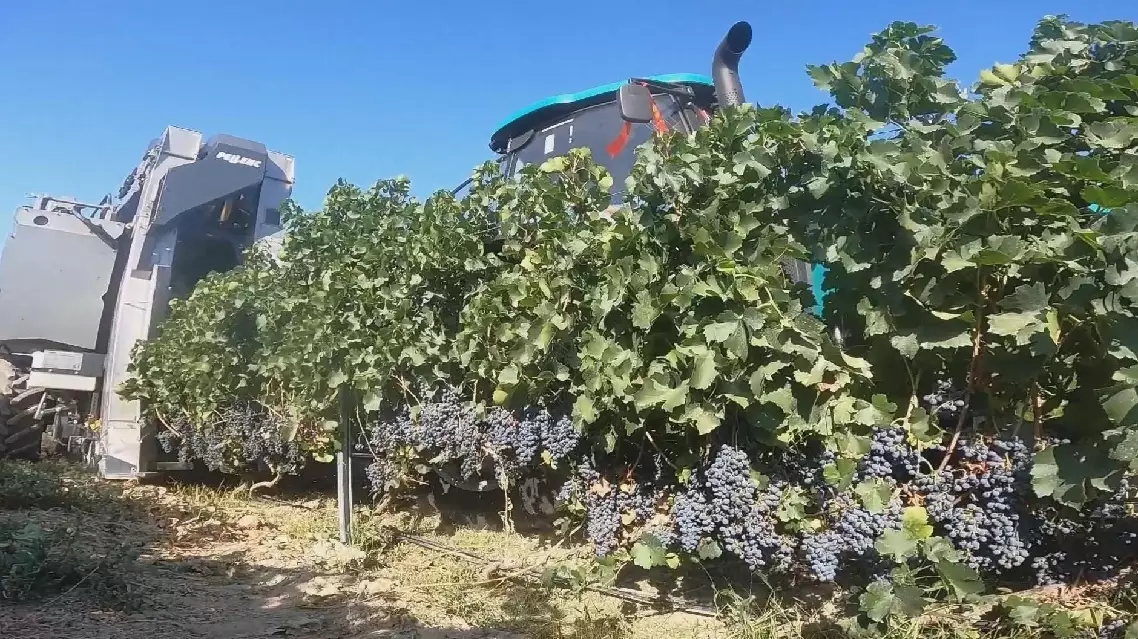
As the autumn grape harvest season arrives, Manas County in northwest China's Xinjiang Uygur Autonomous Region has, for the first time, adopted mechanized harvesting across more than 20,000 mu (about 1,333 hectares) of wine grape fields, achieving high quality and efficiency.
At the county's standardized wine grape planting base, the fields are bustling with harvesters moving between rows, swiftly picking and collecting the fruit.
Compared with manual picking, mechanized harvesting offers clear advantages. A single machine can cover over 100 mu (about 6.6 hectares) a day, matching the daily output of more than 100 workers. It also addresses longstanding challenges like labor shortages, high labor costs, and long harvest cycles, while shortening the time from field to winery to preserve freshness.
Once harvested, the grapes are rushed to wineries, where workers sort them cluster by cluster and berry by berry to discard damaged, unripe, or diseased fruit. The finest berries are then sent to fermentation tanks to be turned into quality wine.
"We process 18 to 20 tons of grapes a day. After sorting, the raw material goes into fermentation tanks," said Yang Tao, head of a local winery.
Not just at harvest, the grape base has been pushing mechanization and digital transformation across the entire growing cycle, the head of the base said.
"The mechanized management rate for wine grapes has reached 70 percent, and we have adopted more digital field management technologies. This has laid a solid foundation for the development of our wine grape industry," said Li Shude, head of the planting base.
Xinjiang's Manas county embraces digital, mechanized harvest for wine grapes
A longstanding Mid-Autumn Festival staple, mooncakes are seeing shifting market trends this year, driven largely by young consumers.
The Mid-Autumn Festival, celebrated annually on the 15th day of the eighth month on the Chinese lunar calendar, fell on Sept. 25 this year. As one of China's most important traditional holidays, it is a joyous time when families come together, appreciate the full moon and share mooncakes, to mark the harvest season.
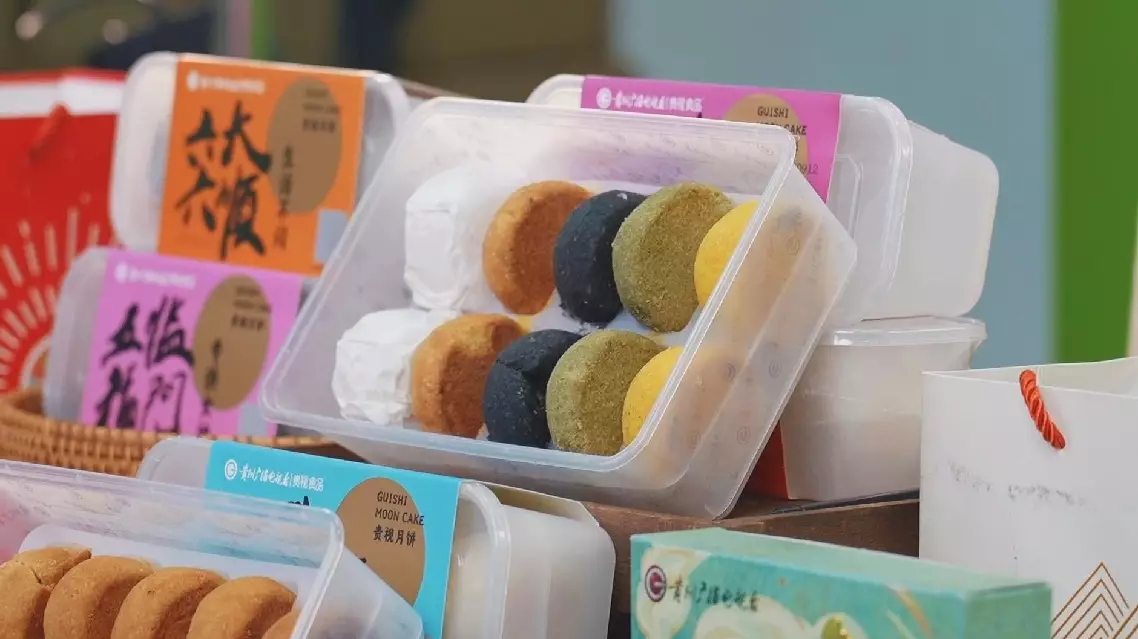
Among the most iconic foods of the festival, mooncakes traditionally symbolize reunion and togetherness. As the market evolves, elaborate gift boxes are giving way to simpler packaging, while individually sold mooncakes are becoming more common. The focus is shifting from mooncakes as gifts to treats people can enjoy themselves.
"Our customers are mainly between 18 and 35 years old. As we understand it, they are quite self-focused. They tend to be more individualistic and care more about their shopping experience. They're less concerned about product labeling," said Tang Lingyan, a planning manager of Xin Yin 1950.
As consumer preferences shift, brands are responding with eye-catching designs, fresh flavors and more intricate details.
"Young consumers possess a keen sense for new flavors and are highly receptive to them. They also care more about whether the ingredients are healthy. So we're bringing ingredients like matcha and rose into mooncakes. For the packaging, we focus on the idea of reunion and creating a festive atmosphere," said Yang Jieting, founder of T.matata Dessert.
Industry data shows that during the 2026 Mid-Autumn Festival season, 50.4 percent of consumers bought mooncakes for their own consumption, reflecting a growing preference for smaller, lighter products.
Health-conscious choices are also gaining ground. Searches for "low-sugar mooncakes" on JD.com surged 320 percent year on year, prompting traditional brands to rethink their recipes and develop products that better fit changing consumer preferences.
"This year, we launched a reduced-sugar version of our red pastry, known as the low-sugar red pastry. It's been very well received, and it's almost sold out," said Zhang Chao, director of Logistics and Services Center at Guizhou TV.
Young Chinese consumers look for mooncakes with unique designs, fresh flavors