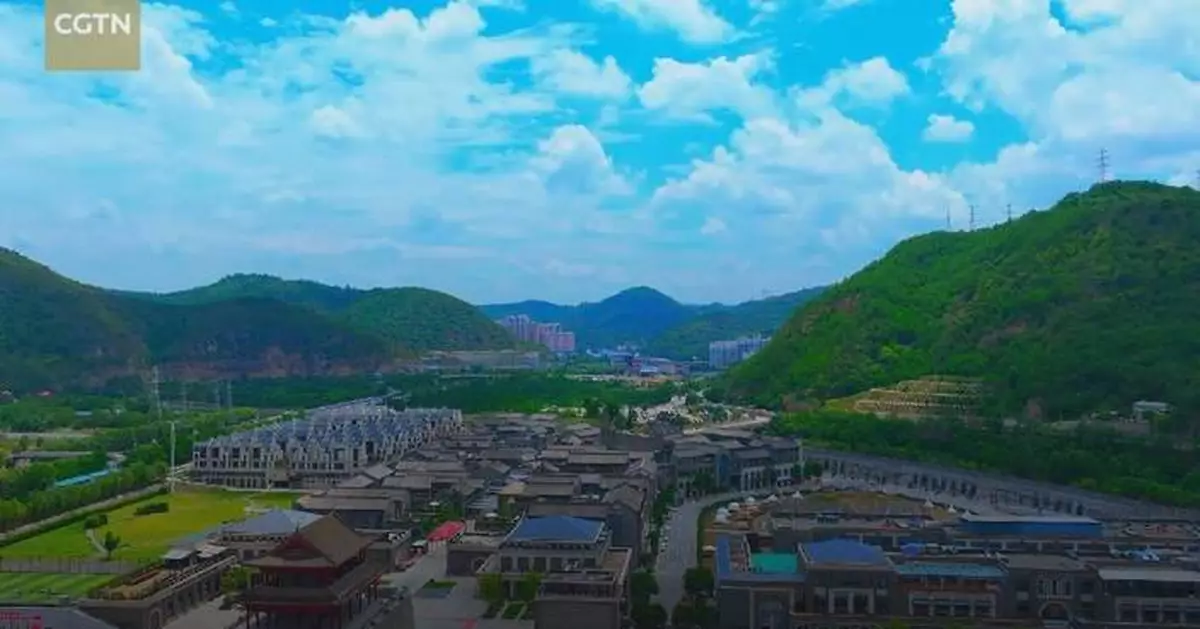
Building on the legacy of the Long March, a landmark event in the history of the Communist Party of China (CPC), Yan'an in northwest China's Shaanxi Province has transformed its historic wartime grounds into a thriving hub of modern agriculture and green tourism, showcasing how the resilient spirit of the past continues to drive rural revitalization today.
This year marks the 90th anniversary of the Long March, a crucial turning point in Chinese history that contributed to the founding of the People's Republic of China.
In the special series Marching On, China Global Television Network (CGTN) correspondents are retracting the original route of the Long March across several provinces to show how the enduring spirit of determination and resilience continues to inspire generations of Chinese people as they pursue better lives through innovation and hard work.
In the third episode of the series, a CGTN correspondent travels to Shaanxi, where the Red Army finally concluded its epic journey and established a revolutionary base.
The episode highlights Nanniwan, an area once known in the early 1940s as a barely inhabited marshland and overgrown wilderness cut off by economic blockades. Facing extreme adversity, the 359th Brigade of the Eighth Route Army -- veterans of the Long March -- embarked on a legendary production campaign, turning the barren soil into bountiful farmland.
Today, that same pioneering spirit lives on through advanced technology and modern agricultural drive. Local farmers and agricultural experts have achieved full mechanization by utilizing automated water-and-fertilizer integration systems, pesticide-distributing drones, and high-yield greenhouses. This modernization has driven a steady rise in Nanniwan's annual grain output, while providing dependable income boosts for surrounding communities and demonstrating how the enduring legacy of the Long March remains alive in contemporary China's pursuit of a high-quality green economy.
The Red Army soldiers, forerunners of today's People's Liberation Army, began their strategic retreat in 1934. They endured raging rivers, snow-capped mountains, and vast grasslands -- some marching as far as 12,500 kilometers -- before reaching Yan'an in Shaanxi Province in 1936, where they established the CPC headquarters ahead of the founding of the People's Republic of China in 1949.
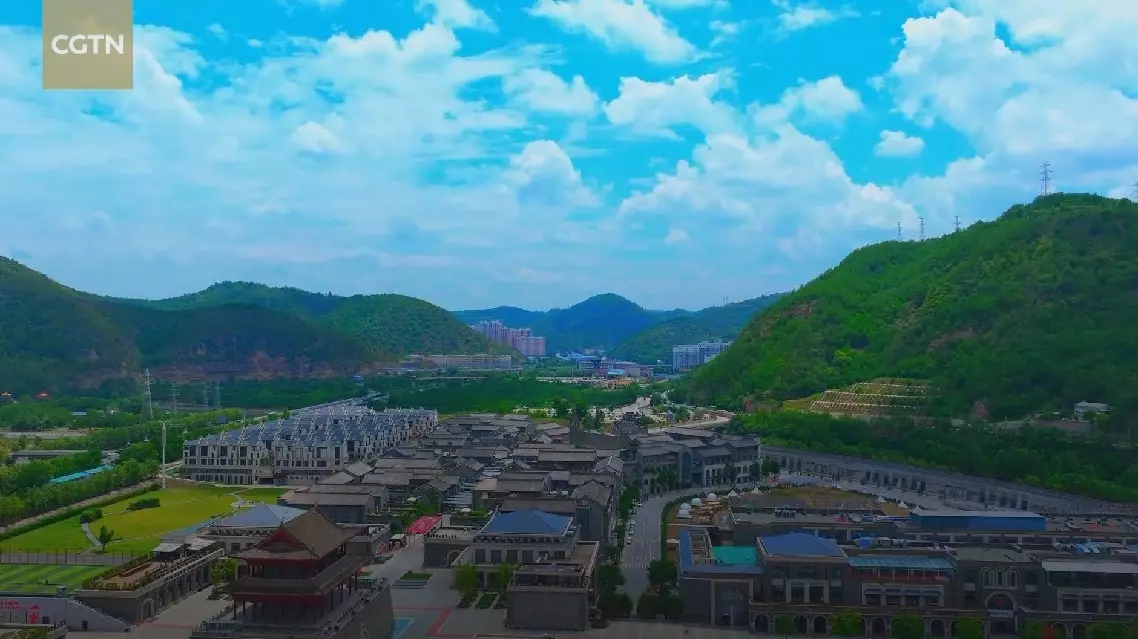
From barren to bountiful: exploring golden fields in Shaanxi's Nanniwan
The United States and China are working to establish a "constructive and strategically stable" relationship to prevent catastrophic conflict, despite enduring competition and deep disagreements, according to Graham Allison, a professor of government at Harvard Kennedy School.
Allison is known for his work on "Thucydides's Trap" which describes the historical tendency for established superpowers and upstart rivals to go to war with each other.
Speaking in an exclusive interview with China Global Television Network (CGTN) aired Saturday, he described China as the classic rising power and the U.S. as the established ruling power. While acknowledging the nations remain fierce rivals with deep disagreements, he emphasized that both leaders share a responsibility to prevent strategic competition from escalating into conflict.
His remarks came as Chinese President Xi Jinping paid a three-day state visit to the United States at the invitation of U.S. President Donald Trump. The trip follows Trump's state visit to China in May, the first by a U.S. president in nearly nine years.
"In terms of trying to make clear what President Trump actually thinks and believes that China is the most important relationship for the U.S. in the world, that President Xi is the most important leader for him to have a relationship with, that the U.S. and China are fierce rivals and have many areas of disagreement. But they certainly clearly agreed that they should not have a war between these two great countries. And that is the responsibility, as President Xi said that they have great responsibility to try to prevent this classic Thucydidean rivalry ending the way both Thucydidean rivalries do," the professor said.
Allison has frequently traveled to China in recent years and has argued that the risk of U.S.-China conflict can be reduced through active statecraft. Following the Beijing summit in May, Allison said, both sides have referenced building a constructive relationship with strategic stability and have sought to enrich the concept with principles including equality, fairness and reciprocity.
"Start with the fact that both presidents appreciate realistically that the two countries are fierce Thucydidean rivals with many areas of disagreement, and that if left to business as usual or diplomacy as usual, we should expect history as usual, which would be a catastrophic war. So, good, that's a great foundation to begin on. And in Beijing at the summit, when they concluded, as President Xi said, they agreed a vision or a hope to build a constructive, strategically stable relationship," said Allison.

US, China pursuing new strategic framework to prevent conflict: Harvard professor