Policy experts and foreign relations analysts say Chinese President Xi Jinping's call for "constructive strategic stability" provides a crucial framework to anchor U.S.-China relations against global volatility, pivoting the world's two largest economies toward expanded cooperation.
The remarks follow the conclusion of Xi's three-day state visit to the United States on Friday. The summit builds on momentum established earlier this year in Beijing, where Xi and U.S. President Donald Trump agreed to foster "constructive strategic stability" over the coming years.
Speaking at a welcome ceremony on the White House South Lawn, President Xi reaffirmed his commitment to guiding relations with a focus on predictability, fairness, and mutual respect.
It is an approach policy observers view as crucial for maintaining steady, constructive momentum.
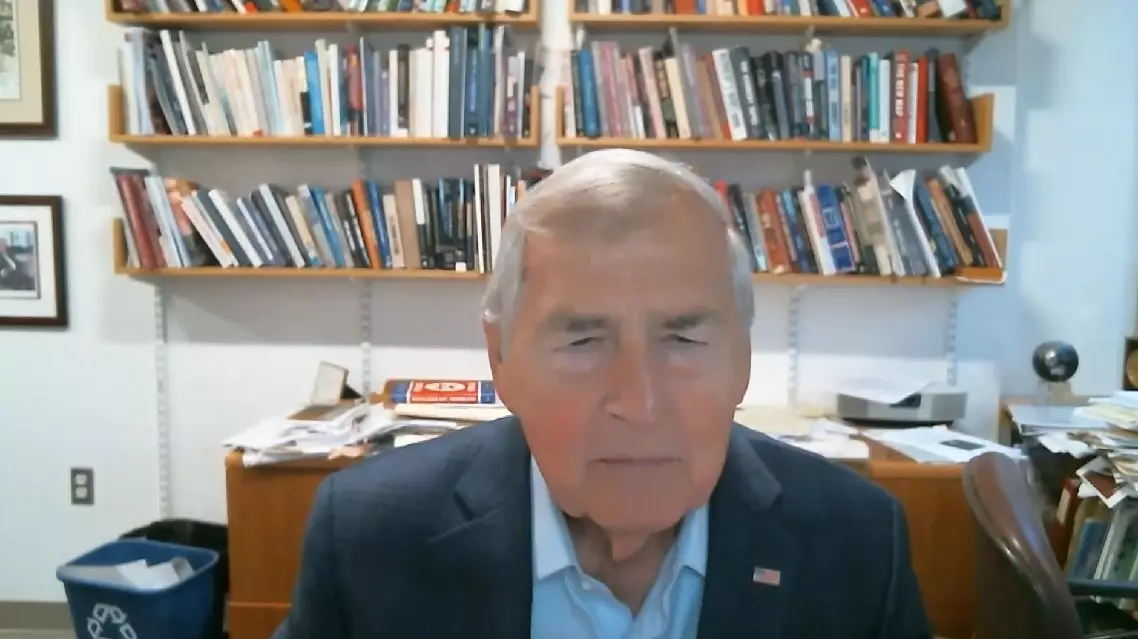
"The best prescription is stability between the U.S. and China, because that's the best way to contain whatever problems will be, and strategic means that's important and long-term," said Robert Lawrence Kuhn, chairman of The Kuhn Foundation.
That long-term focus marks a broader shift away from reactive crisis management toward a more constructive baseline, one defined by core cooperation, managed competition, and stable relations.
Addressing historical anxieties over the inevitable conflict between rising and established powers -- the so-called "Thucydides trap" -- Xi offered a practical formula during his visit of lengthening the cooperation list, and shortening the problem list.
It is a pragmatic approach that analysts say unlocks tangible benefits for both nations across shared global priorities.
"There are a whole range of areas where the countries, the United States and China can work together and each advance its interests as a result of doing so. And that's a very positive development in this relationship against the backdrop of a period of great instability, volatility, and risk of going off the rails," said David Firestein, president and CEO of the George H. W. Bush Foundation for U.S.-China Relations.
Analysts also noted that strategic stability relies on a dual engine of practical policy coordination alongside deeply rooted public engagement. While cooperation on artificial intelligence (AI), trade, and law enforcement builds functional alignment, direct people-to-people ties create the underlying trust required to sustain high-level diplomacy.
Highlighting people-to-people links as the foundation of bilateral trust, Xi noted that two centuries of historical ties continue to nurture heart-to-heart bonds. To deepen those connections, he announced an initiative inviting 100,000 young Americans to study in China over five years, complemented by the upcoming arrival of two giant pandas at the Atlanta Zoo.
"People-to-people exchange is really important. China is making all these efforts, trying to build up the trust and bond between the young people of China and the U.S.," said Wang Huiyao, founder and president of the Center for China and Globalization.

China's strategic framework reshapes China-US relations: experts