China has been extending express delivery services to remote rural communities in its central and western regions.
Nearly 3,000 remote villages have gained express delivery access via the country's postal network since this January after the State Post Bureau and China Post Group launched a pilot program aimed at bridging the "last-mile" delivery gap in rural areas where private courier services are often unavailable or economically unviable.
As of the end of August, 2,939 villages across the 17 pilot counties had gained express delivery access through the postal network's "backstop" service, accounting for the majority of the 3,960 villages included in the program, according to the State Post Bureau on Monday.
To support the program, China Post Group formulated tailored plans for each county and allocated 210 million yuan (about 31.4 million U.S. dollars) in investment, including over 21 million yuan in special construction funds for the pilot counties.
The motorization rate of rural mail delivery has surged from 62 percent to 97 percent.
More and more villagers can now receive parcels conveniently without even stepping out of their villages as the program proceeds.
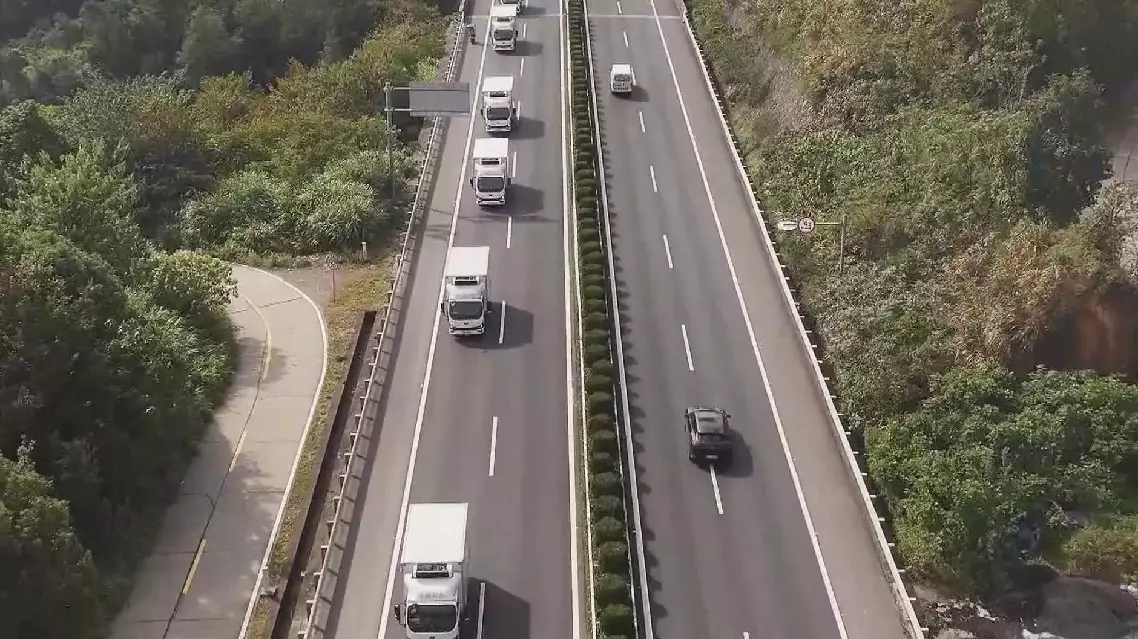
China extends express delivery services to remote rural communities
NIO's manufacturing base in Hefei, east China's Anhui Province, the country’s leading new energy vehicle startup brand, showcases advanced intelligent manufacturing with a highly flexible assembly line that breaks the limitations of traditional fixed-mode production, boosting production flexibility, operational efficiency, and product quality.
At NIO's Second Advanced Manufacturing Base, vehicles with entirely different models and designs are assembled alternately on the same line. This flexible system supports millions of personalized configuration combinations, spanning a wide range of interiors and accessories to precisely meet the growing demand for customization among global EV consumers.
Besides flexible production, the plant's original zero-kilometer logistics model achieves a major breakthrough in supply chain efficiency. A dedicated connecting corridor links the vehicle assembly workshop directly to supporting component suppliers. Core auto parts such as vehicle seats are delivered to the assembly line in real time via conveyor belts, completely replacing traditional truck transportation. The innovative model substantially cuts intermediate logistics costs and greatly improves overall production efficiency and stability.
"Our automated and digital capabilities enable the plant to roll out one finished vehicle every minute. The workshop is equipped with 1,015 intelligent robots, and all our connections are 100 percent automated, effectively ensuring the safety of our vehicles and the quality of our products," said Yin Liang, a production supervisor.
In addition, AI-driven quality inspection acts as the final and critical safeguard for vehicle quality. The plant's inspection workshop deploys an unmanned detection system integrated with cloud computing, vehicle-mounted AI agents, and 5G technology.
Without human intervention or exposed detection devices, the intelligent system autonomously completes over 1,000 professional inspection items in just three minutes, including door actuation tests, air conditioning and seat functionality checks, and lighting system calibration.
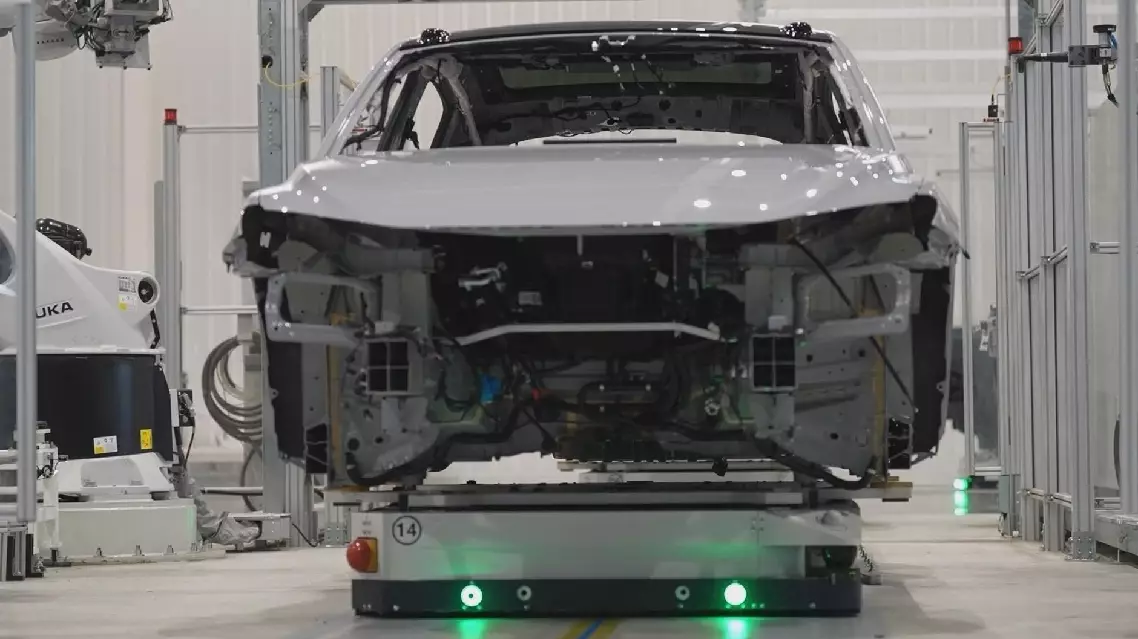
NIO’s Hefei plant highlights advanced, flexible assembly line