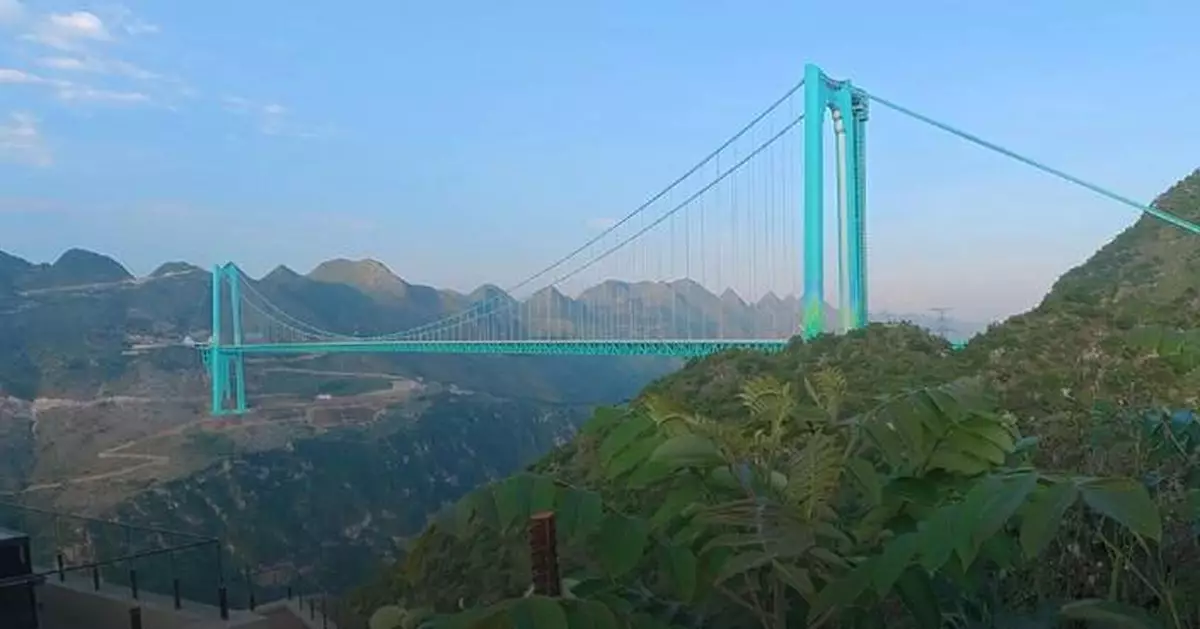
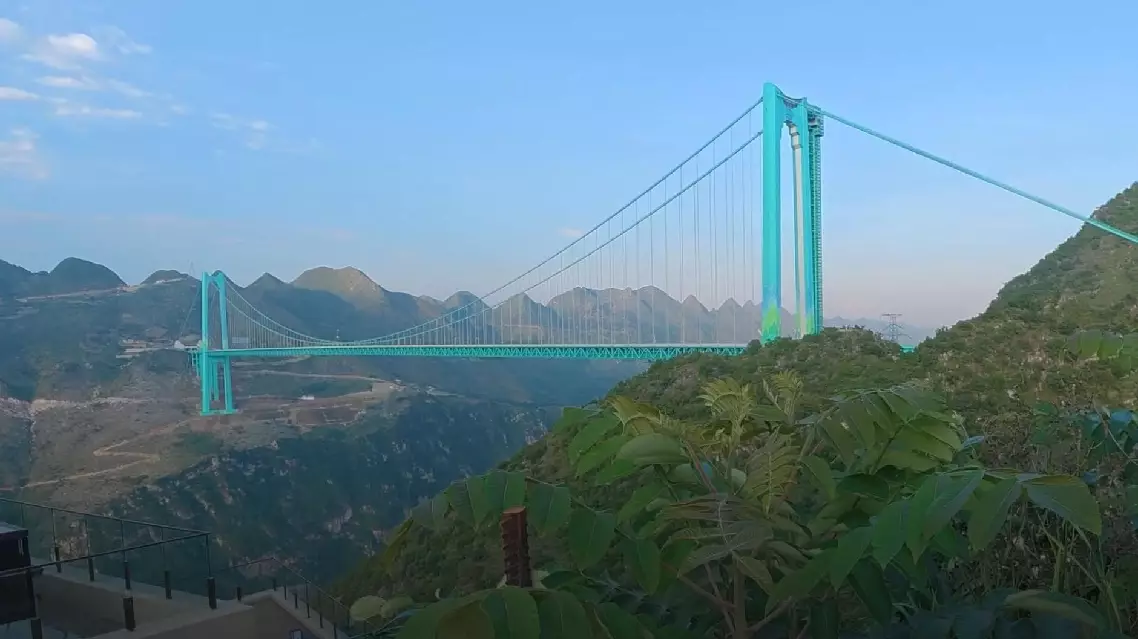
In a special series on the Long March, a landmark event in the history of the Communist Party of China (CPC), the Huajiang Gorge Bridge in southwest China's Guizhou Province, the world's highest bridge, has demonstrated how the Long March spirit lives on.
This year marks the 90th anniversary of the Long March, a crucial turning point in Chinese history which contributed to the founding of the People's Republic of China.
In the special series Marching On, China Global Television (CGTN) correspondents retrace the original route of the Long March across several provinces to find out that the Long March's enduring spirit—marked by determination and resilience—continues to inspire generations of Chinese people as they pursue better lives through innovation and hard work.
In the first episode of the series, a CGTN correspondent kicks off the journey across rugged hills and river‑carved valleys in Guizhou Province, a key region along the Long March route. He stands in awe atop the Huajiang Gorge Bridge, completed in 2025 by local engineers and workers. With a deck soaring 625 meters above the river, the bridge is a testament to the enduring spirit of overcoming adversity.
The remarkable transformation of mountainous Guizhou—with a nearly twelvefold increase in per capita GDP over the past two decades—reflects the enduring legacy of the Long March spirit, which remains evident in all aspects of contemporary Chinese life.
The Red Army soldiers, forerunners of today's People's Liberation Army, began their strategic retreat in 1934. They endured raging rivers, snow-capped mountains, and vast grasslands—some marching as far as 12,500 kilometers—before finally reaching Yan'an in Shaanxi Province in 1936, where they established the CPC headquarters before the People's Republic of China was founded in 1949.
From barriers to bridges: unpacking Long March legacy in Guizhou
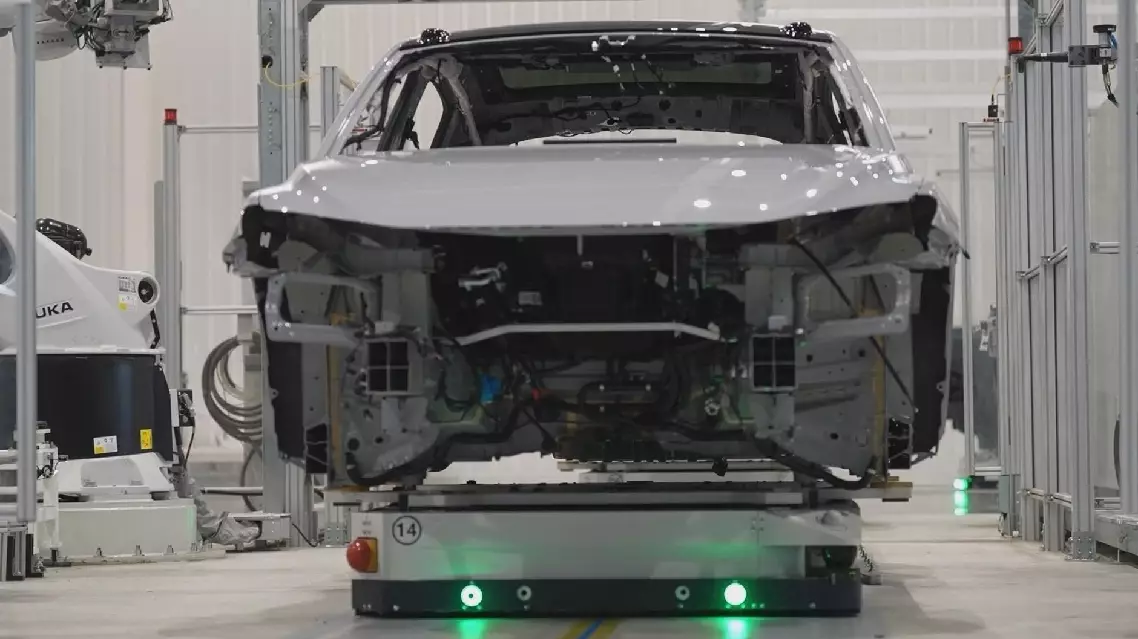
NIO's manufacturing base in Hefei, east China's Anhui Province, the country’s leading new energy vehicle startup brand, showcases advanced intelligent manufacturing with a highly flexible assembly line that breaks the limitations of traditional fixed-mode production, boosting production flexibility, operational efficiency, and product quality.
At NIO's Second Advanced Manufacturing Base, vehicles with entirely different models and designs are assembled alternately on the same line. This flexible system supports millions of personalized configuration combinations, spanning a wide range of interiors and accessories to precisely meet the growing demand for customization among global EV consumers.
Besides flexible production, the plant's original zero-kilometer logistics model achieves a major breakthrough in supply chain efficiency. A dedicated connecting corridor links the vehicle assembly workshop directly to supporting component suppliers. Core auto parts such as vehicle seats are delivered to the assembly line in real time via conveyor belts, completely replacing traditional truck transportation. The innovative model substantially cuts intermediate logistics costs and greatly improves overall production efficiency and stability.
"Our automated and digital capabilities enable the plant to roll out one finished vehicle every minute. The workshop is equipped with 1,015 intelligent robots, and all our connections are 100 percent automated, effectively ensuring the safety of our vehicles and the quality of our products," said Yin Liang, a production supervisor.
In addition, AI-driven quality inspection acts as the final and critical safeguard for vehicle quality. The plant's inspection workshop deploys an unmanned detection system integrated with cloud computing, vehicle-mounted AI agents, and 5G technology.
Without human intervention or exposed detection devices, the intelligent system autonomously completes over 1,000 professional inspection items in just three minutes, including door actuation tests, air conditioning and seat functionality checks, and lighting system calibration.
NIO’s Hefei plant highlights advanced, flexible assembly line