JEFFERSON CITY, Mo. (AP) — A long-running legal fight over Missouri’s congressional map took another turn Monday when a federal appeals panel ruled in favor of new districts backed by President Donald Trump, even though the U.S. Supreme Court has blocked those districts from being used in the November election.
A three-judge panel of the 8th U.S. Circuit Court of Appeals said Missouri should use the new Republican-drawn U.S. House districts in the November election, just as the state did in its August primary. To revert to its prior districts for the general election would violate the U.S. Constitution, the appeals judges said.
The appeals panel directed a lower court judge to issue a permanent injunction against using anything other than the map favored by Trump. But the ruling has no immediate impact. That’s because the panel also ordered the judge to delay the effect of the order for one week to allow time for an appeal. The judge quickly did so.
Opponents of the new map said Monday that they will file an emergency appeal to the U.S. Supreme Court.
The Supreme Court already has twice sided against the Trump-backed map. Earlier this month, it blocked enforcement of a lower court order favoring the new map pending a potential appeal and eventual decision by the high court.
Missouri currently is set to run its November election with the same congressional districts it used in 2024 and 2022, following prior decisions by both the Missouri Supreme Court and the U.S. Supreme Court.
Local elections officials already have sent absentee ballots to overseas citizens and military voters using the 2022 districts. State law requires absentee ballots to be available to all other voters by Tuesday.
Local elections officials theoretically could scramble to change ballots again and could send replacements for ones already distributed. But if voters already have cast an absentee ballot, they cannot change their vote — even if the district boundaries have changed.
Miller County Clerk Clinton Jenkins said he mailed an absentee ballot Friday to a Missouri voter living in Australia and also sent ballots to other overseas voters. But he suggested that other people “wait a little deeper into the absentee period, just in case” the congressional district boundaries get swapped again.
To try to change districts at this late date would be “practically impossible” and cost hundreds of thousands of dollars, the Missouri Association of County Clerks and Election Authorities had told appeals judges in a legal filing.
But an attorney representing Republicans who sued — including U.S. Rep. Bob Onder and state Sen. Rick Brattin, a congressional candidate — suggested during arguments last Thursday that there still is time to revert to the Trump-backed map.
The appeals panel agreed, pointing to other cases in which courts have ordered changes after absentee ballots already had been distributed to overseas citizens and military voters.
The group People Not Politicians, which spearheaded a referendum petition to put the new map to a statewide vote on the November ballot, said it will appeal the latest decision to the U.S. Supreme Court.
“Ballots have been printed, and Missourians have already voted. Thousands more will vote before this order seeks to take effect,” Richard von Glahn, executive director of People Not Politicians Missouri, said in a statement. “Officials should stop wasting taxpayers’ money on pointless legal action and instead focus on administering our elections.”
The 8th Circuit decision puts the federal court at odds with Missouri's top court.
“The Constitution does not permit Missouri to use a different congressional district map in the November 2026 general election than it used in the August 2026 primary election,” the appeals panel wrote in its decision.
The panel consists of Judge James Loken, an appointee of former President George H.W. Bush, and two appointees of Trump — Judges David Stras and Justin Smith. Prior to his June appointment, Smith was an attorney who represented Trump as he unsuccessfully appealed a $5 million jury verdict in a lawsuit filed by the writer E. Jean Carroll to the U.S. Supreme Court.
Earlier this month, the Missouri Supreme Court said the state forbids the use of districts passed last September because opponents submitted thousands of petition signatures in December calling for a statewide vote on the new districts.
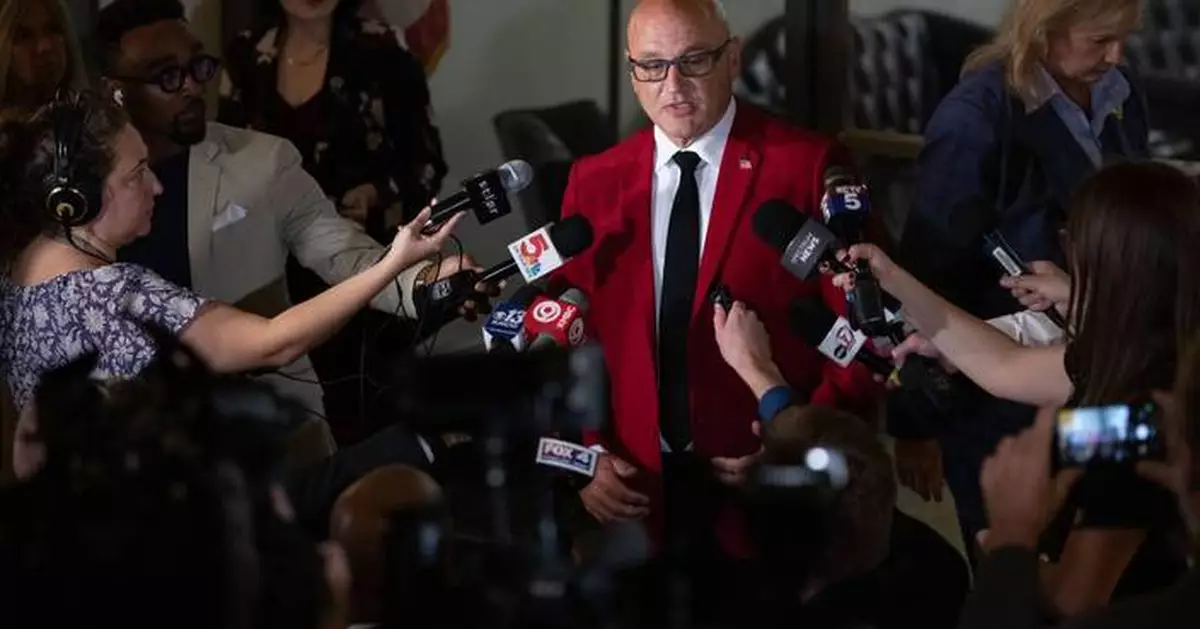
Republican Secretary of State Denny Hoskins waited until August — on the same day that the primary was held under the new districts — to reject the petition. He asserted that referendum petitions aren’t allowed for congressional redistricting.
The Missouri Supreme Court reversed Hoskins’ finding, ruling that the state must use the districts approved in 2022 for the November election. The high court then temporarily held Hoskins in contempt when he directed local election officials to use the 2025 map after a federal district court order favoring it.
The new congressional map backed by Trump significantly reshapes a Kansas City-based district held by Democratic Rep. Emanuel Cleaver. Republicans hope the map could help them win seven of the state’s eight House seats — one more than they currently hold.
Cleaver was unopposed in the Democratic primary, and Brattin won a multi-way Republican primary. Brattin praised Monday's appeals panel decision, saying that switching districts after the primary “defies common sense and undermines the entire electoral process.”
About 59% of the 5th District's potential voters are new under the revised map, which also changes several other districts. All told, more than a million potential Missouri voters, or nearly 1 in 4 voters statewide, are affected by the redistricting, according to an Associated Press estimate.
Missouri’s redistricting battle has been the longest and most complex among roughly a dozen states that sought to change their U.S. House districts over the past year. Districts are usually redrawn at the start of each decade, after a census. But Trump spurred a spate of mid-decade redistricting last year when he urged Republican-led states to redraw districts to gain an edge in the midterm elections that will determine control of Congress.
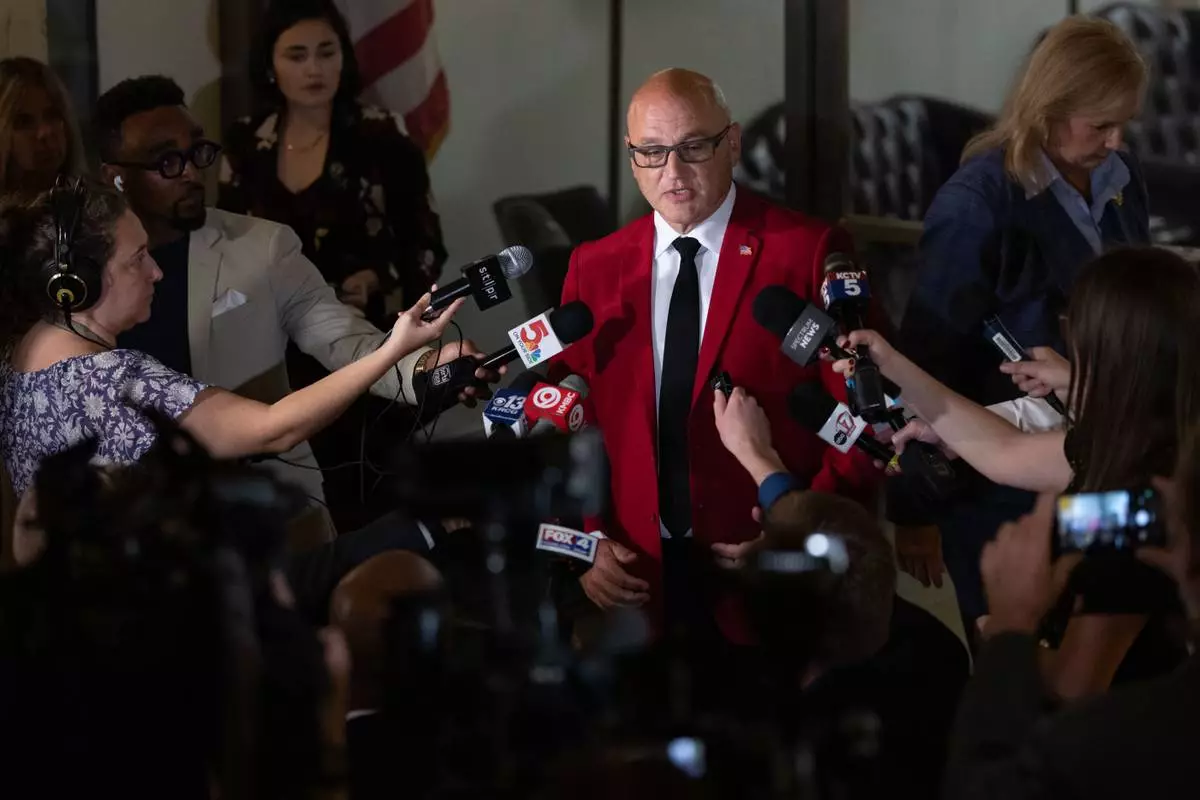
Missouri Secretary of State Denny Hoskins speaks to members of the press after his contempt hearing at the Missouri Supreme Court in Jefferson City, Mo., Thursday, Sept. 10, 2026. (Liz Rymarev/St. Louis Post-Dispatch via AP, Pool)
CHICAGO (AP) — Twelve states and Hollywood writers challenging Paramount’s buyout of Warner Bros. Discovery agreed to settle their lawsuits on Monday, effectively paving the way for the $81 billion mega merger to cross the finish line, with some new commitments from the company.
The blockbuster deal will still vastly reshape Hollywood — bringing together two of the “big five” remaining studios, key TV networks like CBS and CNN and streaming platforms HBO Max and Paramount+, as well as decades-old libraries with titles ranging from “Harry Potter” to “Top Gun.”
But among terms of Monday’s agreement announced by California Attorney General Rob Bonta — who led the states' case — Skydance-owned Paramount pledged to increase film production in the U.S., commit millions of dollars to a fund to support workers displaced by the merger and create new monitoring of the editorial independence of the company’s news operations.
The settlement still needs a final sign-off by a judge.
Paramount CEO David Ellison welcomed the terms reached with both the states and the Writers Guild of America on Monday, which he said marks “complete clearance” for his company's merger with Warner — reiterating that such a combo will “build a stronger Hollywood.”
Critics, however, decried the settlement terms as too weak and accused the state attorneys general of capitulating to corporate pressure. Many saw the litigation as the last guardrail from keeping a combined Paramount-Warner from becoming a reality.
Talks were contentious for months — and, despite new remedies announced Monday, Bonta and other top state prosecutors who sued said that they still didn't think the companies should merge.
Politics have also surrounded much of Paramount’s quest for Warner. Many eyes are on the billionaire Ellison family's relationship with President Donald Trump and the future of assets like CNN, which the Republican administration barred from the White House over what Trump called unfavorable coverage.
The coalition of states — which, beyond California, also includes entertainment heavyweight New York — sued to block the merger in July, alleging it would “extinguish competition” and lead to fewer choices for consumers, particularly movie theatergoers and cable customers.
In Monday's agreement, the states said they had secured a handful of “court enforceable” commitments from Paramount — including pledges to increase domestic film production over the next five years by spending at least an additional $1.5 billion, or $300 million per year, and commit another $47.5 million to help fund training and career development for workers displaced by the merger.
Paramount also must make good on its promise to release 30 films each year for the next two years — and 32 films in each of the three years after that. If it fails to do so, the states say it will be required to divest from Miramax Studios and pay $30 million for each missed film toward health care and retirement trust funds associated with the Writers Guild of America and other industry unions.
When it comes to cable, Monday's settlement orders the company to negotiate deals for current Paramount-owned and Warner-owned basic channels separately for the next five years, which the states say will help keep consumer prices down. The company must also form a “News Editorial Independence Board” monitoring news operations at CBS and CNN.
Bonta said in a news conference in Los Angeles the settlement was about “protecting people’s careers, the lives they’ve built here in California, the livelihoods their families rely on," while maintaining it was not a vote for the merger.
The Writers Guild of America, which filed its own lawsuit in July challenging the merger on the grounds it specifically harms Hollywood writers, separately confirmed that it settled its case, too — concluding that it couldn't continue its legal fight alone.
“We continue to believe the merger will cause damage to writers and the industry at large," the WGA said in a statement. The union maintained that as a nonprofit “with no backing from government enforcers,” the complex litigation would have cost millions of dollars.
New York Attorney General Letitia James, who helped secure Paramount’s commitment to put $17.5 million in the Writers Guild health care fund, said she will monitor the company’s activities “to ensure they are following this agreement and the law.”
Paramount previously agreed to delay its transaction well into next year so the challenges could make their way through court. But it soon called for a settlement — notably as it looked increasingly likely that the price tag for Warner could get a lot more expensive. Paramount had promised to pay shareholders “ticking” fee compensation amounting to $7 million each day the deal was not closed past Sept. 30.
Including billions of dollars in debt, Paramount’s buyout of Warner is currently valued at about $111 billion based on outstanding shares.
Over the weekend, a handful of lawmakers including Democratic Sens. Elizabeth Warren and Cory Booker urged the states to keep up their fight. Other critics decried the deal Monday while warning what further consolidation could mean in an industry controlled by just a few major players.
“Today, billionaires have yet again bribed, censored, and bullied their way to the top,” Alvaro Bedoya, senior adviser at the American Economic Liberties Project and a former commissioner of the Federal Trade Commission, said in a statement. “Layoffs will follow. People from L.A. to Atlanta will lose their jobs, small businesses will lose their contracts, your cable bill and movie ticket will be even more expensive.”
Bedoya claimed Bonta and California Gov. Gavin Newsom caved to pressure — particularly after Paramount reportedly threatened to leave the state amid the antitrust battle.
But in a statement Monday, Ellison said that the newly combined company would be based in Los Angeles.
“We aren’t going anywhere. Our history is here and this is where our future is being built," he said.
Paramount never publicly commented on a potential move from California, and Monday's settlement doesn't specify that its headquarters stay in the state. But over the summer, Tennessee officials wrote Ellison a letter encouraging Paramount to relocate there.
Newsom said the deal was a win for workers and California’s creative economy.
“It protects California jobs while putting a safeguard in place to help preserve editorial independence for two of America’s most important news organizations,” Newsom said in a statement.
Connecticut Attorney General William Tong, whose state was among those filing suit, said his main goal had been to protect the editorial independence of CNN and CBS News and that he wanted to see a full divestiture of the two news organizations.
A week ago, Tong said, Paramount refused to agree to any editorial independence for the news outlets.
“We wanted to save ethical and independent journalism and news,” he said in a statement.
Tong and others stressed that it was an uphill battle after the Trump administration decided against intervening. In June, the U.S. Justice Department released a lengthy statement supporting the merger.
“The complete abdication of the federal government’s enforcement role in this fight left states with one arm tied behind our backs," Tong said.
AP Writers Sophie Austin in Sacramento and Dave Collins in Hartford contributed. Sisak reported from New York.
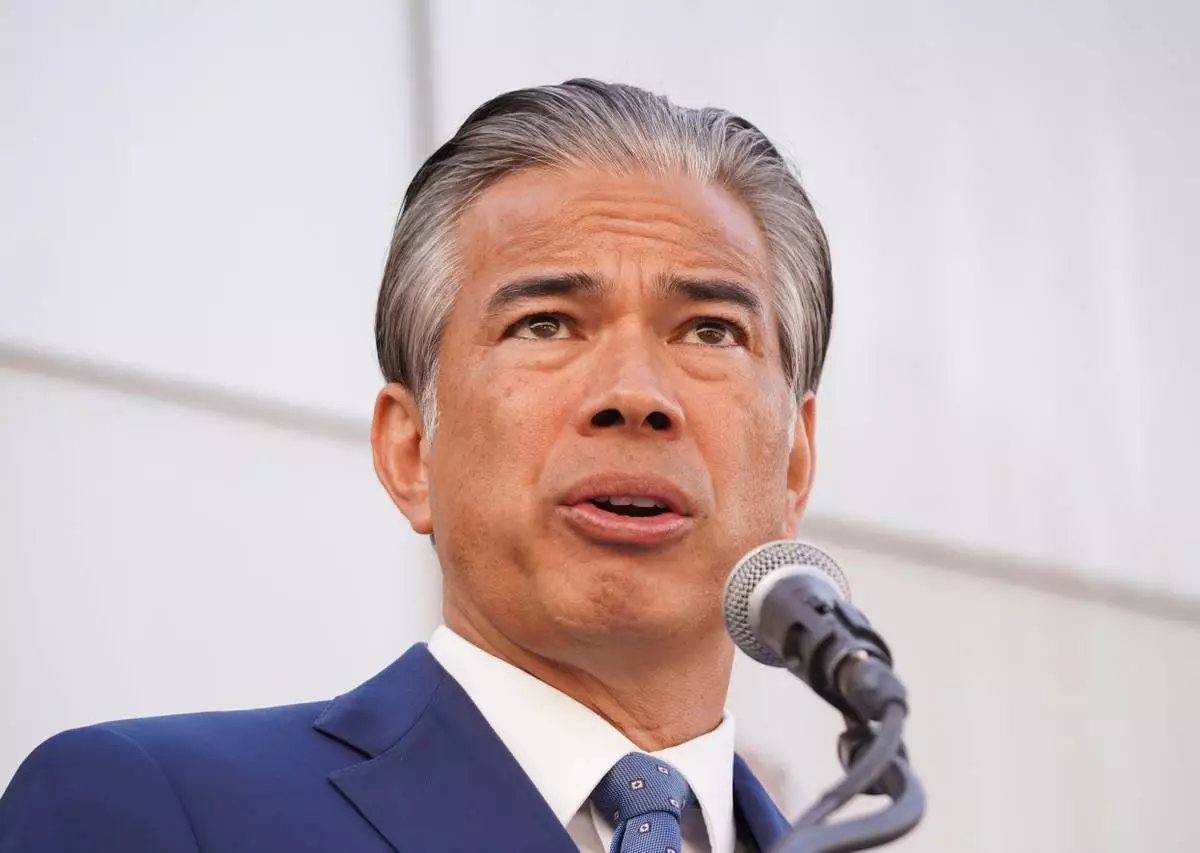
FILE - California Attorney General Rob Bonta speaks during a press conference, Oct. 8, 2024, in San Francisco. (AP Photo/Minh Connors, File)

FILE - A CinemaCon attendee holds a pin expressing opposition to the proposed Paramount-Warner Bros. Discovery merger during CinemaCon 2026, April 14, 2026, at Caesars Palace, in Las Vegas. (AP Photo/Chris Pizzello, File)
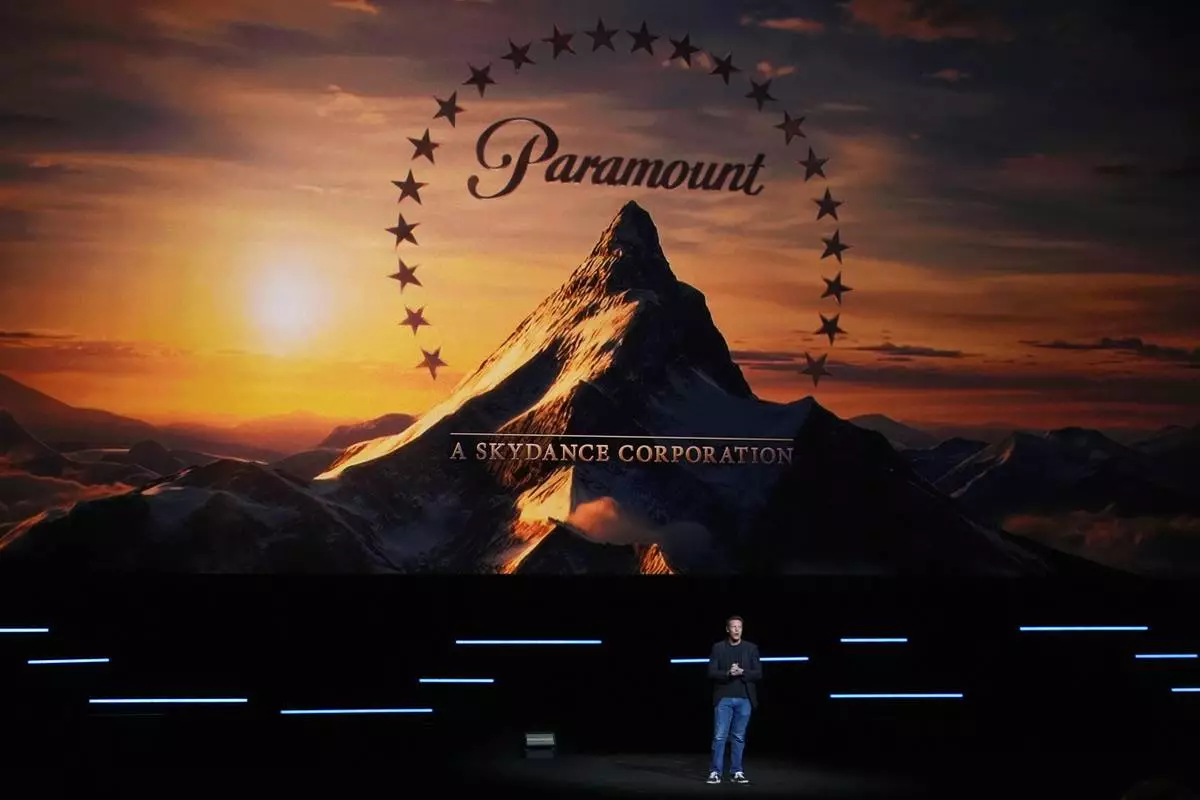
FILE - David Ellison, CEO of Paramount Skydance, speaks during the Paramount Pictures presentation at CinemaCon on April 16, 2026, at Caesars Palace in Las Vegas. (AP Photo/Chris Pizzello, File)
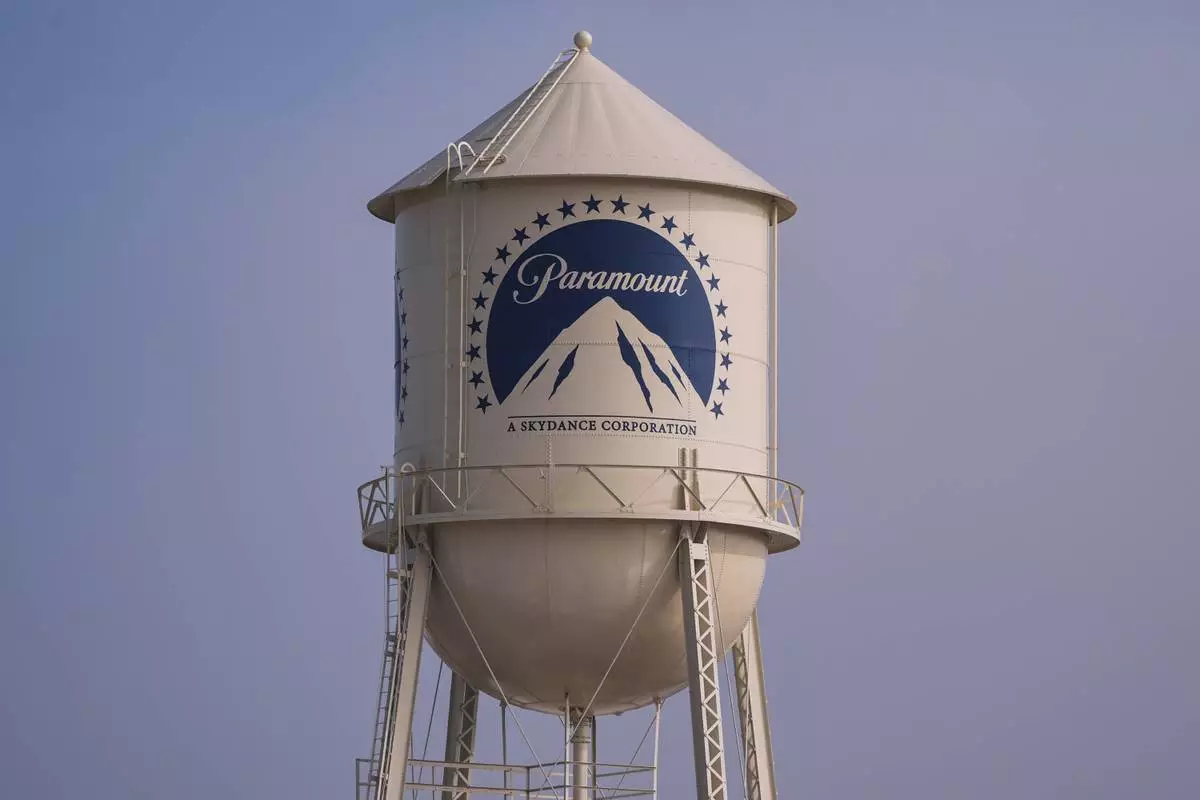
FILE - The Paramount Pictures water tower is seen in Los Angeles on Dec. 17, 2025. (AP Photo/Jae C. Hong, File)