INDIANPOOLIS (AP) — Indianapolis Colts coach Shane Steichen chose the safe play in overtime Sunday night.
It proved costly then and it could prove costly later if the playoffs are involved.
Click to Gallery
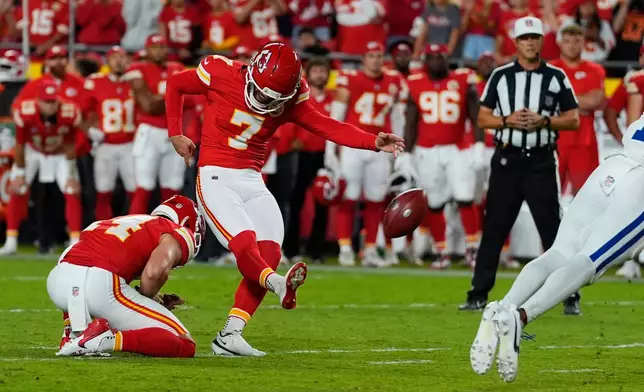
Kansas City Chiefs place kicker Harrison Butker makes a field goal to defeat the Indianapolis Colts in overtime of an NFL football game Sunday, Sept. 20, 2026, in Kansas City, Mo. (AP Photo/Charlie Riedel)
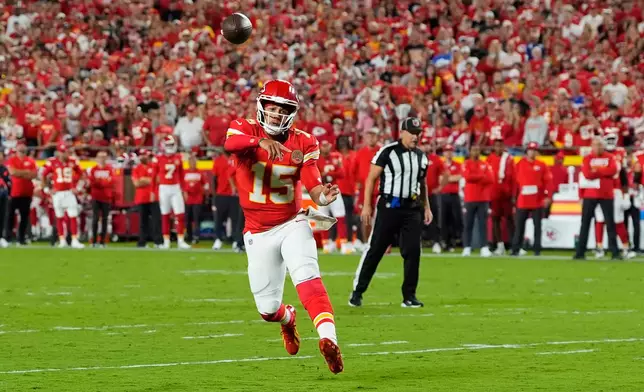
Kansas City Chiefs quarterback Patrick Mahomes throws a touchdown pass to wide receiver Xavier Worthy during the first half of an NFL football game against the Indianapolis Colts Sunday, Sept. 20, 2026, in Kansas City, Mo. (AP Photo/Charlie Riedel)
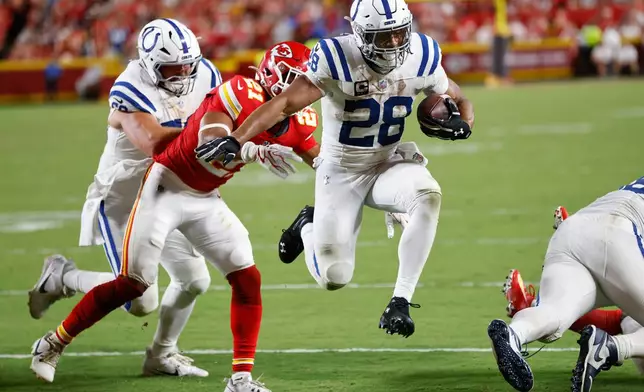
Indianapolis Colts running back Jonathan Taylor (28) scores on a touchdown run past Kansas City Chiefs safety Jaden Hicks (21) during the second half of an NFL football game Sunday, Sept. 20, 2026, in Kansas City, Mo. (AP Photo/Colin E. Braley)
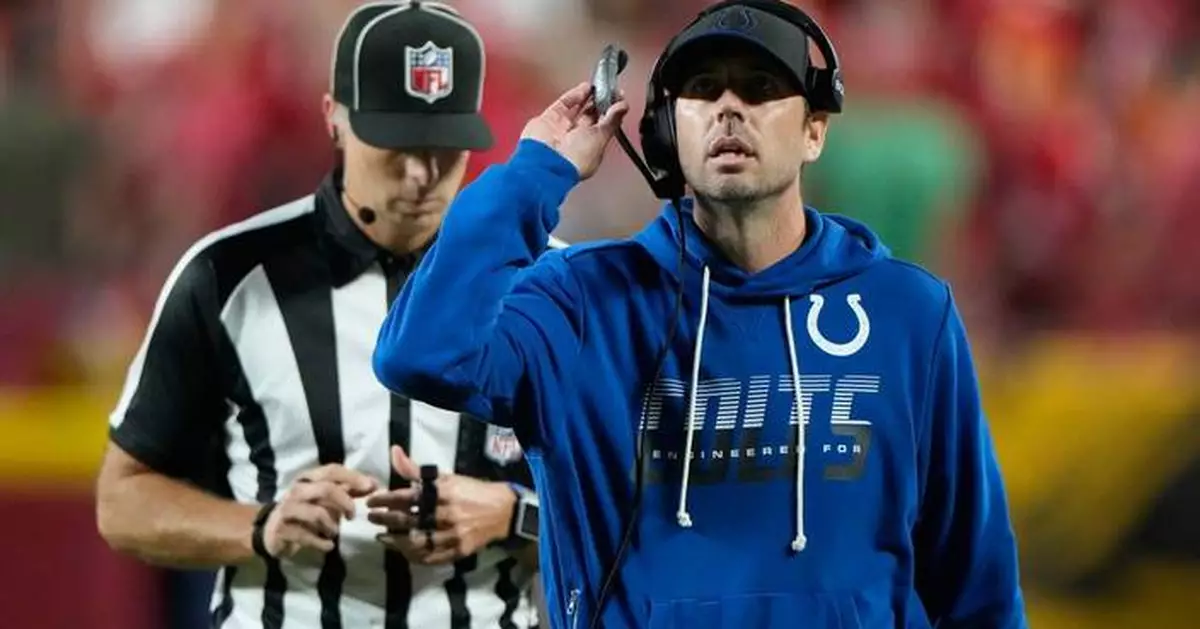
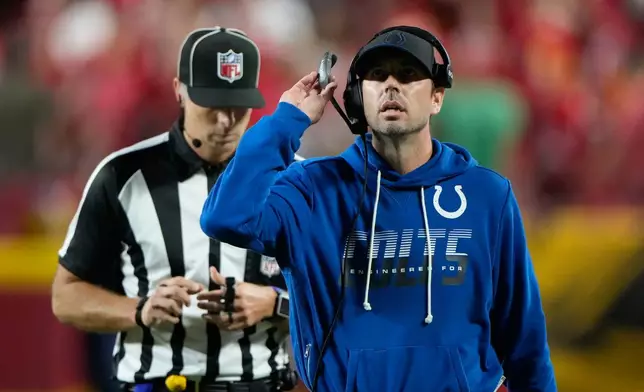
Indianapolis Colts head coach Shane Steichen looks at a replay during a review during overtime of an NFL football game against the Kansas City Chiefs Sunday, Sept. 20, 2026, in Kansas City, Mo. (AP Photo/Charlie Riedel)
After deciding to start overtime by kicking off, holding the Chiefs to a field goal and then moving inside the Chiefs 20-yard line, Steichen made three conservative play calls before settling for the tying field goal and giving two-time league MVP and three-time Super Bowl MVP Patrick Mahomes one last chance to win the game.
Naturally, he did.
Mahomes quickly moved Kansas City (2-0) into position for Harrison Butker's 40-yard field goal as time expired for a second straight overtime loss at Arrowhead Stadium.
Afterward, Steichen explained he wanted the Colts' top offensive playmaker, Jonathan Taylor, to close out the game.
“We were trying to score there," Steichen said Monday. "The thought process was J.T. there on that, we had four downs and then you had the second down situation. I thought we could pop a run, get it to third-and-manageable and then, you know, you have two downs to go for it. It didn't work out in that situation, and any time you don't get the results you want, obviously, you second-guess things.”
Steichen considered going for the winning touchdown on fourth-and-8 from the Chiefs 15. He kept the offense on the field, hoping to get a favorable look from Kansas City's defense, and when it didn't happen, Indy took a delay of game penalty and kicked the 38-yard field goal with 3:11 to go.
Mahomes responded by doing what he does best — producing game-winning drives.
The result: Indy (0-2) extended the league's longest active losing streak to nine, and the decisions won't help Steichen's stock in a season team co-owner Carlie Irsay-Gordon has described as critical for Steichen and general manager Chris Ballard.
Some Colts fans compared it to Steichen's decision to punt from his 40 on the first possession of overtime last November at Kansas City. Mahomes did the same thing then, leading the Chiefs on an 87-yard drive to set up Butker's 27-yard game winning kick.
But whether it was last season or Sunday night, Steichen did what he thought was right and he didn't back down from those decisions Monday.
“It's a results-based, a results-driven league and if you don't get the results you want, obviously, you're going to look back on some things that didn't go your way," he said. “That's part of it, that's the NFL. So in those situations, we've just got to go out and do our job the best we can do, to go find a way to win.”
Josh Downs. Taylor had another terrific game with 132 total yards rushing and two TD runs, but Downs delivered while being pressed into the No. 1 receiver's role because of Alec Pierce's heal injury. Downs caught seven of the nine passes thrown his way for 72 yards and helped give the offense some much-needed balance.
Tackling. Indy has given up 74 points in its first two games and has allowed more than 500 yards in each game, which ranks among the worst in league history. The problem in Week 1 seemed to be misalignments in part because safety Camryn Bynum was the on-field play-caller. The problem Sunday night, they needed extra tacklers to corral RBs Kenneth Walker III and Emmett Johnson or TE Travis Kelce.
Laquon Treadwell. The receiver nearly became the goat of the game when he appeared to fumble a 48-yard completion that the Chiefs recovered. But a replay review overturned the fumble and nearly turned Treadwell into the hero. That wasn't his only contribution. He had a 10-yard reception on Indy's first TD drive and drew a 26-yard pass interference penalty to set up a field goal.
Keenan Allen. The six-time Pro Bowler finished with just one reception for 5 yards despite being targeted five times. But it wasn't just the numbers. Allen failed to wrestle the ball away from Kristian Fulton on Indy's second series, which led to a Chiefs TD. He also failed to catch two third down passes.
Pierce did not return after leaving in the first half, and Steichen said Monday that the X-rays came back negative, but that he did aggravate something in the same leg he had ankle surgery in March. CB Charvarius Ward left in the second half with groin tightness, but Steichen said he would know more about Ward's availability later this week.
191 — The Colts defense has allowed 1,029 yards through games — 191 yards more than every team other than the Detroit Lions, who have allowed 915 yards this season. Carolina ranks 30th with 838 yards, entering Monday.
The offense and special teams looked markedly better in Week 2, and the defense also improved despite giving up so much yardage against yet another league MVP. But it's still not good enough. Indy must continue to work on the basics — tackling, coverage and proper alignments — to avoid yet another loss against the winless Texans.
See AP’s full NFL coverage here
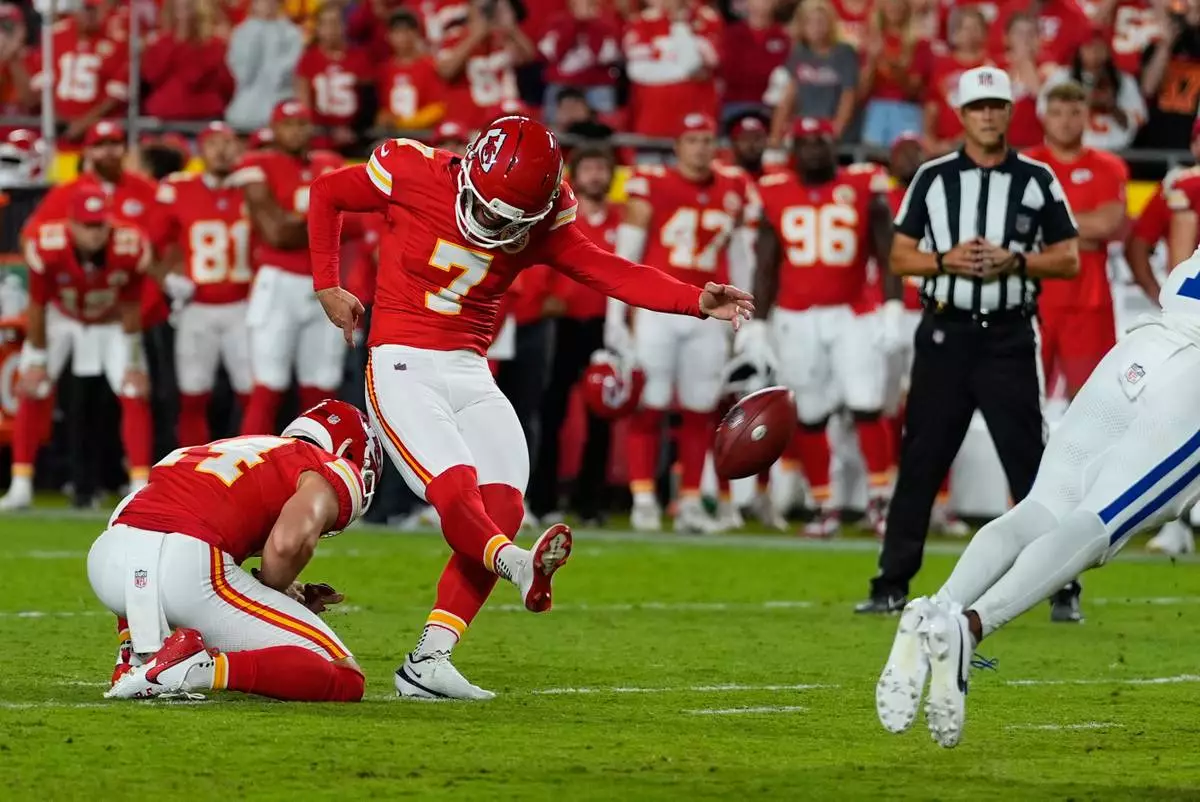
Kansas City Chiefs place kicker Harrison Butker makes a field goal to defeat the Indianapolis Colts in overtime of an NFL football game Sunday, Sept. 20, 2026, in Kansas City, Mo. (AP Photo/Charlie Riedel)
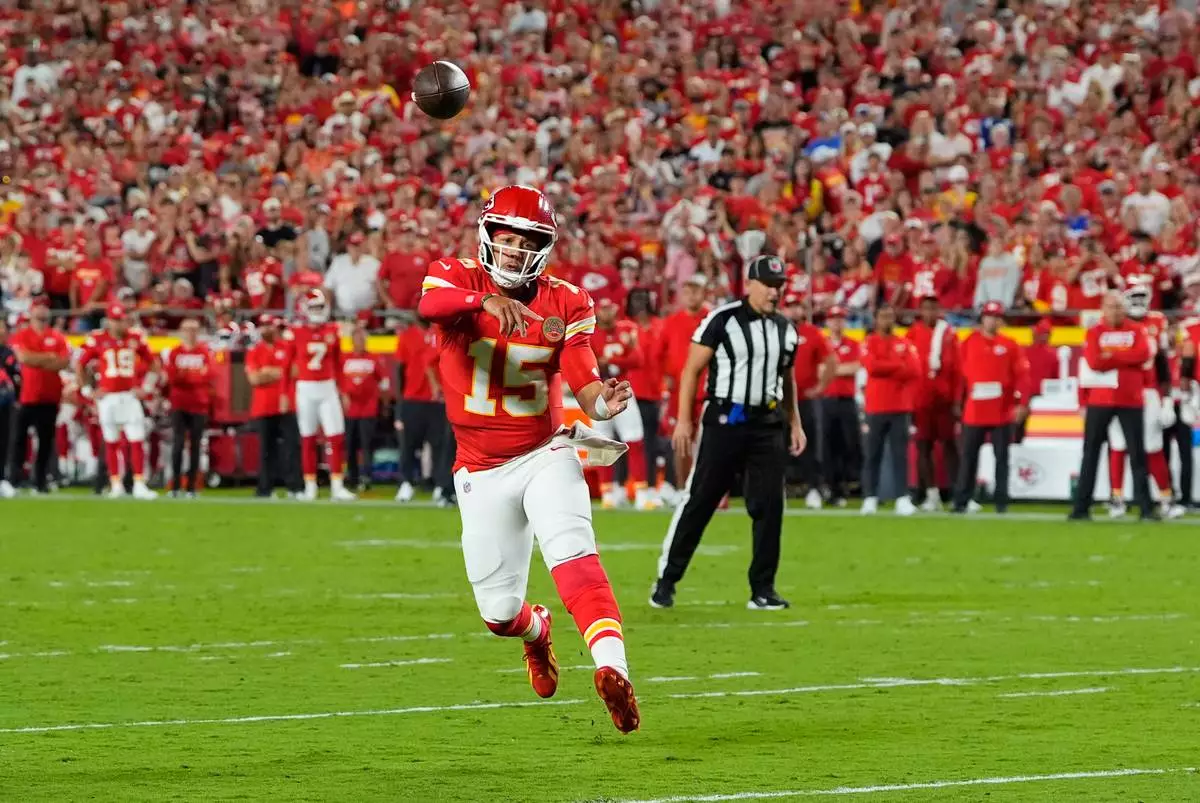
Kansas City Chiefs quarterback Patrick Mahomes throws a touchdown pass to wide receiver Xavier Worthy during the first half of an NFL football game against the Indianapolis Colts Sunday, Sept. 20, 2026, in Kansas City, Mo. (AP Photo/Charlie Riedel)
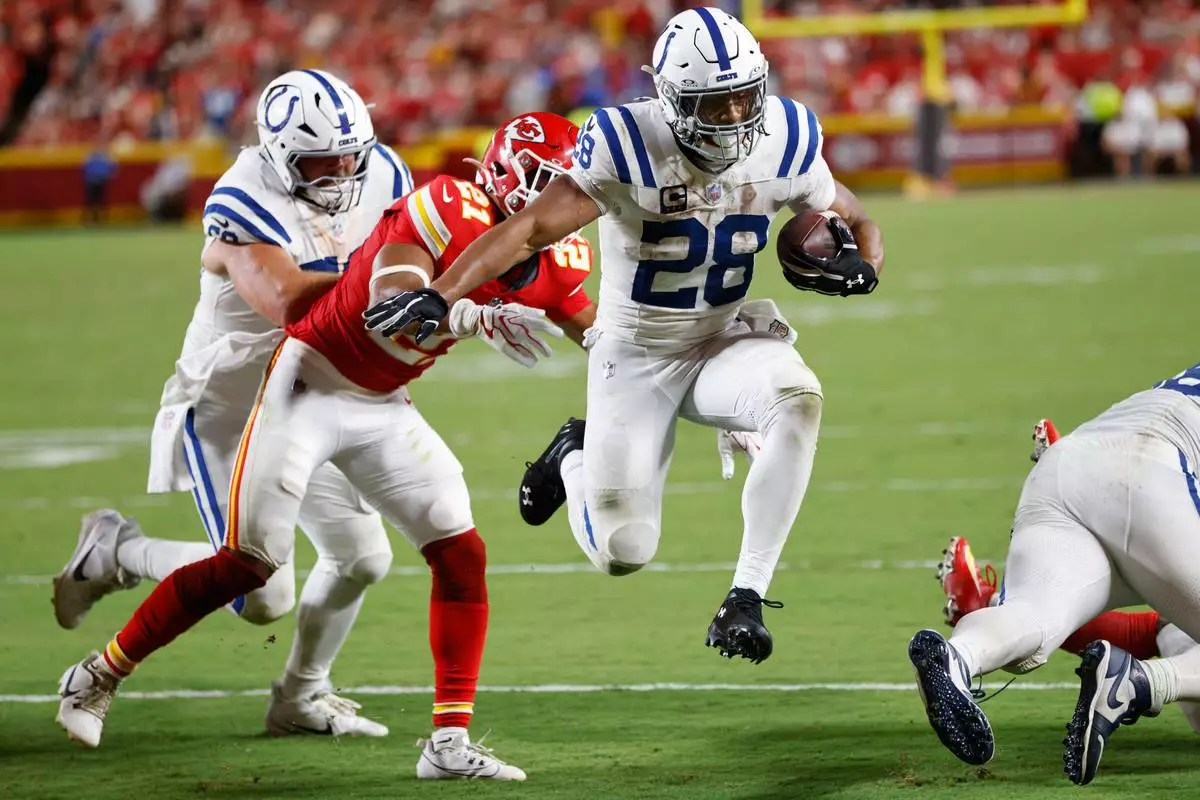
Indianapolis Colts running back Jonathan Taylor (28) scores on a touchdown run past Kansas City Chiefs safety Jaden Hicks (21) during the second half of an NFL football game Sunday, Sept. 20, 2026, in Kansas City, Mo. (AP Photo/Colin E. Braley)
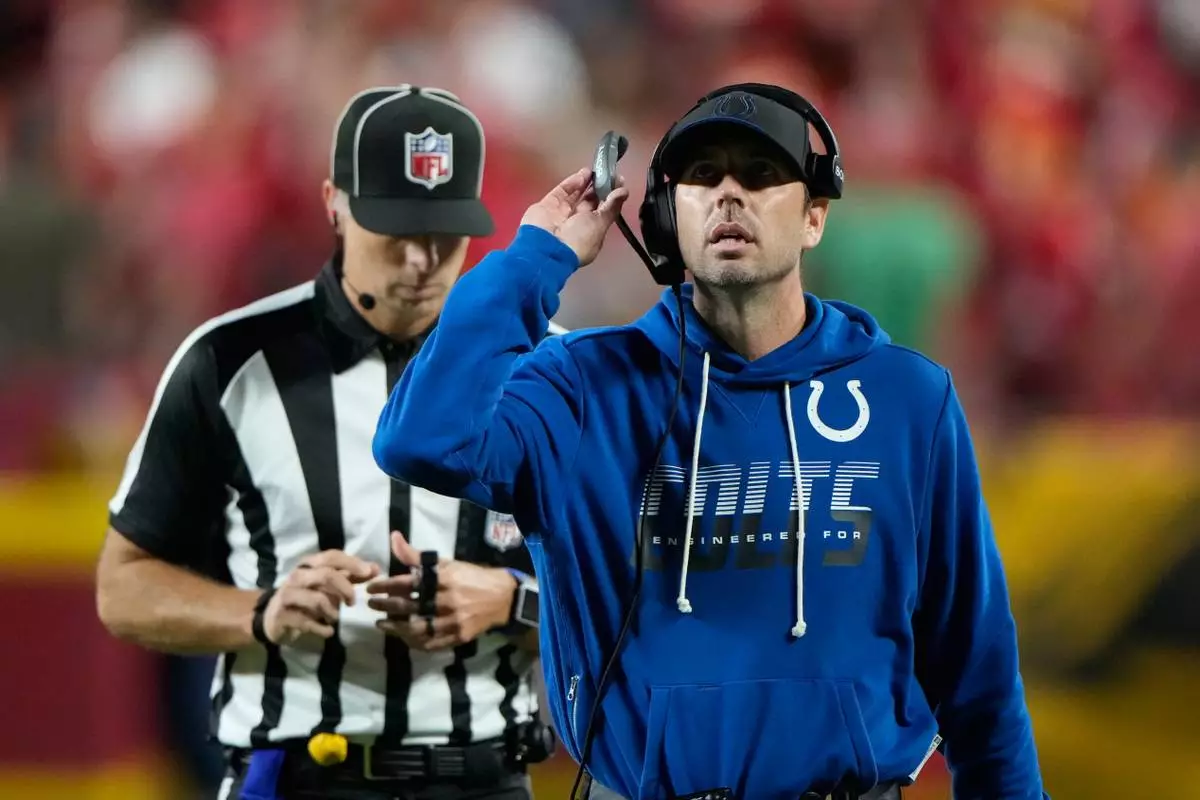
Indianapolis Colts head coach Shane Steichen looks at a replay during a review during overtime of an NFL football game against the Kansas City Chiefs Sunday, Sept. 20, 2026, in Kansas City, Mo. (AP Photo/Charlie Riedel)
CHICAGO (AP) — Twelve states and Hollywood writers challenging Paramount’s buyout of Warner Bros. Discovery agreed to settle their lawsuits on Monday, effectively paving the way for the $81 billion mega merger to cross the finish line, with some new commitments from the company.
The blockbuster deal will still vastly reshape Hollywood — bringing together two of the “big five” remaining studios, key TV networks like CBS and CNN and streaming platforms HBO Max and Paramount+, as well as decades-old libraries with titles ranging from “Harry Potter” to “Top Gun.”
But among terms of Monday’s agreement announced by California Attorney General Rob Bonta — who led the states' case — Skydance-owned Paramount pledged to increase film production in the U.S., commit millions of dollars to a fund to support workers displaced by the merger and create new monitoring of the editorial independence of the company’s news operations.
The settlement still needs a final sign-off by a judge.
Paramount CEO David Ellison welcomed the terms reached with both the states and the Writers Guild of America on Monday, which he said marks “complete clearance” for his company's merger with Warner — reiterating that such a combo will “build a stronger Hollywood.”
Critics, however, decried the settlement terms as too weak and accused the state attorneys general of capitulating to corporate pressure. Many saw the litigation as the last guardrail from keeping a combined Paramount-Warner from becoming a reality.
Talks were contentious for months — and, despite new remedies announced Monday, Bonta and other top state prosecutors who sued said that they still didn't think the companies should merge.
Politics have also surrounded much of Paramount’s quest for Warner. Many eyes are on the billionaire Ellison family's relationship with President Donald Trump and the future of assets like CNN, which the Republican administration barred from the White House over what Trump called unfavorable coverage.
The coalition of states — which, beyond California, also includes entertainment heavyweight New York — sued to block the merger in July, alleging it would “extinguish competition” and lead to fewer choices for consumers, particularly movie theatergoers and cable customers.
In Monday's agreement, the states said they had secured a handful of “court enforceable” commitments from Paramount — including pledges to increase domestic film production over the next five years by spending at least an additional $1.5 billion, or $300 million per year, and commit another $47.5 million to help fund training and career development for workers displaced by the merger.
Paramount also must make good on its promise to release 30 films each year for the next two years — and 32 films in each of the three years after that. If it fails to do so, the states say it will be required to divest from Miramax Studios and pay $30 million for each missed film toward health care and retirement trust funds associated with the Writers Guild of America and other industry unions.
When it comes to cable, Monday's settlement orders the company to negotiate deals for current Paramount-owned and Warner-owned basic channels separately for the next five years, which the states say will help keep consumer prices down. The company must also form a “News Editorial Independence Board” monitoring news operations at CBS and CNN.
Bonta said in a news conference in Los Angeles the settlement was about “protecting people’s careers, the lives they’ve built here in California, the livelihoods their families rely on," while maintaining it was not a vote for the merger.
The Writers Guild of America, which filed its own lawsuit in July challenging the merger on the grounds it specifically harms Hollywood writers, separately confirmed that it settled its case, too — concluding that it couldn't continue its legal fight alone.
“We continue to believe the merger will cause damage to writers and the industry at large," the WGA said in a statement. The union maintained that as a nonprofit “with no backing from government enforcers,” the complex litigation would have cost millions of dollars.
Paramount previously agreed to delay its transaction well into next year so the challenges could make their way through court. But it soon called for a settlement — notably as it looked increasingly likely that the price tag for Warner could get a lot more expensive. Paramount had promised to pay shareholders “ticking” fee compensation amounting to $7 million each day the deal was not closed past Sept. 30.
Including billions of dollars in debt, Paramount’s buyout of Warner is currently valued at about $111 billion based on outstanding shares.
Over the weekend, a handful of lawmakers including Democratic Sens. Elizabeth Warren and Cory Booker urged the states to keep up their fight. Other critics decried the deal Monday while warning what further consolidation could mean in an industry controlled by just a few major players.
“Today, billionaires have yet again bribed, censored, and bullied their way to the top,” Alvaro Bedoya, senior adviser at the American Economic Liberties Project and a former commissioner of the Federal Trade Commission, said in a statement. “Layoffs will follow. People from L.A. to Atlanta will lose their jobs, small businesses will lose their contracts, your cable bill and movie ticket will be even more expensive.”
Bedoya claimed Bonta and California Gov. Gavin Newsom caved to pressure — particularly after Paramount reportedly threatened to leave the state amid the antitrust battle.
But in a statement Monday, Ellison said that the newly combined company would be based in Los Angeles.
“We aren’t going anywhere. Our history is here and this is where our future is being built," he said.
Paramount never publicly commented on a potential move from California, and Monday's settlement doesn't specify that its headquarters stay in the state. But over the summer, Tennessee officials wrote Ellison a letter encouraging Paramount to relocate there.
Newsom said the deal was a win for workers and California’s creative economy.
“It protects California jobs while putting a safeguard in place to help preserve editorial independence for two of America’s most important news organizations,” Newsom said in a statement.
Connecticut Attorney General William Tong, whose state was among those filing suit, said his main goal had been to protect the editorial independence of CNN and CBS News and that he wanted to see a full divestiture of the two news organizations. The settlement instead includes an editorial board structure aimed at protecting their independence.
A week ago, Tong said, Paramount refused to agree to any editorial independence for the news outlets.
“We wanted to save ethical and independent journalism and news,” he said in a statement. “We fought aggressively for that remedy. I am deeply disappointed that we could not do more.”
Tong and others stressed that it was an uphill battle after the Trump administration decided against intervening. In June, the U.S. Justice Department released a lengthy statement supporting the merger.
“The complete abdication of the federal government’s enforcement role in this fight left states with one arm tied behind our backs," Tong said.
AP Writers Sophie Austin in Sacramento and Dave Collins in Hartford contributed. Sisak reported from New York.
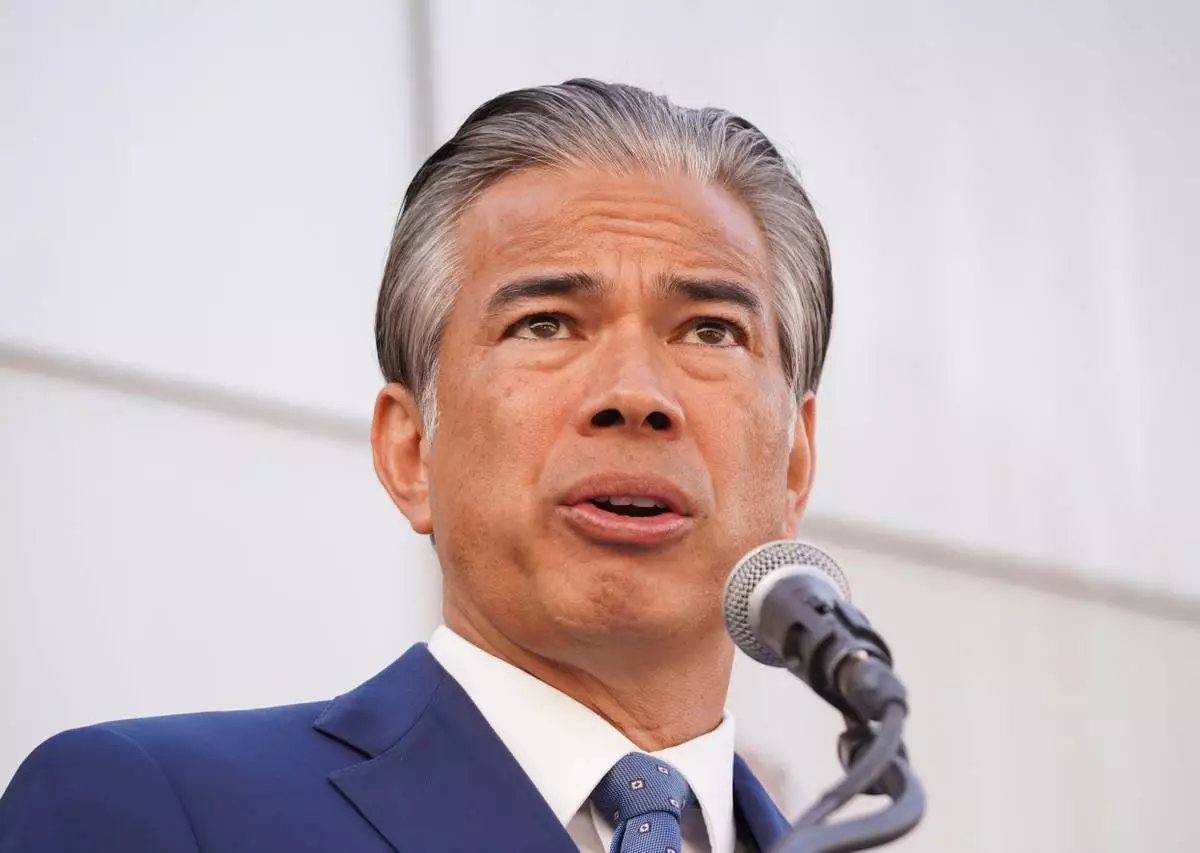
FILE - California Attorney General Rob Bonta speaks during a press conference, Oct. 8, 2024, in San Francisco. (AP Photo/Minh Connors, File)

FILE - A CinemaCon attendee holds a pin expressing opposition to the proposed Paramount-Warner Bros. Discovery merger during CinemaCon 2026, April 14, 2026, at Caesars Palace, in Las Vegas. (AP Photo/Chris Pizzello, File)
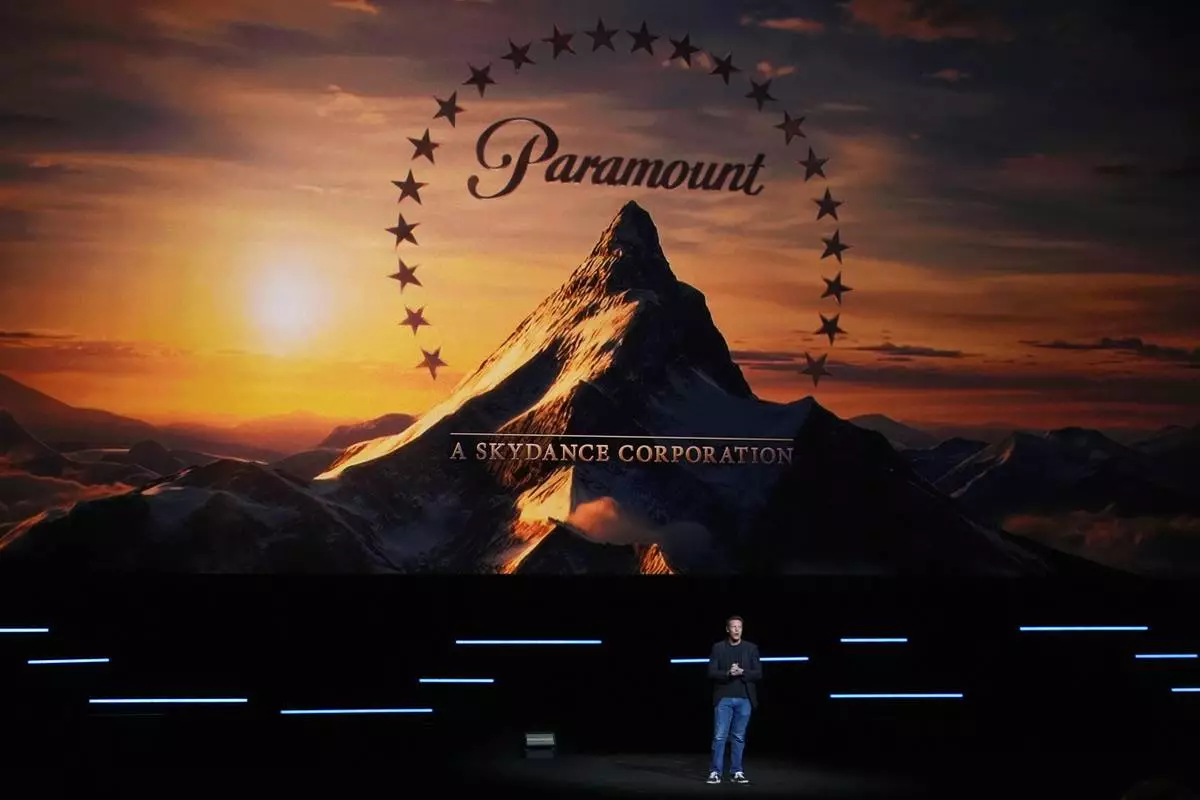
FILE - David Ellison, CEO of Paramount Skydance, speaks during the Paramount Pictures presentation at CinemaCon on April 16, 2026, at Caesars Palace in Las Vegas. (AP Photo/Chris Pizzello, File)
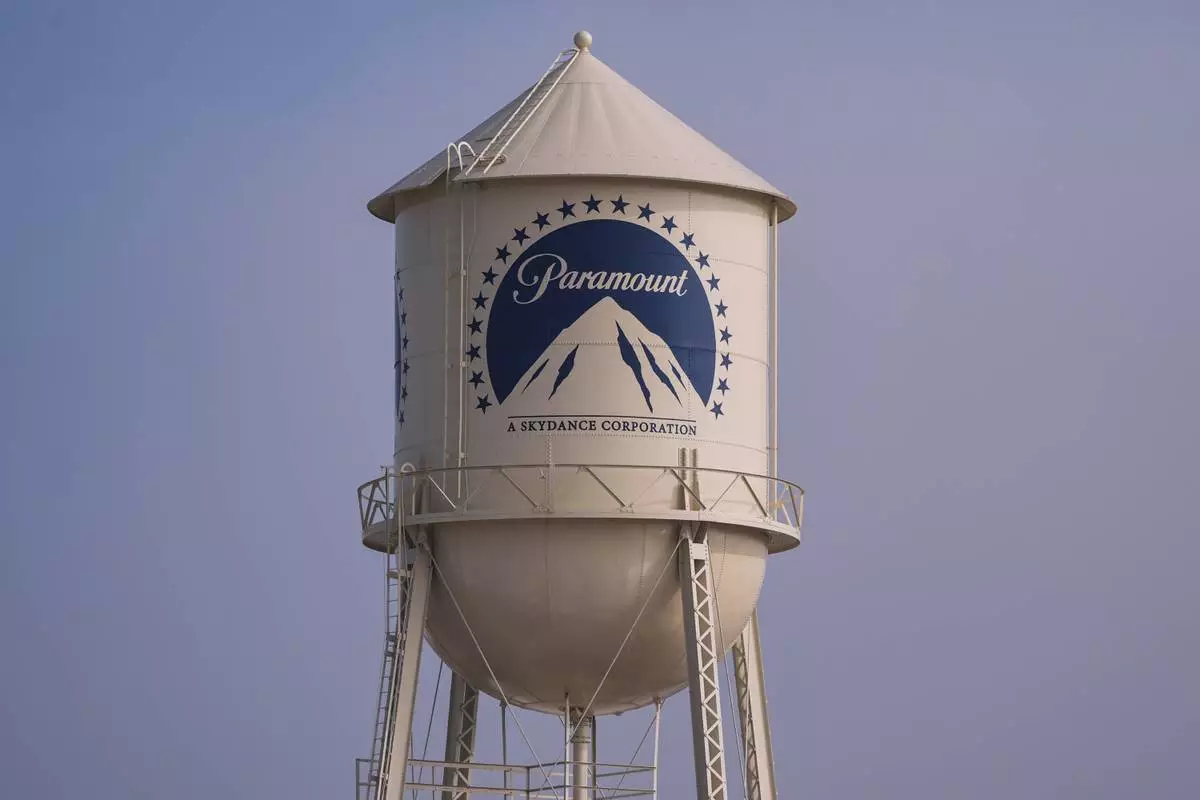
FILE - The Paramount Pictures water tower is seen in Los Angeles on Dec. 17, 2025. (AP Photo/Jae C. Hong, File)