Russia and Ukraine updated conflicting battlefield reports on Monday, with Moscow saying it struck Ukrainian port and logistics targets while Kiev claimed it had repelled Russian attacks along multiple fronts.
The Russian Defense Ministry said in a statement that over the past day, Russian forces had taken control of two settlements in the Kharkiv and that Russian air defense systems had downed 634 fixed-wing drones.
The ministry also said Russian forces launched drone strikes early Monday on logistics centers, warehouses and ports in Ukraine, as well as vessels providing support to the Ukrainian military.
The General Staff of the Armed Forces of Ukraine reported on Monday that 238 combats occurred along the front line over the past day, with Ukrainian forces repelling Russian attacks in multiple directions.
The Ukrainian side said its air force, missile units and artillery struck Russian troop concentration areas, drone control and launch sites, and artillery systems and positions. It claimed to have destroyed 1,728 Russian drones.

Russia reports strikes on Ukrainian port, Ukraine claims repelling Russian offensive
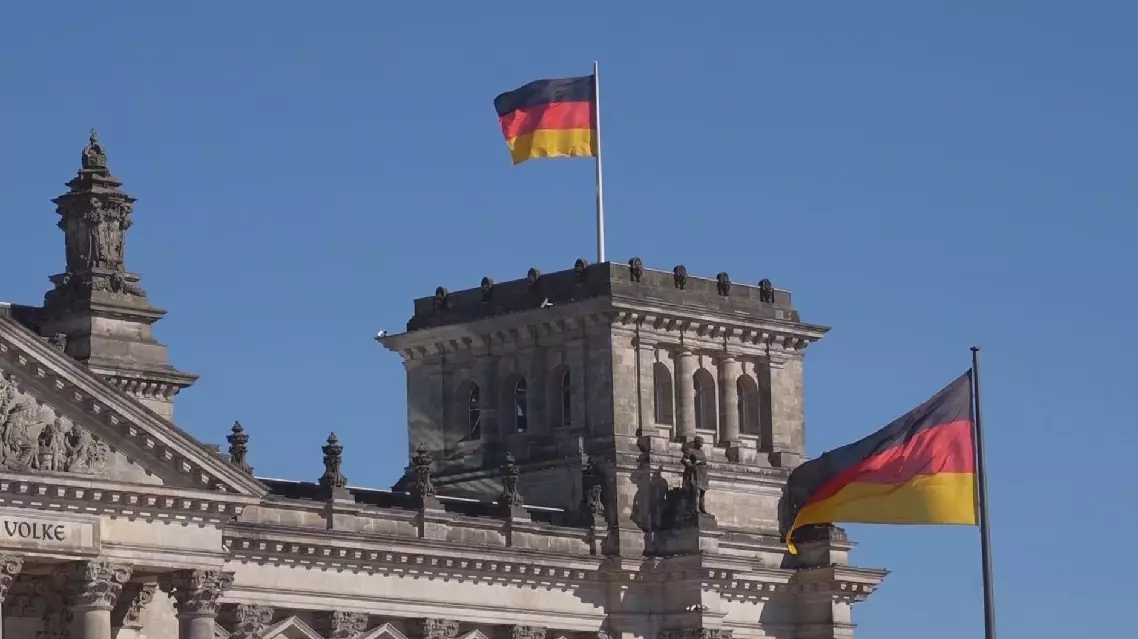
German Chancellor and Christian Democratic Union (CDU) leader Friedrich Merz on Monday called his party's state election defeat in Mecklenburg-Vorpommern a "heavy blow," while ruling out any internal leadership challenge.
Speaking at a press conference in Berlin, Merz admitted that the CDU failed to provide satisfactory answers to public concerns.
However, he dismissed allegations of an internal rebellion, stressing that there had been "no personnel debate" regarding his leadership.
On Sunday, the CDU secured only 4.9 percent of the vote in the Mecklenburg-Vorpommern election, failing to enter the state parliament for the first time. Meanwhile, the far-right Alternative for Germany (AfD) won the state election with 38.2 percent of the vote, followed by the Social Democratic Party (SPD) with 35.5 percent.
Noting the center-left SPD's intention to stick with the coalition in Berlin, Merz said his party also fully supported the federal governing coalition.
The two parties would discuss the path forward for their cooperation, Merz said, adding that he would also hold talks with federal state leaders in the near future.
The German Bundestag has a total of 630 seats. Following the 2025 German federal election, the CDU/CSU alliance won 208 seats and subsequently formed a coalition government with the SPD, which holds 120 seats and is the third-largest party in parliament, making Merz German chancellor.
It is worth noting that, since all major German parties currently rule out the possibility of forming a coalition government with the far-right AfD, the party, which holds 150 seats and is the second-largest party in parliament, serves as the largest opposition party in the Bundestag.
Merz vows coalition stability after state election defeat