The total value of goods imports and exports in the Yangtze River Delta in east China reached 13.16 trillion yuan (about 1.97 trillion U.S. dollars) in the first eight months of 2026, up 18.8 percent year on year, according to Shanghai Customs on Tuesday.
The figure marks a record high for the same period in history and represents 18 consecutive months of positive growth. The Yangtze River Delta covers Shanghai Municipality, Jiangsu Province, Zhejiang Province and Anhui Province.
The region's share of China's total foreign trade rose to 37.8 percent, cementing its role as the ballast of the nation's trade. Each province and the municipality advance in coordination, each with distinctive drivers of trade growth.
Shanghai has leveraged its strengths as a port hub and a highland of institutional opening-up, with exports of AI-related products surging more than 90 percent and imports of energy products such as crude oil maintaining double-digit growth.
Jiangsu Province, backed by its comprehensive manufacturing system, has formed a complete export chain from core components to finished products, with exports of key competitive categories such as integrated circuits and vessels growing rapidly.
Zhejiang Province has fully leveraged the private sector as the main force, with private enterprises accounting for 82.6 percent of imports and exports, while technology-intensive, high-value-added products have become the core driver of trade growth.
Anhui Province's monthly imports and exports have stayed above the 100-billion-yuan mark for six consecutive months. In the first eight months, both the volume and value of its automobile exports doubled, ranking first nationwide.
Overall, the region's emerging industries have posted standout performances in overseas markets, with exports of four key categories of robots, including surgical robots, reaching 16 billion yuan (around 2.4 billion U.S. dollars), a threefold increase year on year.
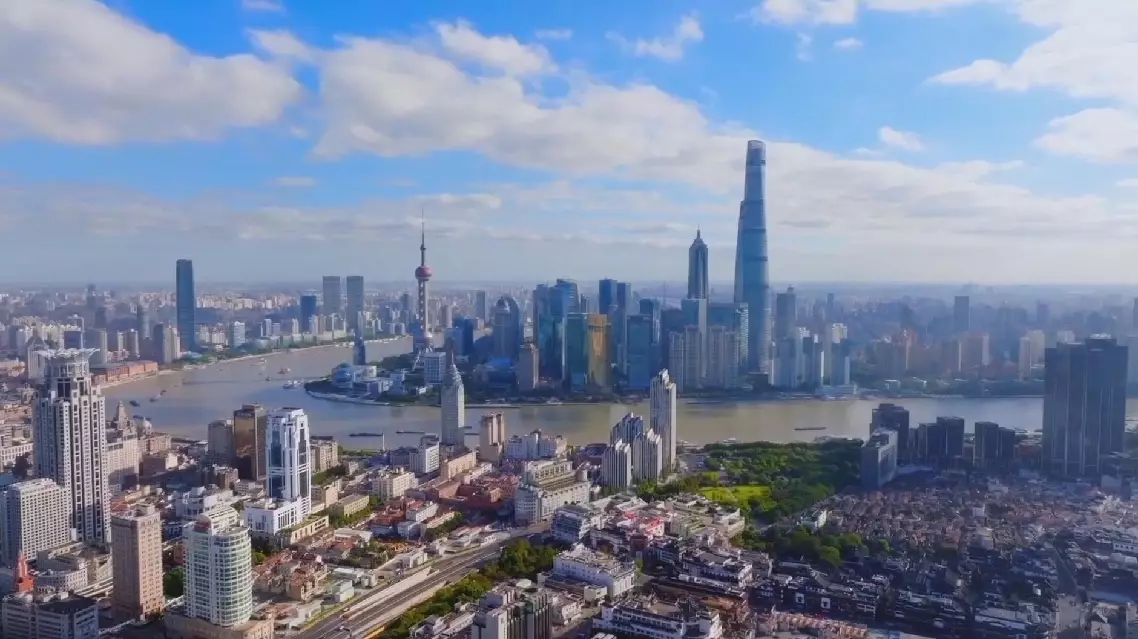
China's Yangtze River Delta reports record-high foreign trade in Jan-Aug period
Digital and intelligent finance has been playing an increasingly important role in boosting cross-border payment between China and ASEAN countries, with a series of innovations in "AI plus finance" showcased at the just-concluded 23rd China-ASEAN Expo in Nanning, south China's Guangxi Zhuang Autonomous Region.
Running from Sept 17 to 21 in Nanning, the event drew more than 3,400 exhibitors from over 70 countries and regions.
Cross-border payment services have become an important foundation for regional cooperation between China and ASEAN countries, as both sides have seen closer trade and economic exchanges.
At the financial zone of the 23rd China-ASEAN Expo, multiple exhibitors showcased their latest products in "AI plus finance."
"We have signed cooperation agreements with banks in Guangxi and have reached broad consensus on cross-border digital finance and AI financial applications. Our goal is to build an innovation hub that integrates services in Guangxi, serves ASEAN, and radiates across the rest of the Asia-Pacific region. In terms of security governance, we have developed our own AI-powered intelligent risk control system and implemented solutions to enhance verification capability. In June, the cross-border QR code payment project between China and Indonesia was officially launched. China and Vietnam have also achieved standard interoperability, with which Chinese mobile wallets can now be used smoothly in Vietnam," said Sun Quan, one of the exhibitors. Beyond financial cooperation, the expo also focused on upgrading consumption and promoting AI technology to empower cross-border convenient payment.
"We've been working on boosting cross-border consumption and internationalization of the Chinese yuan. The close personnel and trade exchanges between China and ASEAN are a focus of our services. We provide solutions to industries, enable domestic e-payment systems to go global with high quality operation, and facilitate users' cross-border payments," said Cui Wei, another exhibitor.

Intelligent finance boosts cross-border payment connectivity between China, ASEAN countries