China's permanent representative to the United Nations Fu Cong has called for the UN to play a significant role in shaping global AI governance as the world strives to balance the technology's potential with its dangers.
In a recent in-studio interview with China Global Television Network (CGTN) in Beijing, Fu emphasized China's efforts to support the UN in making AI more accessible to the Global South and promote better AI governance, citing the establishment of the World Artificial Intelligence Cooperation Organization (WAICO) in July.
Twenty-nine countries signed an agreement in Shanghai on forming WAICO on July 16, establishing it as an independent intergovernmental international organization headquartered in the same city.
According to founding documents, the organization will uphold the purposes of the UN Charter in its aims to promote international cooperation and global governance on AI, ensuring that AI is beneficial, safe and fair, thereby promoting its healthy and orderly development to benefit all humanity.
UN Secretary-General Antonio Guterres was among representatives from countries and international organizations present at the signing ceremony. Fu said his presence was a sign that the UN will be active in pushing for equal access to AI.
"It is expected that the UN should play a role in trying to prevent a gap between those who have AI and those who do not have AI. We talked about the digital divide, now we are talking about the AI divide. And how to make AI more accessible to the Global South, I think here the UN has a role to play, and in that, China is playing a big role in actually supporting the UN. We say that the UN should be the main channel for the discussion on AI. Our own experience has shown that AI can enable all kinds of industries and help the country develop. And we are trying our best to actually to promote that in Global South countries," Fu said.
He emphasized that WAICO will be the central force behind that push.
"That is an organization that is set up to work on the cooperation, the capacity building cooperation in order that the Global South countries can really utilize AI and, I would say, to leapfrog in economic development. That is one aspect we think that the UN has a big role to play," said Fu.
"And another aspect I think is important is global governance itself. We all know that AI can bring about a lot of benefits, but also it has a lot of inherent dangers, and some even say that AI poses an existential threat to humanity. So then how to make the best use of the benefits that the AI, this new technology can bring to the world, and on the other hand, try to harness the potential dangers that AI can bring to the world," the ambassador continued.
For its part, China has been fulfilling its promises of training individuals from developing and emerging economies on AI and providing support through AI-aided early warning systems to some of the economies that are threatened by climate change.
"That is exactly what we are doing right now. For instance, you mentioned the training opportunities, and we are actually sending invitations to members of the United Nations. Of course, you have to do in batches, you can't go at the same time. But our aim is that it will be open to all Global South countries, and we know that bilaterally some of the things that we are talking about are already on the ground, and this meteorological weather forecasting, and we have already done that with 30 countries," Fu said.
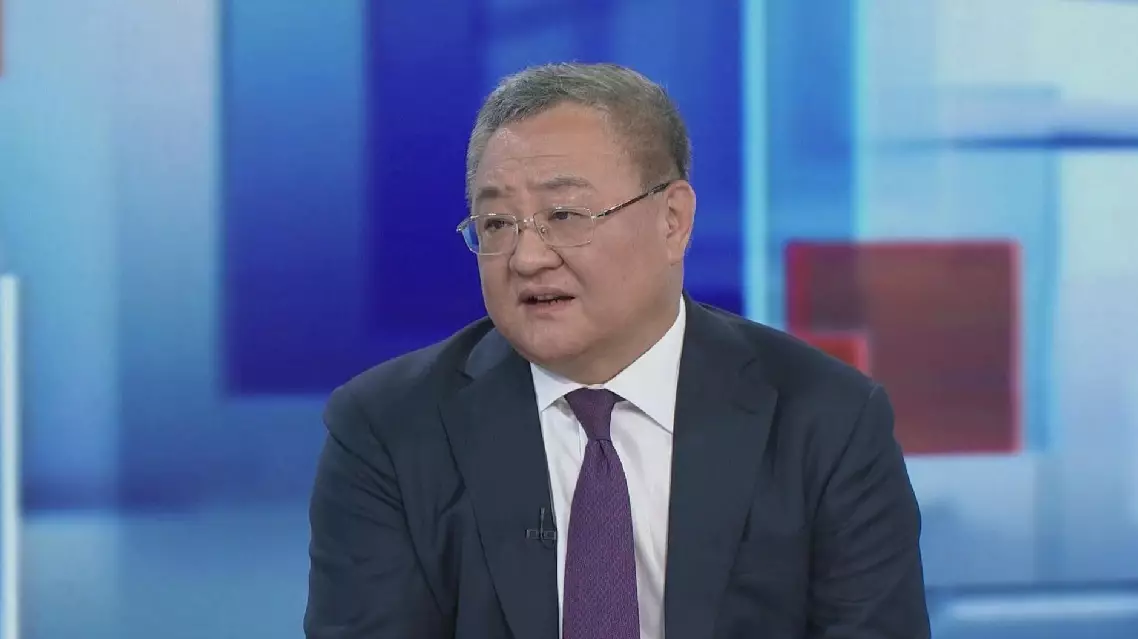
Chinese envoy calls for greater role for UN in building AI governance